Get ready to dive into a world of creativity and conservation! The Khaled bin Sultan Living Oceans Foundation is thrilled to announce the finalists of the Science Without Borders® Challenge. This year’s theme, “Marine Keystone Species,” invited young artists from across the globe to explore the critical roles these species play in shaping and sustaining healthy ocean ecosystems.
We were amazed by the response—more than 1,300 entries from 75 countries poured in, each a powerful testament to students’ talent and environmental awareness worldwide. These stunning artworks showcase diverse marine life, from foundational species at the base of the food web and grazers to apex predators and ecosystem engineers.
Every submission brought a unique voice to the conversation about marine keystone species. Most artists focused on a single species’ essential role, keeping its ecosystem healthy, while others portrayed a variety of marine keystone species. After much thoughtful consideration, our panel of judges selected a group of finalists whose pieces stood out for their creativity, originality, and strong connection to this year’s theme.
We can’t wait for you to see what these young artists have created. So, without further ado, we proudly present the finalists in the Ages 11–14 category of the 2025 Science Without Borders® Challenge. Prepare to be inspired by their imaginative interpretations and powerful messages about protecting the species that keep our ocean in balance.
11-14 Year-Old Finalists
3rd Place (11-14 years old): "The Beauty of Coral Reef" by Annie Douglas, Age 12, Bahamas
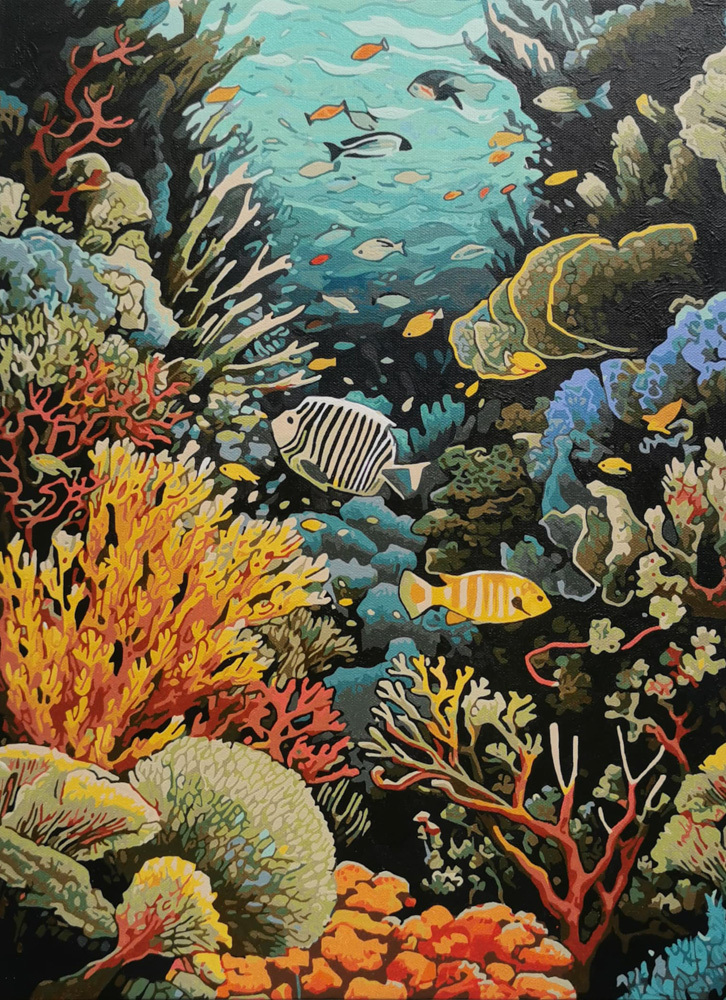
ARTIST STATEMENT: I chose to paint a coral reef for my entry because my hometown, The Bahamas, is home to 1/3 of the Caribbean's coral reefs. Coral reefs are structures in the ocean formed by the accumulation of calcareous skeletons secreted by organisms such as coral polyps. They typically grow in warm, clear, and shallow waters and form one of the most diverse and complex ecosystems on the planet. Although coral reefs cover less than 0.1% of the ocean's surface, they support a quarter of all marine life species. Coral reefs not only provide habitat and food for a vast array of marine life, but they also reduce damage to human settlements by slowing the erosion of shorelines by waves. My painting cannot accurately depict the contribution of coral reefs to mankind, but I hope that people can see the beauty of coral reefs through my artwork and become more aware of their protection.