search-icon

2001

Sea of Cortez Ocean Health Research Expedition

We partnered with other U.S. and Mexican scientists in the Sea of Cortez to conduct research at 12 different sites, spanning a distance of over 500 miles. The team collected and partially processed fungi, soft coral, and sediment samples in an ongoing search for natural products made from marine organisms.

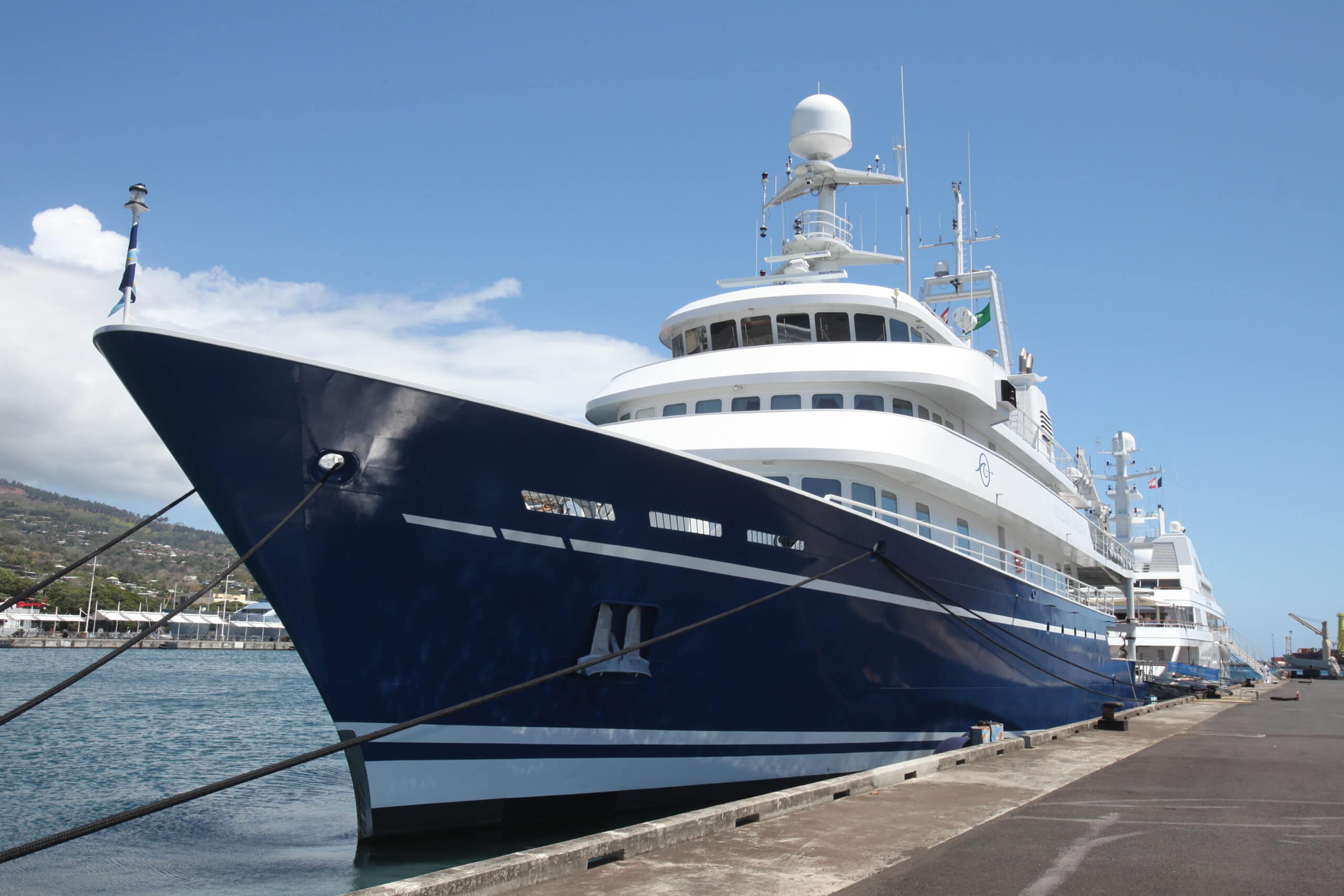
U.S. and Mexican scientists joined forces to conduct a scientific research expedition in the Sea of Cortez off the coast of Mexico aboard the Golden Shadow. The teams went to 12 different research sites, covering a distance of over 500 miles between northern Loreto and southern Cabo San Lucas. Scientists from the Scripps Institution of Oceanography, led by Professor William Fenical, collected and partially processed fungi, soft coral, and sediment samples in an ongoing search for natural products from marine organisms. With a unique sediment collector, samples were pulled up from as deep as 400 feet. Joining the Scripps team was a group of Mexican scientists led by Dr. Rosalba Encarnacion Dimayuga of the Universidad Autonoma De Baja California. As part of a cooperative agreement, the Scripps scientists worked closely with the Mexican team to develop methods of collecting and processing marine organisms to discover those that may be key to treating human diseases. 
Related Posts

Announcing the 15th Annual Science Without Borders® Challenge: Navigate with Care

Every day, fishing boats, ferries, sailboats, kayaks, research vessels, cargo ships, whales, sea turtles, dolphins, seabirds, and countless other marine animals share the same waters. While people rely on the ocean for transportation, recreation, research, fishing, and exploration, it is also home to some of the most diverse and important ecosystems on Earth.

That simple but powerful idea is the inspiration behind the 15th Annual Science Without Borders® Challenge.

Read More

2025-2026 B.A.M. Student Voices

Throughout the Bahamas Awareness of Mangroves (B.A.M.) and Jamaica Awareness of Mangroves in Nature (J.A.M.I.N.) programs, we evaluate each phase of the mangrove education and restoration process to better understand how students are learning, growing, and connecting with their coastal environments.

Before the programs begin, students share what they already know about mangroves and how they feel about them. As the program progresses, we continue to gather feedback to see how their knowledge evolves from identifying mangrove species and understanding food webs to recognizing the role mangroves play in coastal protection and climate change mitigation.

But the surveys go beyond science content.

We also ask students…

Read More
Privacy Overview

This website uses cookies so that we can provide you with the best user experience possible. Cookie information is stored in your browser and performs functions such as recognising you when you return to our website and helping our team to understand which sections of the website you find most interesting and useful.  You can view our complete Privacy Policy here.

Strictly Necessary Cookies

Most of our cookies are used to improve website security and reduce spam. These cookies should be enabled at all times. They also enable us to save your preferences for cookie settings.

3rd Party Cookies

This website uses Google Analytics to collect anonymous information such as the number of visitors to the site, and the most popular pages. Keeping this cookie enabled helps us to improve our website.