search-icon
Gambier, 800 feet above sea level

After a 3.5 hour flight on the Golden Eye, we reached Hao to begin our third research mission in French Polynesia at Gambier. Hao is a large (56 km X 15 km), low-lying coral atoll at the southeastern end of the Tuamoto archipelago, 920 km east of Tahiti. It has one navigable pass into the lagoon at the north end with a well developed reef system and treacherous currents that may exceed 20 knots. Hao is home to the longest airstrip in the region, used as the support base for the nuclear testing on nearby Mururoa atoll in the mid 1990s, and as a Transoceanic Abort Landing site for U.S. space shuttles. Most of the 1600 inhabitants live at the northeast end of the atoll.

Gambier Islands

The Acteon Group, at the northwestern end of Gambier Archipelago, consists of four neighboring, isolated atolls about 1400 km from Tahiti. These low-lying coral atolls range in size from about 2 km2 to 18 km2, with a land area of no more than 2.5 square km, bound by a continuous reef, and no access to the central lagoon. Each has a small landing strip to provide access to the dense coconut plantations, but the atolls lack permanent residents.

Continuing southwest about 50 km, we reached Maria Est, an oval-shaped coral atoll that completely encloses a hypersaline lagoon.

Marie Est Atoll
Marie Est Atoll

More than 1,600 km southeast of Tahiti, is the Gambier group, a collection of extinct high volcanic islands. The 14 small, mountainous islands are located within an extensive lagoon, and are surrounded by a barrier reef with three navigable passages to the sea. Well developed fringing reefs are found off headlands and on the exposed south and southeast coasts of each island and small coral bommies are scattered throughout the lagoon. The highest point, Mt. Duff, is on Mangareva, rising out of the ocean to an elevation of 441 m. Mangareva is also the largest and most populated island, with about 1200 residents, and an economy based largely on pearl farms.

Mt. Duff, Mangareva
Mt. Duff, Mangareva

Temoe Atoll, 25 km south of Gambier, is our final destination. Trapezoidal in shape and bound by a continuous reef, many small shallow spillways connect the 23 m deep lagoon, none which are deep enough to allow boat access.

Before departing, we got a spectacular view of the vibrant reefs we were about to witness—an unusually low tide exposed the dense thickets of corals, their branches extending out of the water.

lagoonal reef with exposed corals

Back in Tahiti, the remainder of the science team joined us, and the Golden Shadow departed a 36 hour journey to Hao in Gambier. For many of the low coral atolls our efforts will focus on the extensive spur and groove reef systems that characterize the front of the reef, facing the ocean.  At Hao and Mangareva, we will also characterize the fringing reefs, reticulate reefs and patch reefs within the lagoon.

spur and groove fore reef, Tenararo

(Photos by: Image 1 Amanda Williams, Photos 2-5 Dr. Andrew Bruckner)
 

Related Posts

From Dialogue to Action: Ocean Foundations Gather in Stockholm

What can philanthropy accomplish when foundations working across ocean science, conservation, and sustainable development come together around a shared purpose?

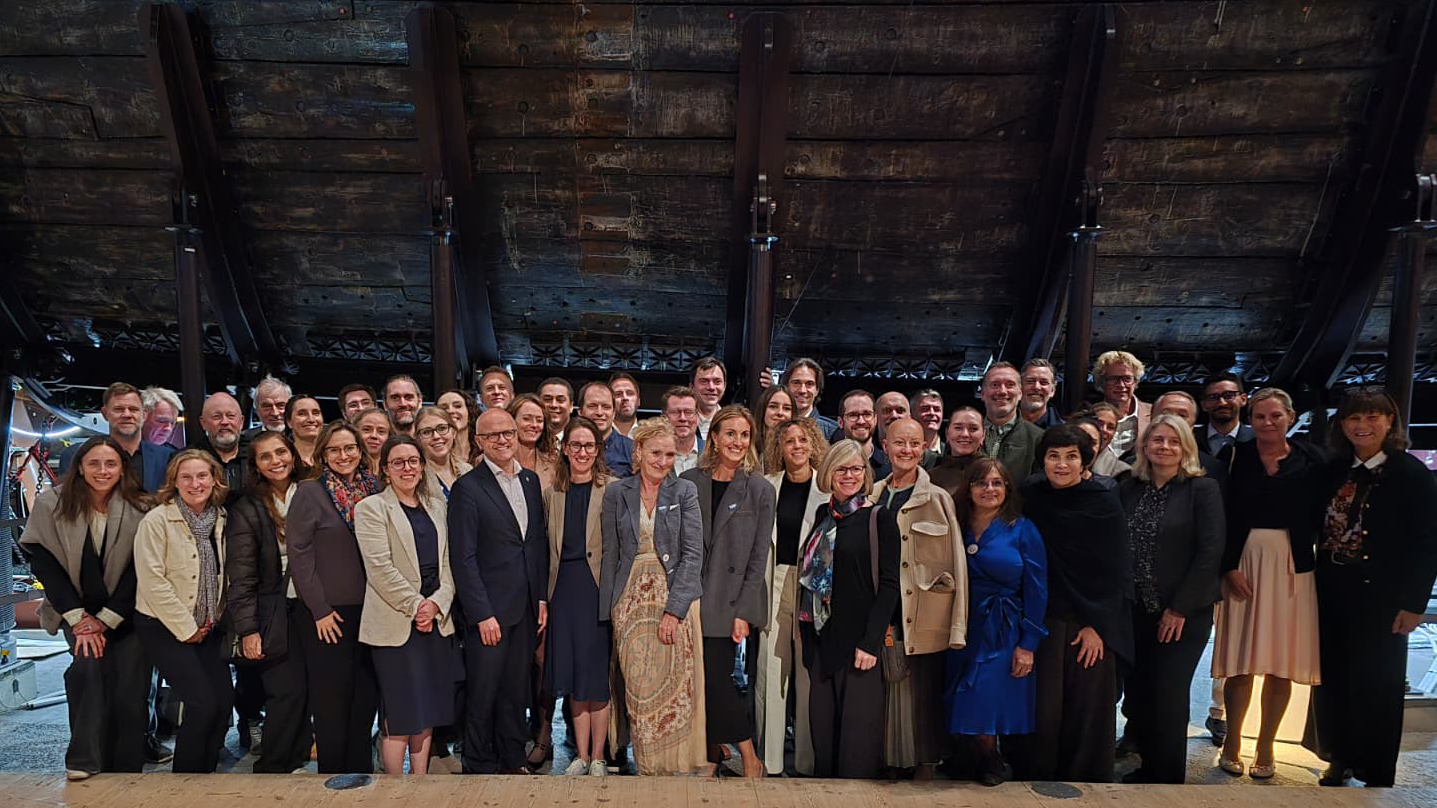
That question was at the heart of the 6th UN Ocean Decade Foundations Dialogue, held September 7–9 in Stockholm, Sweden. The Khaled bin Sultan Living Oceans Foundation joined philanthropic organizations from around the world for three days of discussion, collaboration, and planning focused on accelerating progress during the second half of the UN Decade of Ocean Science for Sustainable Development.

Facilitated by UNESCO’s Intergovernmental Oceanographic Commission (IOC), the UN Ocean Decade Foundations Dialogue is a growing network of more than 30 philanthropic organizations committed to advancing ocean science, collaboration, and action. Since its creation within the framework of the Ocean Decade, the Dialogue has provided foundations with a space to exchange ideas, develop partnerships, and explore how philanthropy can help advance a healthy and resilient ocean.

Hosted by the Voice of the Ocean Foundation (VOTO), this year’s gathering began with From Depth to Action, an Opening Forum that brought nearly 100 leaders from the Swedish and international ocean community together at…

Read More

Meet IFAN: Helping Bring Navigate with Care to the Next Generation

If you’ve ever seen a lighthouse flashing from the shore or a brightly colored buoy bobbing in the water, you’ve seen Aids to Navigation at work.

Aids to Navigation, often called AtoNs, help mariners navigate safely. They can mark channels, warn of hazards, help vessels determine their position, and provide other information people need to make safe decisions on the water. Around the world, these systems help guide everything from small recreational boats to large commercial or container ships. 

But safe navigation isn’t only about protecting vessels and the people aboard them. The choices mariners make can also affect the animals and ecosystems beneath and around them.

That connection between maritime safety and ocean conservation is at the heart of this year’s Science Without Borders® Challenge—and of our partnership with this year’s theme sponsor, the International Foundation for Aids to Navigation (IFAN).

Read More

Privacy Overview

This website uses cookies so that we can provide you with the best user experience possible. Cookie information is stored in your browser and performs functions such as recognising you when you return to our website and helping our team to understand which sections of the website you find most interesting and useful.  You can view our complete Privacy Policy here.

Strictly Necessary Cookies

Most of our cookies are used to improve website security and reduce spam. These cookies should be enabled at all times. They also enable us to save your preferences for cookie settings.

3rd Party Cookies

This website uses Google Analytics to collect anonymous information such as the number of visitors to the site, and the most popular pages. Keeping this cookie enabled helps us to improve our website.