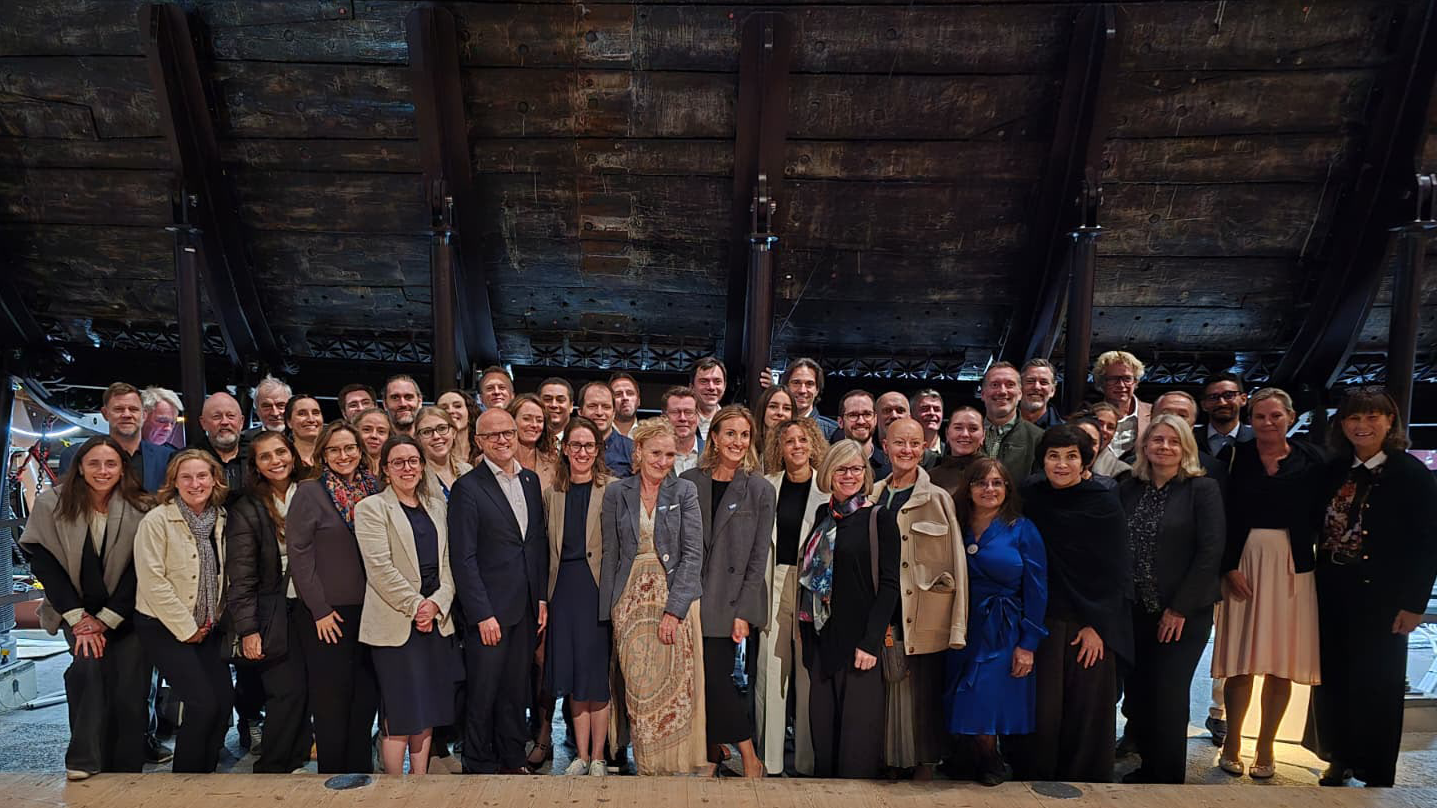
In continuation of the Foundation’s efforts in outreach and education, the Foundation’s Chief Scientist, Dr. Andy Bruckner, led a coral reef monitoring workshop for St. Kitt’s divers and conservation officers on board the M/Y Golden Shadow.
The day opened with a discussion about the global coral reef crisis, changes to Caribbean coral reefs over the last three decades, and factors triggering reef degradation. This was followed by an overview of the objectives of the GRE, how the research we conduct will fill critical knowledge gaps and aid in the development of actions that can mitigate local impacts, enhance the resilience of coral reefs and ensure the persistence of these threatened ecosystems locally and globally.
Participants at the coral reef monitoring workshop gained an understanding of the linkages between reef fishes, algae and corals, how a balanced ecosystem can help promote rapid recovery following large-scale disturbances, and local actions that are necessary to protect and restore vulnerable coral reef ecosystems. They explored some of the tools available for marine spatial planning, how we develop these tools, and how they can be applied to meet conservation needs and ensure sustainable use of coral reef resources. This led into a discussion on the importance of rapid assessments in defining the current baseline, threats, and health of coral reefs, and the need for continued monitoring to evaluate changes in response to management.
The coral reef monitoring workshop sessions ended with an introduction to the methods we are using in St. Kitts and Nevis and in other locations we examine during the GRE. Participants received three sets of underwater identification cards depicting reef building corals, coral diseases, and ecological resilience indicators.
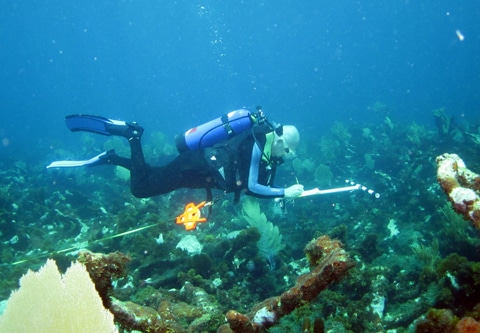
In the afternoon, 12 divers and 2 snorkelers headed out on the Golden Shadow’s two small catamaran dive boats to a shallow reef in order to practice the survey methods. The Living oceans Foundation is using a standardized survey approach that Bruckner developed and tested in the Red Sea, and further refined during our 2010 Caribbean field surveys. This combines attributes of the AGRRA survey approach, the IUCN resilience assessment approach and additional components on substrate quality, coral structure, algal communities and nuisance species. By employing a standardized method at all locations we visit, we will be able to assess the health and resilience of these sites and make valuable comparisons among different locations. Divers were split into three 2-3 person buddy teams, each with an instructor (Andy, Amanda and James).
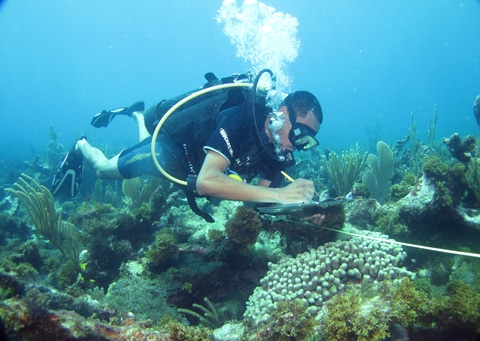
Each team deployed a 10 m transect, and with assistance of the instructors identified what was on the bottom, under points spaced at 10 cm intervals. The divers learned to differentiate the different types of substrate (pavement, rubble, sand, dead coral, live coral), the functional group of algae that colonized the substrate (turf, macroalgae, crustose coralline algae and cyanobacteria), the species of live coral or other invertebrate, and the health of the coral. After completing a 100 points on each transect, and a minimum of 6 transects at each site, we are able to characterize the percent cover of different organisms that have colonized the reef substrate, the quality of the habitat and likelihood that it will support settlement and growth of new corals (recruitment), and the condition of the important reef building corals. The next level of training for these divers, which begins tomorrow, involves more detailed assessments of coral abundance, size structure and health and fish community structure.
All of the scientists are now aboard the M/Y Golden Shadow, so research is now in full swing. We are excited to have a great mix of scientists aboard the ship and are really looking forward to the connections we are creating and will maintain throughout the Global Reef Expedition and beyond.
To follow along and see more photos, please visit us on Facebook! You can also follow the expedition on our Global Reef Expedition page, where there is more information about our research and our team members.
(Images/Photos: 1-2. James Byrne)