If you follow our blogs, then you might recall the blogs about harvesting sea cucumbers in Fiji. In Tonga, they are also collecting sea cucumbers and processing them. When the sea cucumbers are processed and dried, they are called beche-de-mer.
Each sea cucumber species is processed differently; however, the primary technique is to place the sea cucumbers in salt for approximately five days. Afterwards, they are boiled in water and laid in the sun to dry. For larger specimens, the sea cucumber is slit open, the internal organs are removed, and a stick is used to hold the body cavity open for quicker drying.
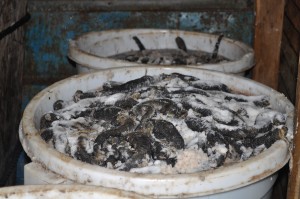
Here are the sea cucumbers being salted at the processing plant.
After the sea cucumbers are processed, they are sold to an exporter. Islands that do not have processing plants, harvest the sea cucumbers and sell them to a processing plant. The Ministry of Fisheries only allots a certain amount of exporter licenses per year. The exporter in turn sells the beche-de-mer to Asian markets.
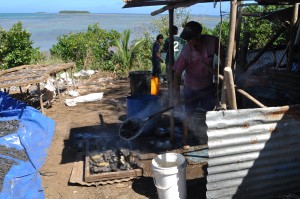
Part of the processing of beche-de-mer is to boil the sea cucumbers.
In Tonga, beche-de-mer were commercially exported beginning in the mid-1980’s. During this time, sea cucumbers were able to be harvested while SCUBA diving. According to a report from the Tongan Ministry of Fisheries, the sea cucumber stocks decreased and were no longer sustainable. From December 31, 1997 to December 31, 2007 a ten year moratorium was imposed on commercial sea cucumber harvesting and only culturally significant species were able to be harvested for feasts. It wasn’t until late 2008, after the Tonga National Sea Cucumber Fishery Management and Development Plan was approved, that the fishery was reopened.
Since 2008 these are the main management measures:
- A closed season from October 1st – March 31st
- Ban harvesting sea cucumbers on SCUBA or other underwater breathing apparatus’ such as hookahs
- Species size limits
- A set quota
- Limited licenses
Tonga, like many Pacific Island nations struggle with the resources required to monitor the sea cucumber harvests and to survey the reefs as a measurement of sustainability. Many of the processing plants are on the outer islands in Ha’apai and without proper equipment including vessels, the Fisheries Officers are unable to visit the processing plants regularly and are only able to monitor on the main islands where their offices are based.
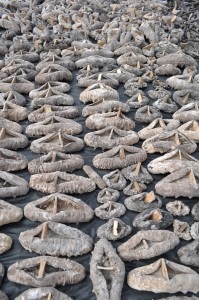
Larger species that are being held open with wood to help speed up the drying process.
As the Khaled bin Sultan Living Oceans Foundation researches the outer islands in Ha’apei, Vava’u, and Niua’s island groups, they are collecting information on the numbers and size of different sea cucumbers found on or near the reefs.
“Since most of these surveys are from deeper water that can only be accessed on SCUBA, we hope to determine if healthy breeding populations remain that could help reseed shallow areas being targeted by sea cucumber fishers,” states the Foundation’s Lead Scientist, Andrew Bruckner, Ph.D.
Additionally, the education team is providing outreach to community and school groups about the importance of sea cucumbers in the coral reef ecosystem.
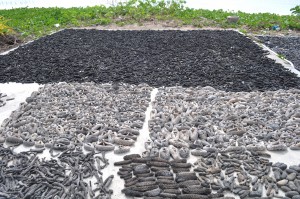
To maintain the beche-de-mer exports as a sustainable industry for both the sea cucumber populations and economic development is a tough line for many governments to draw. Without effective and consistent data being provided and collected it is an uphill battle for both the communities and governance of the fishery. It is the hope that data collected by the Living Oceans Foundation will be effective in the management of this important, yet delicate fishery.
To read more about sea cucumbers in Fiji read these past blogs:
- http://www.sciencewithoutborders.org/sea-cucumber-craze-part-1/
- http://www.sciencewithoutborders.org/sea-cucumber-craze-part-2/
Photos: 1-4 Amy Heemsoth