Happy International Coastal Cleanup Day! Across the world people are cleaning up beaches in order to conserve and protect their coastlines and the precious marine ecosystems that line them.
While on the Global Reef Expedition in Tonga, the education team visited Mo’unga’one island. We provided an education seminar on coral reefs including the benefits and threats to reefs around the world and in Tonga. During the presentation, we explained how litter can cause damage to reefs as well as being detrimental to the many of the animals living there.
Beach Cleanup Protects Marine Ecosystems
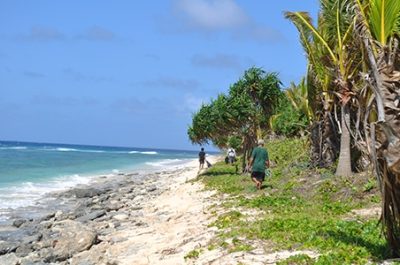
Cleaning up beaches in Tonga.
Often animals mistake litter for food and ingest it, causing health problems. They can also get tangled up in rope, plastic bottle rings, wire, etc. often causing death. We also mentioned that some plastics are believed to take hundreds or even thousands of years to degrade, and that some scientists even think that they may never break down.
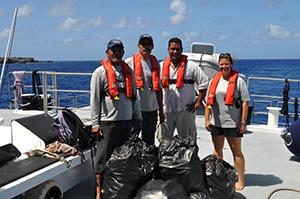
Education team members, Sione Mailau, Hoifua’ Aholani, ‘Apai Moala, and Amy Heemsoth, posing with the litter they collected during the beach cleanup.
Corals receive most of their energy from zooxanthallae or algae that live in their tissues. Zooxanthallae photosynthesize in order to create energy. If litter settles on top of corals, the zooxanthallae are unable to make food, and the coral will die.
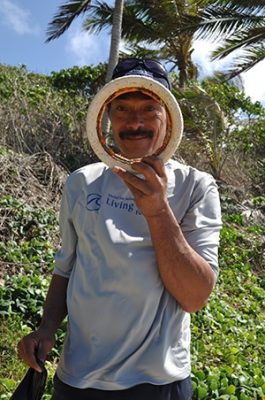
Beach litter: Hoifua’ Aholani holding up a photo of a tire found on the beach.
After the seminar, the education team put their words into action and coordinated an island beach cleanup in which the team and islanders participated as part of the International Coastal Cleanup.
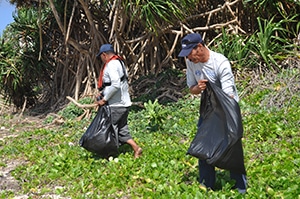
Sione Mailau and Hoifua’ Aholani picking up beach litter.
In one hour, seven large bags of trash were collected. Beach litter collected included fishing gear, floats and rope, plastic bottles, toothbrush, a tire, glass jars, food wrappers, bottle caps, and Styrofoam. The most common item that we found were flip flops and the soles of shoes, while Christmas tree icicles was the most interesting item that we found.
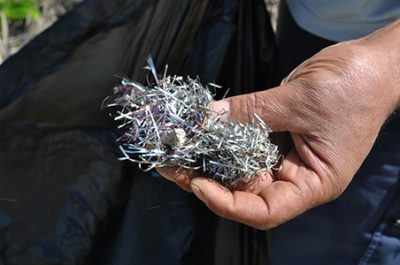
Christmas tree tinsel were the most interesting litter found during the beach cleanup.
All of the data collected will be put into the official registry on the Ocean Conservancy website.
For more information about the International Coastal Cleanup, visit their website at www.oceanconservancy.org.
Photos by: 1-5 Amy Heemsoth