search-icon
Traditional Canoes

Today the education team is headed to Kia Village on Santa Isabel Island to conduct a seminar on coral reefs. Due to rough sea conditions, it took us a long time to get to our location, but when we got there, we were completely mesmerized by this beautiful village. Stilted, thatched roof houses line the coastline of the island and the jungle-covered mountain rises almost straight up behind them. The houses, which are mostly build over the water, overlook small patch reefs.
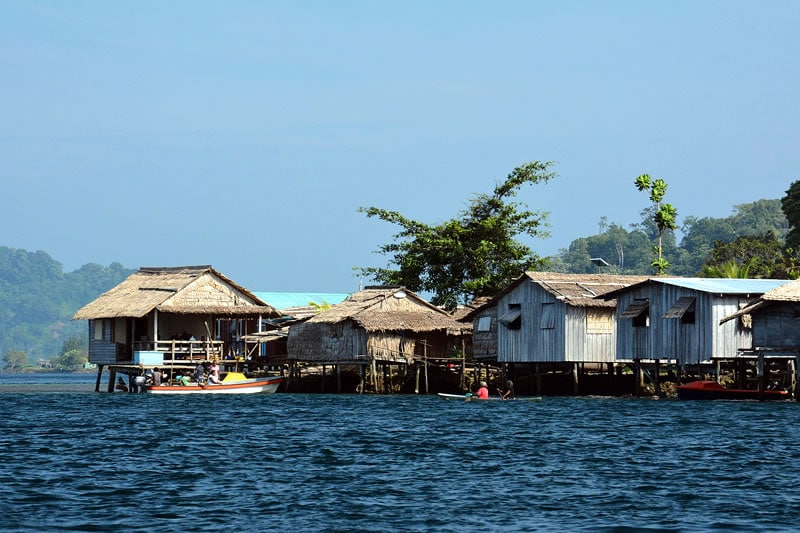
Kia Village, Santa Isabel Island, Solomon Islands Kia Village, Santa Isabel Island, Solomon Islands
Kia Village, Santa Isabel Island

This was the last week of school and students were either on vacation or taking end-of-year exams. Many of the students who were out of school enjoyed playing and cooling off in the water. Some tried balancing on floats while others zipped around in their dugout canoes.
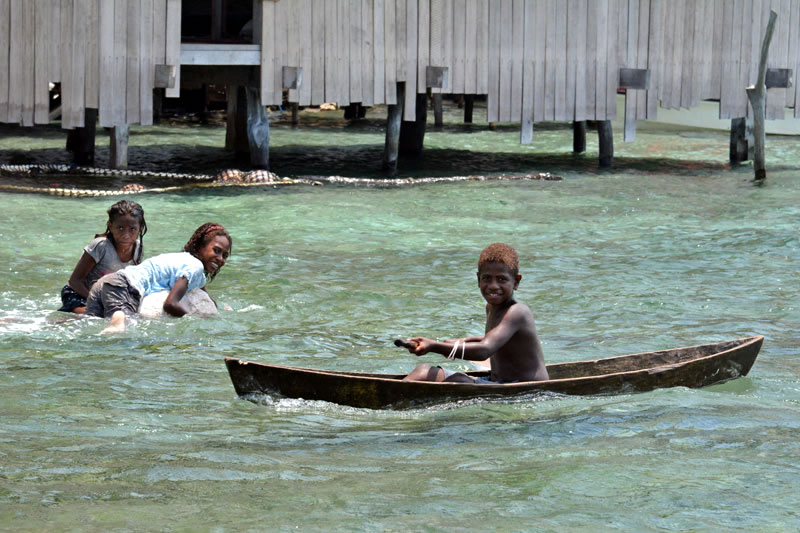
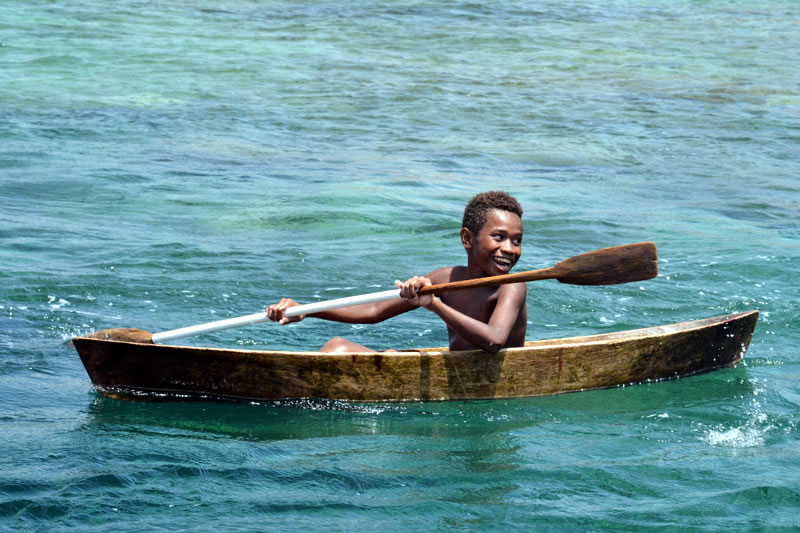
Kia Village Children Play in the Ocean Traditional Dugout Canoes of Solomon Islands
Children in Kia Village enjoying playing in the ocean.

Dugout canoes were traditionally used to travel between islands as well as allow people to fish in the ocean. A canoe is carved out of a single tree. There are different sizes of these canoes depending on the size of the tree. Some canoes are small—one fathom (6 feet)—and meant for children, while others can be as long as 4-5 fathoms in length carrying around 20 adults sitting side by side in pairs. Most of these canoes in the Solomon’s do not have an outrigger though some do have sails.
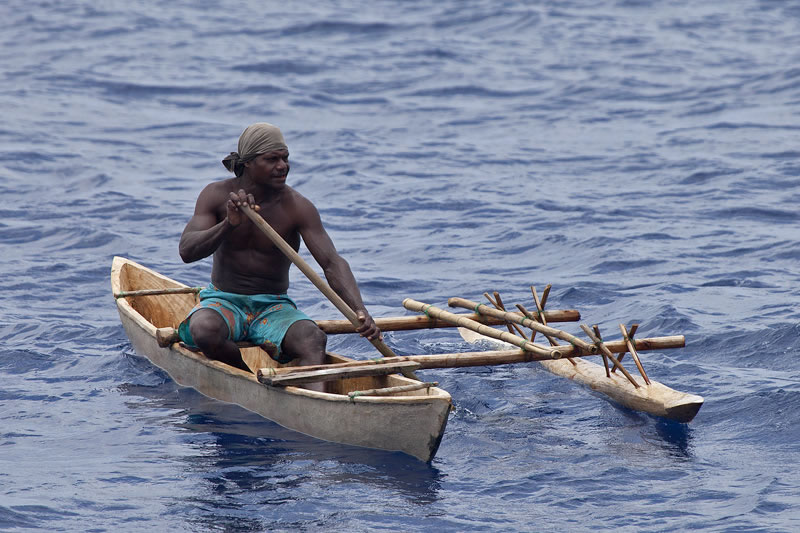
Kia Village traditional dugout canoe with outrigger. Kia Village traditional dugout canoe with sails.
Canoe with outrigger (left) and one with sails (on right).

Solomon Islanders carve these canoes out of mature trees. A variety of woods are used. Each island in the Solomon’s has a different name for these canoes including: hola (Mailata Island), mola (Western Province), and nogo (Utupua Island).

Paddles are used to propel the canoes through the water. They come in a variety of shapes and sizes. Some of the ends are more rounded while other are more square-like. Some paddles even have designs carved into them.
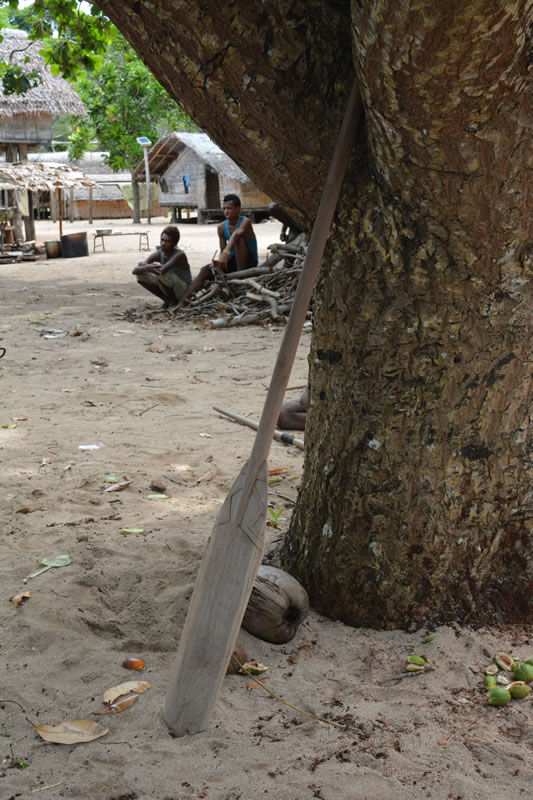
Kia Village local traditional dugout canoe paddle with rounded end.
Local paddle with rounded end.

Today, dugout canoes are still used for the same purposes. Daily, we see men, women, and children handlining for fish and people transiting to other islands using their dugout canoes. In Kia Village, some young boys were racing after our boat trying to keep up with us. They were riding in our wake giggling as they tried to catch up to us. When they could no longer keep up, they sat in their canoes waving to us and saying goodbye. The boy’s sendoff was the perfect way to end a fulfilling day.
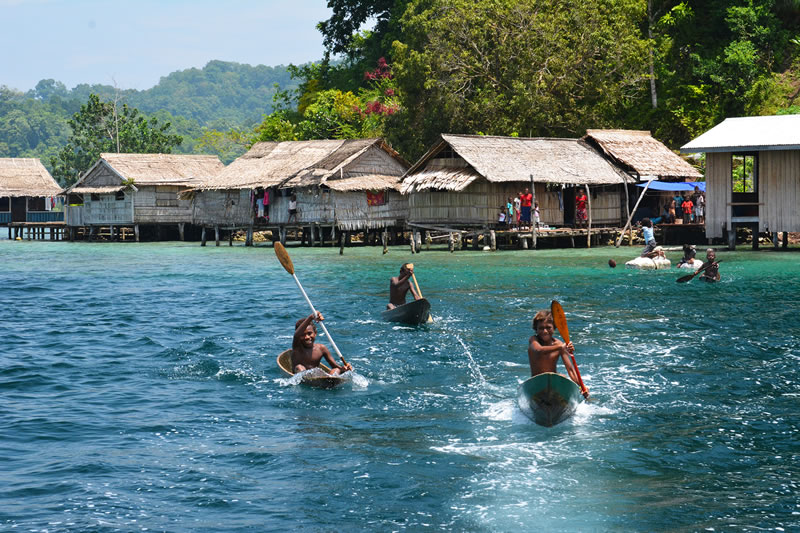
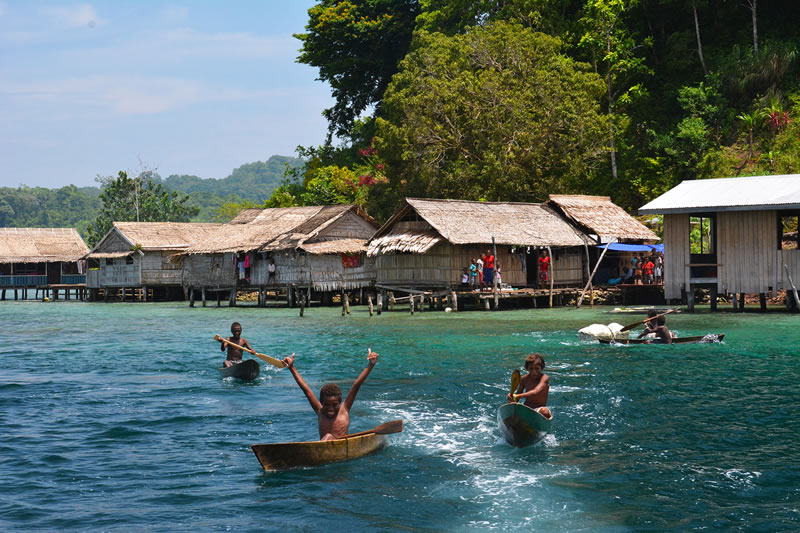
kia-village-boys-canoeing-after-the-boat-1 Kia Village boys canoeing after the boat.
Young boys chasing after the boat.

Photos: Amy Heemsoth 1a, 1b, 2a, 2b, 4, 5a-b; Ken Marks 3a, 3b


For more images of local villages and communities of Solomon Islands, visit our Topside Photo Album

topside-gallery

Related Posts

Introducing Our New Website: A Fresh Look for the Foundation’s Future

As we celebrate the Khaled bin Sultan Living Oceans Foundation’s 25th anniversary, we are proud to unveil our newly redesigned website—a modern home for our science, conservation work, and educational programs. This launch marks an important moment for the Foundation as we honor our long history and look toward the future of ocean conservation.

For more than two decades, the Foundation has worked tirelessly to improve the health of our living oceans. We have advanced ocean science, led one of the largest coral reef research missions in history, restored mangrove forests with local communities, created award-winning education programs, and shared the wonders of the ocean with people around the world. Our new website reflects the organization we are today—focused on conserving coral reefs, restoring mangrove forests, and improving ocean literacy—while still highlighting the legacy of work that brought us here.

The redesigned site…

Read More

Connecting People, Art, and Oceans: Championing Conservation at the 2025 IUCN Congress

The IUCN World Conservation Congress brings together thousands of leaders and decision-makers from governments, non-profit organizations, civil society, Indigenous groups, and the private sector to shape global conservation policy and action. This influential gathering serves as a platform to share knowledge, build partnerships, and advance initiatives that protect our planet’s biodiversity.

As a member of the International Union for Conservation of Nature (IUCN), the Khaled bin Sultan Living Oceans Foundation was honored to take part in the Congress, joining a global community of leaders, organizations, and changemakers committed to protecting nature and advancing sustainable futures.

Read More
Privacy Overview

This website uses cookies so that we can provide you with the best user experience possible. Cookie information is stored in your browser and performs functions such as recognising you when you return to our website and helping our team to understand which sections of the website you find most interesting and useful.  You can view our complete Privacy Policy here.

Strictly Necessary Cookies

Most of our cookies are used to improve website security and reduce spam. These cookies should be enabled at all times. They also enable us to save your preferences for cookie settings.

3rd Party Cookies

This website uses Google Analytics to collect anonymous information such as the number of visitors to the site, and the most popular pages. Keeping this cookie enabled helps us to improve our website.