Expedition Log: Palau – Day 8
1998 was a bad year for coral reefs. In many parts of the Indian and Pacific Oceans an unprecedented coral bleaching event swept across the reefs, killing much of the coral. In some countries, up to 80% of their reefs lost all or most of their coral due to unseasonably high water temperatures during a particularly severe El Niño event.
In Palau, water temperatures were above normal for 5 months (June to November 1998), massive coral bleaching occurred, and some outer reefs were devastated, with over 90% mortality. The branching corals, especially species of Acropora, were hardest hit and large areas suffered total loss. In the ensuing years, their skeletons disintegrated into rubble. Massive corals, such as the key frame-building coral Porites lobata also bleached, but mortality was more patchy and often polyps at the base or perimeter survived. Bleaching was delayed in some species, although they succumbed during 1999 and 2000. Water temperatures did not return to their normal seasonal pattern until 2001.
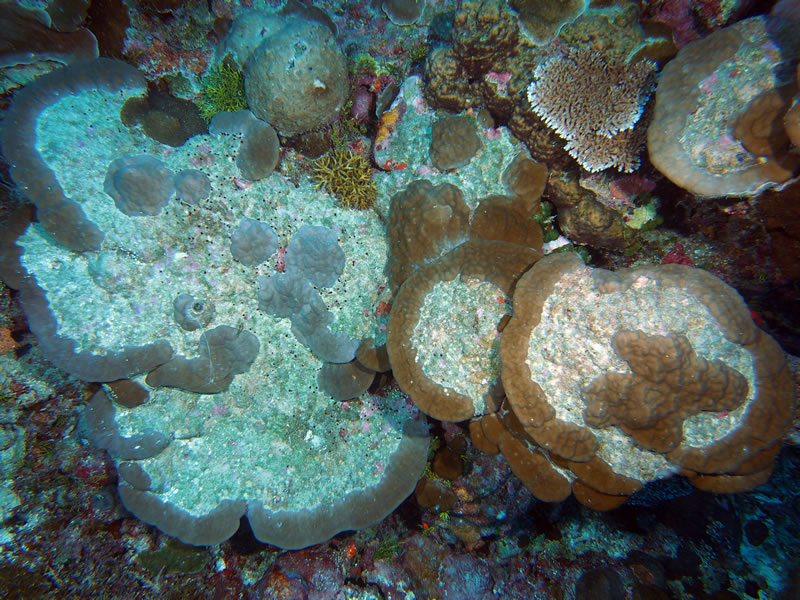
Regrowth of Porites after bleaching mortality.
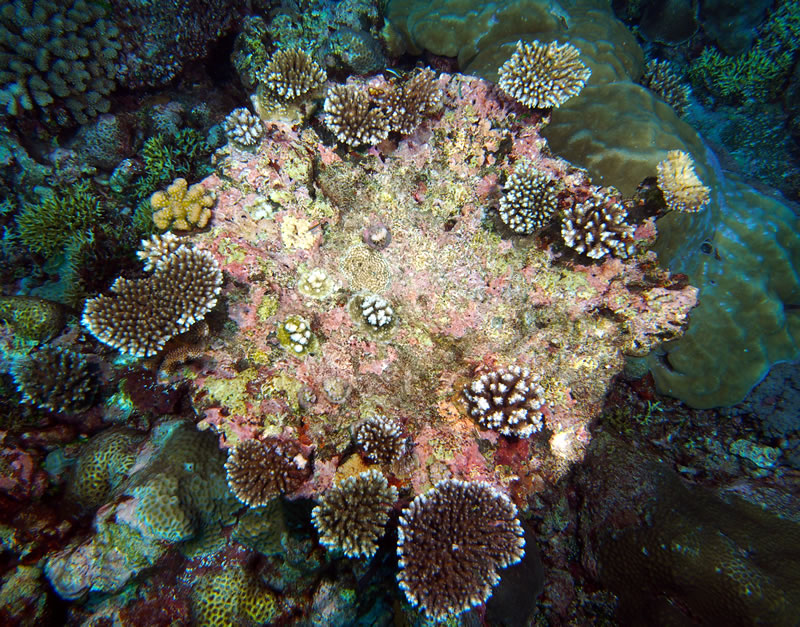
Pocillopora and Acropora recruits on dead table Acropora.
Scientists have used this event as a baseline against which to measure recovery. Fifteen years after the event, signs of coral bleaching are still visible in some locations, while other areas have shown dramatic recovery.
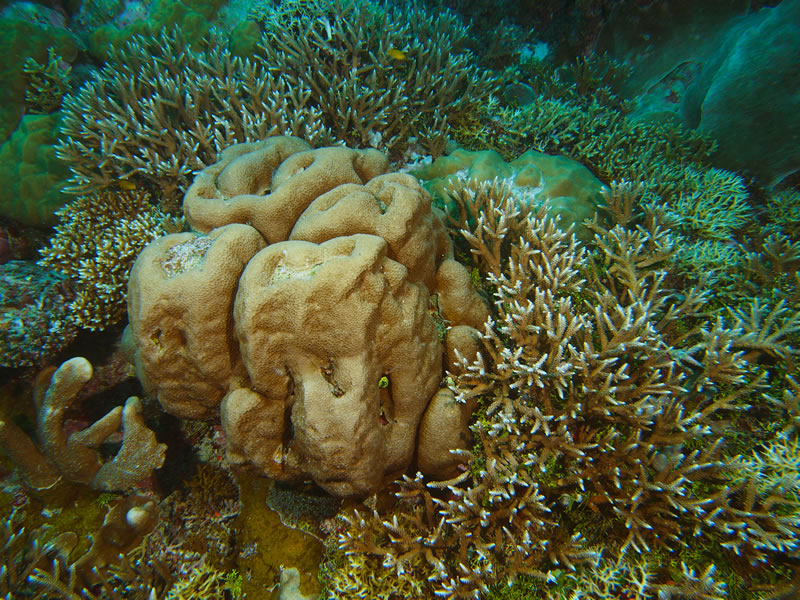
Staghorn thickets engulfing a massive Gardinoseris colony.
During our dives off the southwestern end of Palau, the fore reef slope was often dominated by two species of Porites (P. lobata and P. rus). Many of the colonies of P. lobata showed prominent signs of old mortality – the central portion of the colony had died and numerous other massive, plating and branching corals had settled on the exposed skeleton. In numerous colonies, the sides survived and remnants began to regrow, forming multiple lobes that extended upward 5-15 cm from the skeleton. These rarely resheeted over the entire skeleton, but they appeared healthy and actively growing. Between the massive corals were lush stands of branching corals, staghorn coral, bottlebrush acroporids, thin bird’s nest coral (Seriatopora) and other fragile corals. This remarkable pattern of recovery illustrates the high resilience of Palau’s reefs, as rapid recruitment and regrowth of the small tissue remnants that survived have caused the corals to rebound to their former splendor.
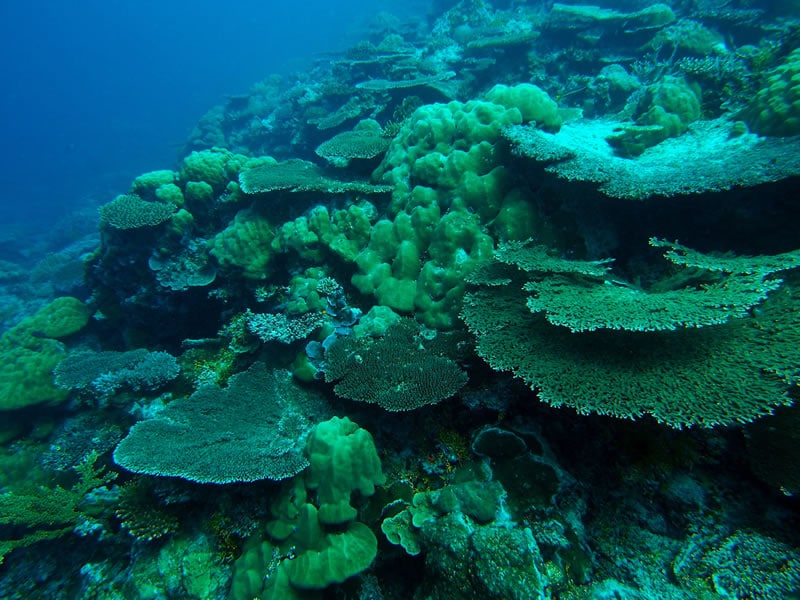
Healthy fore reef slope with large Porites lobata colonies and table acroporids.
All photos by Andrew Bruckner