search-icon
Addressing Acanthaster in Aitutaki

Expedition Log: Cook Islands – Day 1

Over the last four years, the Global Reef Expedition (GRE) has focused on the Pacific and Indian Ocean. These reefs are vastly different from Caribbean reefs, especially with regards to the numbers of species of corals, fish and other organisms. Yet, many of the large scale threats are similar – bleaching, coral diseases, overfishing and land-based pollution to name a few. One of the most pervasive and destructive threats to Indo-Pacific corals, absent from the Caribbean, is Acanthaster planci – better known as crown of-thorns starfish (COTS). In every Indo-Pacific country surveyed during the GRE we have identified reefs that have been devastated by COTS, and many more that are currently under attack.

Pacific Indian Ocean GRE sitesAitutaki Satellite Image
Locations we’ve examined in the Pacific and Indian Ocean during the GRE (left).
Satellite image of Aitutaki atoll (right).

We’ve mentioned these voracious coral predators (corallivores) in previous blogs. We have witnessed their destructive potential, seen active outbreaks spread through a reef system, and documented the extent of coral loss on affected reefs. We have also removed hundreds of these animals from certain reefs and in 2013 we attempted our first large scale removal from an entire atoll – Aitutaki – in the Cook Islands.
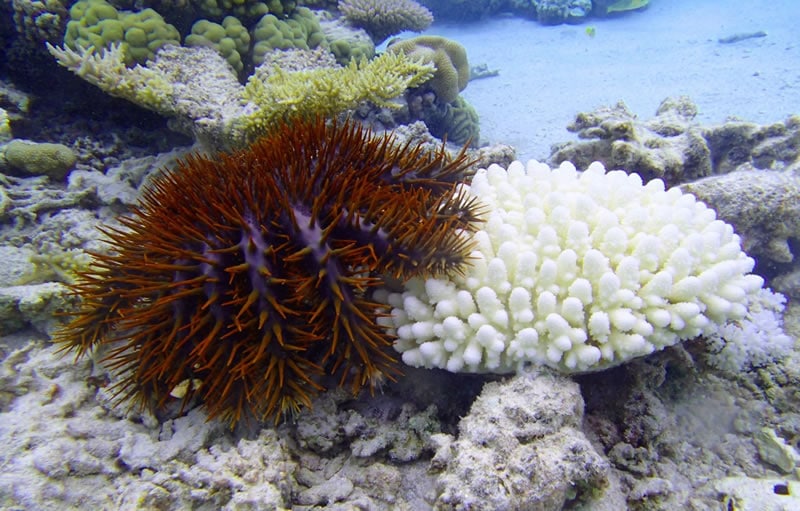
Aitutaki Acanthaster
Crown of thorns eating Acropora corals in Aitutaki.

As the Foundation completed baseline surveys and research during the GRE we have acquired a much better understanding of the current status of reefs, the threats that affect them, and factors that help them persist and recover following large scale disturbances. Over the next decade we will begin implementing programs to use our scientific knowledge to take action, through on-the-ground conservation and ecological restoration programs. The first of these is the Starfish Control and Removal Program (SCAR).

COTS Mortality
Badly damaged reef in Aitutaki during the original outbreak in 2013.

The SCAR program will expand our scientific understanding of COTS, mitigate damage through large-scale COTS removal efforts, and educate local communities, dive operators, resource management agencies and tourists in affected countries on the ecology of these starfish and techniques to control outbreaks.
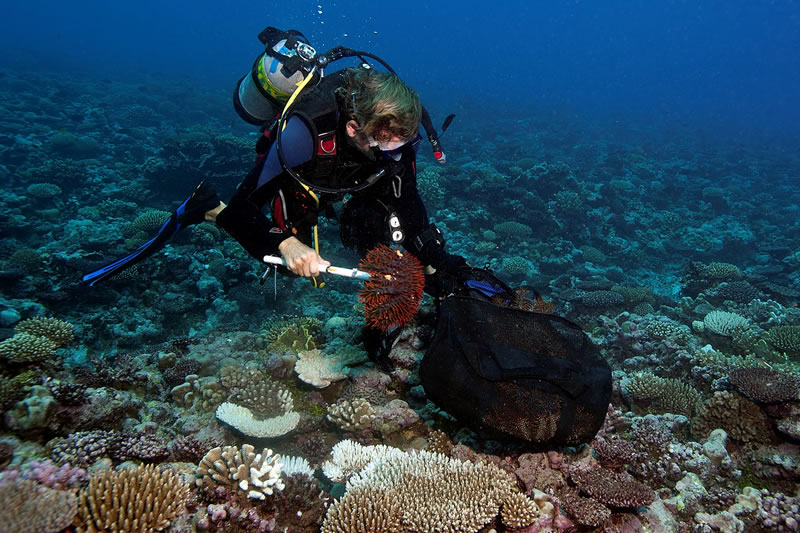
COTS Removal
Andy collecting crown of thorns.

Our pilot SCAR program has just begun. We have returned to Aitutaki two years after our initial removal effort. We are here to assess the extent of recovery in areas damaged by COTS, and to remove starfish from additional locations currently containing large numbers of these starfish. Through collaboration with the Ministry of Marine Resources, Aitutaki’s Traditional Leaders, Aitutaki Conservation Trust, and the Aitutaki Marine Research Centre, we hope to prevent additional impacts to Aitutaki’s reefs, while raising awareness of these deadly starfish.
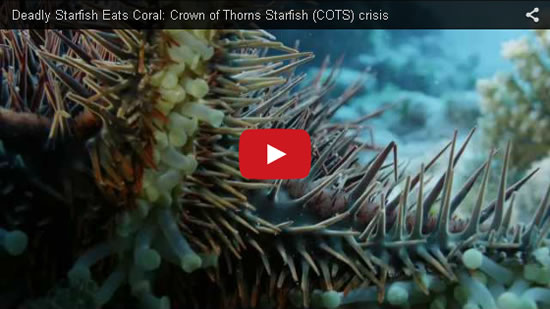
COTS video


Photos: 3,5 Ken Marks, 4 Andrew Bruckner.
Related Posts

From Dialogue to Action: Ocean Foundations Gather in Stockholm

What can philanthropy accomplish when foundations working across ocean science, conservation, and sustainable development come together around a shared purpose?

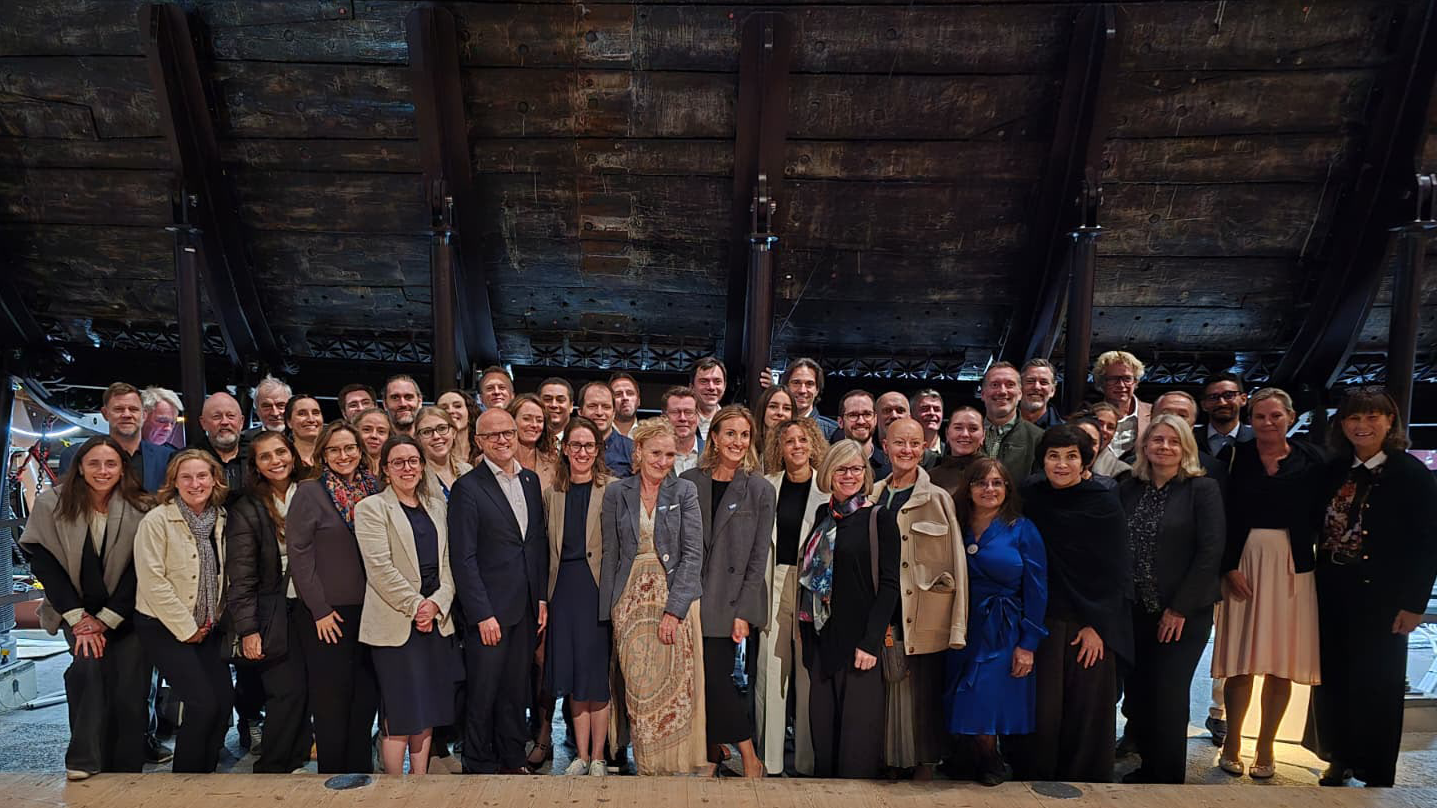
That question was at the heart of the 6th UN Ocean Decade Foundations Dialogue, held September 7–9 in Stockholm, Sweden. The Khaled bin Sultan Living Oceans Foundation joined philanthropic organizations from around the world for three days of discussion, collaboration, and planning focused on accelerating progress during the second half of the UN Decade of Ocean Science for Sustainable Development.

Facilitated by UNESCO’s Intergovernmental Oceanographic Commission (IOC), the UN Ocean Decade Foundations Dialogue is a growing network of more than 30 philanthropic organizations committed to advancing ocean science, collaboration, and action. Since its creation within the framework of the Ocean Decade, the Dialogue has provided foundations with a space to exchange ideas, develop partnerships, and explore how philanthropy can help advance a healthy and resilient ocean.

Hosted by the Voice of the Ocean Foundation (VOTO), this year’s gathering began with From Depth to Action, an Opening Forum that brought nearly 100 leaders from the Swedish and international ocean community together at…

Read More

Meet IFAN: Helping Bring Navigate with Care to the Next Generation

If you’ve ever seen a lighthouse flashing from the shore or a brightly colored buoy bobbing in the water, you’ve seen Aids to Navigation at work.

Aids to Navigation, often called AtoNs, help mariners navigate safely. They can mark channels, warn of hazards, help vessels determine their position, and provide other information people need to make safe decisions on the water. Around the world, these systems help guide everything from small recreational boats to large commercial or container ships. 

But safe navigation isn’t only about protecting vessels and the people aboard them. The choices mariners make can also affect the animals and ecosystems beneath and around them.

That connection between maritime safety and ocean conservation is at the heart of this year’s Science Without Borders® Challenge—and of our partnership with this year’s theme sponsor, the International Foundation for Aids to Navigation (IFAN).

Read More

Privacy Overview

This website uses cookies so that we can provide you with the best user experience possible. Cookie information is stored in your browser and performs functions such as recognising you when you return to our website and helping our team to understand which sections of the website you find most interesting and useful.  You can view our complete Privacy Policy here.

Strictly Necessary Cookies

Most of our cookies are used to improve website security and reduce spam. These cookies should be enabled at all times. They also enable us to save your preferences for cookie settings.

3rd Party Cookies

This website uses Google Analytics to collect anonymous information such as the number of visitors to the site, and the most popular pages. Keeping this cookie enabled helps us to improve our website.