Tonga Coral Education Program Blog (from October 21, 2015)
In Polynesia, an island group that includes Central and South Pacific island archipelagos, people have been passing down myths or legends by word of mouth for thousands of years. These oral traditions typically describe history during ancient times or the adventures of gods and ancestors. There are a variety of writing techniques used to tell the story including the use of personification, fables, and metaphors.
Polynesian oral traditions differ from country to country, island to island, within a country, or even village to village. The story often changes over time because it is not written down and because it serves a different purpose or lesson to be learned.
The story that I’m about to tell you differs from the one in Fiji, and probably many other Polynesian countries. It will likely continue to change as time passes. I came across this story in the primary schools where we have been working and our Tongan colleague helped us translate it into English. They are learning about this myth in school in order to preserve their Tongan culture. It is a unique story about the coexistence of sharks and humans.
The Battle of the Shark and Octopus
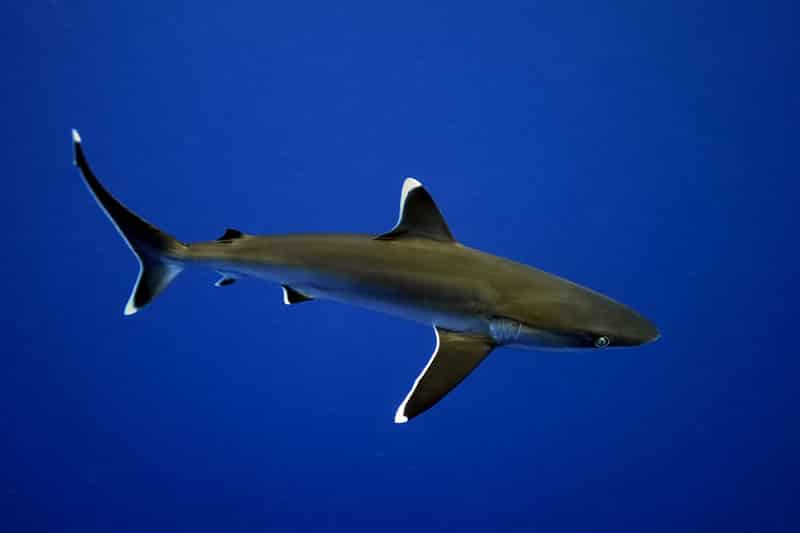
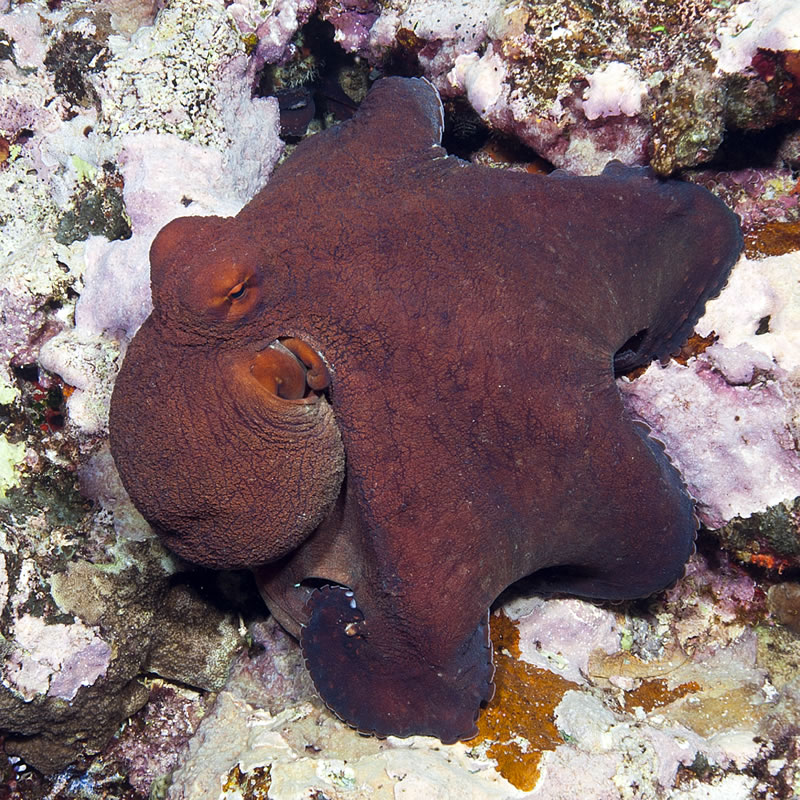
During the Dark Age, there was a Fijian god named Takuaka. He was one of the high gods in Fiji and he was the guardian of the reef. This god was brave, strong, fearless, and jealous of all of the other reef guardians. He was the best known of all of the gods that guard the reefs.
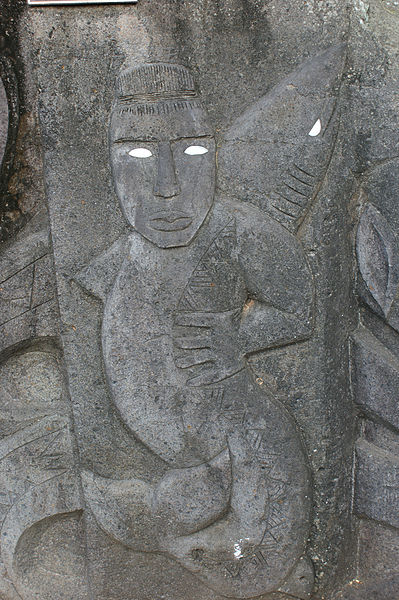
As a god, Takuaka could sometimes change into an ‘anga (shark), so that he can travel from island to island. He often turned into an ‘anga so that he could travel around defeating the other reef guardians.
One day, Takuaka went to the Lomaiviti Island group to challenge the guardians of the reef. He beat the guardians here quite easily. Then he decided to go to Suva. When he arrived in Suva, the guardian of this reef challenged him.
During the battle, the two creatures were massive and they generated large waves. The waves caused the rivers to overflow flooding the valleys for many miles inland. The seas also caused really rough seas and people were scared.
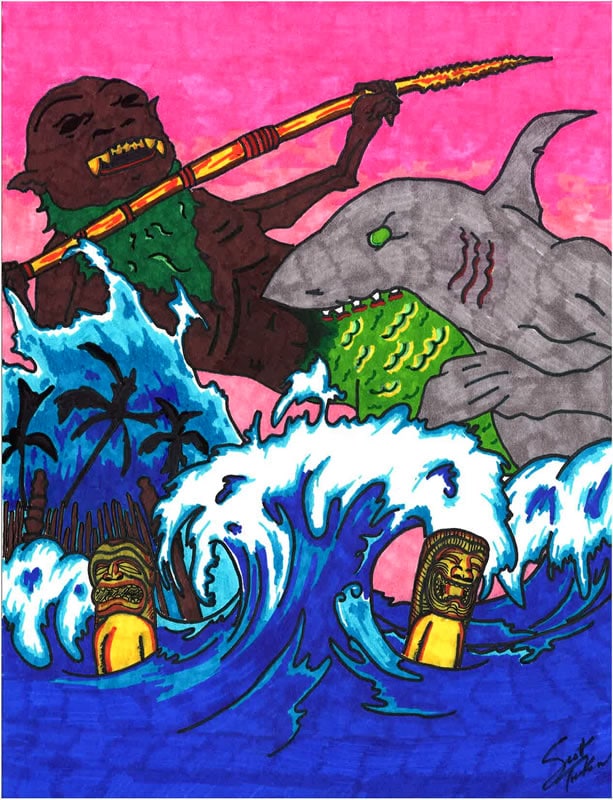
Takuaka challenges a reef guardian.
Takuaka won yet another battle. He continued challenging most of the other reef guardians and he won each battle.
One day, Takuaka met an old friend Masilata, another god. Masilata told him that there is a brave guardian that guards the Kamatuvú Islands. Tukuaka didn’t waste any time and he went to look for this guardian. He listened for the sounds of the reef and swam towards the sound. When he found the entrance to the reef, he saw a great big feke (octopus) waiting for him.
The feke had four tentacles that floated on the surface of the water, while the other four tentacles grasped the reef. Takuaka swam straight for the feke. The four floating tentacles wrapped around Takuaka and squeezed his body tightly.
In this moment, Takuaka could feel that the feke was really strong and he felt that death was upon him. For the first time ever, Takuaka admitted defeat.
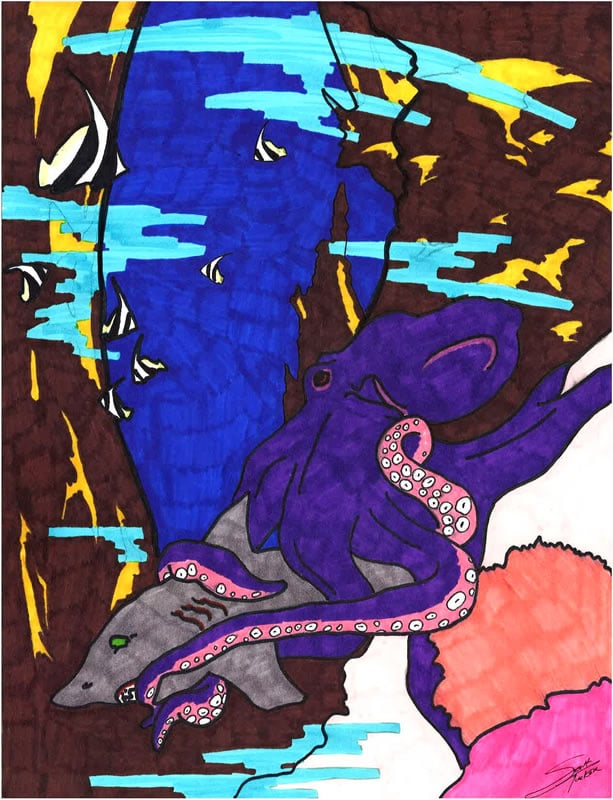
Takuaka is defeated by the feke.
He begged the feke, “Let go of me and I promise that I won’t harm any people for the rest of time.”
The feke let go of him.
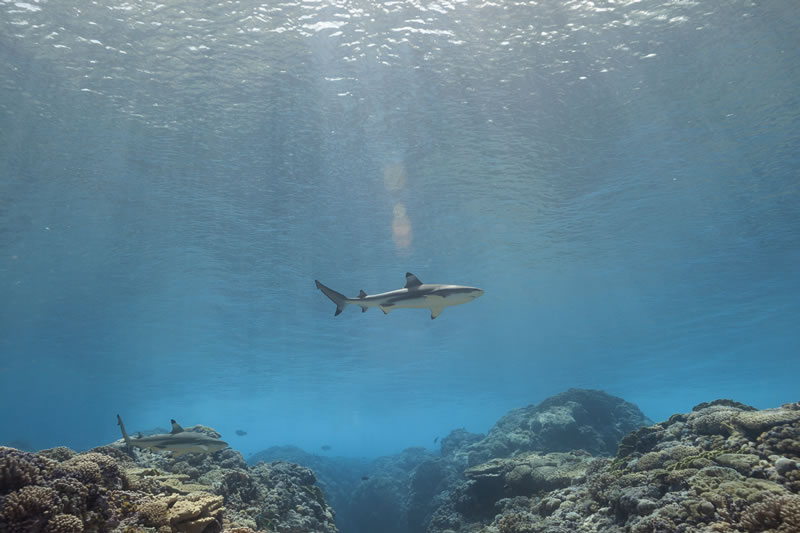
Still to this day, the ‘anga keeps his promise. People of Kamatuvú can go to the ocean to swim or fish and they will not be harmed by any ‘anga.
For more Tongan myths, check out these blogs from our previous mission:
Photos: 1-2 by Ken Marks, 3 By dustinpsmith [CC BY 2.0], via Wikimedia Commons, 4 ©Michele Westmoreland/iLCP.
Artwork courtesy of Scott Tucker.