
search-icon
My Experience with J.A.M.I.N

Jamaican high school student, Javar Barnes, chronicles his JAMIN experience learning about Jamaican mangroves through participating in the Foundation’s Jamaica Awareness of Mangroves in Nature (J.A.M.I.N.) program.


Mangrove Education and Restoration Program Blog

My experience with the J.A.M.I.N. (Jamaica Awareness of Mangroves in Nature) Project has been great, and very informative. This project has given me knowledge about mangroves and the animals that live there.
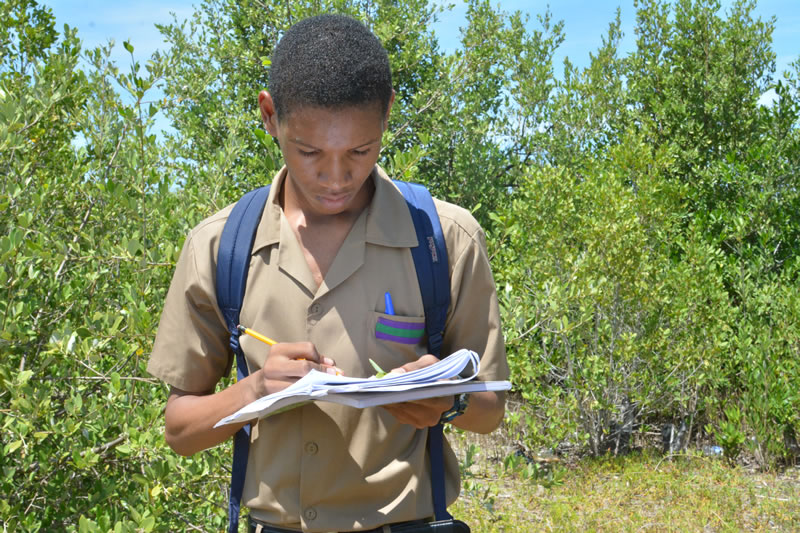
Tenth grade Biology student, Javar Barnes sketching a white mangrove leaf in his Mangrove Journal during a mangrove field trip
Tenth grade biology student, Javar Barnes, sketching a white mangrove leaf in his mangrove journal during a mangrove field trip.

It has been a great privilege and delight to see and interact with the animals from the mangrove forest. Some of the organisms brought in by the J.A.M.I.N. team included fire worms, sea cucumbers, sea slugs, sea stars, sea urchins and the sea sponge. It was interesting to hear facts about these animals and their habitats.

I was intrigued by the number of animals that live in the mangrove ecosystem. My favourite organism is the sea cucumber because of its ability to discharge its intestines whenever it feels threatened. The presence of these intestines, which can be very sticky, tends to deter predators. It is able to regenerate its intestines over a period of time. These creatures are decomposers belonging to the Phylum Echinodermata. They have soft bodies, and are ocean dwellers, living on or near the sea floor. Sea cucumbers feed on algae, other microscopic organisms like zooplankton and phytoplankton and waste materials. They feed through tube-like structures surrounding their mouths. One important contribution to the ecosystem is that they move along the ocean floor sucking up sand and debris; they are equipped with tube feet that allow them to effectively carry out this role.
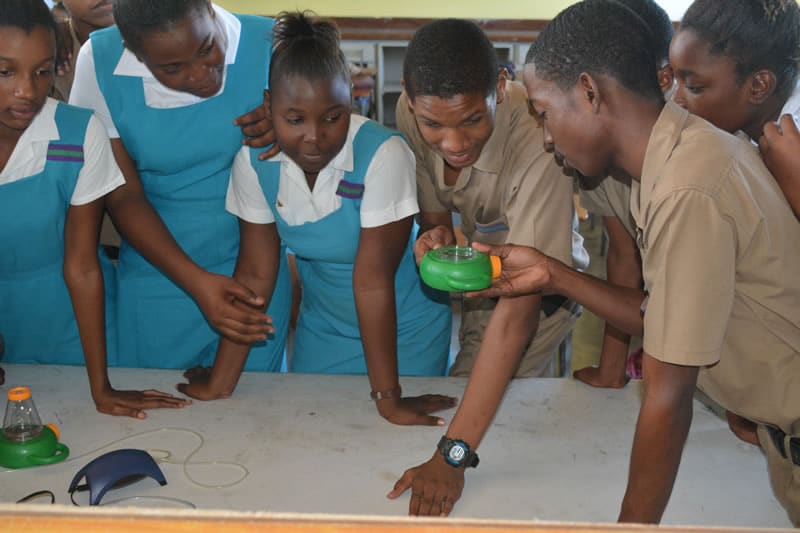
William Knibb High School students looking at a sea slug in the microviewer
William Knibb High School students looking at a sea slug in the microviewer.

The knowledge that I gained from this project has helped me to better appreciate the contribution of each organism and the role they play in keeping a balance in the ecosystem. Mangroves are nurseries for most of these organisms and preservation is indeed necessary to continue the life cycle.

I would like to extend my appreciation to Ms. Amy, Ms. Shauna and Mr. Trench for the time and effort they have put into the introduction of the J.A.M.I.N. Project. Thank you all.
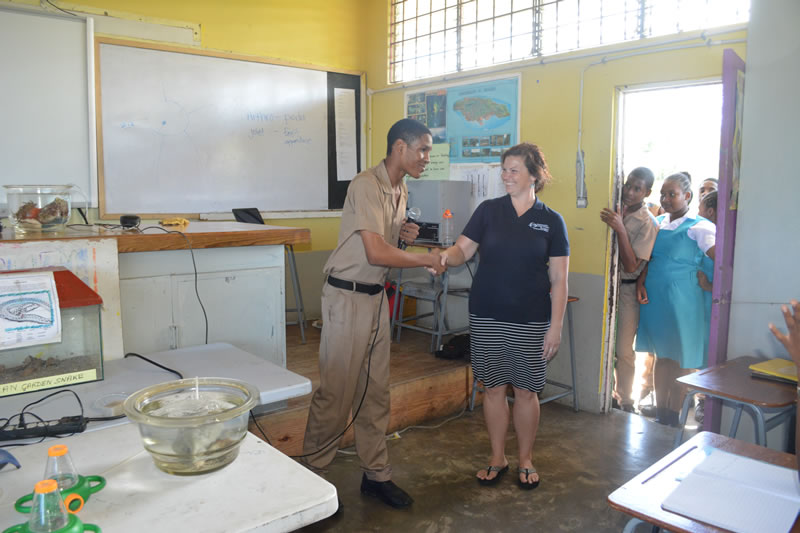
Javar Barnes thanking us for our ongoing commitment to teaching the students
Javar Barnes thanking us on behalf of William Knibb High School and the tenth grade biology class for our ongoing commitment to teaching the students about mangroves.
 

Related Posts

Introducing Our New Website: A Fresh Look for the Foundation’s Future

As we celebrate the Khaled bin Sultan Living Oceans Foundation’s 25th anniversary, we are proud to unveil our newly redesigned website—a modern home for our science, conservation work, and educational programs. This launch marks an important moment for the Foundation as we honor our long history and look toward the future of ocean conservation.

For more than two decades, the Foundation has worked tirelessly to improve the health of our living oceans. We have advanced ocean science, led one of the largest coral reef research missions in history, restored mangrove forests with local communities, created award-winning education programs, and shared the wonders of the ocean with people around the world. Our new website reflects the organization we are today—focused on conserving coral reefs, restoring mangrove forests, and improving ocean literacy—while still highlighting the legacy of work that brought us here.

The redesigned site…

Read More

Connecting People, Art, and Oceans: Championing Conservation at the 2025 IUCN Congress

The IUCN World Conservation Congress brings together thousands of leaders and decision-makers from governments, non-profit organizations, civil society, Indigenous groups, and the private sector to shape global conservation policy and action. This influential gathering serves as a platform to share knowledge, build partnerships, and advance initiatives that protect our planet’s biodiversity.

As a member of the International Union for Conservation of Nature (IUCN), the Khaled bin Sultan Living Oceans Foundation was honored to take part in the Congress, joining a global community of leaders, organizations, and changemakers committed to protecting nature and advancing sustainable futures.

Read More
Privacy Overview

This website uses cookies so that we can provide you with the best user experience possible. Cookie information is stored in your browser and performs functions such as recognising you when you return to our website and helping our team to understand which sections of the website you find most interesting and useful.  You can view our complete Privacy Policy here.

Strictly Necessary Cookies

Most of our cookies are used to improve website security and reduce spam. These cookies should be enabled at all times. They also enable us to save your preferences for cookie settings.

3rd Party Cookies

This website uses Google Analytics to collect anonymous information such as the number of visitors to the site, and the most popular pages. Keeping this cookie enabled helps us to improve our website.