 The world’s oceans are changing at a drastic rate. Conservation efforts will be essential to thwart the decline of nearly all the ocean’s ecosystems, including coral reefs. Most of the negative impacts stem from humans, such as overfishing, pollution, habitat destruction, and climate change. Even though coral reefs occupy less than 1% of the world’s oceans, they host at least 25% of the marine species. Coral reefs are a complex ecosystem with many working parts, where each organism is essential for the longevity of the system. When a part of the ecosystem is disrupted, this can have widespread impacts. But through effective marine conservation, we can help to reduce these impacts on coral reefs.
Marine protected areas are a commonly used conservation method that many countries around the world have adopted to help manage their marine ecosystems. Marine protected areas (MPAs) can range from being small locally-managed conservation areas, to large internationally recognized protected areas such as Papahānaumokuakea National Marine Monument in the Northwestern Hawaiian Islands, the Great Barrier Reef Marine Park, and Marae Moana in the Cook Islands—the largest marine protected area in the world.
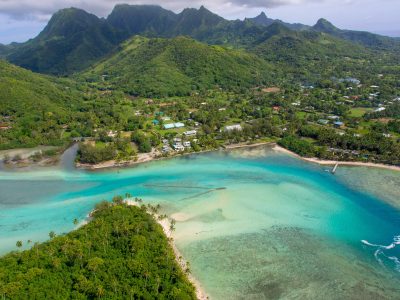
On the Global Reef Expedition mission to the Cook Islands, we assessed the condition of coral reef ecosystems surrounding three islands in Marae Moana Marine Park. The Marae Moana management plan primarily targets commercial fishing, prohibiting commercial fishing within 50 nautical miles of shore. Nearshore fisheries, which are target larger species of reef fish, are not currently regulated by the marine park, so communities in the Cook Islands have turned to traditional Māori conservation methods, such as establishing a ra’ui, to protect their reefs and nearshore fisheries.
In a ra’ui, chiefs and community leaders choose to set aside an area for conservation where regulations are agreed upon and implemented by the communities. The traditional ra’ui has been used and recognized as a locally managed coastal conservation method that protects coral reef areas to prevent overfishing or destruction of the reefs. The ra’ui is a system of traditional laws or “customary prohibitions” that mitigate the collection of resources for a defined period of time, often seasonally. In the Cook Islands, this was traditionally used on land, but more recently has been applied to nearshore marine environments. The ra’ui is typically policed by traditional leadership, the king, and social pressure, with punishment being enforced by the community.
Marine protected areas are important in conserving not just the reef ecosystems, but the traditions and livelihoods of the communities that rely on them. While large parks such as the Marae Moana play an important role in conserving ocean species, effectively managing nearshore ecosystems could potentially have more of an impact on the local communities. Using traditional management measures, such as ra’uis, allows the local communities to feel more involved and invested in the management of their marine resources, helping to protect their livelihoods for years to come.
Learn more
 For more detailed information on our work on coral reefs in the Cook Islands, read our latest publication, the Global Reef Expedition: Cook Islands Final Report.