The Khaled Bin Sultan Living Oceans Foundation (KSLOF) embarked on the Global Reef Expedition (GRE) to better understand the status of coral reefs around the world. On our mission to Palau in January 2015, we found the benthic communities to be in good condition and the reef fish communities to be comparable to the rest of the south Pacific countries surveyed on the Global Reef Expedition.
Over a five-week period, our team of scientists surveyed 85 different coral reefs, stretching from Angaur in the south, through the majestic reefs of the Rock Islands UNESCO World Heritage Site, all the way to Kayangel Atoll and Ngeruangel Reef in the north. The team explored barrier reefs, atolls, fringing reefs, reef channels, back reef environments and lagoonal patch reefs assessing the community dynamics and health of corals, fish and other benthic organisms.
©Keith Ellenbogen/iLCP 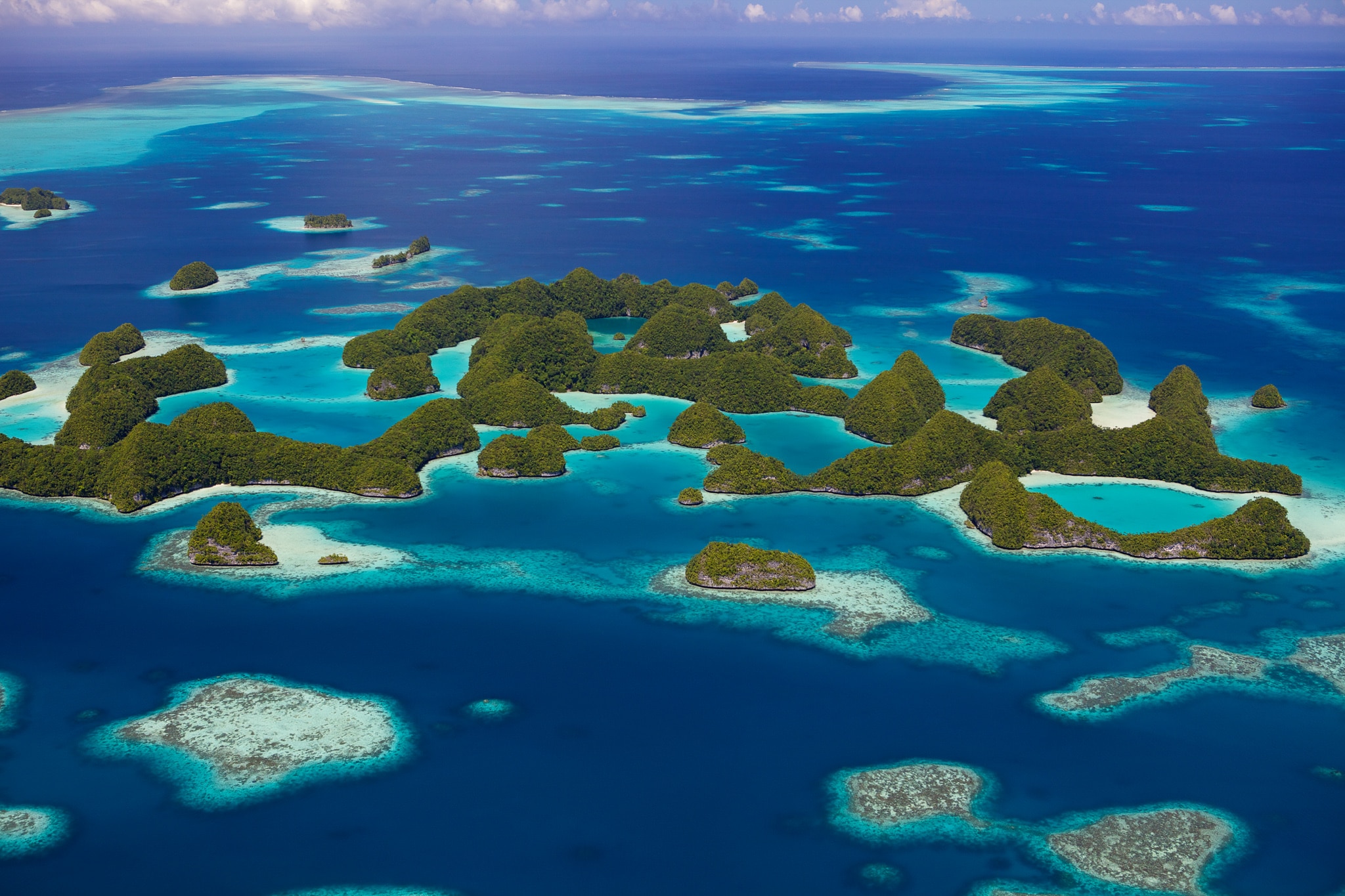
©Keith Ellenbogen/iLCP 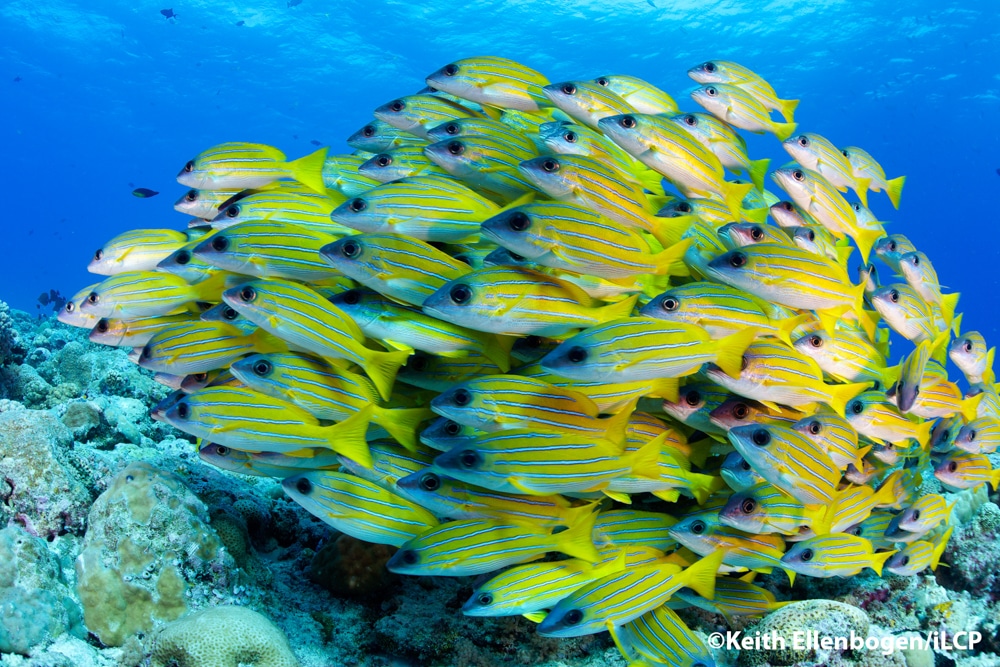
©Keith Ellenbogen/iLCP
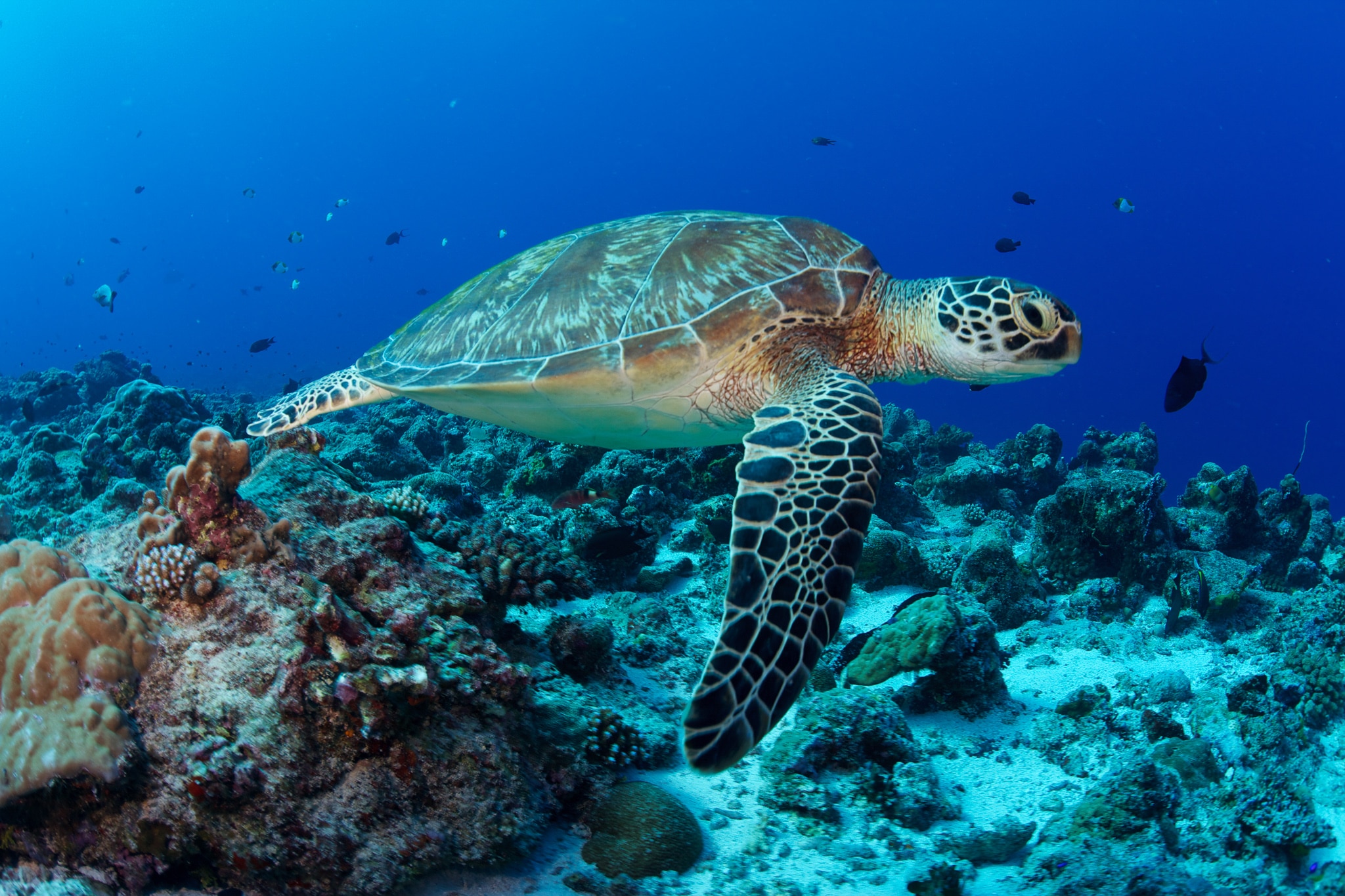
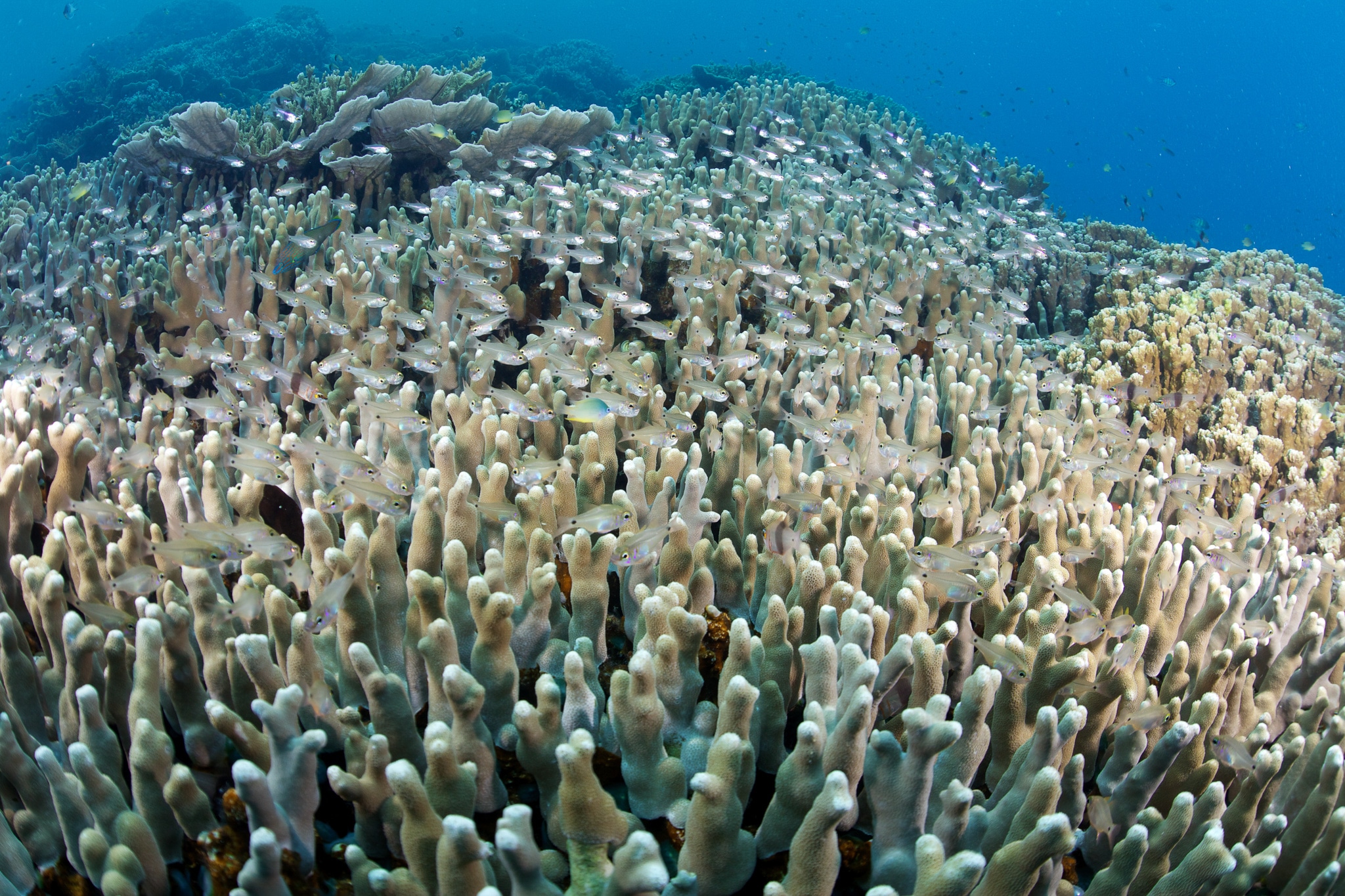
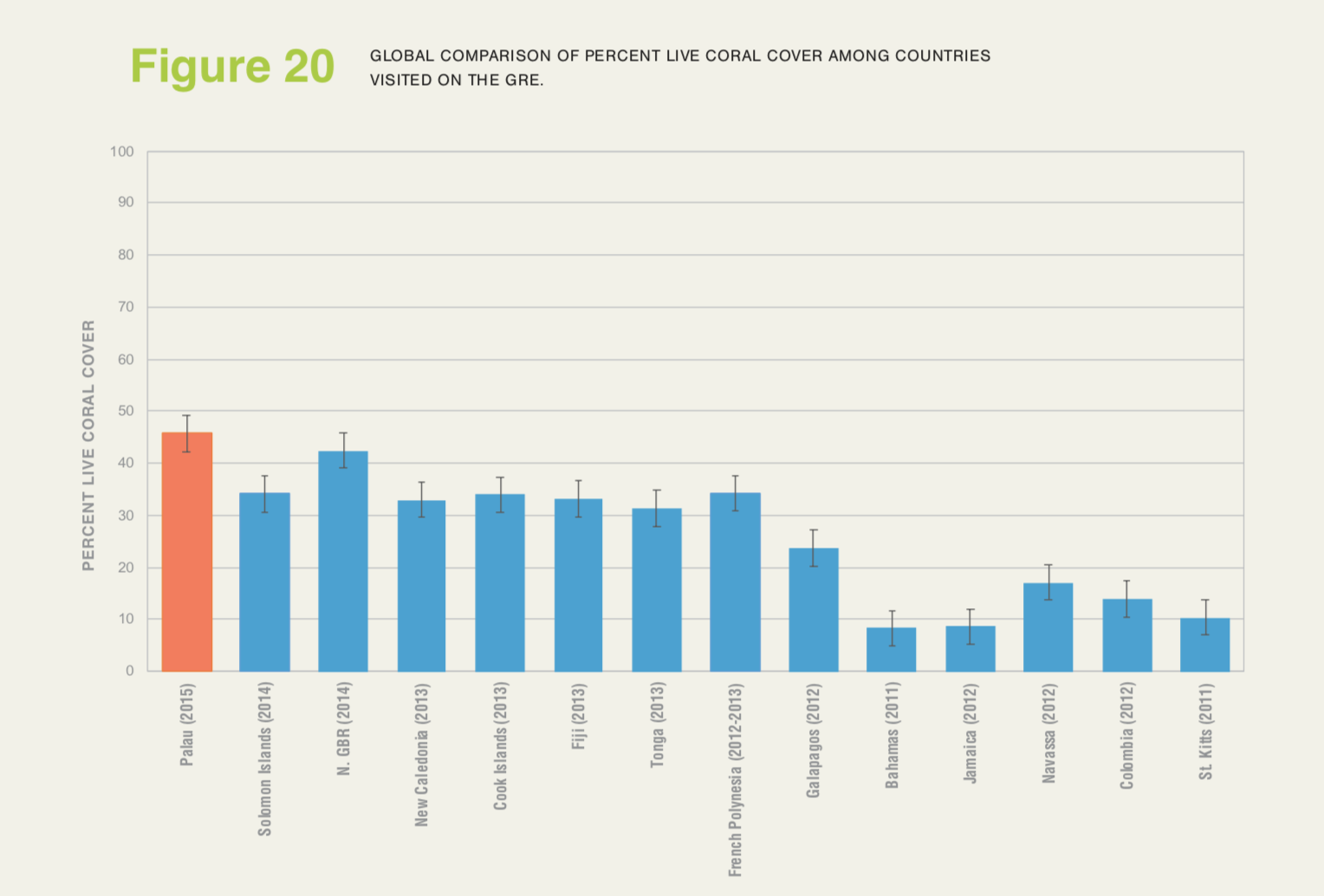
Perhaps what was one of the more striking takeaways from the mission was the incredible coral cover and diversity. Palau boasted over 40% live coral cover across all sites surveyed—the highest overall average live cover observed on the Global Reef Expedition. This meant that of all the benthos (sand, rock, rubble, etc.) recorded on the seafloor, over 40% was live coral. To put that number into perspective, when the GRE visited reefs in Fiji we recorded an average of just over 30% live coral cover. Even when compared to other locations that are well known coral hot spots, like French Polynesia and areas of the Great Barrier Reef, Palau’s live coral cover still appears to be unrivaled.
Coral diversity was also high across all states, with a slightly higher diversity being observed outside of the lagoon. Generally, live coral cover was slightly higher outside of the lagoon than inside, which is likely due to the inherent ecological differences of these to reef zones. The high live coral cover observed inside the lagoon was encouraging as it indicates there may be less stress on these reefs, possibly due to the successful establishment of many conservation areas.
©Keith Ellenbogen/iLCP 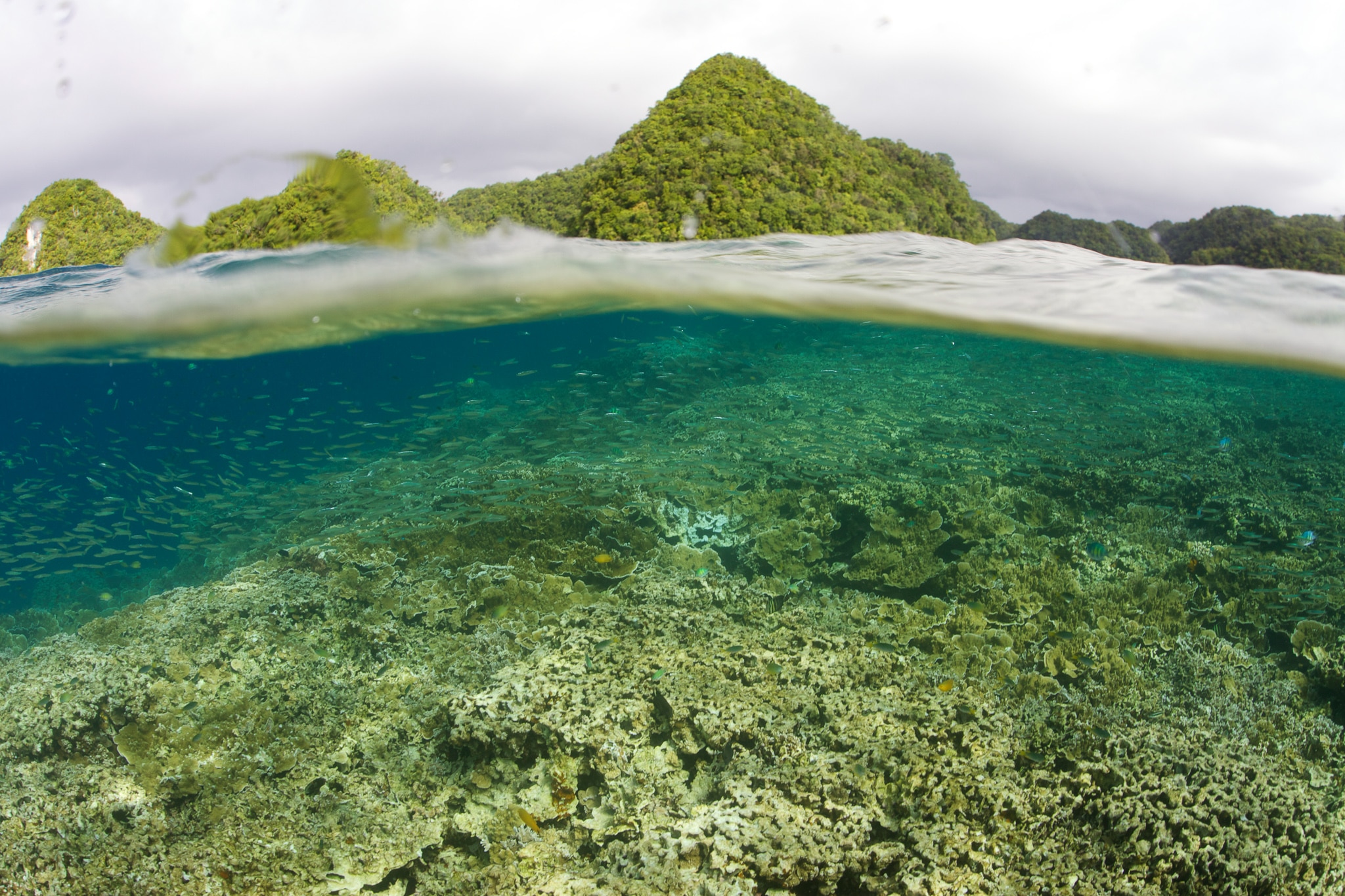
©Keith Ellenbogen/iLCP 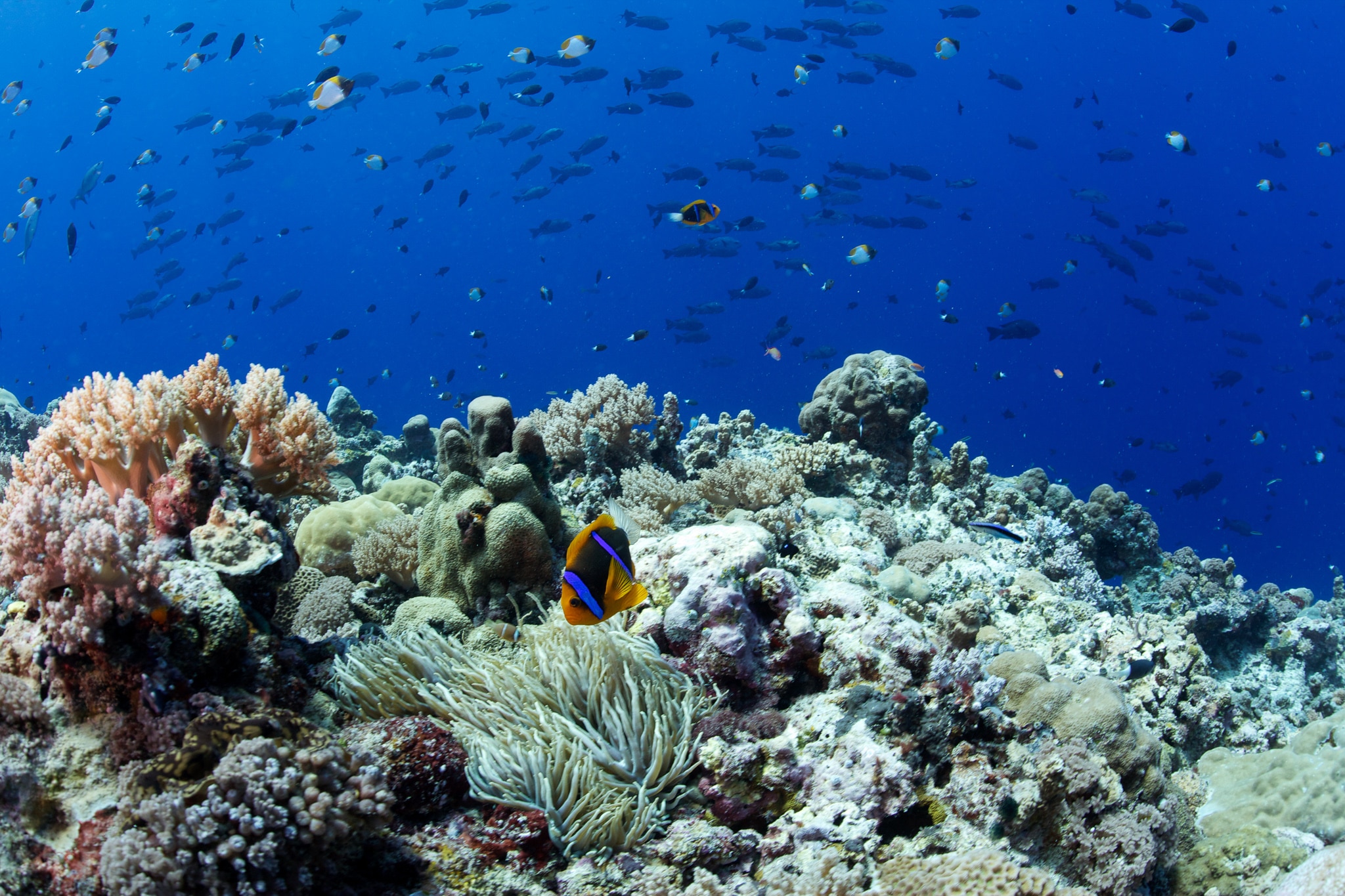
©Keith Ellenbogen/iLCP
It is worth noting that our study occurred prior to the global bleaching event in late 2015, when some of the highest coral bleaching was observed in other places in the Pacific, but not in Palau.
Palau’s myriad of different reef classifications as well as its unique geographical location near large upwelling events and strong currents that bring nutrient rich waters to shallower depths is the perfect recipe for a robust and lush coral reef community. As the ever-changing marine communities are heavily affected by climate change, we hope that Palau’s reefs continue thrive amongst the warming waters, but only time will tell.
The Study
To learn more about our findings from the Global Reef Expedition mission to Palau, read our latest publication: “Global Reef Expedition: The Republic of Palau Final Report.”