In addition to science, education and outreach are important components of conservation. That is why on many of the missions of the Global Reef Expedition (GRE), we used a three-pronged approach: science, education, and outreach. While on the Solomon Islands Expedition, the education team provided land-based education seminars throughout the Western, Choiseul, Isabel, and Temotu Provinces at schools and communities.
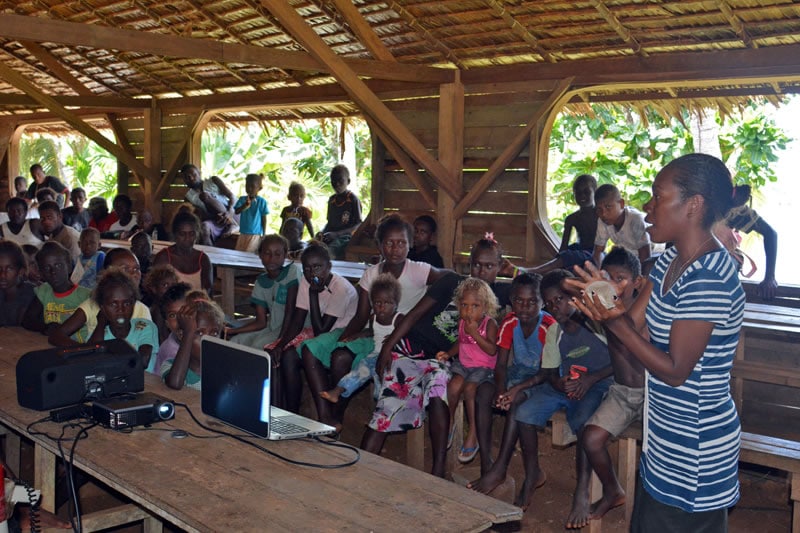
These educational efforts were conducted in partnership with local Solomon’s representatives from the Government of the Solomon Islands, a local Non-Governmental Organization (NGO) called OceansWatch, and local cultural liaisons. During the mission, schools were either taking exams or on holiday break, so the majority of the seminars were provided to communities where men, women, and children attended the talks. Overall, the Foundation conducted 4 school and 25 community seminars and 4 ship tours reaching a total of 2,891 people. This was the greatest number of people reached on any of the GRE missions.
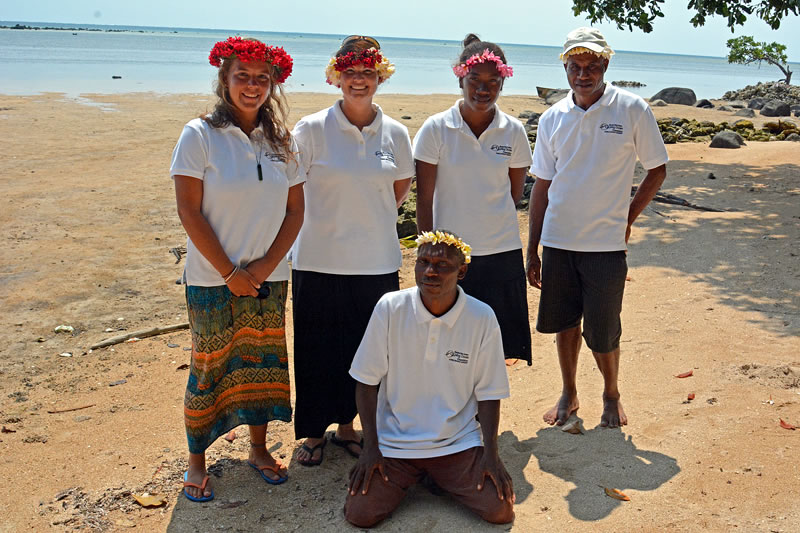
KSLOF Education Team in the Solomon Islands 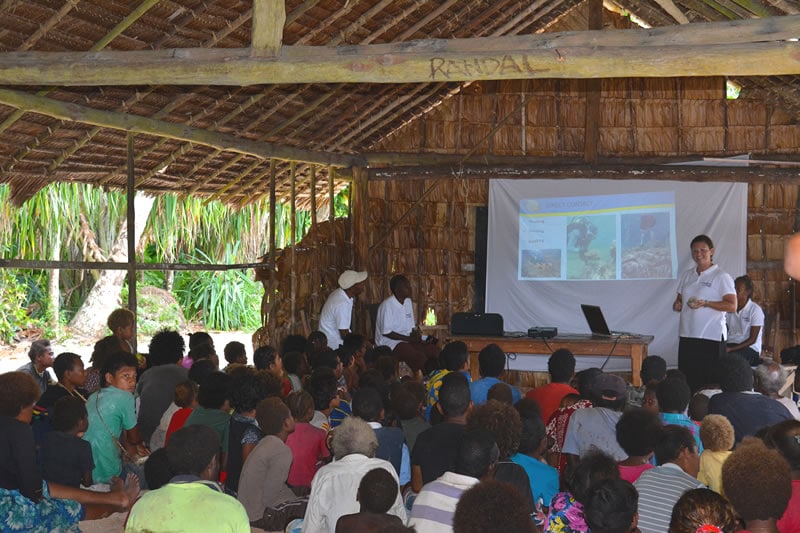
KSLOF Education Director presents coral reef seminar in Nemboa Village
The seminars focused on teaching islanders about corals, the threats to coral reefs, how people benefit from this ecosystem, and the what they can do to protect their coral reefs. Each seminar ended with a community discussion. Often it was the community chiefs and elders that would address the community and voice their concerns for protecting the coral reef. Here are some of the comments that were recorded:
“We are happy that you came to teach us about the marine environment as it is a huge part of our life.”
– Community member in Aveta Village
“If we don’t stop destroying our coral reefs, then the children wouldn’t ever see things like sea turtles again, except for in photographs.”
– Principal of a School in Nembou Village
“I didn’t know that humans could have such a negative impact on the reef. I want to try and control the activities on the reef so that we can help to protect coral reefs for future generations.”
– Elder in Malapu Village
“There is an issue with a lack of marine bylaws; however, they were happy that we came so that now they understand that we must protect the coral.”
– Elder in Asuboa Village
Our education programs were well received by the schools and villages. The communities expressed their interest in preserving coral reefs. Many suggested different actions that the community could pursue and asked us questions about how to implement them.
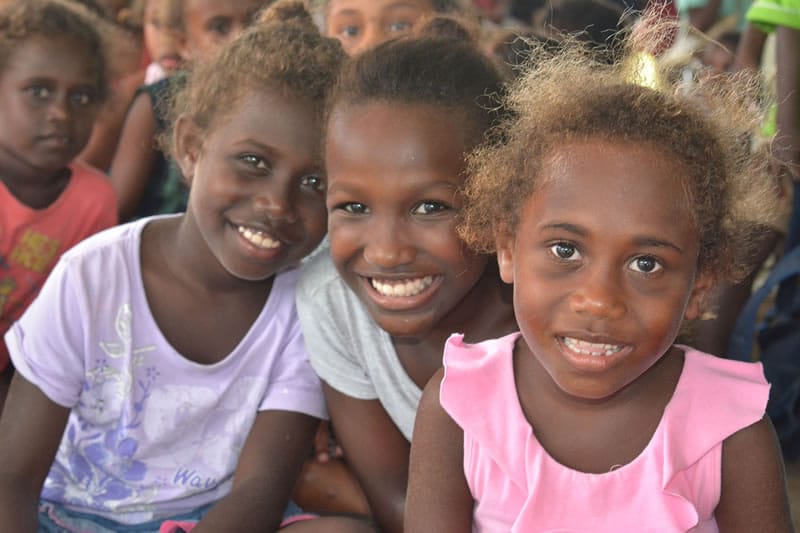
Solomon Islands Elementary Students 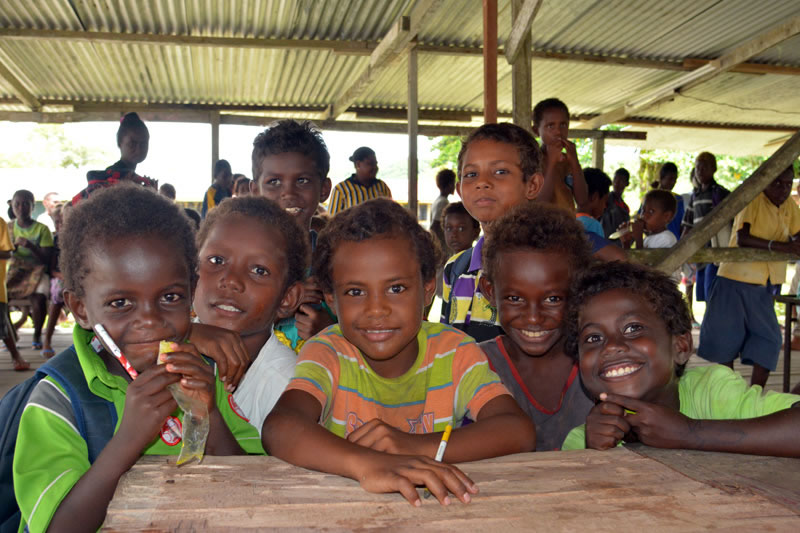
Primary students at Dunde School 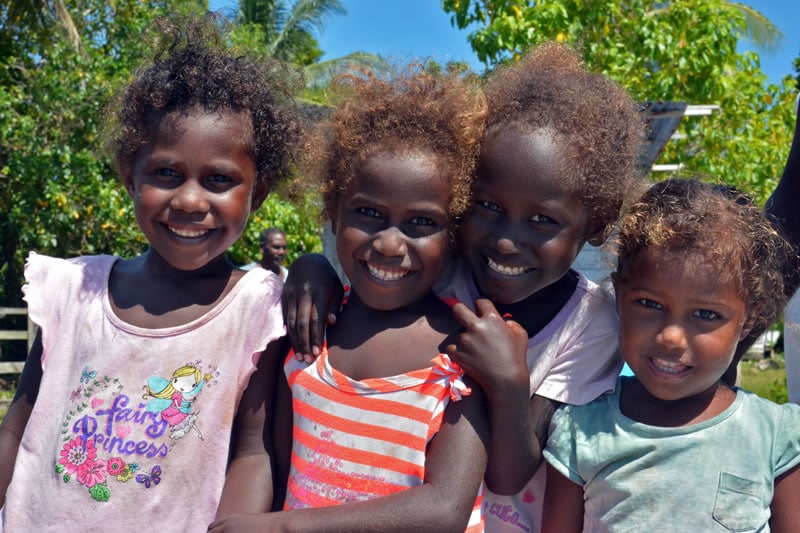
Students in Bareho Village
For more information about our scientific findings and recommendations to protect and conserve the Solomon Island’s coral reefs and coastal marine resources, see our latest publication, the Global Reef Expedition: Solomon Islands Final Report.
I would like to say a special thanks with Ms. Ivory Akao, a Fisheries Officer with the Ministry of Fisheries and Natural Resources. Ivory was on the entire month-long mission. Without her assistance and support, this education mission would not have been possible.