
search-icon
Meet Research Assistant Zachary Adams

Today’s guest blog comes from Zachary Adams, an undergraduate research assistant at the University of Miami working on our Protist Prophets project. The project, funded by the National Science Foundation, uses foraminifera found in sand samples we collected on the Global Reef Expedition to assess the long-term health of coral reefs.


My name is Zachary Adams, and I am one of the undergraduate research assistants at the University of Miami working on the Protist Prophets project. I am a sophomore studying Marine Science and Geology, and I am minoring in Geospatial Technology. I joined the project in October 2022 with no prior research experience. For most of the year, I picked foraminifera out of the project’s many sediment samples. I also learned how to organize and glue the forams for later identification and analysis, in addition to sieving and preparing the samples for picking. 
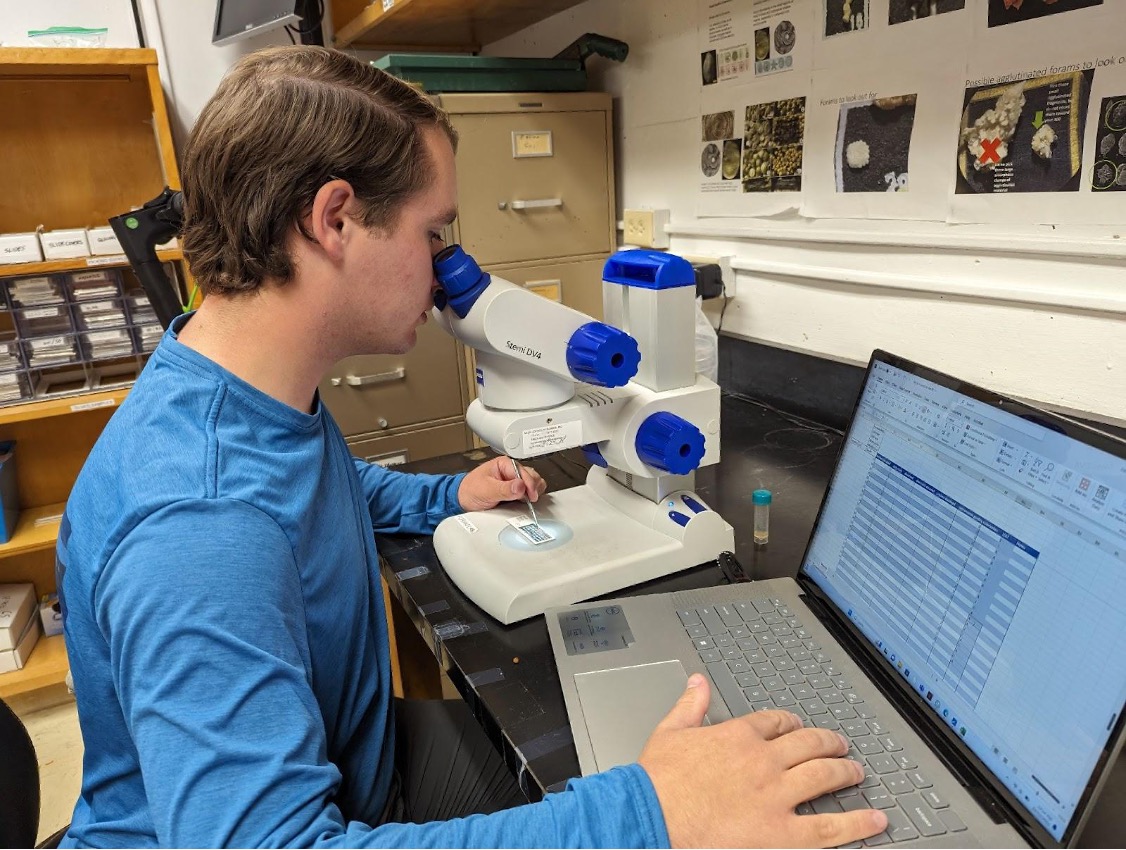
A typical day in the lab identifying genera and logging the conditions of the organism’s skeleton.

This year, my focus has shifted towards the research portion of the project. I work very closely with Dr. Alex Humphreys and Dr. Akos Kalman identifying and logging the foram genera and test conditions. As the project moves into the analysis phase, I am excited to explore what we can learn about tropical coral reef health from our dataset. 

I have been fascinated by the natural and geological world for my whole life, and I am very grateful for the opportunities which have allowed me to study this, especially this lab. Since I joined, I have become a more confident and competent scientist, and I look forward to what foraminifera are able to tell us about the health of coral reefs around the globe. 
Protist Prophets

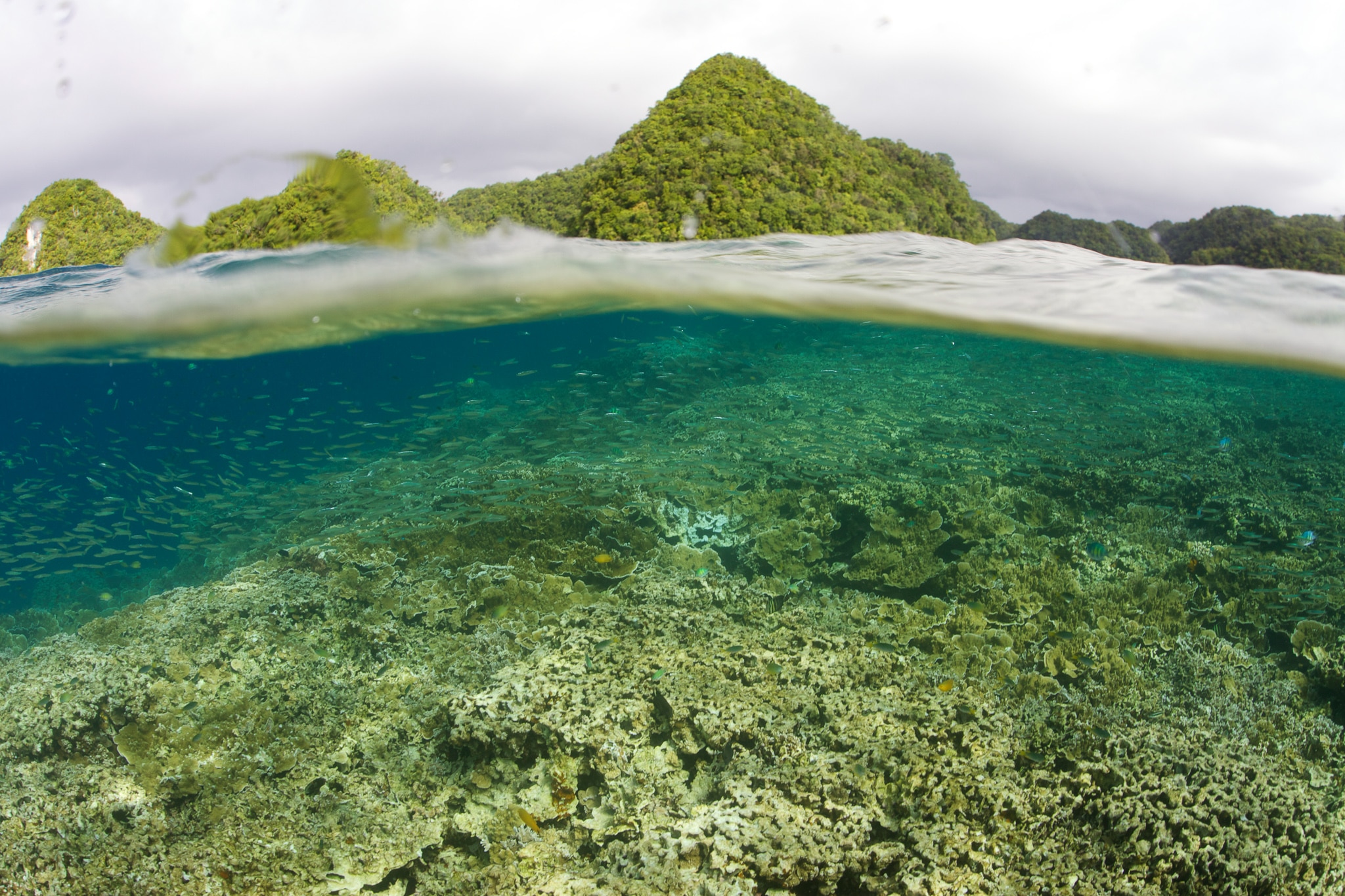
This project takes a microscopic look at seabed samples collected on the Global Reef Expedition to assess the state of the coral reef environment over time. The samples we collected should allow us to look back at the health of these coral reef ecosystems over the past 1,000 years.
Related Posts

Introducing Our New Website: A Fresh Look for the Foundation’s Future

As we celebrate the Khaled bin Sultan Living Oceans Foundation’s 25th anniversary, we are proud to unveil our newly redesigned website—a modern home for our science, conservation work, and educational programs. This launch marks an important moment for the Foundation as we honor our long history and look toward the future of ocean conservation.

For more than two decades, the Foundation has worked tirelessly to improve the health of our living oceans. We have advanced ocean science, led one of the largest coral reef research missions in history, restored mangrove forests with local communities, created award-winning education programs, and shared the wonders of the ocean with people around the world. Our new website reflects the organization we are today—focused on conserving coral reefs, restoring mangrove forests, and improving ocean literacy—while still highlighting the legacy of work that brought us here.

The redesigned site…

Read More

Connecting People, Art, and Oceans: Championing Conservation at the 2025 IUCN Congress

The IUCN World Conservation Congress brings together thousands of leaders and decision-makers from governments, non-profit organizations, civil society, Indigenous groups, and the private sector to shape global conservation policy and action. This influential gathering serves as a platform to share knowledge, build partnerships, and advance initiatives that protect our planet’s biodiversity.

As a member of the International Union for Conservation of Nature (IUCN), the Khaled bin Sultan Living Oceans Foundation was honored to take part in the Congress, joining a global community of leaders, organizations, and changemakers committed to protecting nature and advancing sustainable futures.

Read More
Privacy Overview

This website uses cookies so that we can provide you with the best user experience possible. Cookie information is stored in your browser and performs functions such as recognising you when you return to our website and helping our team to understand which sections of the website you find most interesting and useful.  You can view our complete Privacy Policy here.

Strictly Necessary Cookies

Most of our cookies are used to improve website security and reduce spam. These cookies should be enabled at all times. They also enable us to save your preferences for cookie settings.

3rd Party Cookies

This website uses Google Analytics to collect anonymous information such as the number of visitors to the site, and the most popular pages. Keeping this cookie enabled helps us to improve our website.