Mangroves are some of the most fascinating ecosystems on Earth. These magnificent trees are found in coastal areas in the subtropics and tropics. They are unique because they have adapted to living in seawater and other harsh conditions that most shrubs and trees wouldn’t survive.
If you’re a mangrove living along the coastline, one of your biggest challenges is getting oxygen. You may be thinking: if trees produce oxygen and take in carbon dioxide, why do they need oxygen? The answer is that, like all living organisms, trees need oxygen to survive. While trees do produce oxygen through photosynthesis, they also rely on oxygen for respiration, a process by which they convert the sugar they make into energy. This is similar to how animals and humans breathe in oxygen to fuel their bodies.
However, in the soil surrounding mangroves, oxygen is often scarce. This is called an “anaerobic” environment, meaning “without air” or oxygen. So, how do mangroves get oxygen from the soil when it is limited?
Mangroves have adapted to these harsh conditions by growing aerial roots – roots that extend above the ground or water. These aerial roots (also known as breathing roots) allow mangroves to exchange gases, including oxygen, with the air. This gas exchange happens through tiny openings in the roots called lenticels. They are like pores that allow oxygen to enter the roots from the air. If these roots are submerged underwater, the mangrove can close its lenticels to prevent water from entering.
Different species of mangroves have distinct aerial root structures. In the Caribbean, for example, the three types of true mangrove trees have different structures, which can also help identify each species.
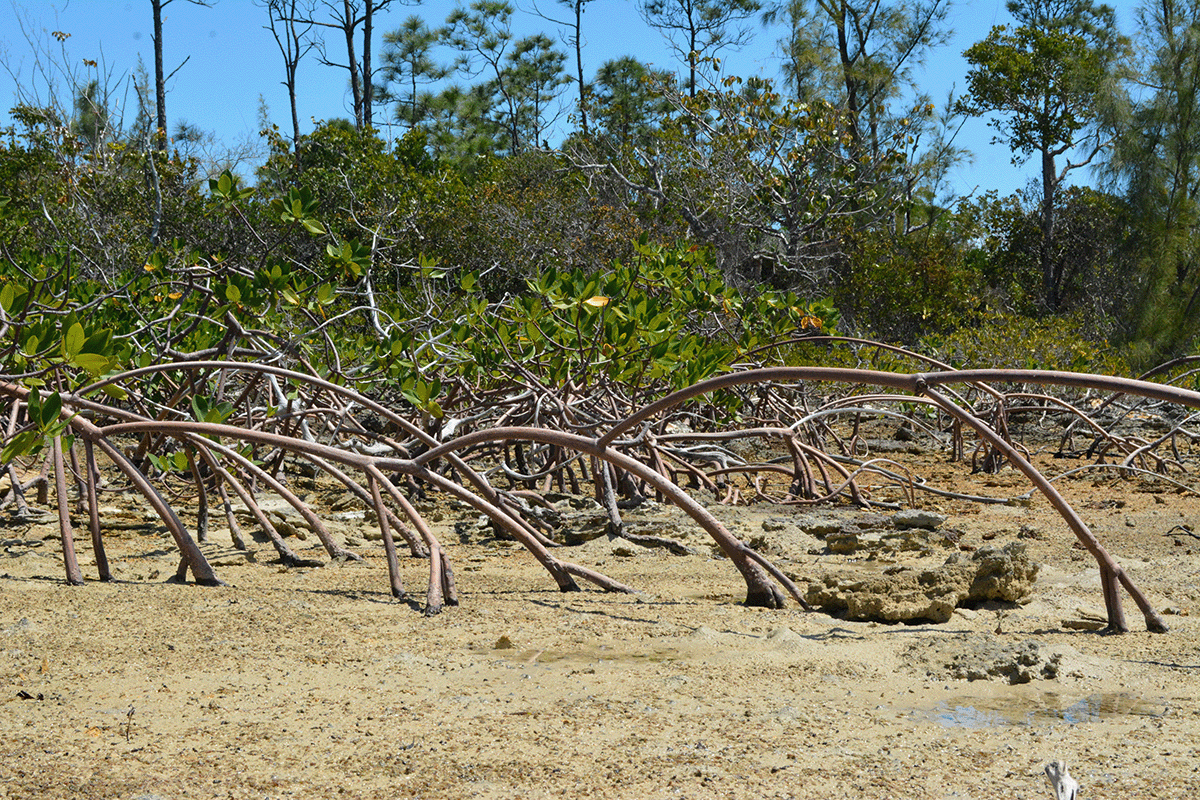
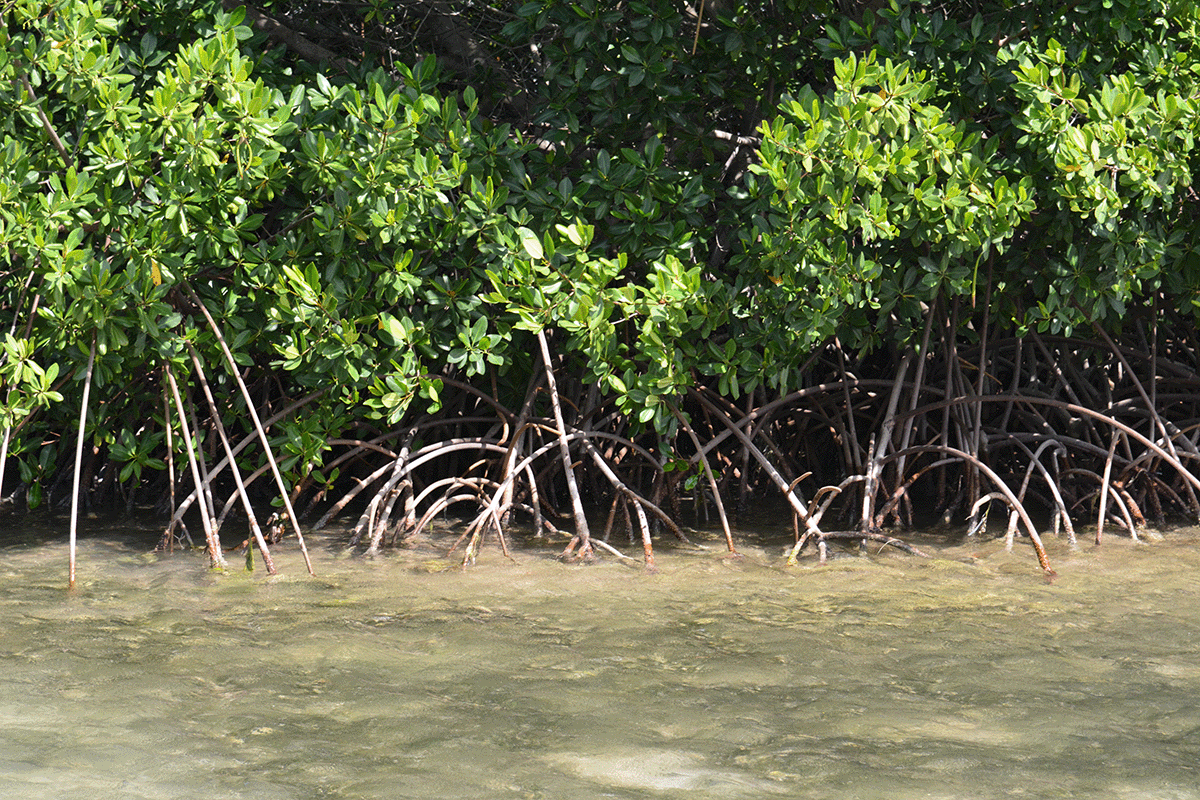
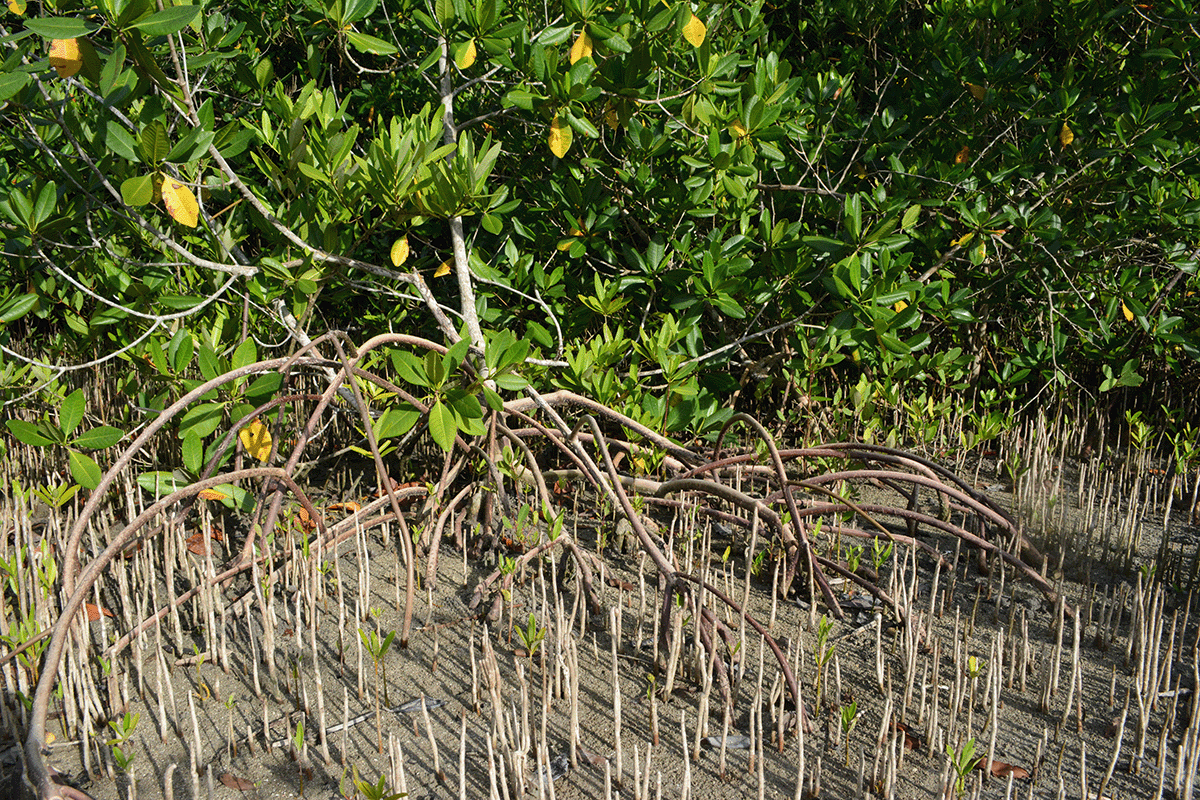
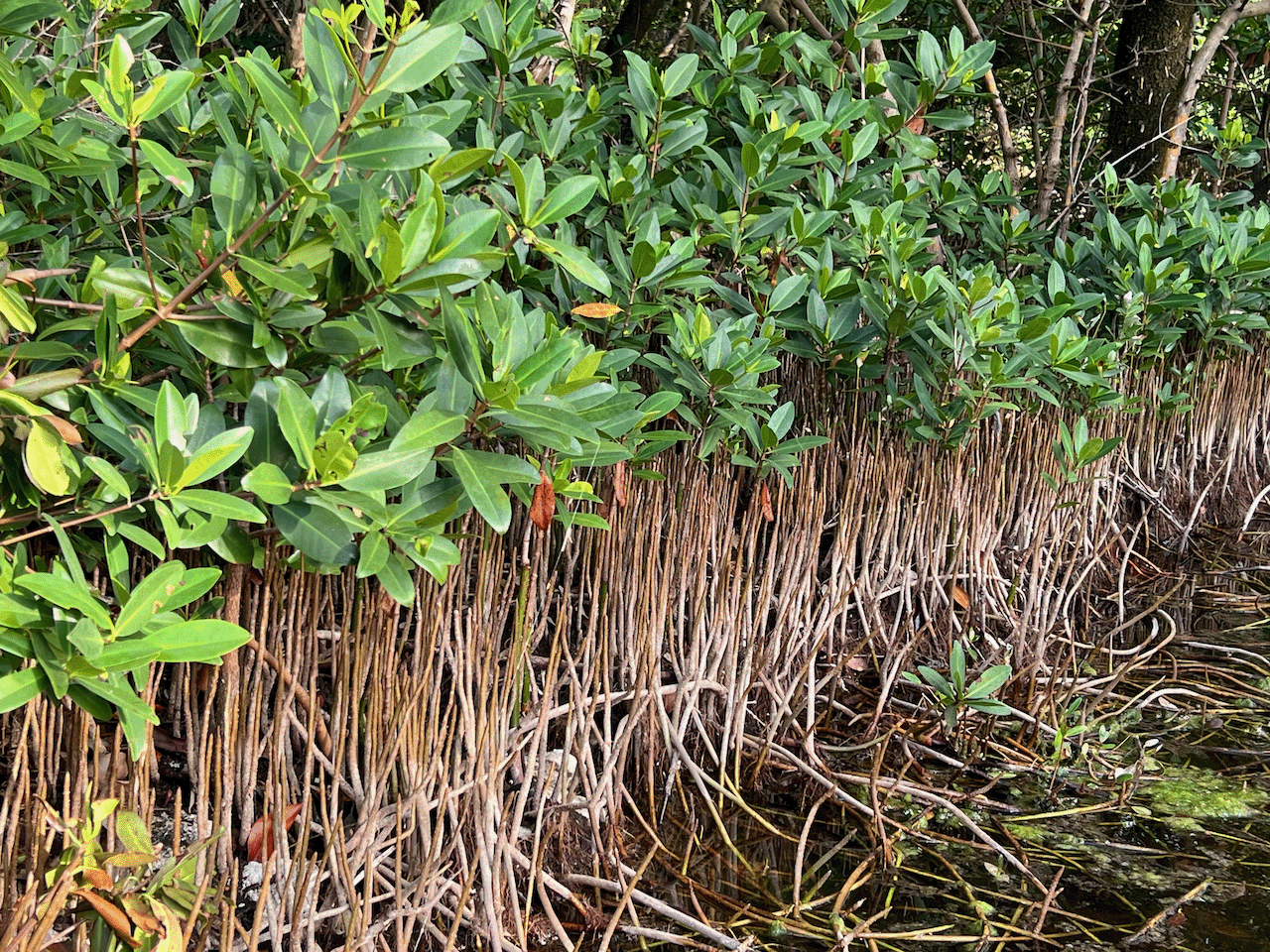
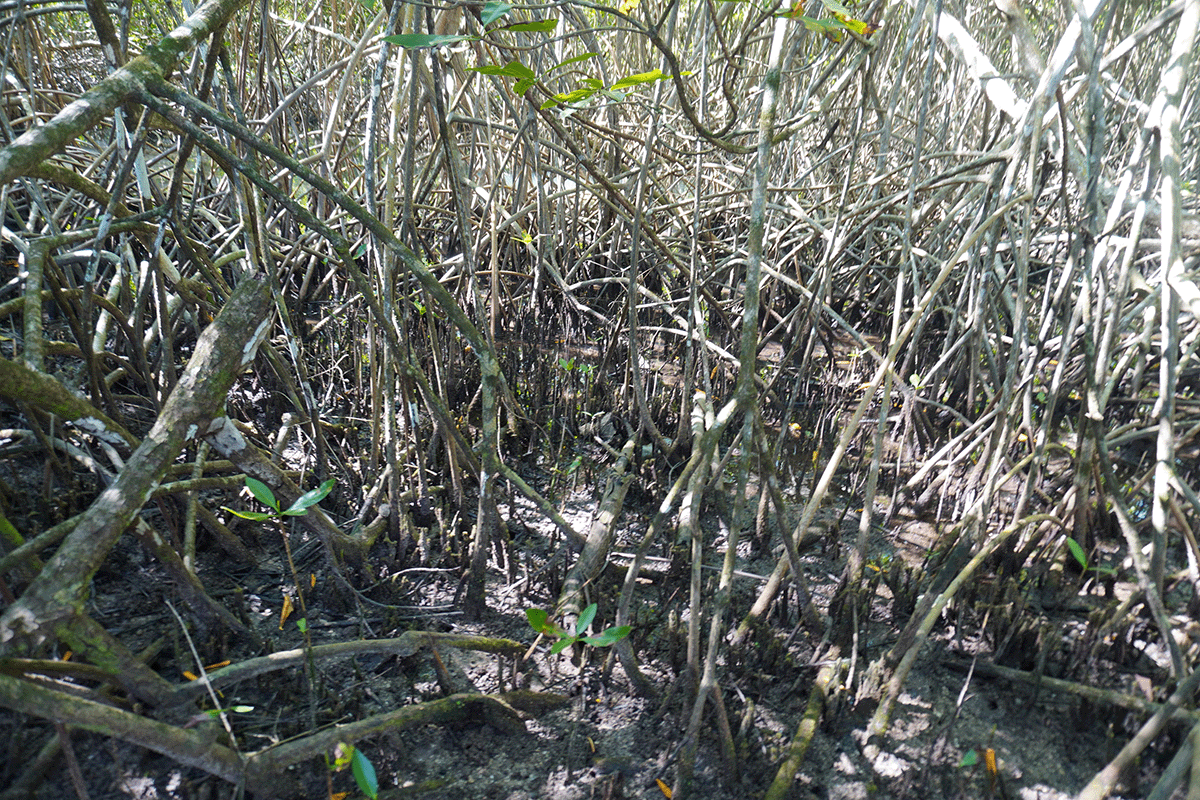
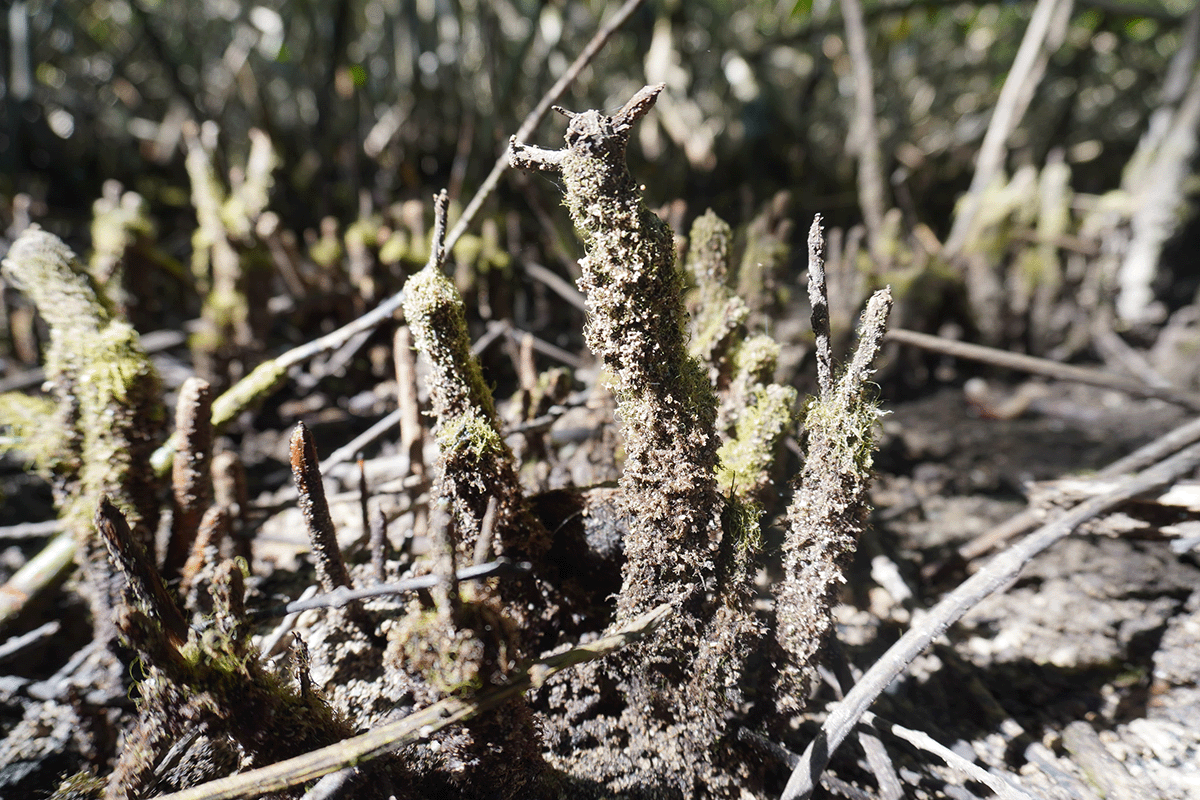
Although one of the primary functions of a mangrove’s aerial roots is to provide oxygen, they also play other crucial roles. For example, they help stabilize the soil and prevent erosion in coastal areas. The dense network of aerial roots, alongside the underground roots, anchors the tree securely in the soft, muddy soil, preventing erosion by trapping sediment and forming a stable foundation. This natural barrier helps protect coastlines from the destructive forces of waves, storm surges, and tidal fluctuations.
In addition, mangroves thrive in salty, flooded environments where most trees cannot survive. Some mangrove tree roots filter out excess salt, and the aerial roots elevate the trunk and branches above the waterline, ensuring the tree is not overwhelmed by saltwater. Additionally, these roots act as natural filters, helping to remove pollutants and excess nutrients from the surrounding water.
But mangroves don’t only benefit from their aerial roots – they also help create a diverse ecosystem that supports a wide variety of wildlife. The tangled root systems provide habitat and shelter for fish, crabs, and other aquatic creatures, offering a safe nursery for young marine life to grow and develop. Birds also often use the roots as nesting sites.
Aerial roots are just one of the many clever adaptations that allow mangroves to survive in such a demanding, harsh environment. So, next time you encounter a mangrove, take a moment to appreciate these extraordinary roots that make such a unique and vital ecosystem possible.