The Khaled bin Sultan Living Oceans Foundation is proud to support the publication of a game-changing report by UNESCO and IUCN that illustrates how the World Heritage Convention can be used to protect special places on the High Seas.
The High Seas – areas of the open ocean that lay beyond national jurisdiction – cover half our planet and contain natural wonders that rival our National Parks on land. Beneath the waves and far from shore you’ll find undersea volcanoes that dwarf the largest mountains on land, floating golden rainforests of the sea, and species so bizarre NASA is studying them to give them an idea of what life might be like on other planets.
Currently, the high seas are highly vulnerable to exploitation. Following our motto Science Without Borders®, the Khaled bin Sultan Living Oceans Foundation supported the work of the UNESCO World Heritage Centre Marine Programme to assess the potential of using World Heritage status to protect places of “Outstanding Universal Value” on the High Seas.
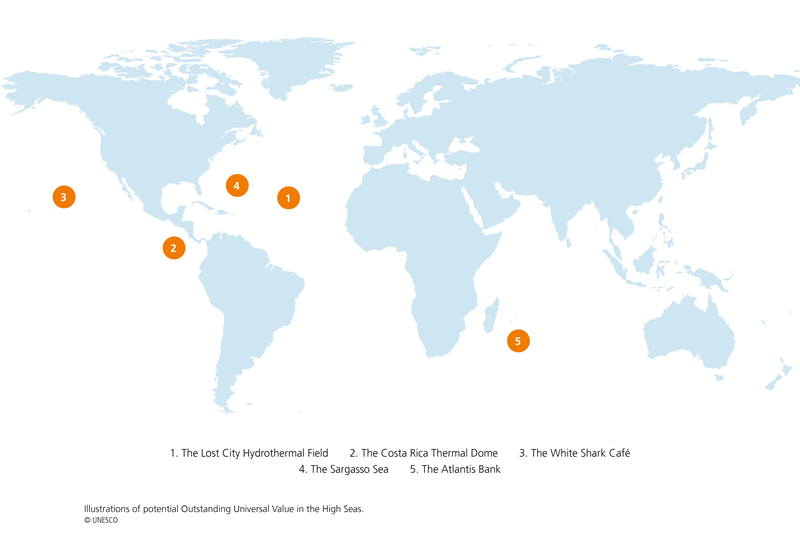
The resulting report, World Heritage in the High Seas: An Idea Whose Time has Come, not only identified how the World Heritage Convention could be used to protect places on the High Seas, but also suggested five possible sites:
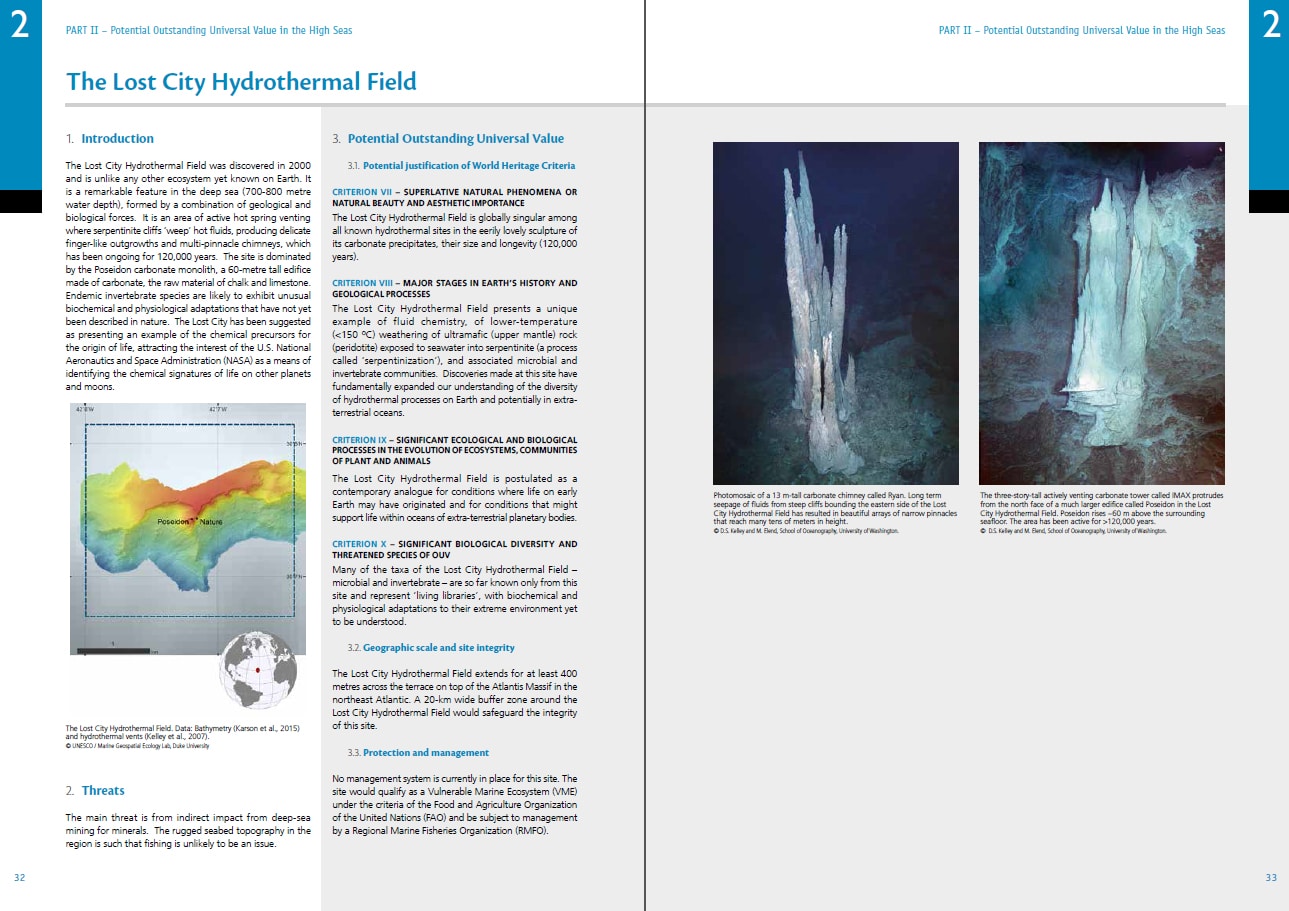
1) The Lost City Hydrothermal Field
The Lost City is a deep-sea wonderland of spires, some hundreds of thousands of years old, created by a combination of geologic and biologic processes in the middle of the Atlantic Ocean. Unlike any other ecosystem on earth, it may present a good example of the chemical precursors for the origin of life.

2) The Costa Rica Thermal Dome
The Costa Rica Thermal Dome is an oceanic oasis – an extremely productive ocean area that attracts marine mammals and large ocean predators such as sharks, tunas, and dolphins to its nutrient-rich waters. It is critical feeding and breeding habitat for the endangered blue whale, and is a regular stop on the migratory route of critically endangered leatherback sea turtles.
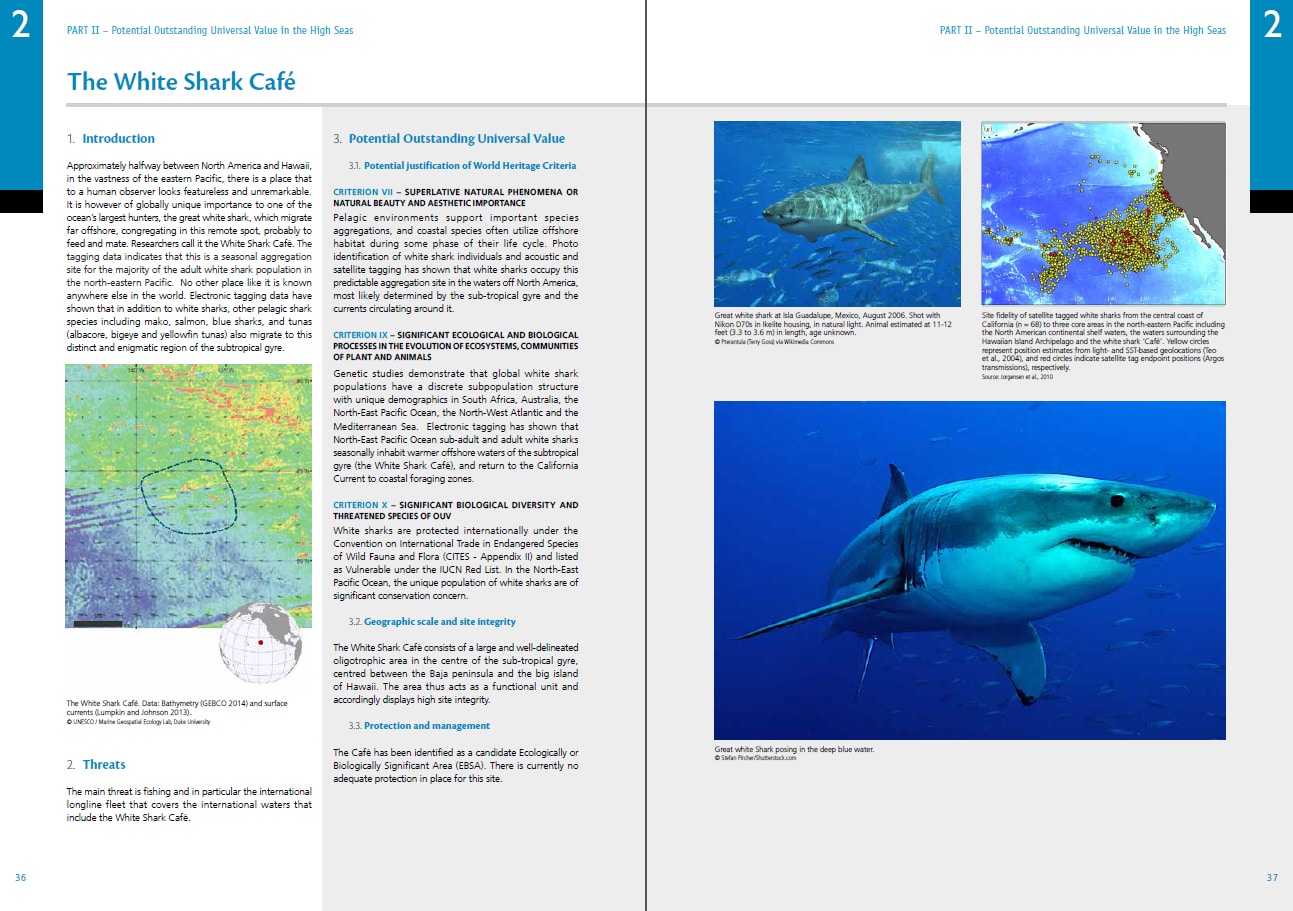
3) The White Shark Café
In the cobalt blue waters between California and Hawaii, hundreds of Great White Sharks gather, most likely to feed and mate. Satellite tagging data shows that many other species of sharks and tuna also congregate in this one particular area of the sub-tropical gyre. Scientists are still figuring out why all of these pelagic predators come and stay at the White Shark Café.
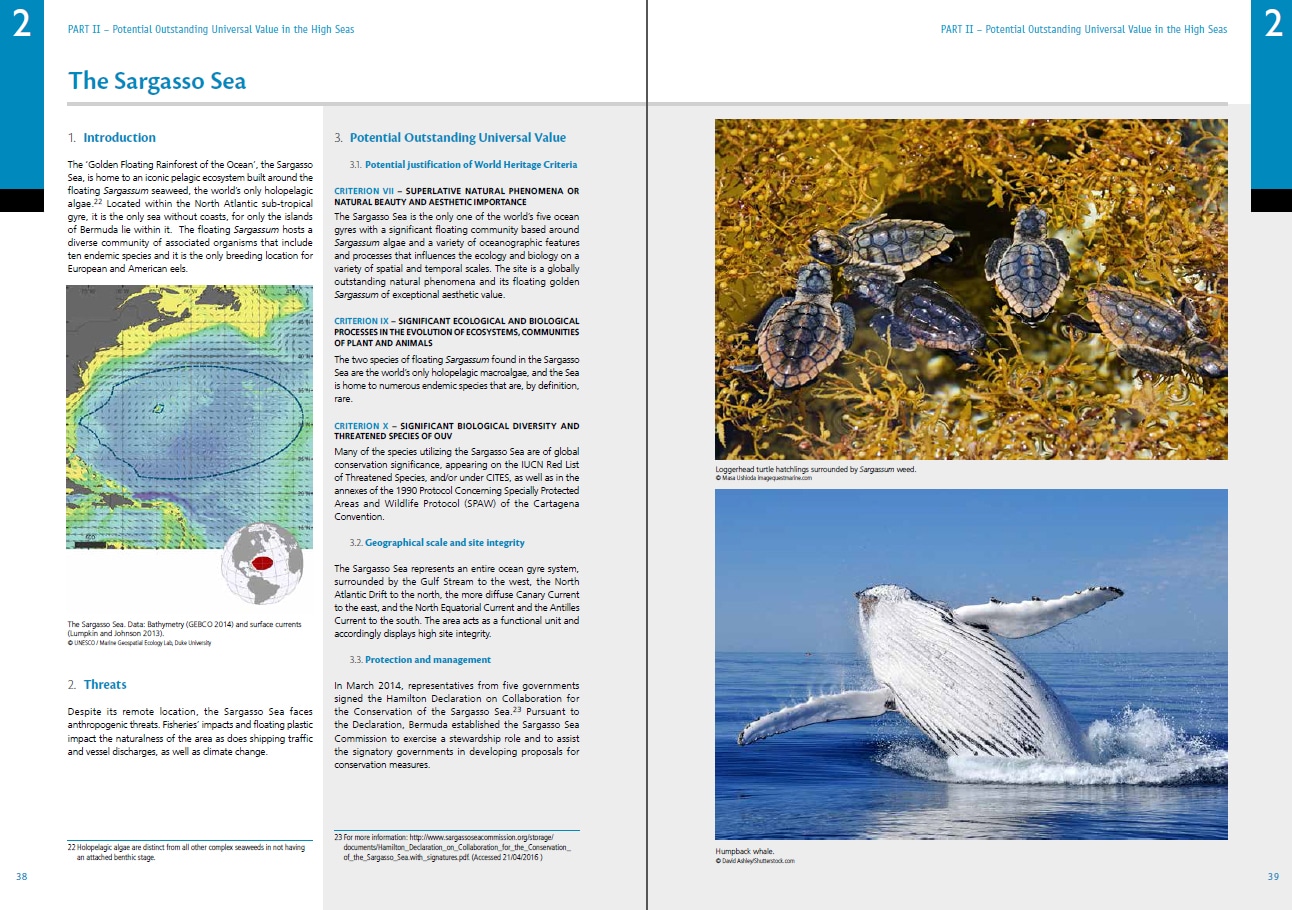
4) The Sargasso Sea
Covered in golden floating Sargassum seaweed, the Sargasso Sea is an iconic ocean ecosystem that is important nursery habitat for hatchling sea turtles and the only known breeding ground for American and European eels. First seen by Columbus on his first voyage to The Americas in 1492, the Sargasso Sea has been a place of myth and legend ever since.
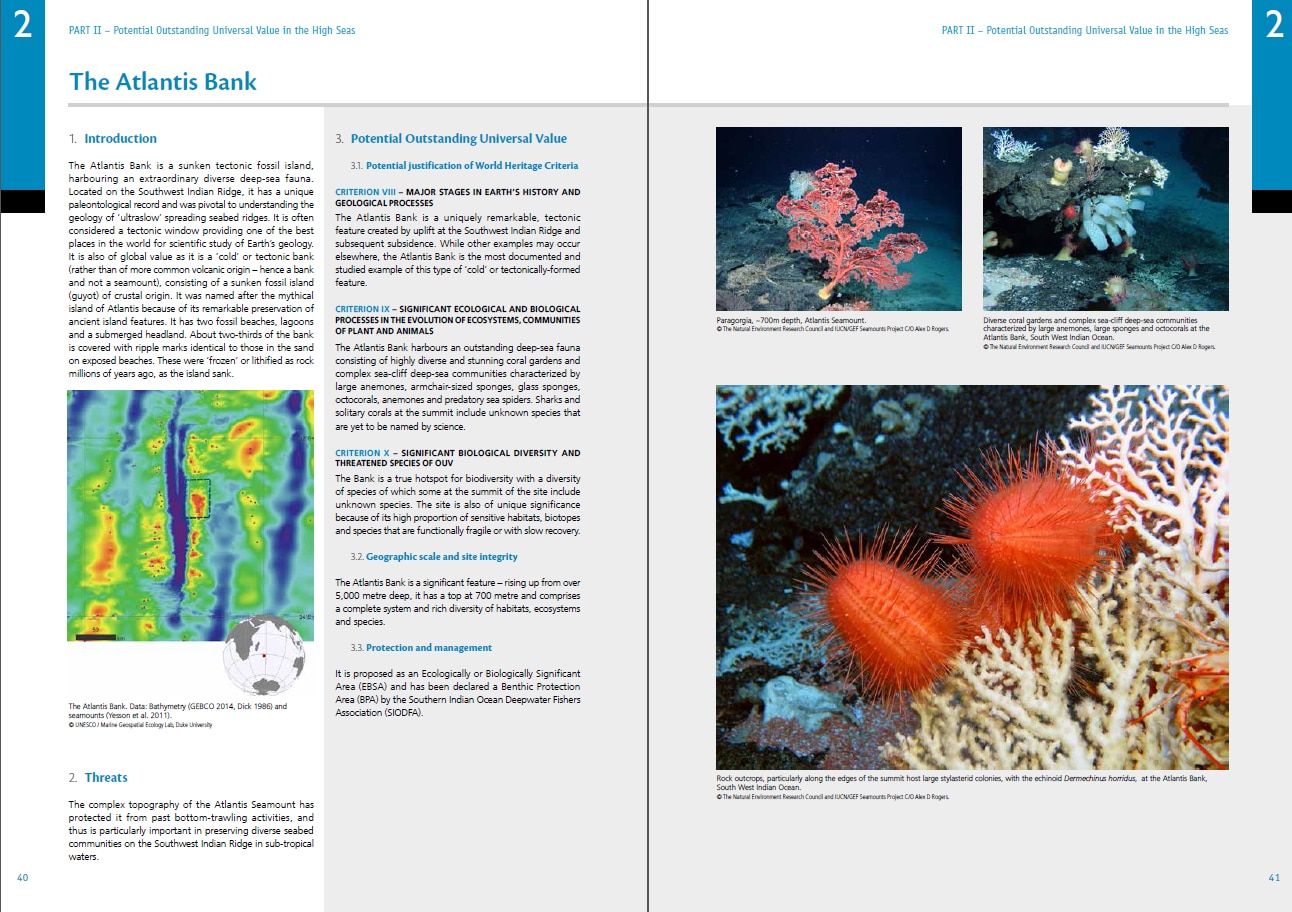
5) The Atlantis Bank
A fossilized island deep in the Indian Ocean, the Atlantis Bank is covered in bizarre ocean creatures, giant sponges, and ancient deep-sea corals.
The time has come to these unique and special places on the High Seas.
This publication would not have been possible without the leadership of His Royal Highness Prince Khaled bin Sultan and the generous support of the Khaled bin Sultan Living Oceans Foundation.