
search-icon
Tongan socio-environmental spatial layers for marine ecosystem management

Published in Pacific Conservation Biology

Abstract
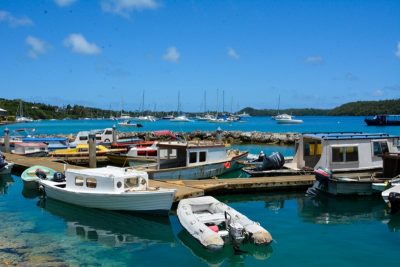
Tongan fishing boats

Environmental conditions and anthropogenic impacts are key influences on ecological processes and associated ecosystem services. Effective management of Tonga’s marine ecosystems therefore depends on accurate and up-to-date knowledge of environmental and anthropogenic variables. Although many types of environmental and anthropogenic data are now available in global layers, they are often inaccessible to end users, particularly in developing countries with limited accessibility and analytical training. Furthermore, the resolution of many global layers might not be sufficient to make informed local decisions. Although the near-shore marine ecosystem of Tonga is extensive, the resources available for its management are limited, and little is known about its current ecological state. Here we provide a marine socio-environmental dataset covering Tonga’s near-shore marine ecosystem as compiled from various global layers, remote sensing projects, local ministries, and the 2016 national census. The dataset consists of 11 environmental and 6 anthropogenic variables summarised in ecologically relevant ways, spatially overlaid across the near-shore marine ecosystem of Tonga. The environmental variables selected include bathymetry, coral reef density, distance from deep water, distance from land, distance from major terrestrial inputs, habitat, land area, net primary productivity, salinity, sea surface temperature and wave energy. The anthropogenic variables selected include fishing pressure, management status, distance to fish markets, distance from villages, population pressure and a socioeconomic development index based on population density, growth, mean age, mean education level and unemployment. We hope this extensive and accessible dataset will be a useful tool for future assessment and management of marine ecosystems in Tonga.
 

Related Posts

Introducing Our New Website: A Fresh Look for the Foundation’s Future

As we celebrate the Khaled bin Sultan Living Oceans Foundation’s 25th anniversary, we are proud to unveil our newly redesigned website—a modern home for our science, conservation work, and educational programs. This launch marks an important moment for the Foundation as we honor our long history and look toward the future of ocean conservation.

For more than two decades, the Foundation has worked tirelessly to improve the health of our living oceans. We have advanced ocean science, led one of the largest coral reef research missions in history, restored mangrove forests with local communities, created award-winning education programs, and shared the wonders of the ocean with people around the world. Our new website reflects the organization we are today—focused on conserving coral reefs, restoring mangrove forests, and improving ocean literacy—while still highlighting the legacy of work that brought us here.

The redesigned site…

Read More

Connecting People, Art, and Oceans: Championing Conservation at the 2025 IUCN Congress

The IUCN World Conservation Congress brings together thousands of leaders and decision-makers from governments, non-profit organizations, civil society, Indigenous groups, and the private sector to shape global conservation policy and action. This influential gathering serves as a platform to share knowledge, build partnerships, and advance initiatives that protect our planet’s biodiversity.

As a member of the International Union for Conservation of Nature (IUCN), the Khaled bin Sultan Living Oceans Foundation was honored to take part in the Congress, joining a global community of leaders, organizations, and changemakers committed to protecting nature and advancing sustainable futures.

Read More
Privacy Overview

This website uses cookies so that we can provide you with the best user experience possible. Cookie information is stored in your browser and performs functions such as recognising you when you return to our website and helping our team to understand which sections of the website you find most interesting and useful.  You can view our complete Privacy Policy here.

Strictly Necessary Cookies

Most of our cookies are used to improve website security and reduce spam. These cookies should be enabled at all times. They also enable us to save your preferences for cookie settings.

3rd Party Cookies

This website uses Google Analytics to collect anonymous information such as the number of visitors to the site, and the most popular pages. Keeping this cookie enabled helps us to improve our website.