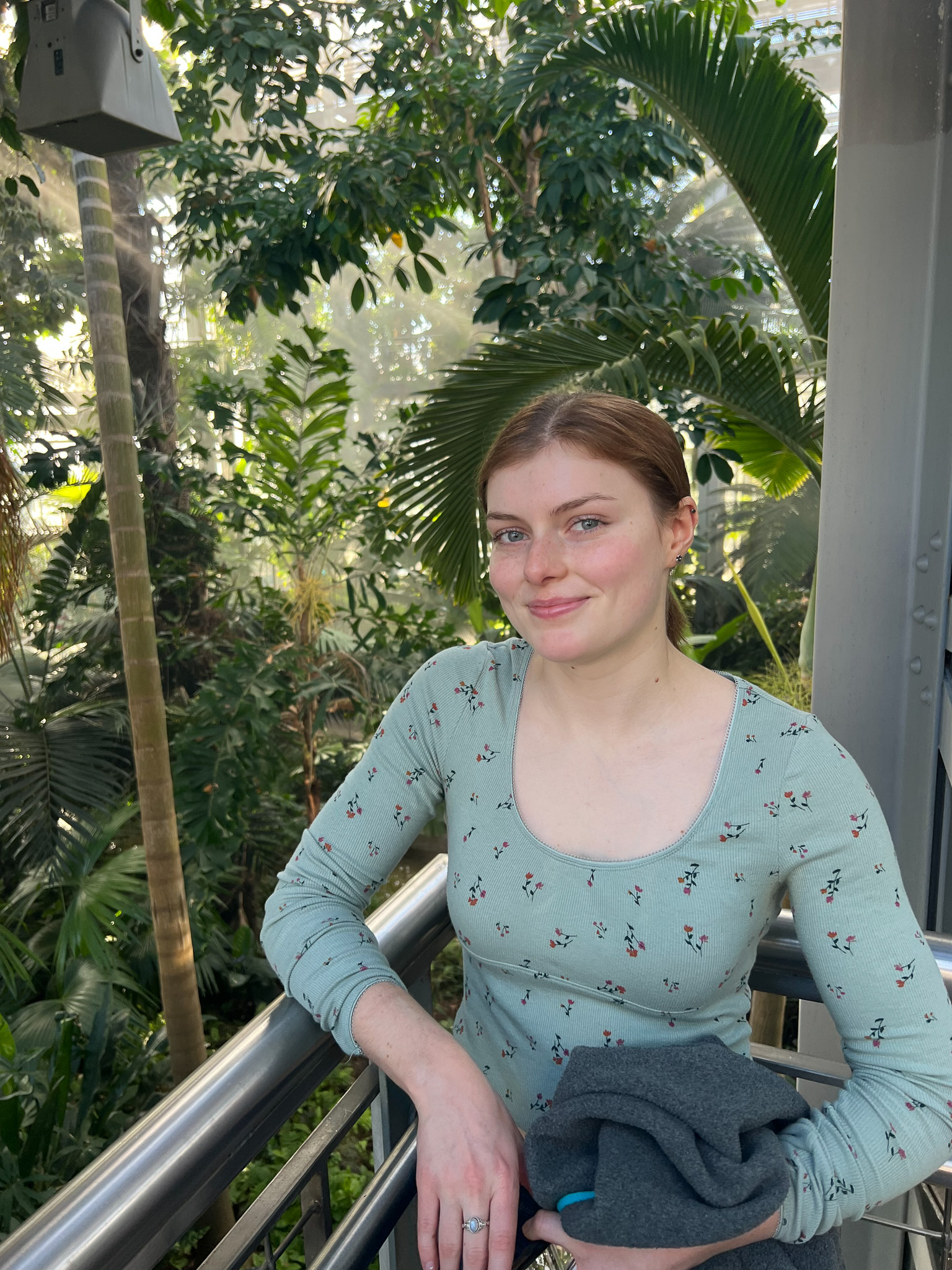
This guest blog was written by Nora Downing, an undergraduate student at the University of Miami working in the Foram Lab. Her work is helping build an index of coral reef health using benthic foraminifera picked from sand samples collected on the Foundation’s Global Reef Expedition. Nora is currently studying Geology and Anthropology and hopes to pursue a career in research in either the geological or anthropological fields. When she isn’t sorting through sand samples, Nora enjoys rock climbing and Jujitsu.
When I first joined the Protist Prophets project, I had never heard of ‘forams.’ I imagined them to be microscopic creatures that would require the use of a micropipette or some other specialized instrument to work with them. As it turns out, while they are small, they are not microscopic, and working with these protists has opened me up to a whole new world of beauty that is hidden before our eyes in marine sand across the globe.
Benthic foraminifera, or ‘forams’ for short, are single-celled organisms that live on and in seafloor sediments around the world. Each foram is encased in a unique shell, called a ‘test,’ that houses and protects the living cell as it grows. There are different groups of benthic forams that like to live in different environmental conditions.
One specific group of these protists, called large benthic foraminifera (LBF), host various microalgae in their tests. These symbiotic algae help the foram acquire energy from photosynthesis. Because of this symbiotic relationship, these LBFs require the same optimal water quality conditions as corals – clear, low nutrient, and sunlit waters – and are found in sands of coral reef environments across the globe. Additionally, like corals, these forams can expel their symbiont algae when stressed, in a process called bleaching. LBF forams respond similarly to, and more rapidly than, corals during stress events, such as ocean heating conditions caused by climate change. Because their tests preserve well in sediments for thousands of years, scientists can use them to learn about the long-term history of coral reef health, going back centuries.
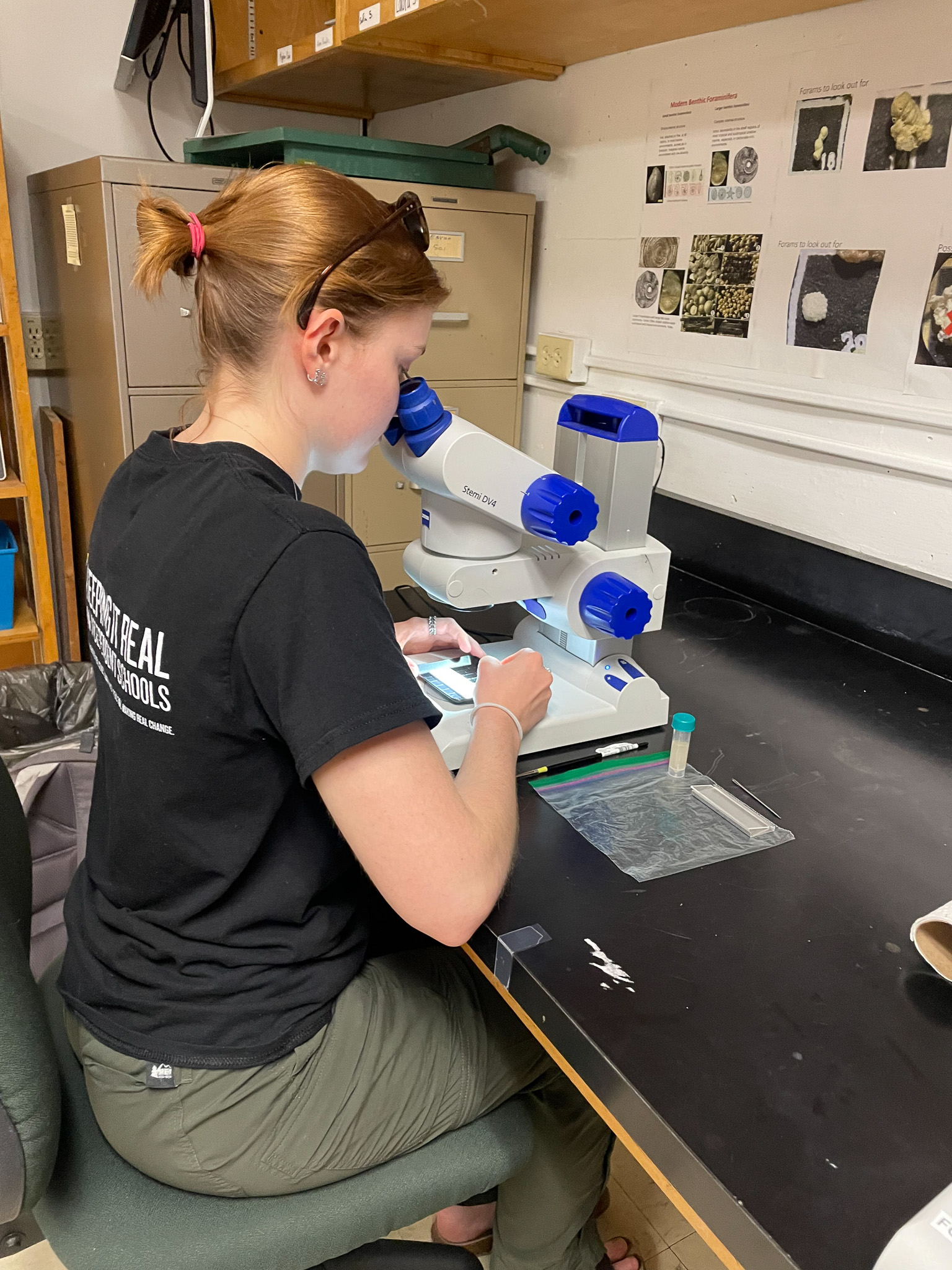

My job as an undergraduate research assistant in the University of Miami’s Foram Lab is to sort surface sand samples collected on the Global Reef Expedition (GRE). I pick foram tests and organize them in cardboard micropaleontology slides (cardboard slides) by their genus. When I first started, I was shocked to discover that the foram tests I pick are not only visible, but sometimes even identifiable, without a microscope!

Previously, sand seemed so insignificant to me, but seeing it under a microscope was like being introduced to another miniature world. I did not realize that it was possible for pieces of carbonate so small to have so many intricate designs and details. Picking forams has become a relaxing and crucial learning experience for me. I am grateful that I get to contribute to the Protists Prophets project to better understand coral reef health, and I am excited to continue this work over the next several years.
Protist Prophets
“Protist Prophets – Foraminifera as Global Bioindicators for Past and Present Coral Reef Health” is funded by National Science Foundation (NSF). It is taking a microscopic look at seabed samples collected on the Foundation’s Global Reef Expedition to assess the state of the coral reef environment over time.