search-icon
Amazing Algae

The average person doesn’t get too excited about algae, which most know as seaweed.  It smells when it accumulates on the beach and rots, it can outcompete coral when left unchecked, and it’s generally considered bad for reefs, especially when they undergo a phase shift from a coral-dominated reef to an algal reef.  They are a very important food source for many invertebrates and fishes, and even for people. Many species are cultivated.  There are many products extracted from this amazing seaweed as well – agar which is used as a gel in various foods and a culture medium for scientific studies; agarose is used by the pharmaceutical industry for separation and purification of many products; and carrageenan used in chocolate milk, ice cream and other foods for  gelling, thickening, and stabilizing.  Extracts from algae are also found in skin care products, make-up and toothpaste.

There are several algal groups. We look mostly at benthic algae which encompasses the red algae (Rhodophyta), green algae (Chlorophyta), brown algae (Phaeophyta) and blue-green algae (cyanobacteria).  Like plants, they need sunlight to produce food.  Unlike plants, they lack roots, vascular tissue, flowers and many other features common to plants.

During our surveys, we assess how much of the bottom is covered in seaweed, dividing them into the beneficial crustose coralline algae, turf algae, macroalgae (fleshy seaweeds) and cyanobacteria.  We also look at interactions between the seaweed and corals, grazing on seaweed by herbivorous parrotfish and surgeonfish, and how they vary depending on human impacts.

Studying Benthic Algae at Ill des Pins

Ile des Pins is the perfect place to study the fleshy seaweeds. On most lagoonal reefs we’ve looked at, more than half the bottom is carpeted in these macroalgae.   Many are quite colorful and each has a unique growth form.

Among the Chlorophyta, Caulerpa is one of the most common groups we see.  These can easily be identified by their creeping stolons (horizontal stem that connects algae) and numerous upright branches, some with grape-like vesicles; others resemble a feather, a disc, or a club.
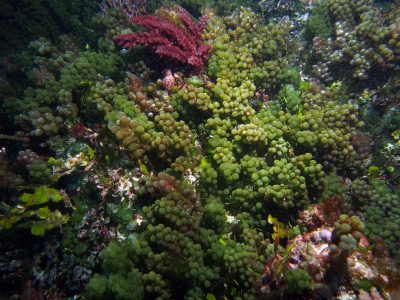
Green Algae: Caulerpa

Green Algae: Caulerpa and Asparagopsis

The Rhodophyta we’ve found are very diverse.  Some, such as Tricleocarpa are erect, branched and heavily calcified.
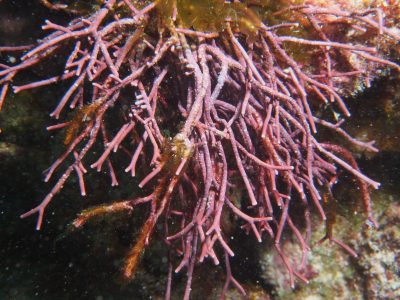
Red Algae: Tricleocarpa

Red Algae: Tricleocarpa

Others are very gelatinous and transparent, with a distinctive white calcified inner region, such as Trichoglea.
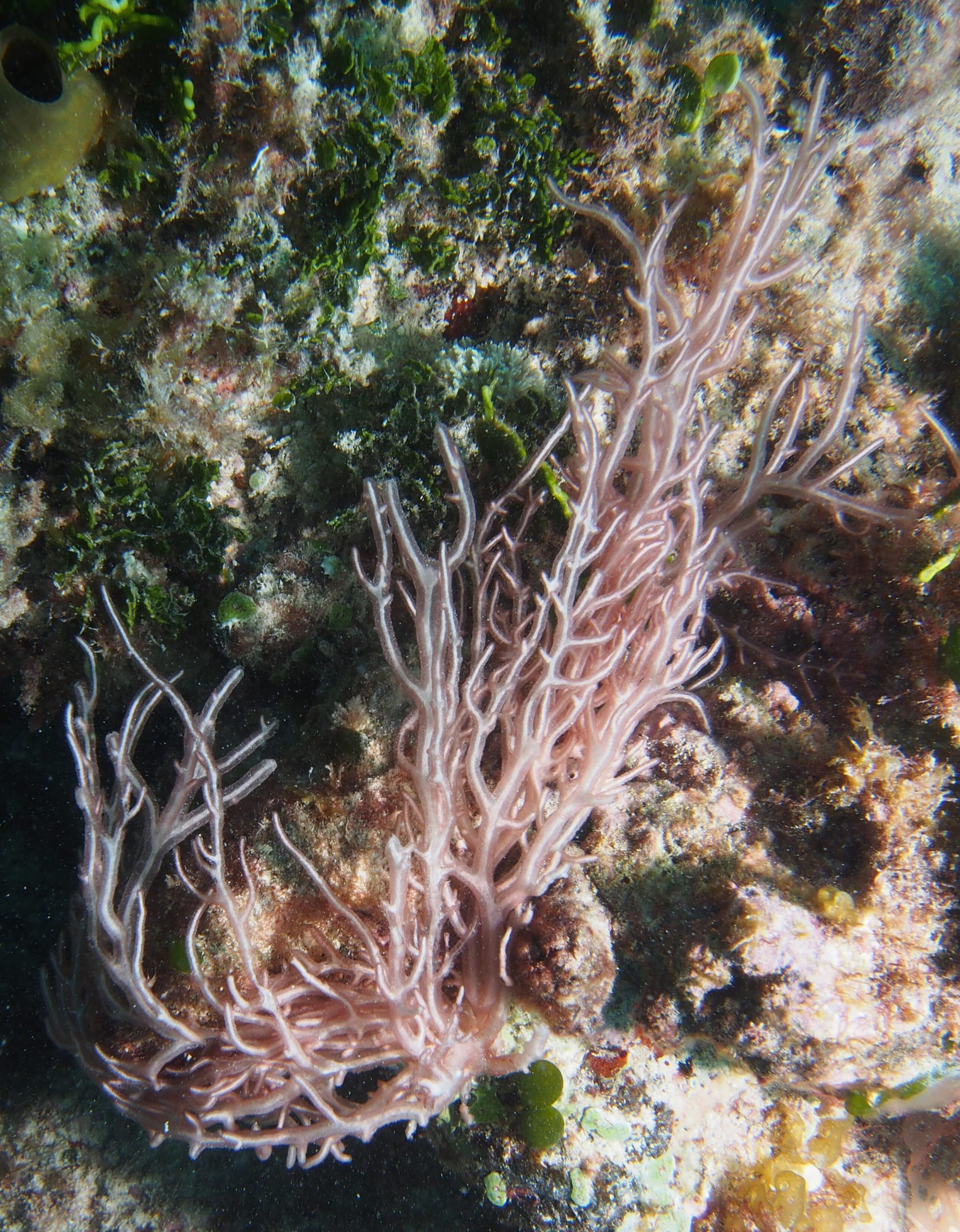
OLYMPUS DIGITAL CAMERA

Tricleoglea

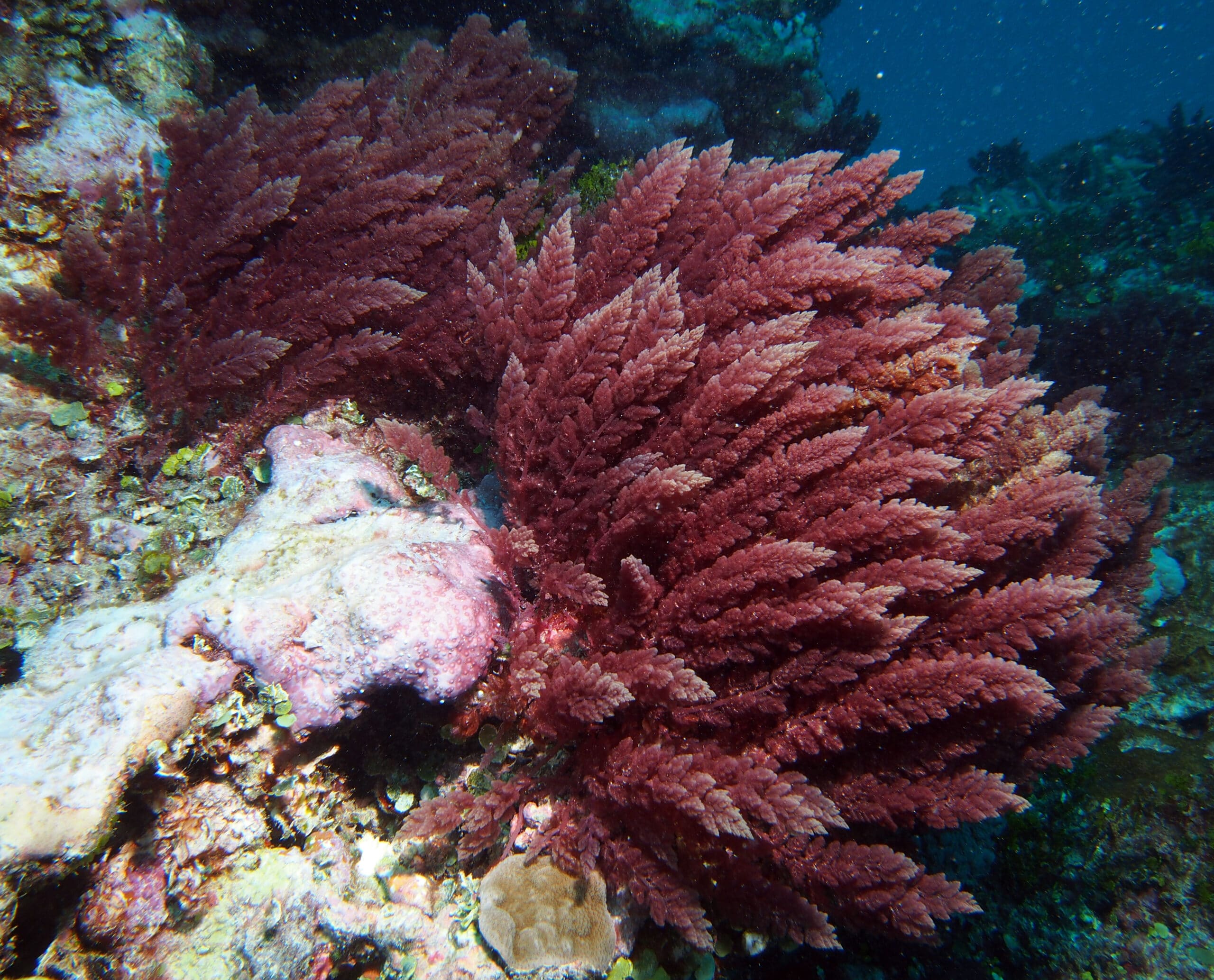
Among the most common, and largest of the seaweeds we’ve seen, Asparagopsis forms clusters of pinkish foxtails that can be 30 cm or more in height.
OLYMPUS DIGITAL CAMERA

Asparagopsis

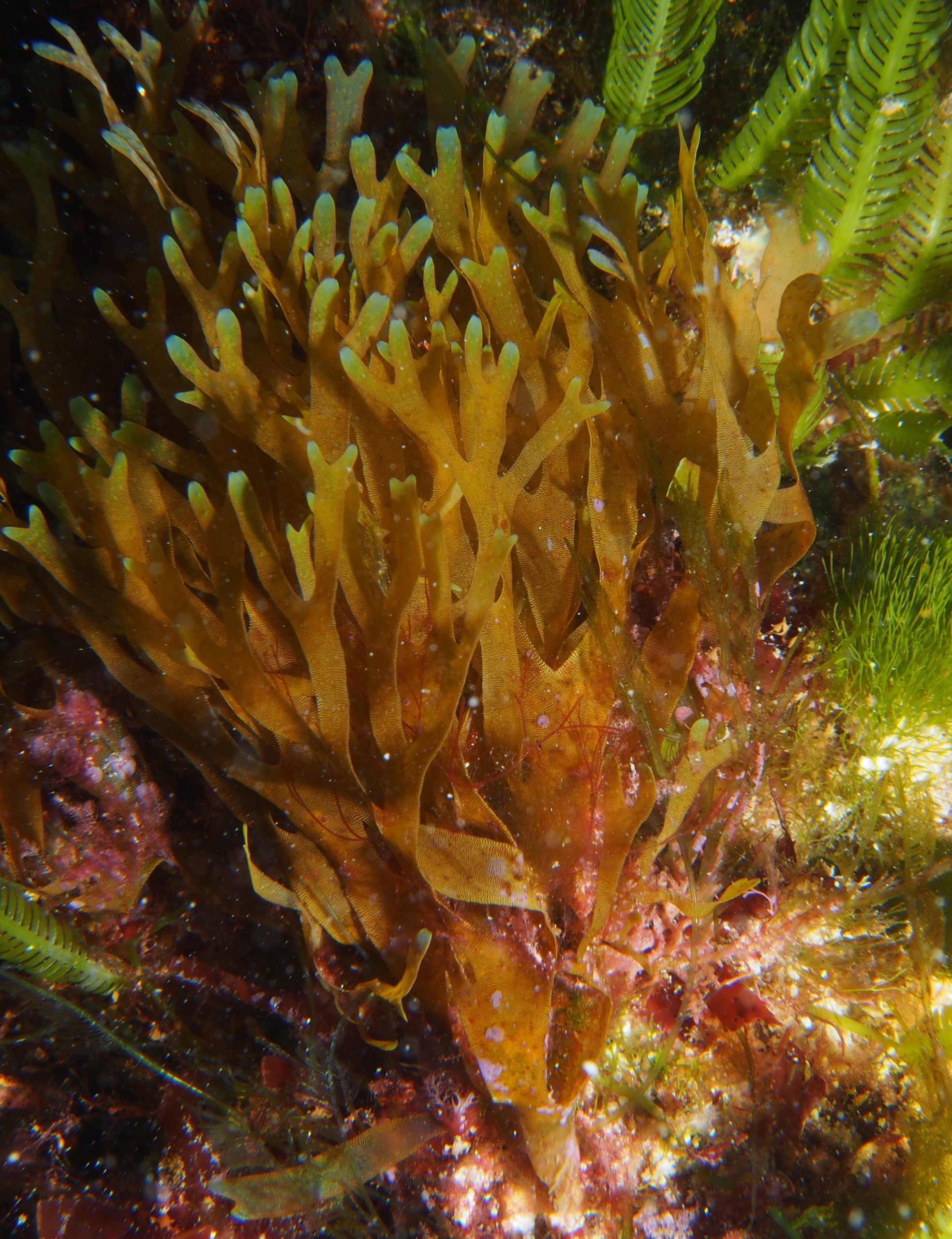
The Phaeophyta include some with flattened fleshy branches such as Dilophus, and others such as Padina have round fronds with concentric rows of white calcium carbonate.
Brown Algae: Dilophus

Brown Algae: Dilophus

The unusually high number of species and the dense carpets of macroalgae found here make this a perfect place to study seaweed, which is what one of our scientists, Claude Payri, is up to.  You’ll hear about her work shortly.


Photos: 1-5 by Andrew Bruckner
Related Posts

From Dialogue to Action: Ocean Foundations Gather in Stockholm

What can philanthropy accomplish when foundations working across ocean science, conservation, and sustainable development come together around a shared purpose?

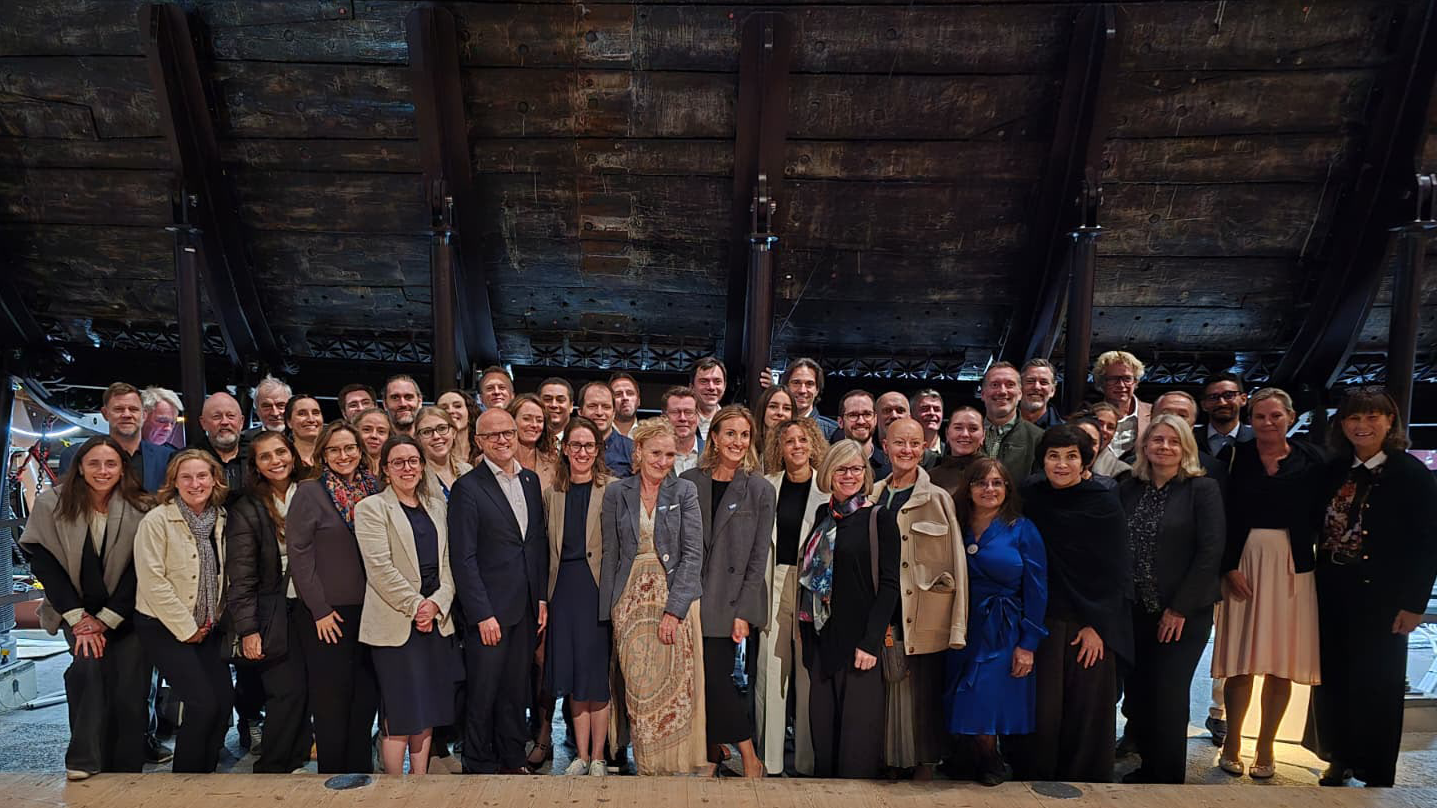
That question was at the heart of the 6th UN Ocean Decade Foundations Dialogue, held September 7–9 in Stockholm, Sweden. The Khaled bin Sultan Living Oceans Foundation joined philanthropic organizations from around the world for three days of discussion, collaboration, and planning focused on accelerating progress during the second half of the UN Decade of Ocean Science for Sustainable Development.

Facilitated by UNESCO’s Intergovernmental Oceanographic Commission (IOC), the UN Ocean Decade Foundations Dialogue is a growing network of more than 30 philanthropic organizations committed to advancing ocean science, collaboration, and action. Since its creation within the framework of the Ocean Decade, the Dialogue has provided foundations with a space to exchange ideas, develop partnerships, and explore how philanthropy can help advance a healthy and resilient ocean.

Hosted by the Voice of the Ocean Foundation (VOTO), this year’s gathering began with From Depth to Action, an Opening Forum that brought nearly 100 leaders from the Swedish and international ocean community together at…

Read More

Meet IFAN: Helping Bring Navigate with Care to the Next Generation

If you’ve ever seen a lighthouse flashing from the shore or a brightly colored buoy bobbing in the water, you’ve seen Aids to Navigation at work.

Aids to Navigation, often called AtoNs, help mariners navigate safely. They can mark channels, warn of hazards, help vessels determine their position, and provide other information people need to make safe decisions on the water. Around the world, these systems help guide everything from small recreational boats to large commercial or container ships. 

But safe navigation isn’t only about protecting vessels and the people aboard them. The choices mariners make can also affect the animals and ecosystems beneath and around them.

That connection between maritime safety and ocean conservation is at the heart of this year’s Science Without Borders® Challenge—and of our partnership with this year’s theme sponsor, the International Foundation for Aids to Navigation (IFAN).

Read More
Privacy Overview

This website uses cookies so that we can provide you with the best user experience possible. Cookie information is stored in your browser and performs functions such as recognising you when you return to our website and helping our team to understand which sections of the website you find most interesting and useful.  You can view our complete Privacy Policy here.

Strictly Necessary Cookies

Most of our cookies are used to improve website security and reduce spam. These cookies should be enabled at all times. They also enable us to save your preferences for cookie settings.

3rd Party Cookies

This website uses Google Analytics to collect anonymous information such as the number of visitors to the site, and the most popular pages. Keeping this cookie enabled helps us to improve our website.