Having first visited the Chagos Archipelago in 2006, it was an immense pleasure to return with the Khaled bin Sultan Living Oceans Foundation under the auspices of the Global Reef Expedition. Returning to the archipelago offered the chance to continue work that had been initiated nearly a decade earlier by other scientists—monitoring of the fish assemblages and health of the coral—but also begin new science initiatives.
For instance, for the first time, field data were collected for the purpose of generating satellite maps for the shallow waters of the archipelago, similar to others already available on the Foundation’s interactive Coral Reef Map Portal.
Following the discovery of a rich portfolio of vintage aerial photographs for the Chagos Archipelago taken in 1963, my team and I are also examining the dynamics of the coastlines of the many islands in the archipelago in an effort to understand how low-lying atoll islands respond to rising sea level. Largely uninhabited, Chagos is one of very few places in the world where the behavior of islands can be tracked in the absence of artificial coastline modifications. That is, “natural” island behavior can be quantified.
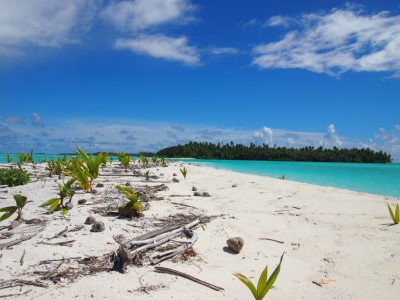
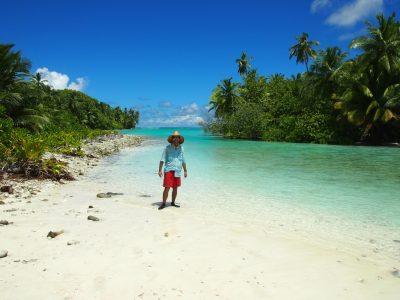
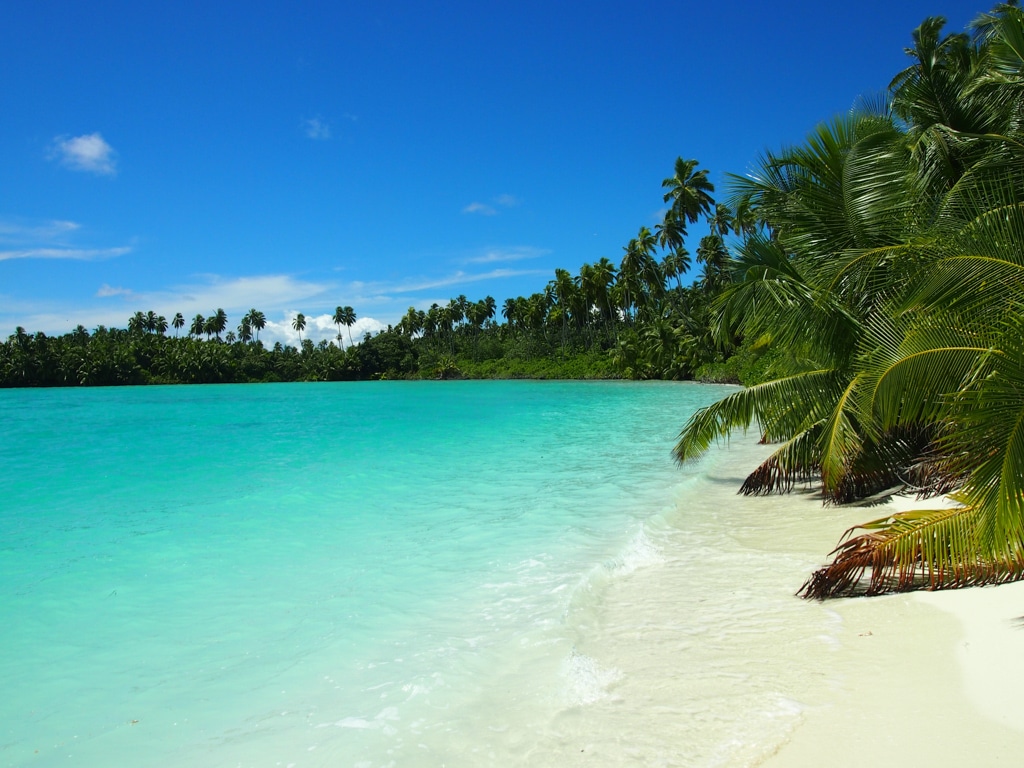
Our initial results from this work indicate that although the Chagos islands are not shrinking under the influence of rising seas, their coastlines are highly dynamic, which is an important lesson for the habitability of atoll islands globally, but in particular for nearby population centers, such as the Maldives, for instance.
The pronounced coral bleaching that we encountered at the tail end of the Foundation’s mission to the Chagos Archipelago is an ominous warning sign for underlying changes in the sediment budget of the archipelago’s islands. Much of the sediment which nourishes their coastlines is sourced from the healthy reefs which mantle the islands—declines in reef vitality can serve to starve beaches of sediment, amplifying coastline retreat and increasing the chance that islands cannot keep pace with rising seas.

Learn more
Learn more about our findings from the Global Reef Expedition mission to the Chagos Archipelago in our Final Report.