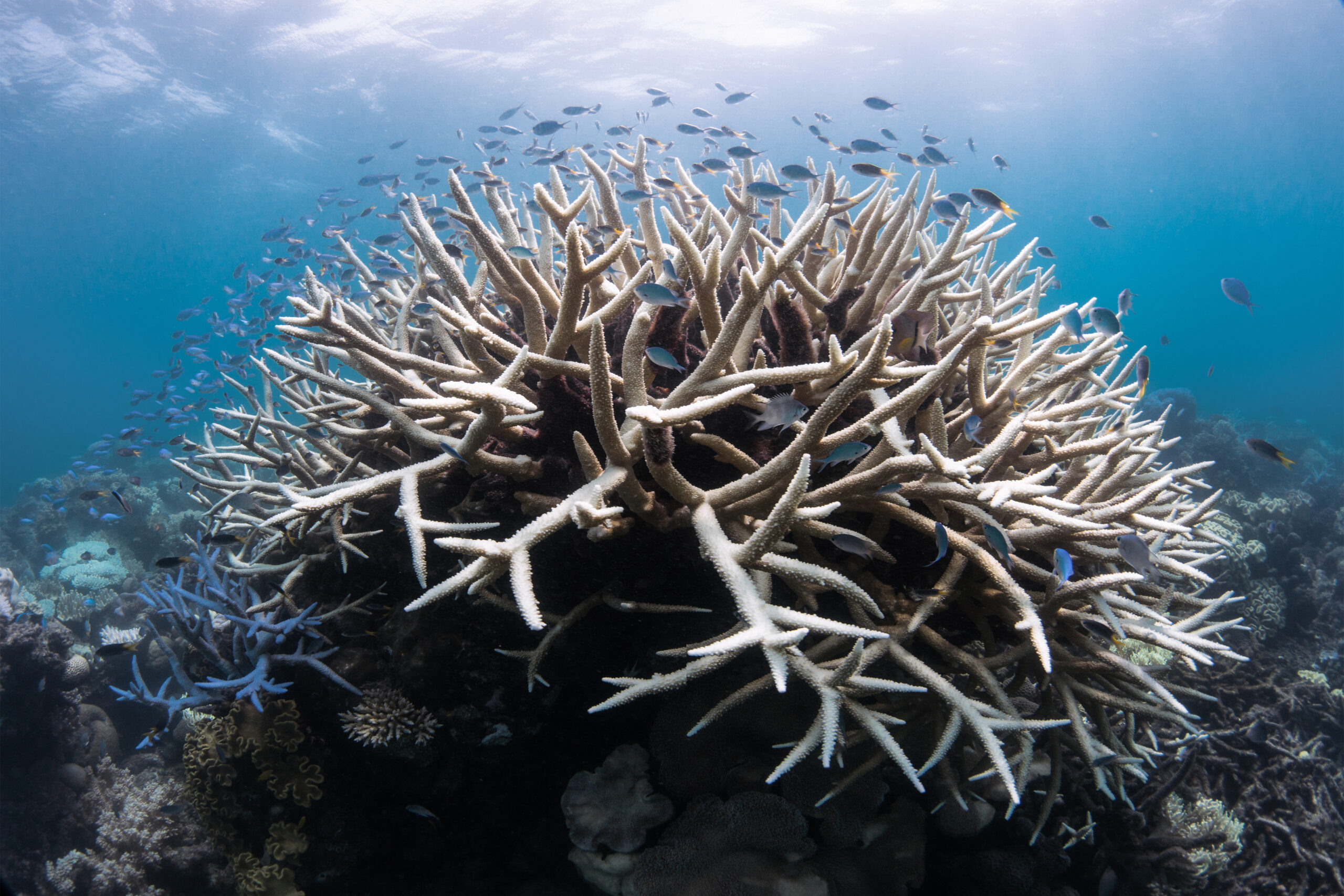
Over the next month our research team will explore the remote northern Great Barrier Reef Marine Park to evaluate the effectiveness of management in protecting biodiversity and enhancing the resilience of the reef system to climate change. The Marine Park is a multiple-use area that supports a large number of communities and industries that depend on the reef for food, livelihoods and recreation.
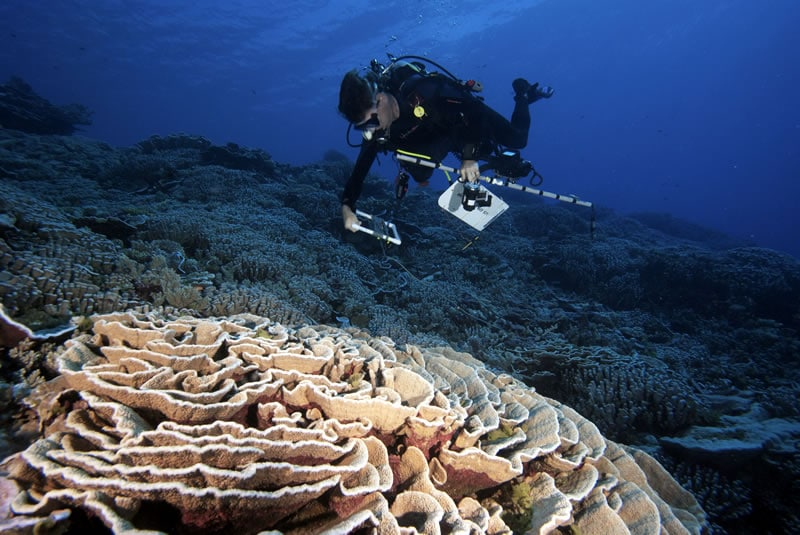
Diver surveying a healthy coral community.
The entire Marine Park is managed through a multiple use zoning plan that identifies where particular activities are permitted and where others are not permitted. The Plan is designed to separate conflicting uses, and includes 33 per cent no-take zones where fishing and collecting is not permitted. The inclusion of no take zones is a globally accepted management strategy to successfully protect exploited species, yet the added benefits of no –take zones in protecting corals and other species from climate change stressors and in maintaining ecosystem structure and function is not well known.
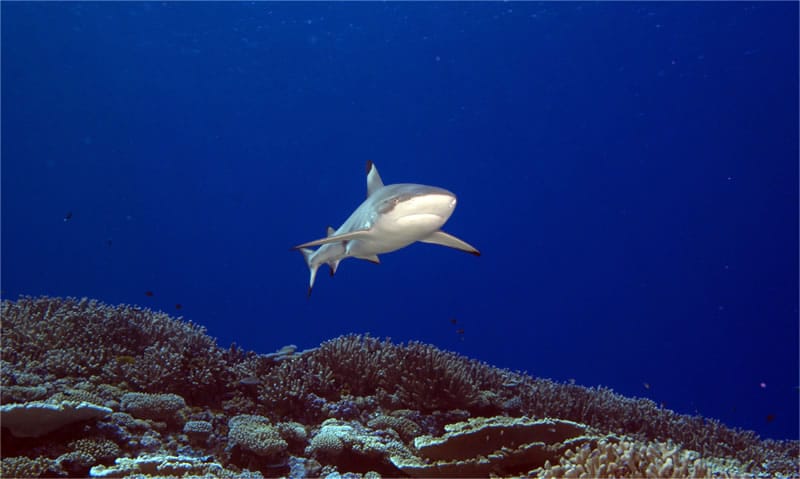
Apex predators such as the black tip reef shark are sensitive to noise from engines and may be more common in Pink Zones
Our surveys and research will compare three zones, within nearshore, midshelf and offshore reef systems. The reefs extend from Cairns to the northern tip of Australia near Thursday Island, spanning a distance of 1100 km. We will examine differences in the abundance and health of populations of apex predators, other reef fishes, coral and benthic communities within a total of 180 locations on 30 reefs. The zones are identified by color and include open access Blue Zones, no-take Green Zones and no-take, no entry Pink Zones. We hope to demonstrate the effectiveness of no-take zones in enhancing exploited reef fish and also will determine what effects boat engine noise has on apex predators by comparing the Green and Pink Zones.
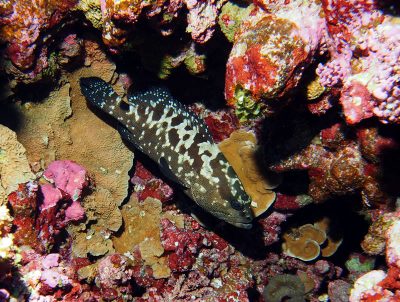
No-take areas should have large populations of exploited species such as grouper.
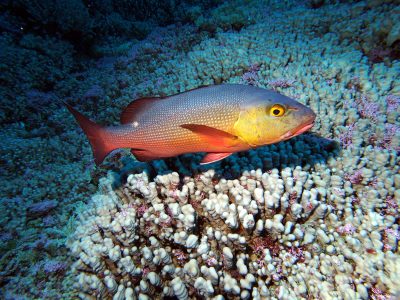
In addition to higher number of predatory fishes such as snapper, coral communities may be healthier in no-take areas.
Photos by João Monteiro