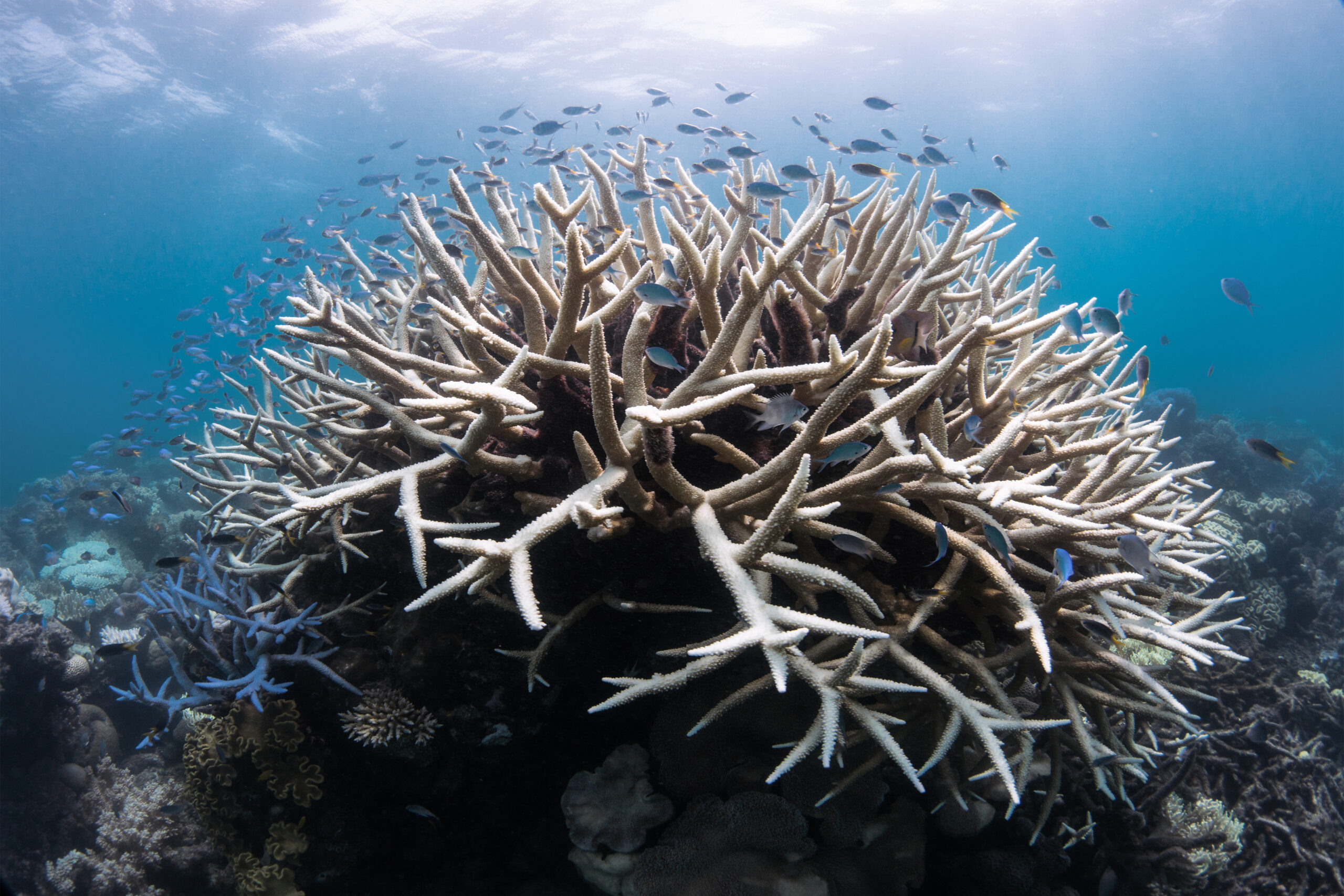
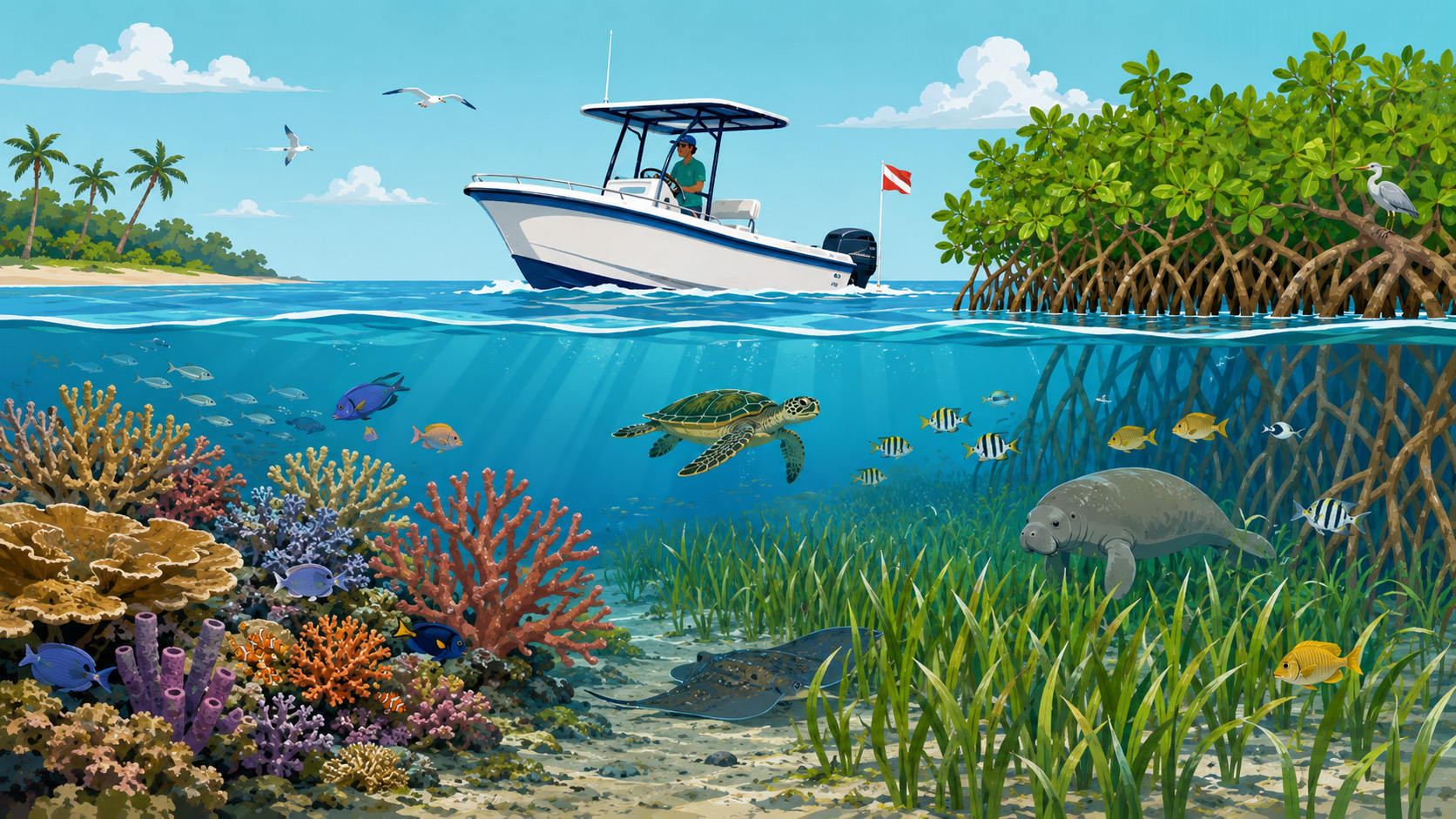
As the Living Oceans Foundation circumnavigates the globe, one of our core activities is rapid assessments of the health and resilience of coral reefs. Our assessments tell us about the diversity and population structure of corals and fishes, the types and amount of algae, and interactions among these species. We can determine if a reef is stressed and why and, if it has been impacted by a past event, how likely it is to rebound. One measure in particular we use is the age (size) distribution of the corals and how many small corals (recruits) that settled within the last 1-2 years. The basic assumption, if there is good settlement and recruitment of new corals, is that there is a source population providing these corals to the reef, the habitat quality is good enough to promote settlement, and conditions allow for growth and survival of these corals. As we explore reefs of St. Kitts and Nevis, it’s been a mixed bag. We found some sites with a lot of recruits and others with few.
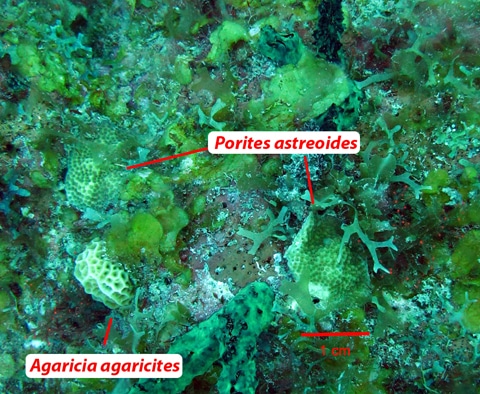
We look more closely at the species of recruits, the amount of algae and herbivory, and other measures to understand why there are differences between sites. We know certain corals, known as brooders, tend to have very high levels of settlement. Brooders are species that may reproduce multiple times in a year. Fertilization is internal and the parents raise the young (brood) until they are much larger and competent (ready to settle), so that they will attach to the bottom, differentiate from a planula larvae into a coral polyp very quickly, and exhibit higher rates of early survival. Brooders tend to be the dominant small corals you see on a reef, especially after a disturbance. The two most common brooders are mustard hill coral (Porites astreoides) and lettuce coral (Agaricia agaricites). In St. Kitts, Porites is by far the dominant coral in terms of numbers of colonies. It has carpeted the bottom and colonized the skeletons of other corals that have died. Agaricia is less common, although some reefs have a lot of these corals.
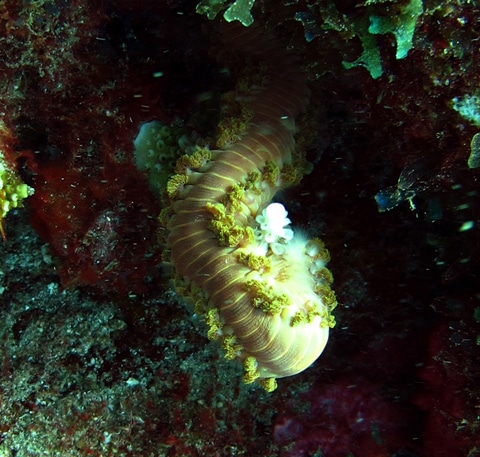
Early colonizers, like Porites, may further enhance substrate quality (reducing the space available for algae), so that other, more long-lived species can settle. We have seen settlers of these species, albeit much less commonly. These corals, known as broadcast spawners, are the larger massive and plating corals that tend to live for hundreds of years. These corals reproduce only once per year. In the Caribbean, this occurs in July, August or September (depending on the location) and 3-7 days after a full moon (depending on the species). Each coral species has a synchronized period of spawning (within hours on the same day) and we now can make highly accurate predictions of the day each year when they will spawn.
Why does any of this matter? As we assess the coral community, we have a good picture of what the community looks like at the time we surveyed it – basically, a snapshot of the structure and health. What we don’t know is how this is likely to change in the future. For a reef that has been affected by an acute event, like a hurricane, bleaching episode or other catastrophic disturbance, scientists often suggest the reef will rebound quickly if there are a high number of recruits. Unfortunately, this is not necessarily the case. A lot of factors can affect the rate and extent of recovery, some of which I have mentioned previously. Our challenge is that we visit a site only once, and don’t have the means to determine if our predictions are accurate.
The Need for Establishing Legacy Sites
To get around this dilemma, we are establishing Legacy Sites in each country we visit. These are large plots (10m x 10m) on a reef that are permanently marked with stainless steel stakes. We photograph the entire area to create a mosaic, and assess each coral within the area when we establish the permanent site. Our plans are to revisit these sites periodically in the future to assess changes. We have accurate GPS coordinates for the location so we can get back to it, and we provide these to local agencies so they can incorporate the site into their monitoring program. Not only will we be able to determine future directions, by establishing these in similar habitats that are under different management regimes (e.g. protected areas vs. areas open to fishing), we can also determine how effective management is at conserving a site.
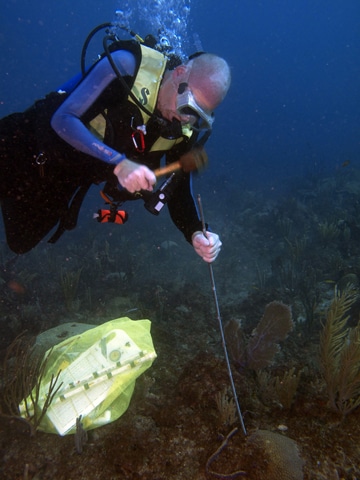
Today we established our first Legacy Site in St. Kitts. It’s located at the northwestern end of St. Kitts at about 10m depth. We chose this site because there appeared to be promising signs of recovery.
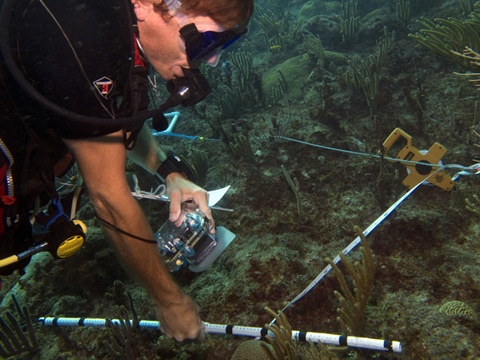
The reef was once dominated by thickets of elkhorn coral (Acropora palmata) in shallow water and staghorn corals (Acropora cervicornis) below this. Most had died, but we found dozens of small colonies (5-10 cm in diameter), including a few surviving fragments and sexual recruits. This coral grows very quickly (each branch can grow 5-15 cm in length per year).
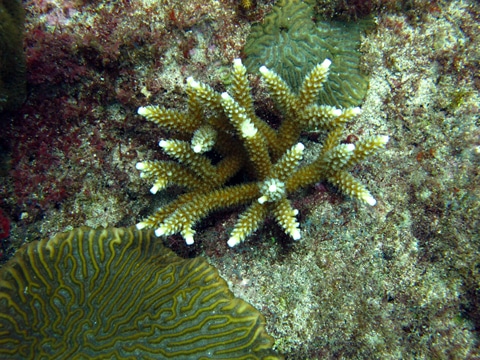
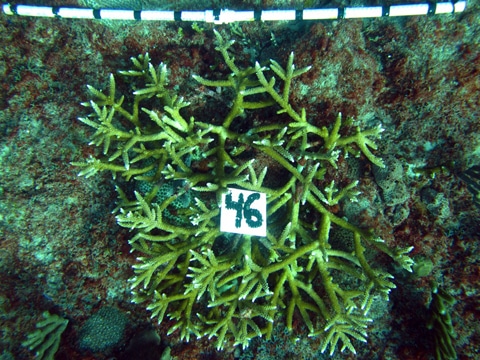
If these survive, dense thickets of staghorn coral could cover this reef within 5 or so years. We’ll be back at the end of the Global Reef Expedition to determine the fate of this Legacy Site and others. Best fishes for a rapid recovery!
(Photos by: 1-2 Andy Bruckner, 3-4 Jason Phillips, 5-6 Andy Bruckner)
To follow along and see more photos, please visit us on Facebook! You can also follow the expedition on our Global Reef Expedition page, where there is more information about our research and our team members.