This guest blog comes from Isabel Key, a doctoral student at the University of Edinburgh, UK. Her research focuses on visual and acoustic methods for assessing the biodiversity of seagrass meadows in Scotland. As an interlude from her studies, she interned with the Khaled bin Sultan Living Oceans Foundation and the University of the West Indies Discovery Bay Marine Lab.
You’re swimming in the glistening, turquoise ocean, feeling totally at peace as the water cools you under the beaming sun. Hang on—what’s that? A slippery, slimy, twisty thing brushing your foot? Ew! Argh.
That’s seagrass! And believe it or not, we love it. You don’t need to be afraid. It’s actually one of the most important ecosystems in the ocean, and it definitely won’t hurt you. Let me tell you more…
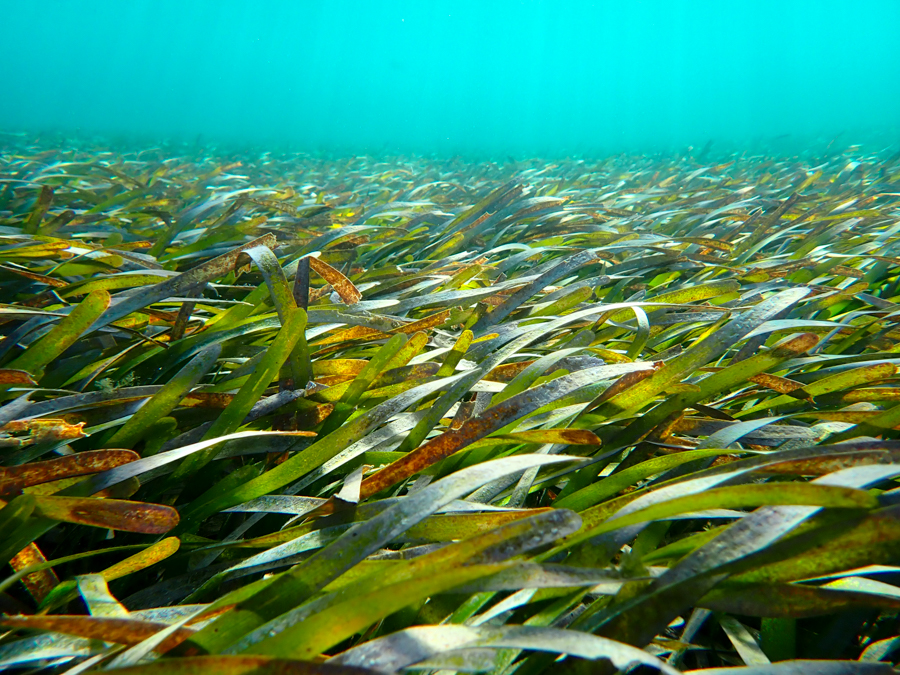
Way back in time, all flowering plants lived on land. But about 100 million years ago, some plants developed the ability to live in the sea! It’s not an easy task—it’s super salty, waves and currents keep trying to wash you away, and somehow you have to pollinate your flowers underwater. But seagrass evolved to do that, and it’s transformed our coastlines!
About 65 species of seagrass have evolved since then, forming meadows along the coasts of all continents except Antarctica. The Caribbean is home to three major seagrass species: turtle grass, manatee grass, and shoal grass. They may not look quite as exciting as coral reefs, but they are crucial habitats for marine life, and in turn, provide lots of benefits to humans.
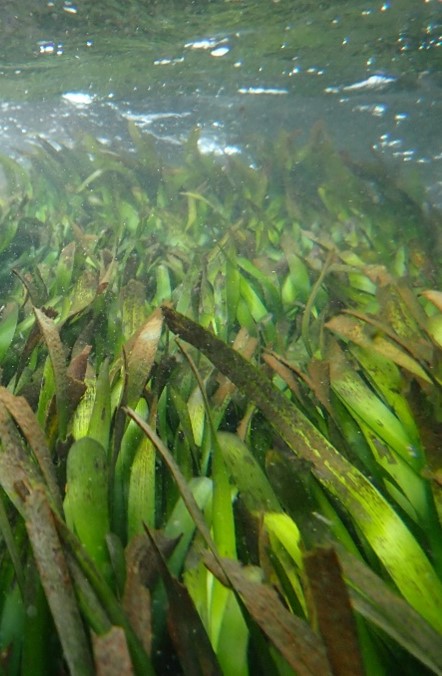
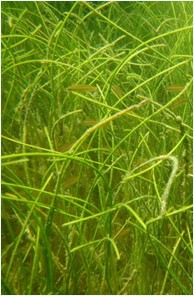
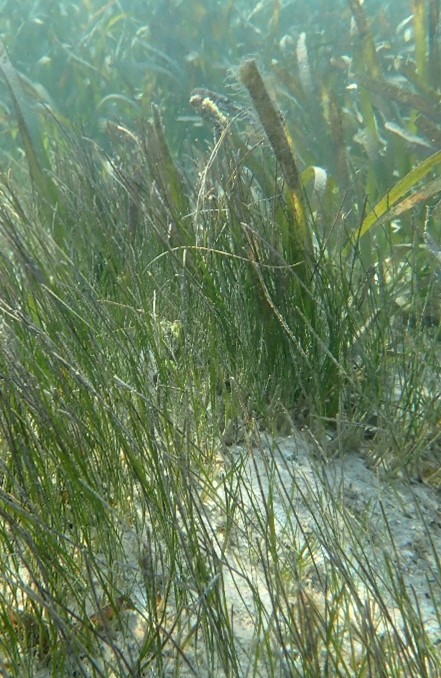
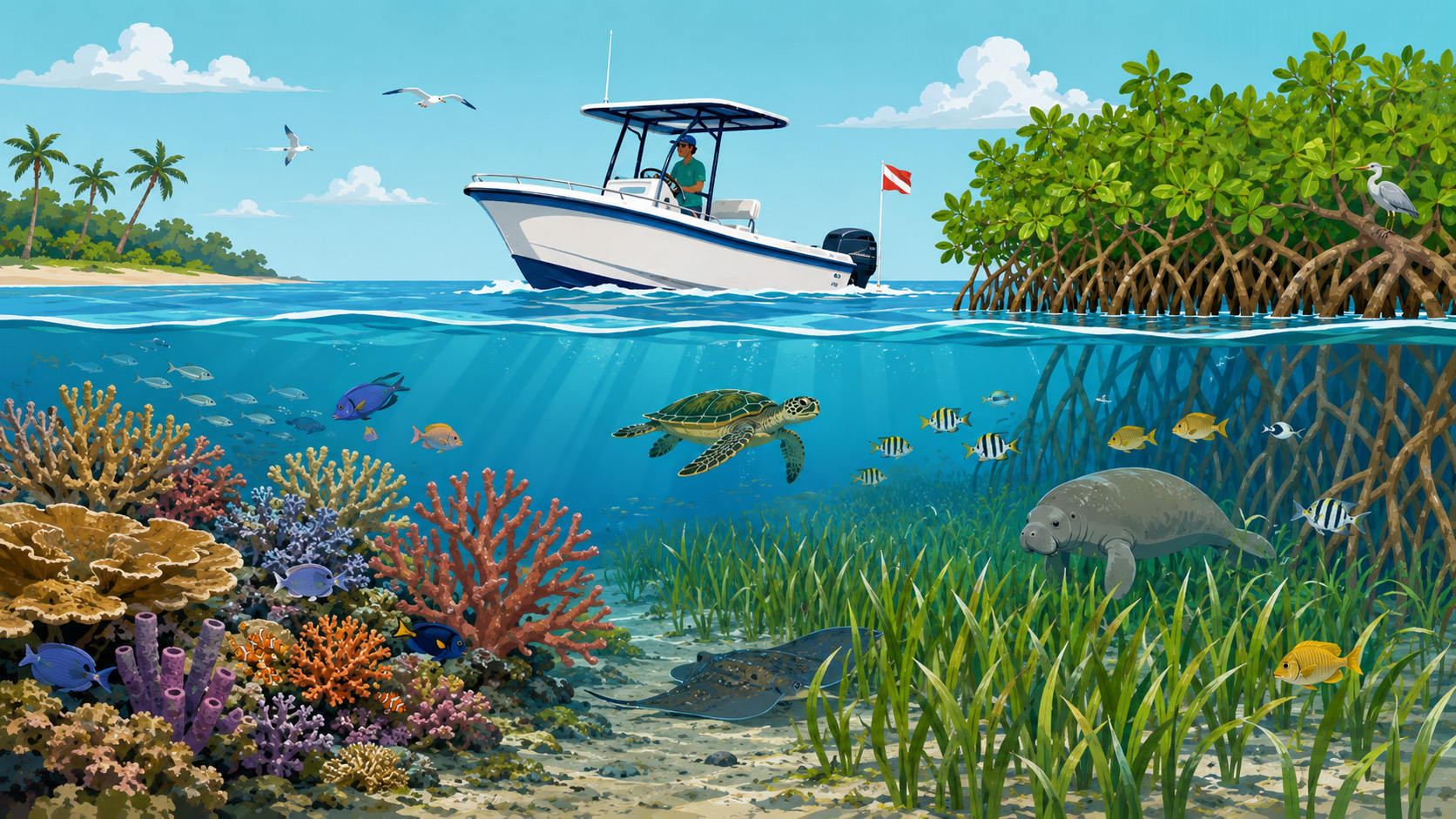
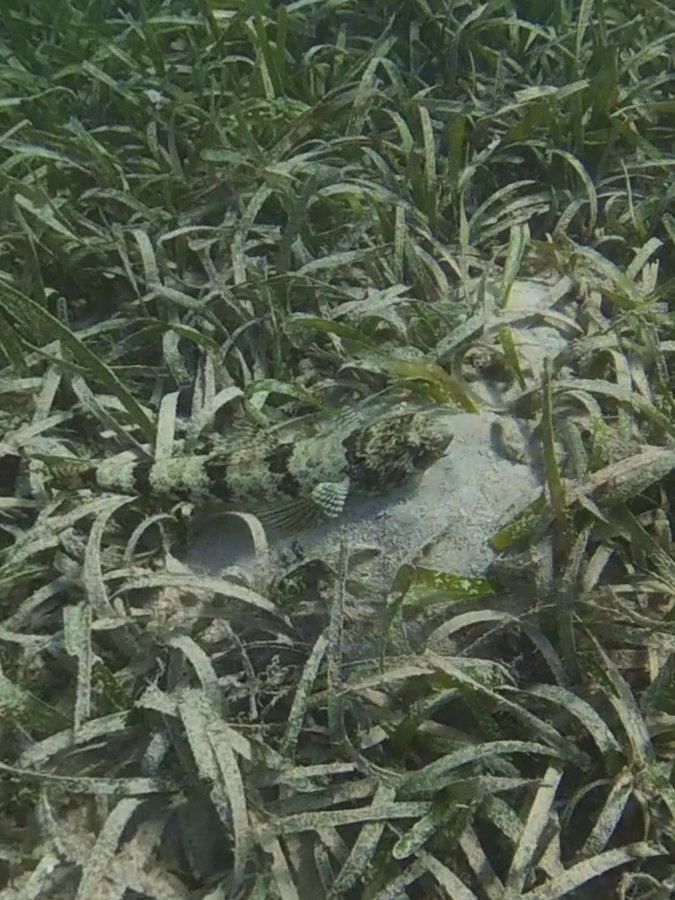
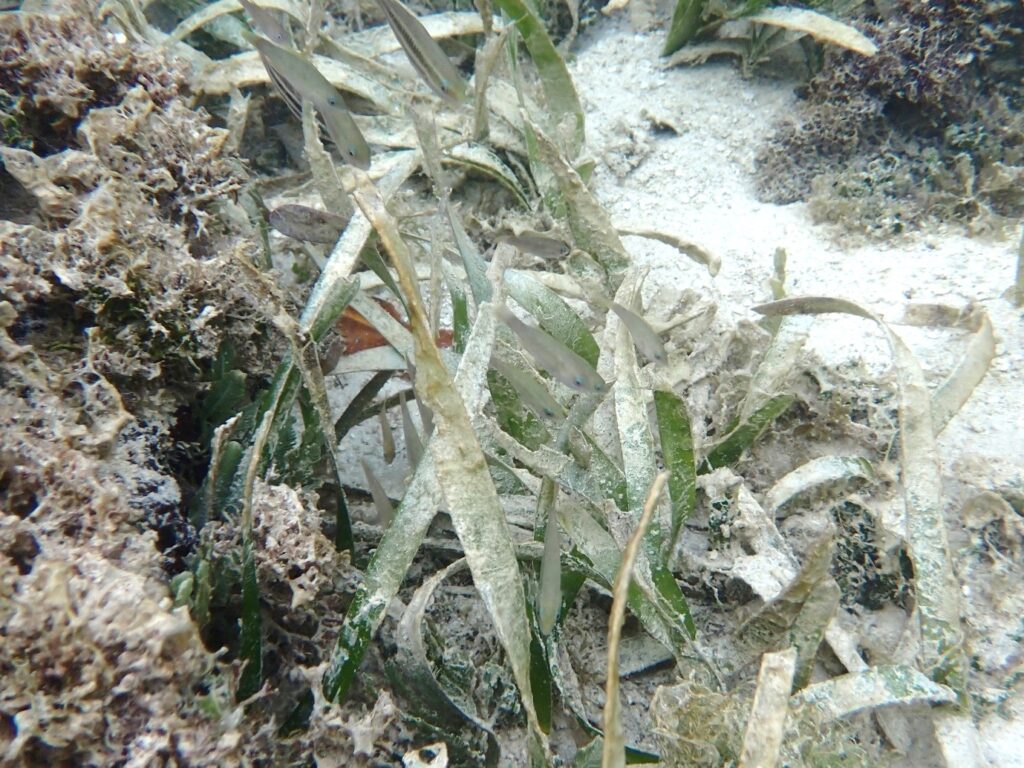
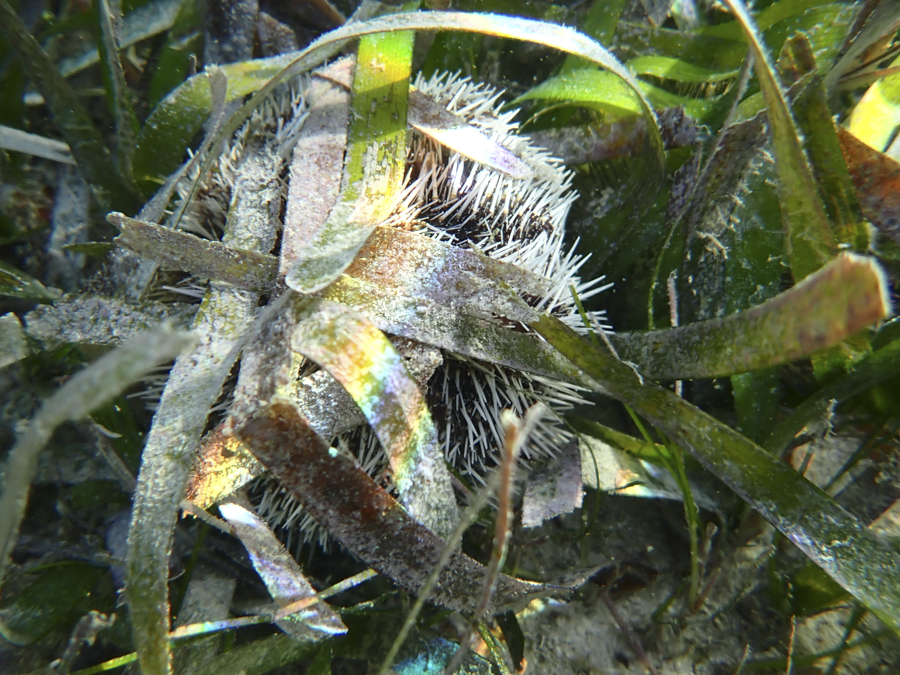
Seagrass meadows are home to many animals, creating busy, bustling ecosystems. It might not be immediately obvious, but hiding between the leaves are lots of fish, crabs, sea urchins and countless other animals. But why are they here?
Seagrass meadows provide essential shelter. Fish, crabs, scallops and clams like to hang out in seagrass because it provides them with protection from predators while they search for food (like algae and small invertebrates). Some creatures are very well camouflaged with the blades, making it extra difficult for predators to spot them. Many of these animals use the seagrass as a nursery when they are young and particularly vulnerable, moving out into deeper waters when they have grown bigger and stronger.
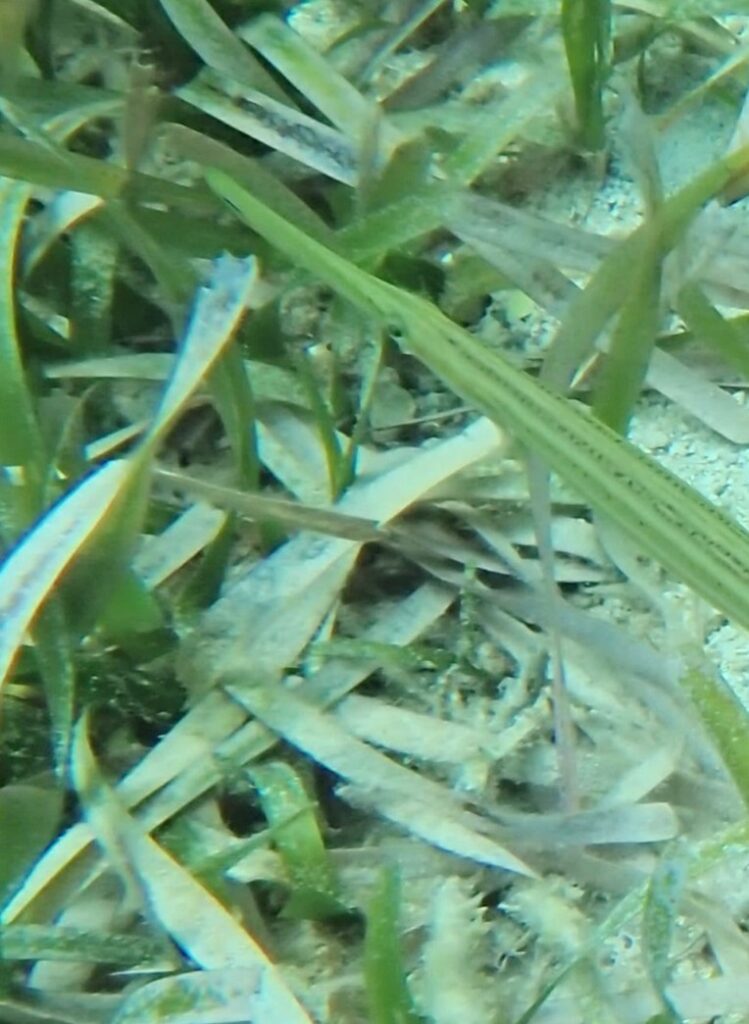
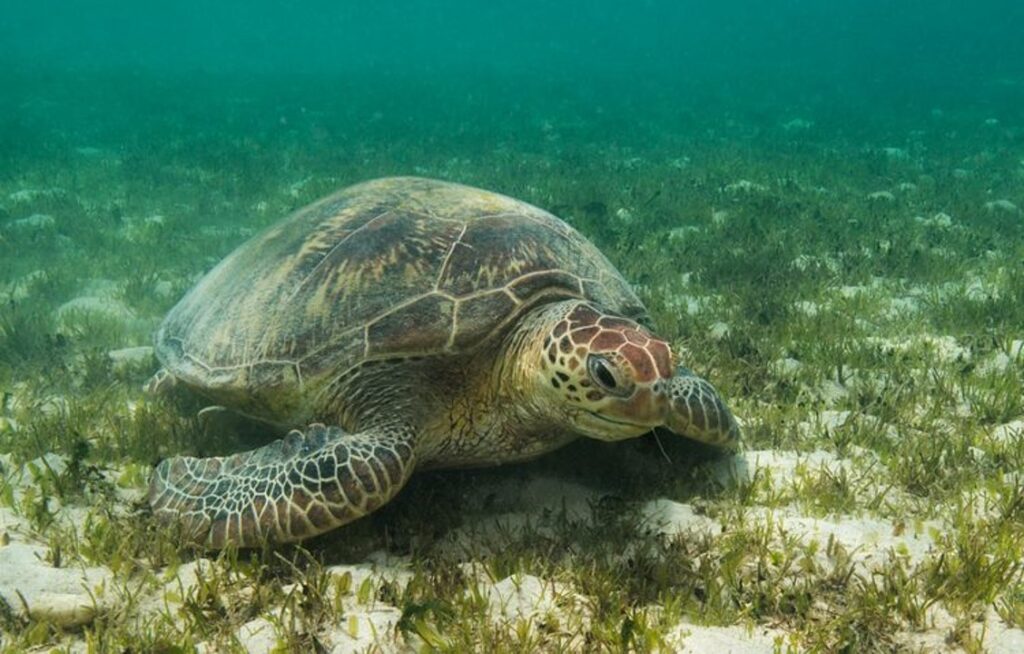
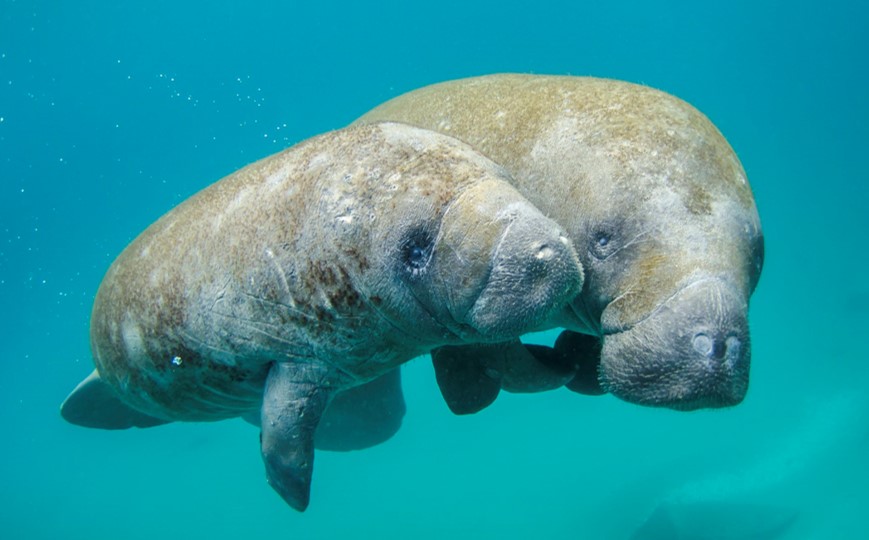
Other species come for a very different reason—seagrass itself is on the menu! Seagrass happens to be the favourite food of some of the graceful giants of the Caribbean—green sea turtles and manatees, as well as certain fish species that feed directly on the blades. Small animals like sea urchins and snails also graze in seagrass meadows, but primarily eat algae from the surface of the leaves, keeping the seagrass healthy so it can continue to grow.
Seagrass is very generous—it doesn’t stop at supporting all this life within its bounds, but also supports the health of the wider ocean by improving water quality. Like most plants, seagrass photosynthesises, releasing oxygen into the water, which fish and other animals need to breathe. Sand and sediment floating through the water become trapped between the leaves, making the water clearer. This helps enough light reach seagrass as well as other light-loving ecosystems, like coral reefs. Moreover, seagrass absorbs excess nutrients from the water, weakening the effect of pollution from sewage and agriculture, and reducing the chance of harmful algal blooms. Incredibly, it can release anti-microbial chemicals that reduce disease in nearby coral reefs and other marine organisms.
From sheltering baby fish and feeding turtles to keeping the water clean, seagrass is already proving itself to be a marine marvel. But this is just the beginning. In our next post, we’ll dive deeper into the surprising ways seagrass benefits people—protecting coastlines, storing carbon, and even fighting disease.
IMAGE CREDITS:
Manatee Grass, Syringodium filiforme by Tania Cota. [CC BY 4.0 (https://creativecommons.org/licenses/by/4.0/)], 24 July 2018 via iNaturalist. https://www.inaturalist.org/photos/23004192
Sea turtle in seagrass, Australia by Jayne Jenkins. [CC BY 4.0 (https://creativecommons.org/licenses/by/4.0/)], downloaded 17 Jan 2025 via The Ocean Agency: Ocean Image Bank (no upload date given). https://www.theoceanagency.org/search-result?img=YUI3BxIAACIAOZDR
Mother manatee and calf swimming out of the inlet by NOAA. [Public Domain (https://creativecommons.org/public-domain/)], 25 June 2019 via Unsplash. https://unsplash.com/photos/mother-manatee-and-calf-swimming-8EXZXZrj3Tw
All other images courtesy of Isabel Key.