Winners of the 2024 Science Without Borders® Challenge
The 2024 Science Without Borders® Challenge invited young artists from around the world to dive into the ocean’s mysteries with the theme, “Hidden Wonders of the Deep.” This theme encouraged students to illustrate the amazing life found in the ocean’s least explored places—from glowing creatures that light up the dark to strange animals living in extreme conditions.
With over 1,700 entries from 82 countries, the competition attracted incredible talent and creativity. Students aged 11-19 brought the deep sea to life with bold colors, detailed artwork, and imaginative ideas that illustrated both the beauty and wonder of life in the deep sea.
The winning artwork stood out because it showcased the wonder of life in the deep sea in a powerful way. These pieces didn’t just look beautiful—they told stories of adventure, discovery, and the importance of protecting the amazing diversity of life in our oceans. We are proud to showcase the 2024 Challenge winners, whose art inspires us to look closer and appreciate the hidden wonders beneath the waves.
Winners & Finalists Ages 11-14:
First Place (11-14): "Wonders of the Twilight Zone" by Claire Kim, Age 12, Canada
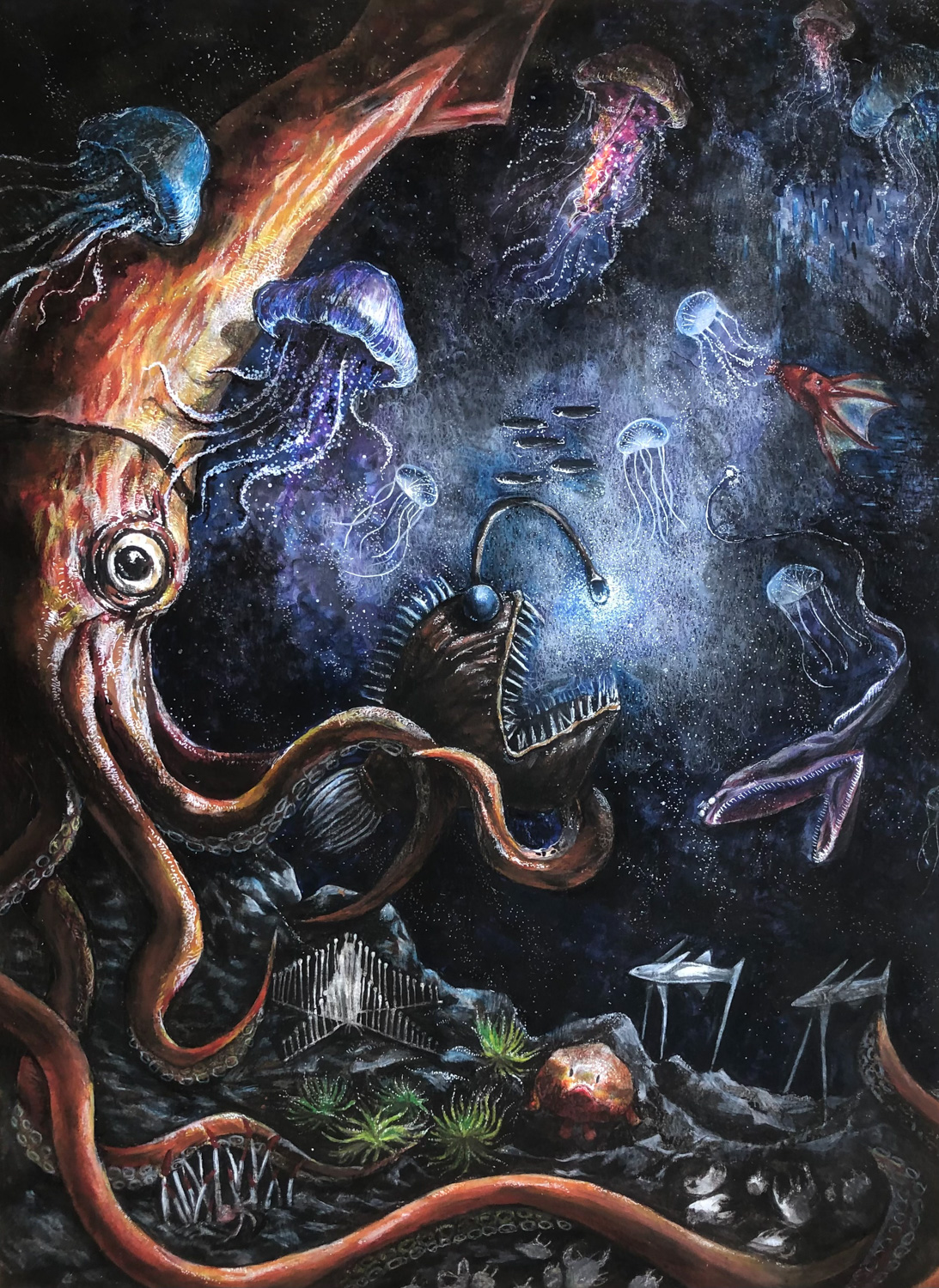
Artist's Statement: Under the deep sea where it is a dark world full of mysteries, there are weird creatures we have not seen. When we think of the deep dark parts of the ocean, the creatures that come to mind usually look unattractive, bizarre, or very unsettling. However deep down in the twilight zone, it is like various colours of fireworks. You can find life with vibrant pinks and blues like a whole new dimension with its own beauty and mysteries. Some even carry light and grace upon seeing them. When a light is lit in the twilight zone, we can see the many charmers who have been hiding in the dark. The deep sea is not all about the big, scary, ugly, or distorted looking creatures, it is about a magical world full of beauty and mesmerizing sights to behold.
Winners & Finalists Ages 15-19:
Second Place (15-19): "Under the Sea" by Nadia Cho, Age 16, United States of America
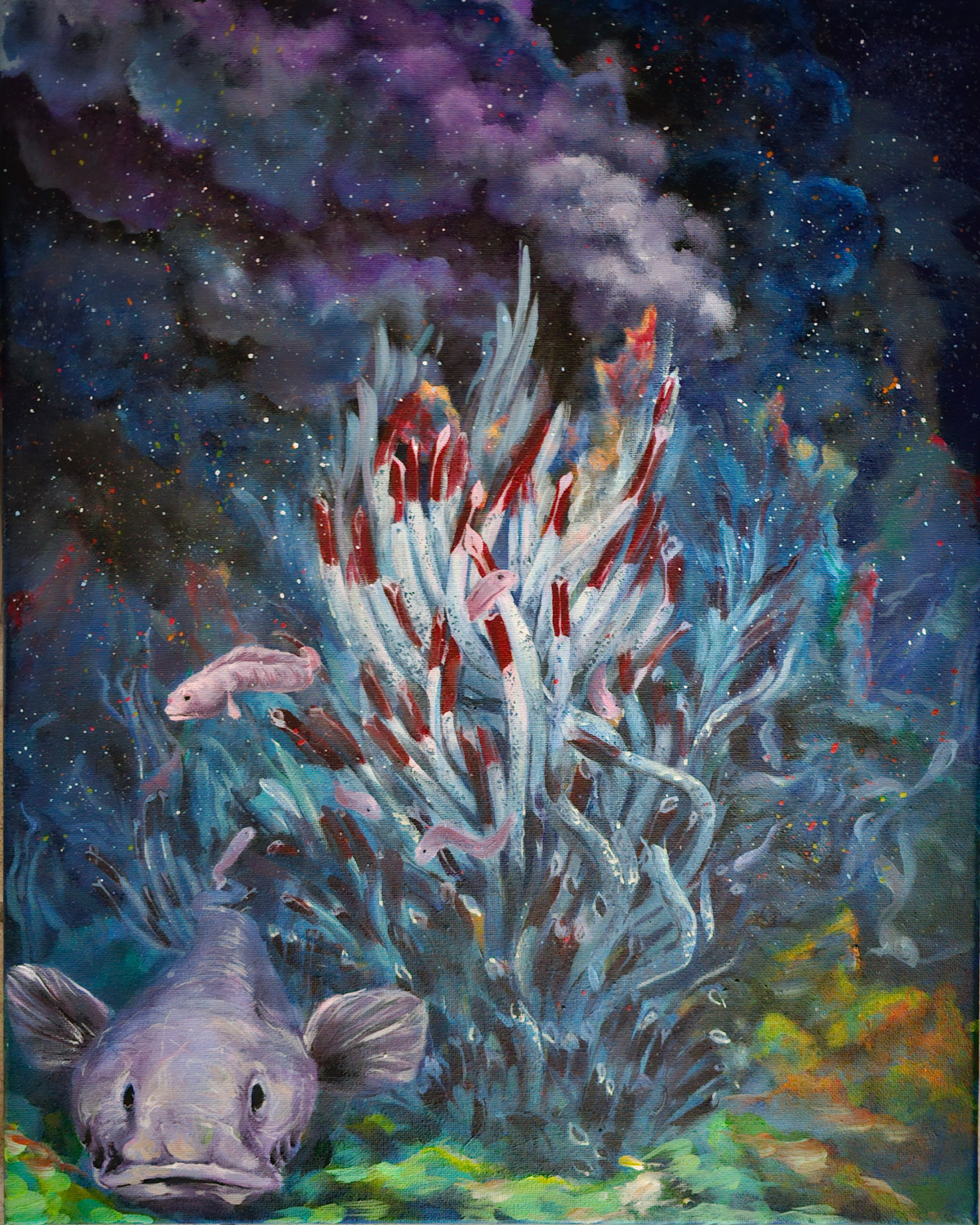
Artist's Statement: In the bathyapelagic zone, tubeworms rest around hydrothermal vents. These tubeworms may seem a little grotesque by their mass numbers, but they are important for the surrounding life by the hydrothermal vents. The tubeworms have a symbiotic relationship with chemosynthetic bacteria inside their body. As the tubeworms transfer hydrogen sulfide from the vent water, the bacteria converts the hydrogen sulfide to food that the tube worm can eat. Since there are many tubworms, it provides a perfect shield to the Zoarcid fish who seek shelter from predators in the deep. Although the tubeworms may provide safety for a few species, they reminded me of the corals in coral reefs and how they provide the same thing for many different species. Hence why I illustrated the type of ecosystem the tubeworms live in and emphasize the beauty of its ecosystem.