In today’s blog, Her Royal Highness Princess Hala bint Khaled bin Sultan, President of the Khaled bin Sultan Living Oceans Foundation, reflects on the profound and often overlooked connections between the desert and the ocean, emphasizing why ocean health is vital—even in regions far from the coast.
As the world gathers for COP16 in Riyadh, which begins today, Princess Hala’s insights resonate deeply. This year’s theme, “Our Land, Our Future,” highlights the pressing issues of desertification and habitat degradation, challenges that are intrinsically linked to the health of our oceans. Her message is a powerful reminder that each of us—whether by the sea or in the desert—can contribute to the health of our shared planet.
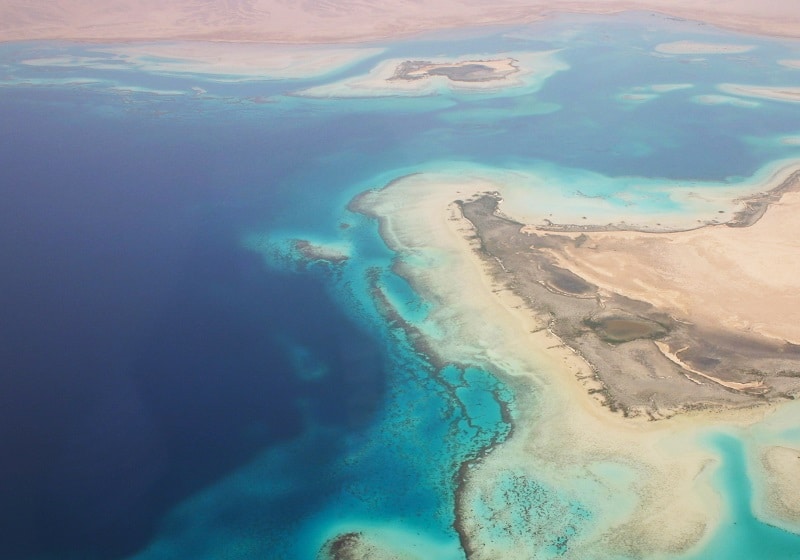
As a resident of Saudi Arabia, I’m frequently met with puzzled looks when I express my passion for ocean conservation. People often wonder why someone living in a desert would be concerned about the health of the oceans. Similarly, despite being surrounded by endless stretches of sand, my father founded an ocean conservation foundation. But the truth is, the desert and the ocean are more connected than meets the eye. From influencing weather patterns to supporting biodiversity, the ocean’s impact extends far beyond coastal regions, reaching even the heart of the desert.
Living in the heart of Saudi Arabia, it’s easy to feel disconnected from the ocean. After all, our vast deserts dominate the landscape, covering about 95% of the country. But did you know that Saudi Arabia boasts a coastline stretching over 2,500 kilometers along the Red Sea and the Arabian Gulf? Despite the desert’s prominence, the health of our oceans directly impacts life in the desert and beyond.
While it may seem counterintuitive, changes in the sea profoundly affect desert environments worldwide. The ocean plays a crucial role in regulating weather patterns, influencing everything from temperature to precipitation. For those of us in arid regions, such as Saudi Arabia, alterations in oceanic conditions can exacerbate droughts or bring unexpected rainfall, impacting agriculture, water resources, and the livelihoods of our people.
But our actions in the desert also have far-reaching consequences for the oceans. From unsustainable agricultural practices leading to soil erosion and runoff, to industrial activities polluting waterways that eventually flow into the sea, what we do inland directly affects marine ecosystems. As desert inhabitants, we must recognize our interconnectedness with coastal communities and marine life.
The biodiversity of our oceans is intricately linked to desert ecosystems. Many species, including migratory birds and marine mammals, rely on both habitats throughout their life cycles. The destruction of mangroves and coastal wetlands, often caused by human activities, not only threatens these species but also diminishes the natural buffers against storms and coastal erosion.
So, what can we do to bridge the gap between the desert and the ocean? It starts with individual actions that collectively make a big difference. Whether it’s reducing our consumption of single-use plastics, conserving water, supporting sustainable practices in our daily choices, or educating others about the importance of ocean conservation,we can all contribute to safeguarding the health of our interconnected planet. Embracing our role as stewards of the environment, regardless of where we live, is essential for creating a positive impact for future generations.
By taking these steps, we can ensure that the health of our oceans and desert environments is preserved for generations to come. Let’s embrace our role as stewards of the planet, whether we reside by the sea or amidst the dunes of the desert. Together, we can make a difference, no matter where we call home.