search-icon
J.A.M.I.N. Program Expands to Rural Jamaica

A guest blog by Ali Teesdale, a Peace Corps Volunteer in rural Jamaica

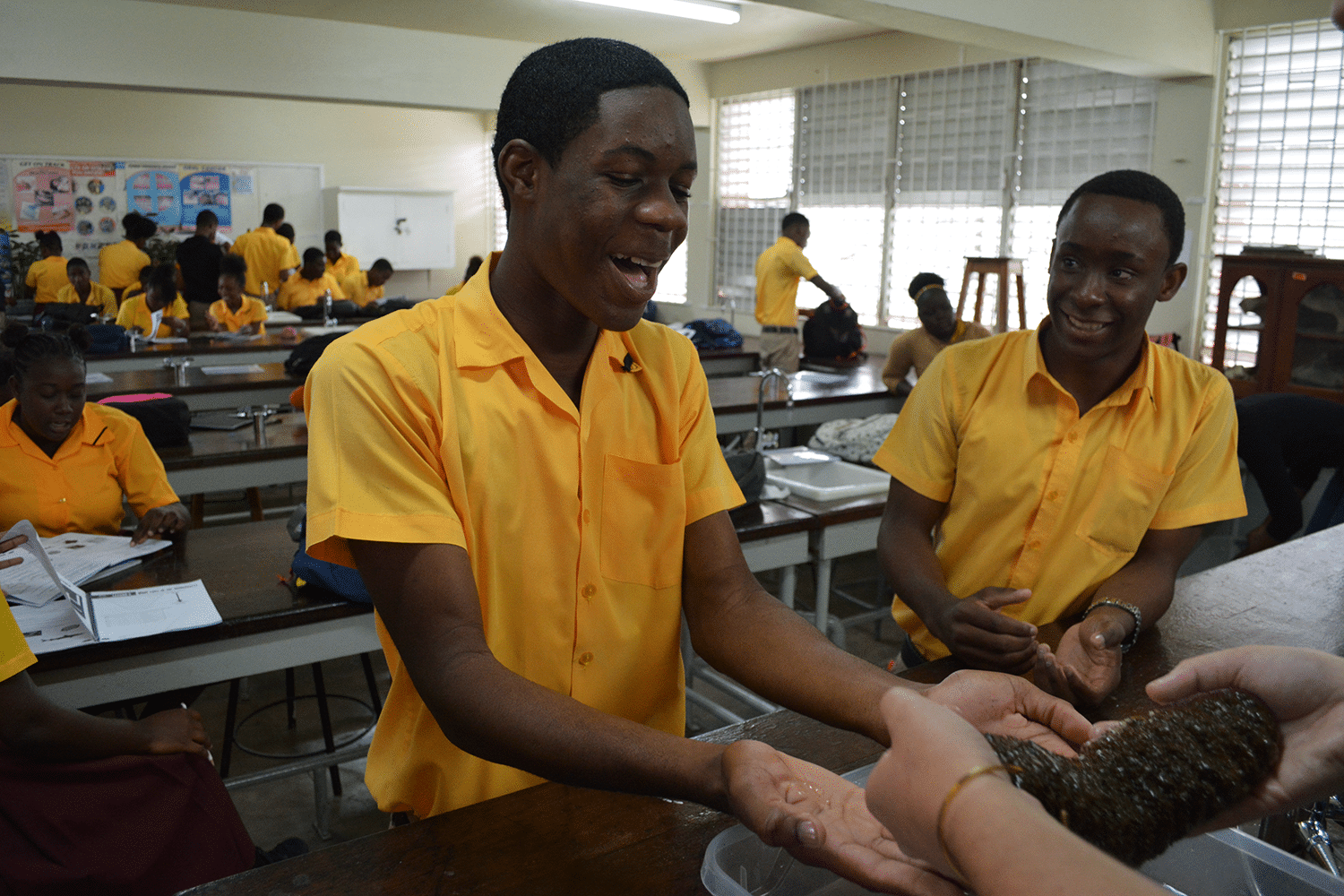
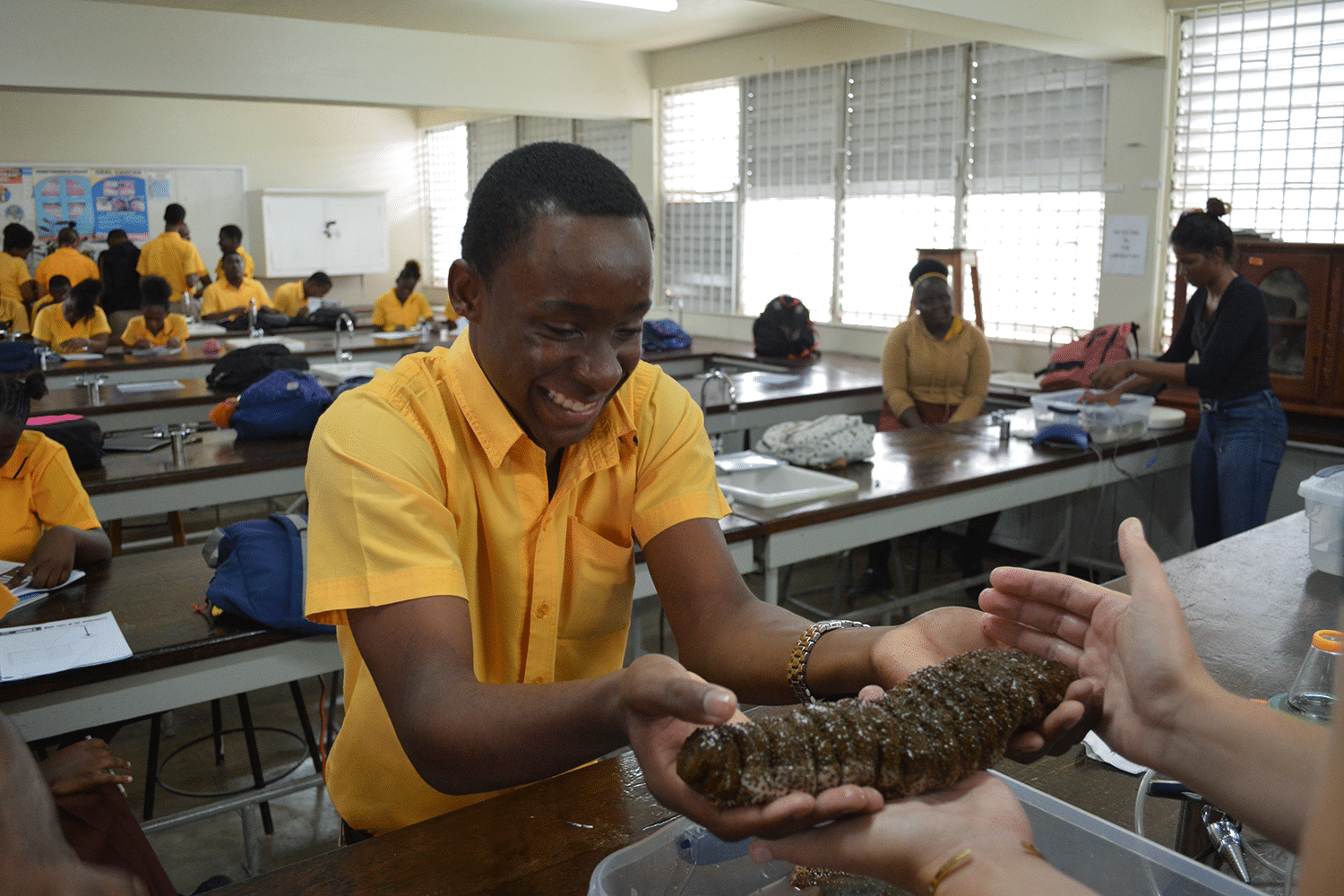
“Miss, a wa mek im move so?” (Miss, why is it moving like this?) A high school student asks me, holding a sea cucumber while it slowly forms to her hand, squishing her own face in uncertainty. I show her the bottom of the animal where its tube feet retract, sensing a threat. I am thrilled to witness her wonder and disgust. 
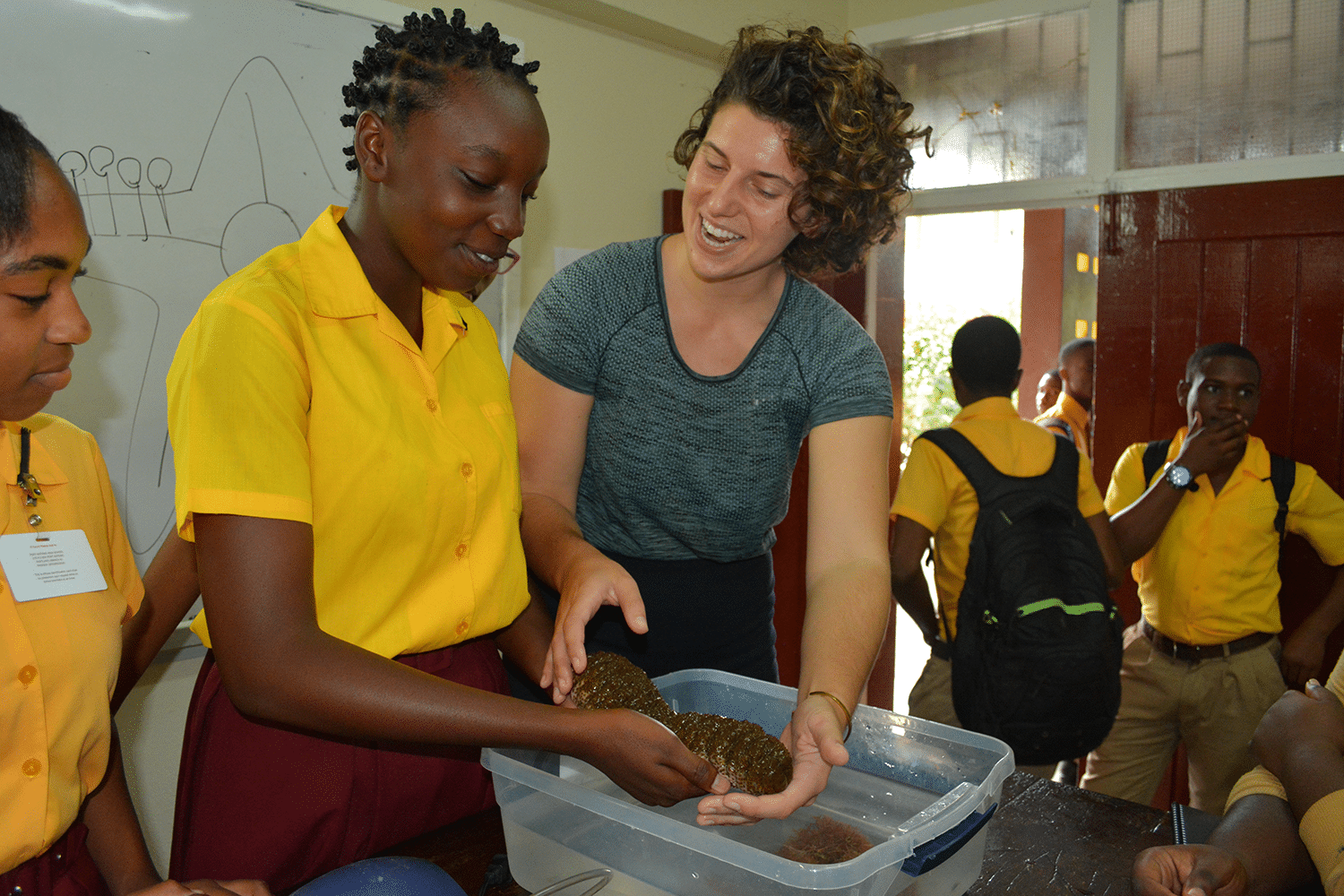
Ali Teesdale teaching students at Port Antonio High School about sea cucumbers, an animal that lives in and around the mangroves.

I, Ali, am an Environment Sector Peace Corps Volunteer living nearby in rural Jamaica, and I’ve been assisting the Khaled bin Sultan Living Oceans Foundation (LOF) and Alligator Head Foundation (AHF) with the implementation of the Jamaican Awareness of Mangroves in Nature (J.A.M.I.N.) program. I’m excited to participate in this newly formed partnership that has allowed LOF to expand the J.A.M.I.N. program to the Portland area, a rural parish on the eastern side of Jamaica.
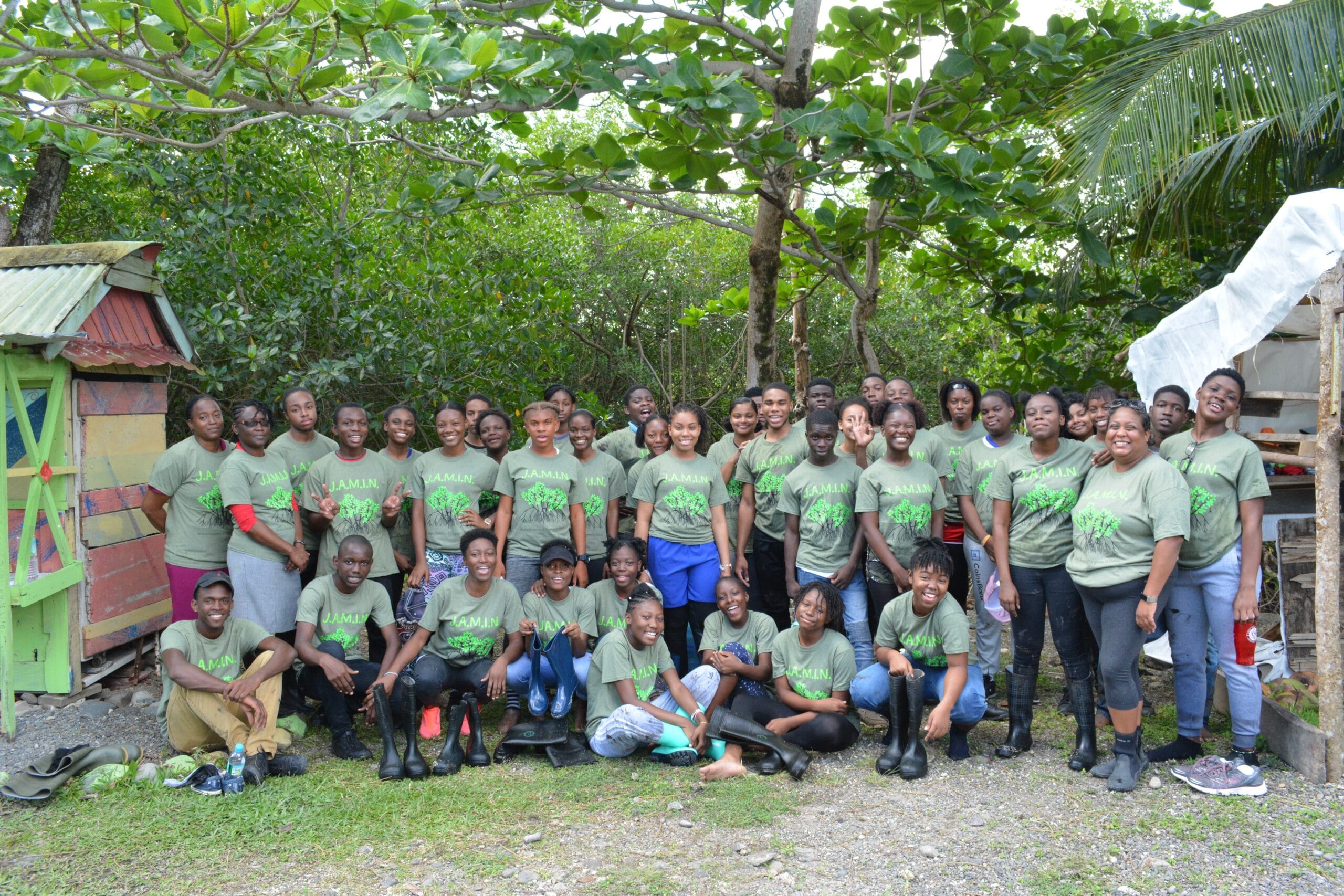
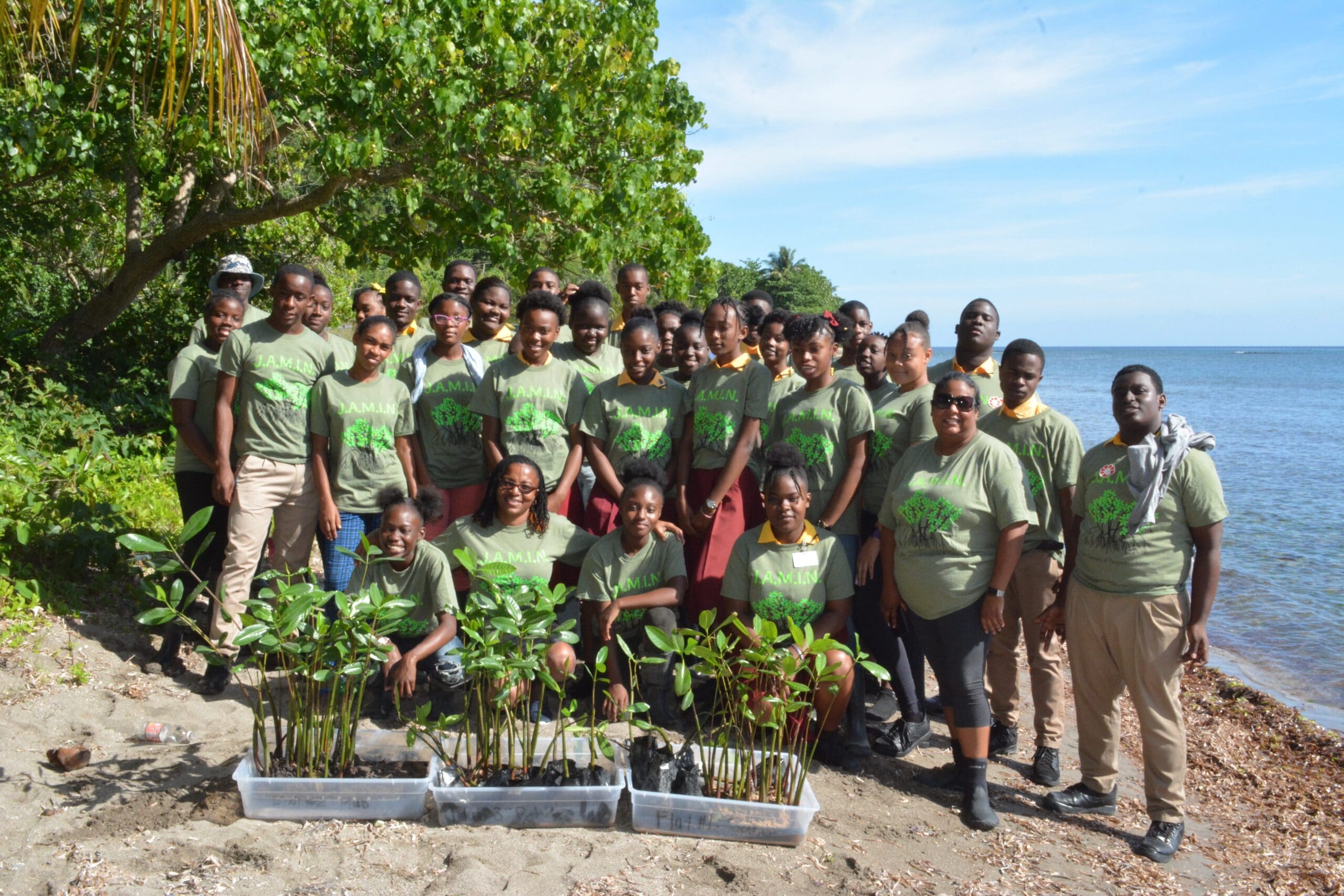
Titchfield High School (left) and Port Antonio High School (right) participated in the J.A.M.I.N. program in Port Antonio, Jamaica. 

I know firsthand how novel this experience is for a Jamaican schoolchild. Jamaicans that live in rural areas often have limited exposure to the rest of their island, and they face multiple barriers to interact with coastline ecosystems (taxi fare, fear of water or lack of water safety, proximity, private access beaches, etc.).

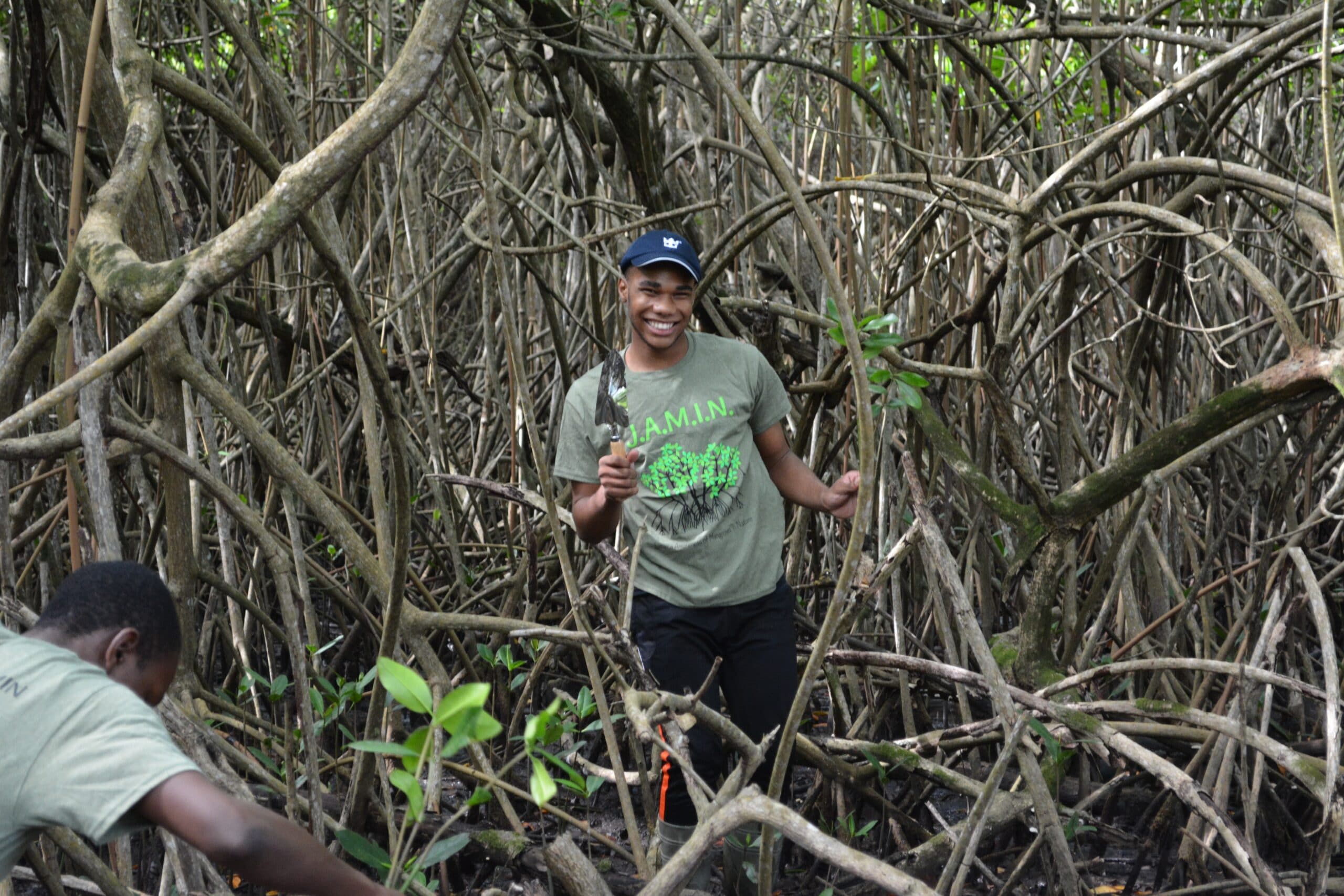
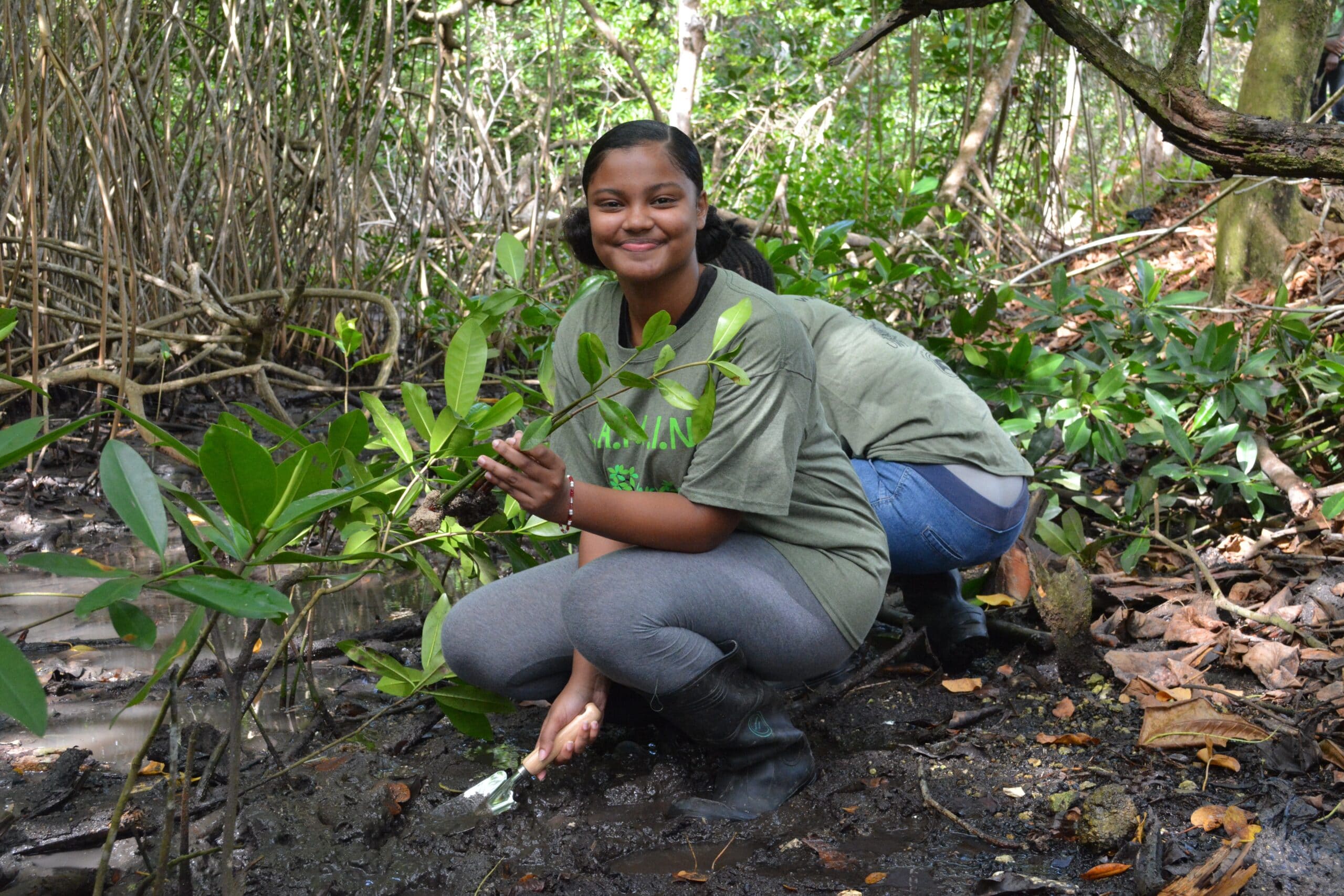
J.A.M.I.N. provides the opportunity for these rural youth to engage with Jamaica’s natural environs, and as a result, LOF and AHF have broken through these boundaries allowing students to experience their likkle but tallawah (little but strong) nation. I was pleasantly surprised when Jamaicans, who are typically very concerned about cleanliness, didn’t hesitate to follow “Miss Amy” Heemsoth, LOF’s Director of Education tramping through inches of mangrove mud. 
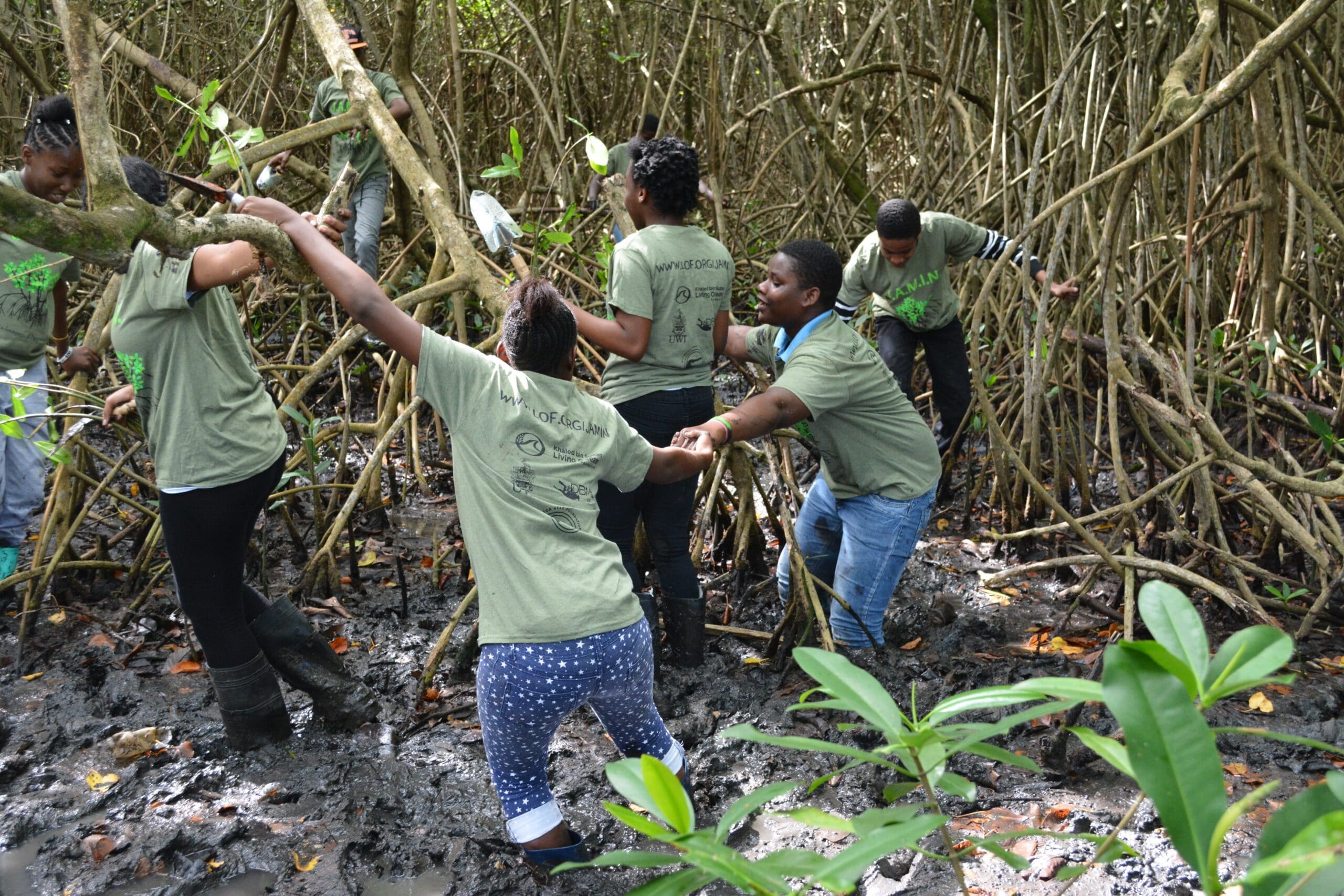
Students from Titchfield High School get muddy planting mangrove propagules that they have been cultivating for the past eight months. 

What do the students ask for after they’ve worked with AHF and LOF for a year? They want more. More time in their mangroves. More out-planting, more exposure for their fellow students and community members. They want more people to know about what they’ve learned, to help protect their island and secure its wellbeing for their children. The success of the partnership between LOF and AHF has flooded students with a steadfast desire to become knowledgeable stewards of Jamaica’s rich biological landscape. As Jamaicans say, One han wash di otha! (Teamwork makes the dream work!)

About Ali

Alexandra Teesdale is a marine botanist with an interest in science communications. She is currently serving Peace Corps Volunteer living in rural Jamaica. Primarily, she facilitates environmental education projects and climate smart adaptation strategies within her surrounding community. 
Related Posts

Meet IFAN: Helping Bring Navigate with Care to the Next Generation

If you’ve ever seen a lighthouse flashing from the shore or a brightly colored buoy bobbing in the water, you’ve seen Aids to Navigation at work.

Aids to Navigation, often called AtoNs, help mariners navigate safely. They can mark channels, warn of hazards, help vessels determine their position, and provide other information people need to make safe decisions on the water. Around the world, these systems help guide everything from small recreational boats to large commercial or container ships. 

But safe navigation isn’t only about protecting vessels and the people aboard them. The choices mariners make can also affect the animals and ecosystems beneath and around them.

That connection between maritime safety and ocean conservation is at the heart of this year’s Science Without Borders® Challenge—and of our partnership with this year’s theme sponsor, the International Foundation for Aids to Navigation (IFAN).

Read More
OceanImageBank_TheOceanAgency_Bleaching_16-scaled-1

Coral Bleaching Awareness Month: Giving Coral Reefs a Chance to Recover

For hundreds of millions of years, coral reefs have supported life in our oceans. Although they cover less than 1% of the ocean floor, they provide habitat for at least 25% of all marine species. They also support people around the world by sustaining fisheries and tourism, providing food and livelihoods, and helping protect coastlines from waves and storms.

But coral reefs are under increasing pressure. Pollution, overfishing, coastal development, physical damage, and increasingly warm ocean temperatures can all affect reef health. One of the most visible signs that a coral reef is under stress is coral bleaching.

This September, in recognition of Coral Bleaching Awareness Month, we’re taking a closer look at what happens when corals bleach, why bleaching matters, and what scientists around the world are doing to better understand, protect, and restore coral reefs.

Read More
Privacy Overview

This website uses cookies so that we can provide you with the best user experience possible. Cookie information is stored in your browser and performs functions such as recognising you when you return to our website and helping our team to understand which sections of the website you find most interesting and useful.  You can view our complete Privacy Policy here.

Strictly Necessary Cookies

Most of our cookies are used to improve website security and reduce spam. These cookies should be enabled at all times. They also enable us to save your preferences for cookie settings.

3rd Party Cookies

This website uses Google Analytics to collect anonymous information such as the number of visitors to the site, and the most popular pages. Keeping this cookie enabled helps us to improve our website.