search-icon
Maldives: A Country of Contrast

Expedition Log: Maldives – Day 1

From the window of our airplane, I gaze in amazement at the expanse of high rise buildings crowded onto the tiny, low lying Indian Ocean island of Male, the capital of Maldives. Home to nearly half of the country’s 328,000 people, crowded together in an area of 1.8 km2, this metropolis is a buzz of cars, motorbikes and water taxis. Dozens of ferries and speedboats line the wharf, providing the main mode of transportation between islands.
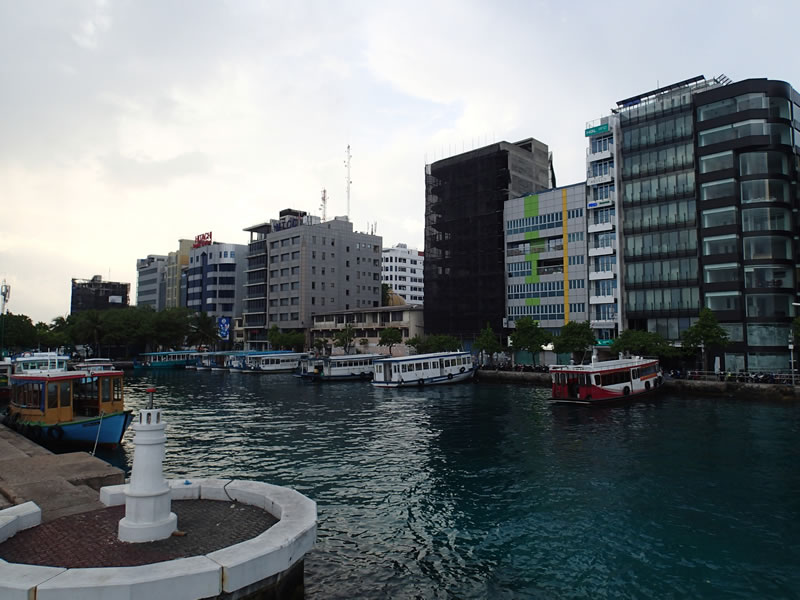
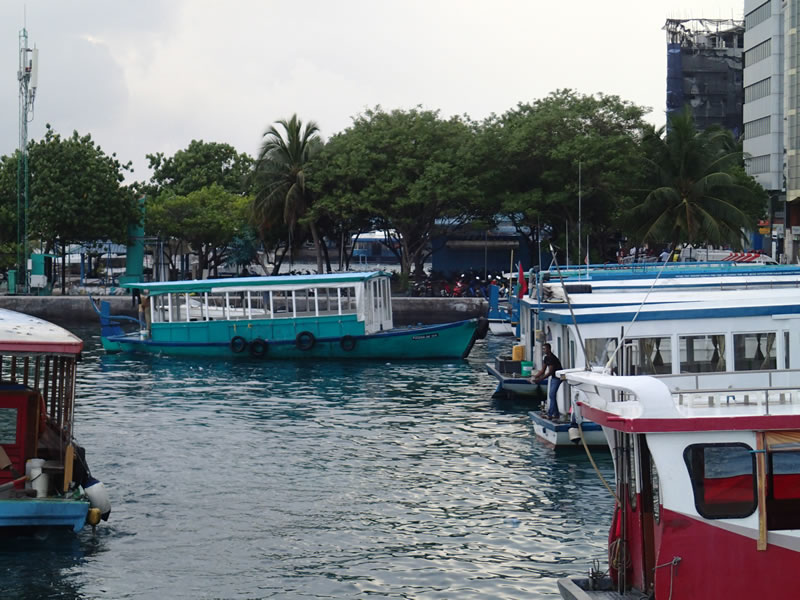
Male waterfront ferry in Male
Male waterfront lined with high rises and filled with ferries.

We land on the neighboring island of Hulhumale, a completely man-made patch of rock and sand first constructed in 2004 and now home to a rapidly expanding residential area and the international airport. Male and Hulhumale are located at the southeastern end of North Male atoll (Kaafu Atoll). Dozens of other islands encircle the atoll, most each home to a luxurious resort, water villas, uninhabited stretches of coconut palm and sea grape lined sandy beaches, sea grass beds, and coral reefs.
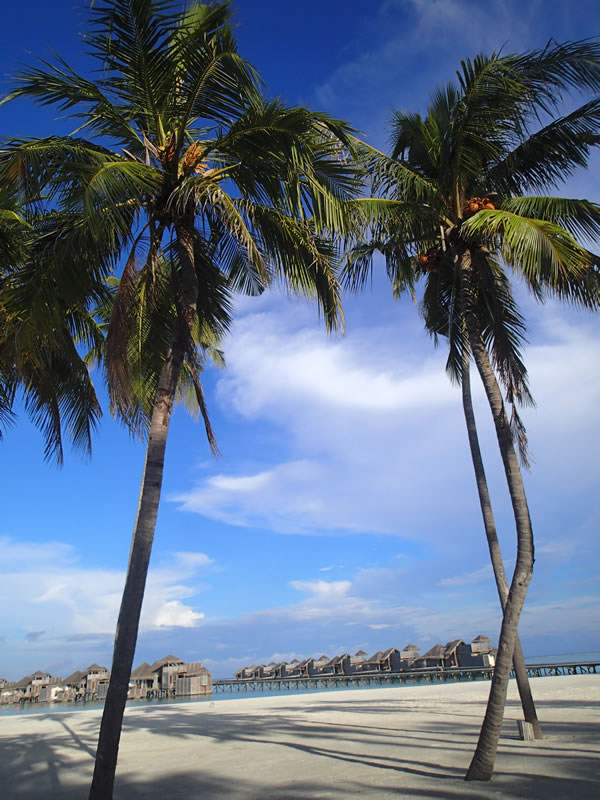
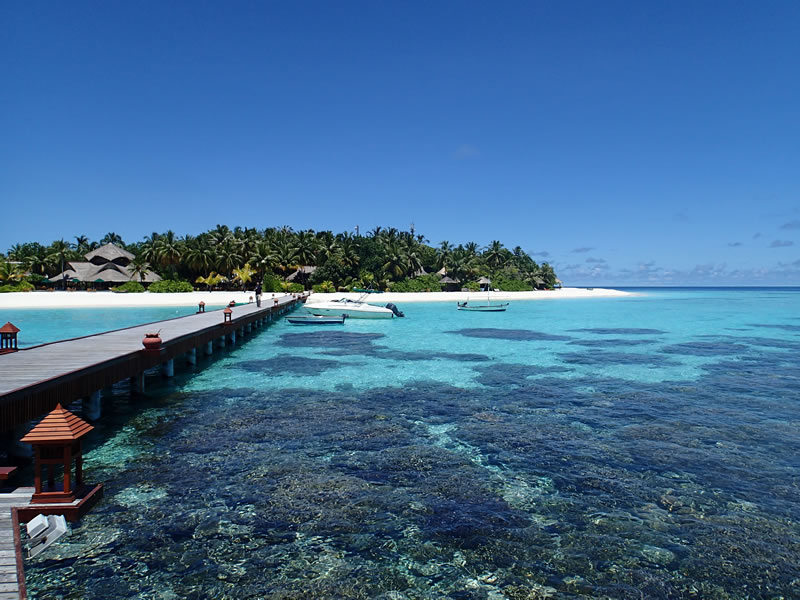
coconut palm beach and water villas Gili Lankanfushi Male in the Maldives: Contrasts and COTS
Coconut palm beach and water villas at Gili Lankanfushi luxury resort (left). / Coral surrounding Banyon Tree resort (right).

North Male atoll is one of the Maldives 26 atolls. The atolls form a double chain extending 900 km north-south between latitudes 1° S to 8° N. In total, there are 1,192 islands spread over an area of about 90,000 km2, but only 192 are inhabited. These islands are the lowest in the world, with a maximum elevation of 2.4 m and more than 80% which are less than 1 m above sea level.

The Maldives is home to the seventh largest reef system in the world. Because more than 80% of these islands are made of coral, and reef-based tourism is the predominant source of economy and employment, coral reefs are critical to the survival of the Maldives. In recent times the reefs have been badly damaged during mass bleaching events, but recovery has been fairly rapid. Potential degradation due to predicted temperature stress from the current El Nino event is disconcerting, as particularly severe outbreaks of crown of thorns starfish (COTS) have plagued many areas.
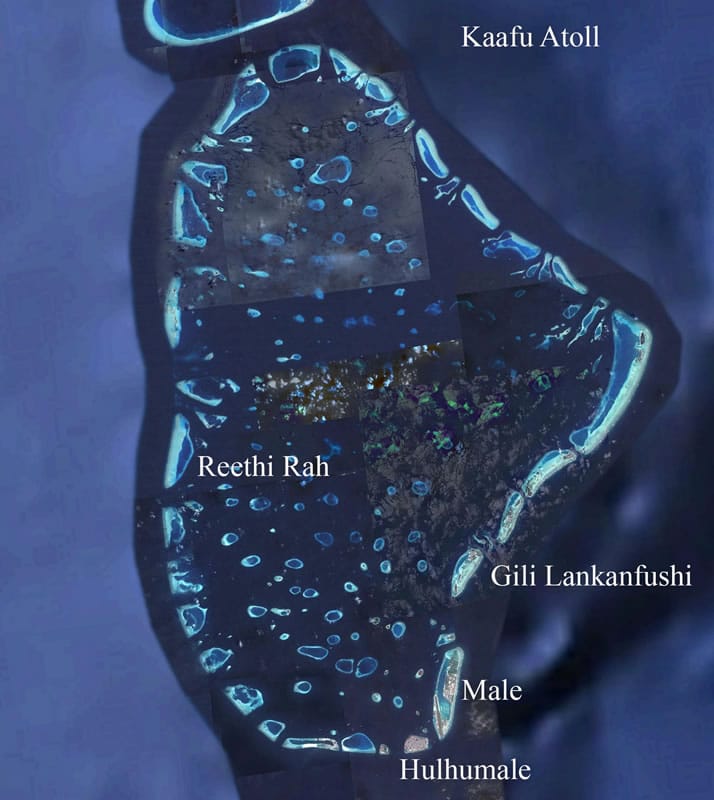
Targeted locations for SCAR program in North Male.

To help reduce ongoing coral losses from COTS, our team of scientists is implementing the Starfish Control and Removal Program (SCAR) in the Maldives. Over the next few weeks, we’ll tell you more about our efforts and successes here as we undergo this COTS venture.
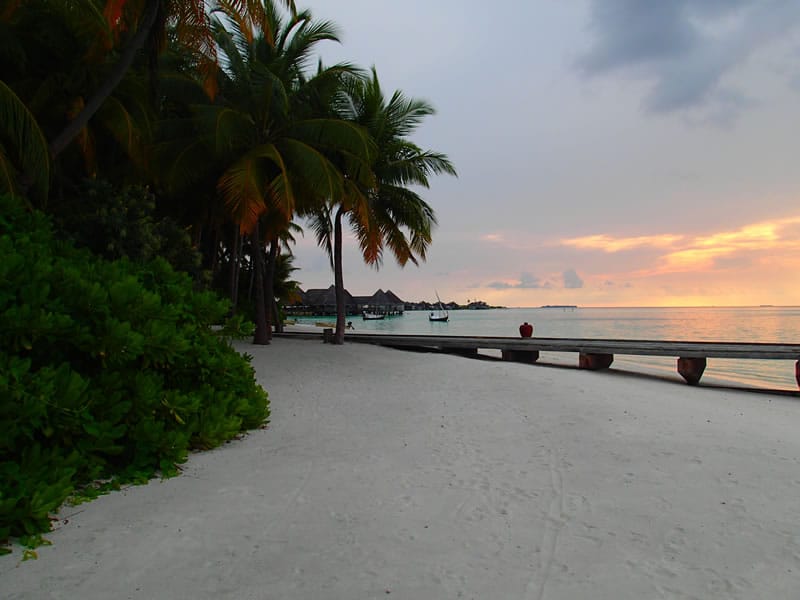
Sunset at Gili.
Sunset at Gili.

Photos by Andrew Bruckner
Related Posts

Introducing Our New Website: A Fresh Look for the Foundation’s Future

As we celebrate the Khaled bin Sultan Living Oceans Foundation’s 25th anniversary, we are proud to unveil our newly redesigned website—a modern home for our science, conservation work, and educational programs. This launch marks an important moment for the Foundation as we honor our long history and look toward the future of ocean conservation.

For more than two decades, the Foundation has worked tirelessly to improve the health of our living oceans. We have advanced ocean science, led one of the largest coral reef research missions in history, restored mangrove forests with local communities, created award-winning education programs, and shared the wonders of the ocean with people around the world. Our new website reflects the organization we are today—focused on conserving coral reefs, restoring mangrove forests, and improving ocean literacy—while still highlighting the legacy of work that brought us here.

The redesigned site…

Read More

Connecting People, Art, and Oceans: Championing Conservation at the 2025 IUCN Congress

The IUCN World Conservation Congress brings together thousands of leaders and decision-makers from governments, non-profit organizations, civil society, Indigenous groups, and the private sector to shape global conservation policy and action. This influential gathering serves as a platform to share knowledge, build partnerships, and advance initiatives that protect our planet’s biodiversity.

As a member of the International Union for Conservation of Nature (IUCN), the Khaled bin Sultan Living Oceans Foundation was honored to take part in the Congress, joining a global community of leaders, organizations, and changemakers committed to protecting nature and advancing sustainable futures.

Read More
Privacy Overview

This website uses cookies so that we can provide you with the best user experience possible. Cookie information is stored in your browser and performs functions such as recognising you when you return to our website and helping our team to understand which sections of the website you find most interesting and useful.  You can view our complete Privacy Policy here.

Strictly Necessary Cookies

Most of our cookies are used to improve website security and reduce spam. These cookies should be enabled at all times. They also enable us to save your preferences for cookie settings.

3rd Party Cookies

This website uses Google Analytics to collect anonymous information such as the number of visitors to the site, and the most popular pages. Keeping this cookie enabled helps us to improve our website.