
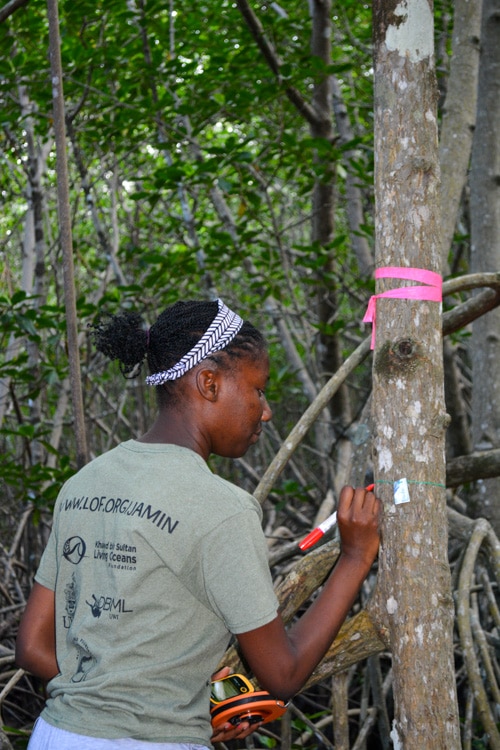
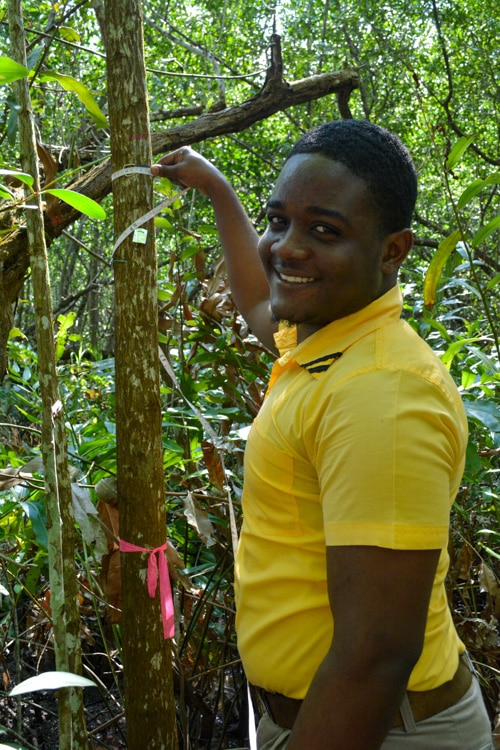
In January, our second-year J.A.M.I.N. students were tasked with collecting a variety of growth measurements from the mangrove trees that they tagged and identified inside their quadrats. Before we started, I wanted to review the characteristics that are unique to each species of mangroves, a skill they learned previously during the first year of the program. I decided to quiz the students instead. “How can we identify the red mangrove?” I asked. The replies came quickly. “Prop and drop roots.” “Pointy, thick leaves.” “Green bean-like propagules.” All correct. But among the flurry of eager replies, one stood out as several students shouted in unison. “Red tannin!”
So, what is tannin? Tannin stems from the word “tanna,” which is the Old German word for an oak or fir tree (known as a Tannenbaum). The word came about because oak tree bark and others were historically used to cure and dye animal hides in order to produce leather. Tannin is a polyphenol, an organic compound found in many plants, including mangroves. This compound is present throughout the various parts of the tree—in the bark, leaves, and roots—and it is what gives mangroves their distinct colors. It also provides many benefits.
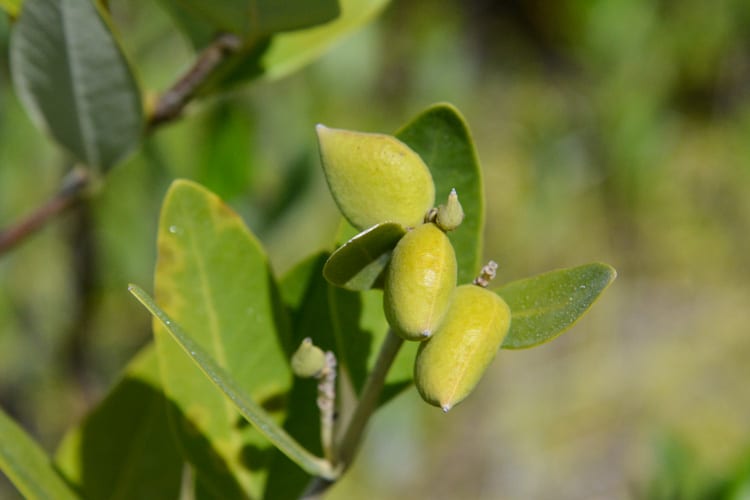
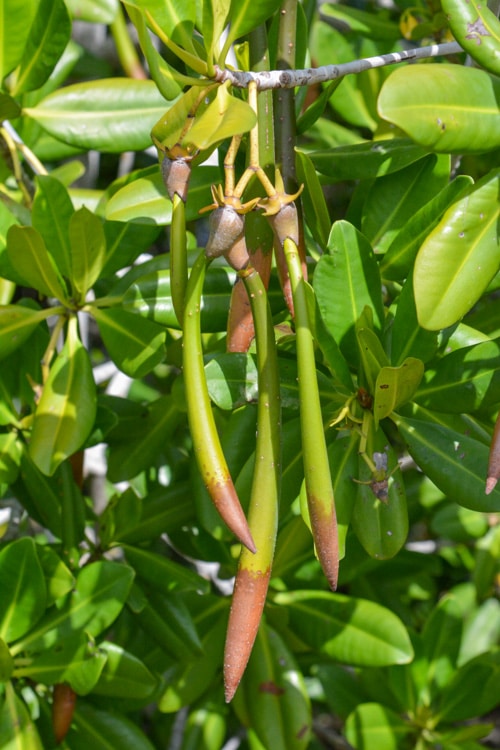
There are a variety of different polyphenol compounds that make up mangrove tannin, and each one provides a different benefit to the mangrove. Phenolic compounds are produced in the mangrove bark to defend the trees from various bacteria and fungi that may try to infect it. In the leaves it acts as a deterrent to herbivores, such as insects, that would feed on them. Mangrove leaves also contain UV-absorbing phenolic compounds in their epidermis, or the outermost layer of the leaf, which act as a sunscreen to protect the mangrove leaves from harmful UV radiation.
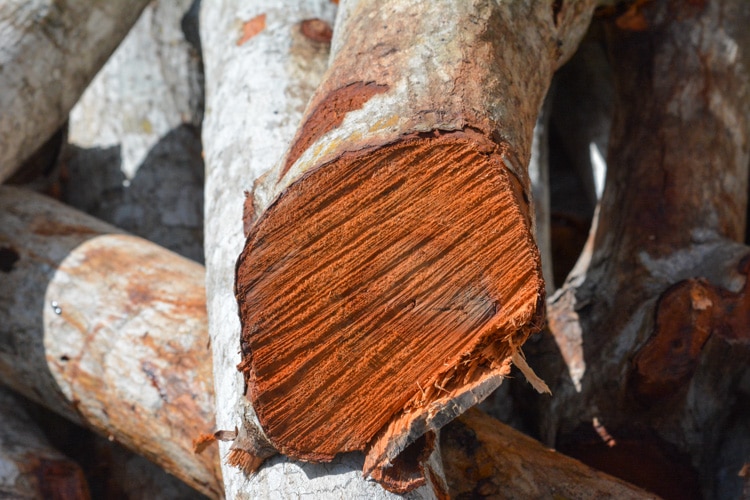
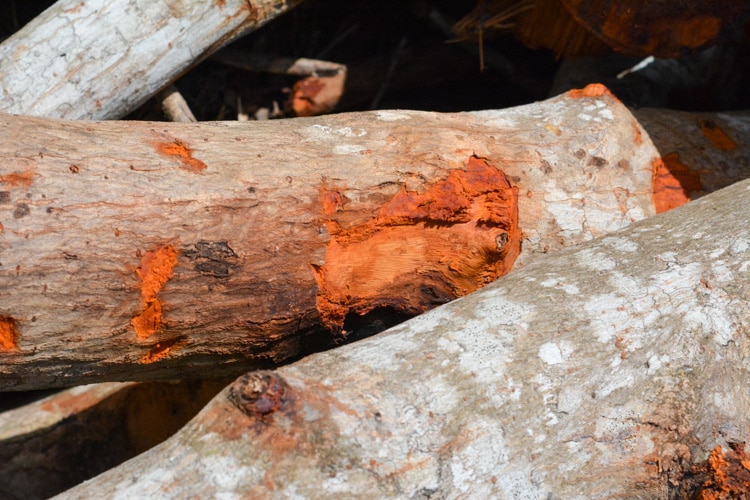
Whenever humans become stressed, our bodies automatically produce various chemicals as a reaction. The same thing is true for mangroves when they are stressed. When they encounter environmental stresses such as drought, salinity, or lack of nutrients, mangroves overproduce and store chemicals that can cause cell damage. However, tannin contains antioxidants that protect the cells from these harmful chemicals.
Tannin not only affects the mangrove itself, but also the surrounding ecosystem. These ecosystems are highly productive cycles that generate large quantities of organic matter, which contains important nutrients such as phosphorus, nitrogen, and carbon. Much of this organic matter is created from “leaf litter,” which is the leaves, branches, propagules, and other plant material that falls from the tree. The leaf litter is then converted into protein-rich food by microorganisms. This nourishment supports consumers (herbivores and carnivores) in the mangrove food web.
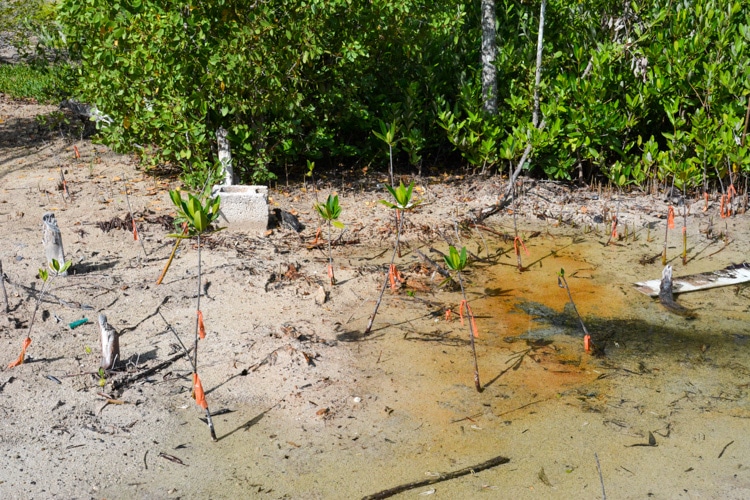
The nitrogen produced in the organic matter is extremely important because all living things need it to survive, including mangroves. When nitrogen is limited in these ecosystems, mangroves may help to regulate how it is cycled. This happens when tannin enters the surrounding environment from the mangroves’ tree roots and attaches to the sediment. Likewise, it is also distributed via the leaf litter. Some studies show that the presence of tannin may deter small invertebrates from feeding on both the sediment and leaf litter. By producing tannin, mangroves may help regulate the number of invertebrates, ensuring enough nitrogen for all of the organisms living in this ecosystem.
We’ve learned how important tannins are for mangroves and the mangrove ecosystem. Did you know that tannins are also very important to humans too? If you liked this blog, stay tuned for our next blog, Mangrove Tannin: The Power of Healing, which explores how tannin has been used by humans as a health remedy.