Winners of the 2025 Science Without Borders® Challenge
The 2025 Science Without Borders® Challenge invited young artists from across the globe to create artwork highlighting species that play a critical role in maintaining the structure and health of ocean ecosystems with the theme, “Marine Keystone Species.” This theme encouraged students to illustrate the critical roles these species play in shaping and sustaining healthy ocean ecosystems.
We were amazed by the response—more than 1,300 entries from 75 countries poured in—each piece a unique interpretation of a marine keystone species, from sea otters and mangroves to corals and sharks. These species may not always be the most numerous or well-known, but they have an outsized impact on their environment. Their presence helps maintain biodiversity, balance food webs, and support ecosystem resilience. If a keystone species is removed, the entire ecosystem could shift dramatically or collapse. Through their art, students explored these complex ecological relationships and made a compelling case for ocean conservation.
These stunning artworks showcase diverse marine life, from foundational species at the base of the food web and grazers to apex predators and ecosystem engineers. Prepare to be inspired by their imaginative interpretations and powerful messages about protecting the species that keep our ocean in balance. We are proud to showcase the 2025 Challenge winners, whose art encourages us to appreciate the species that keep our oceans healthy and in balance.
Winners & Finalists Ages 11-14:
1st Place (11-14 years old): "Melting Grounds" by Gia Kim, Age 12, United States of America
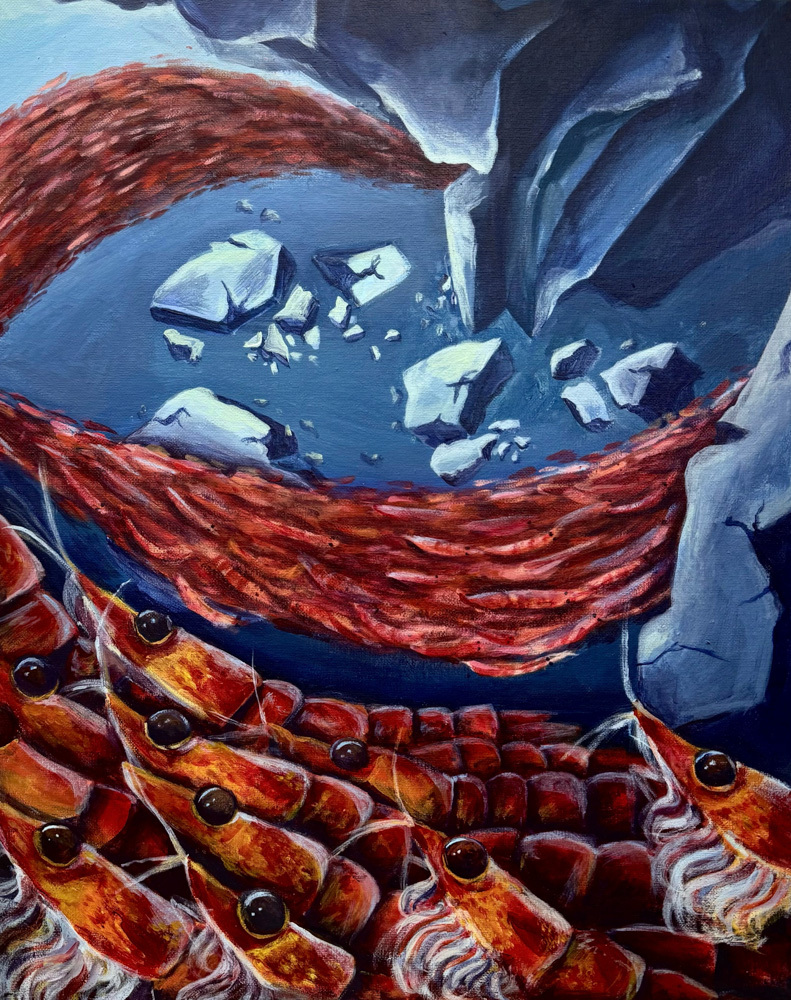
ARTIST STATEMENT: This artwork describes the Antarctic krill fleeing their iceberg habitat that’s melting underwater. Antarctic krill are known as a keystone species because of their wide food chain, which many marine animals (including us) eat in the Antarctic Ocean. However, their numbers are decreasing because of sea ice loss, which causes them to lose their habitat.
Winners & Finalists Ages 15-19:
"Between Shadow and Sea: The Orca’s Lament" by Adrian Wang, Age 17, China
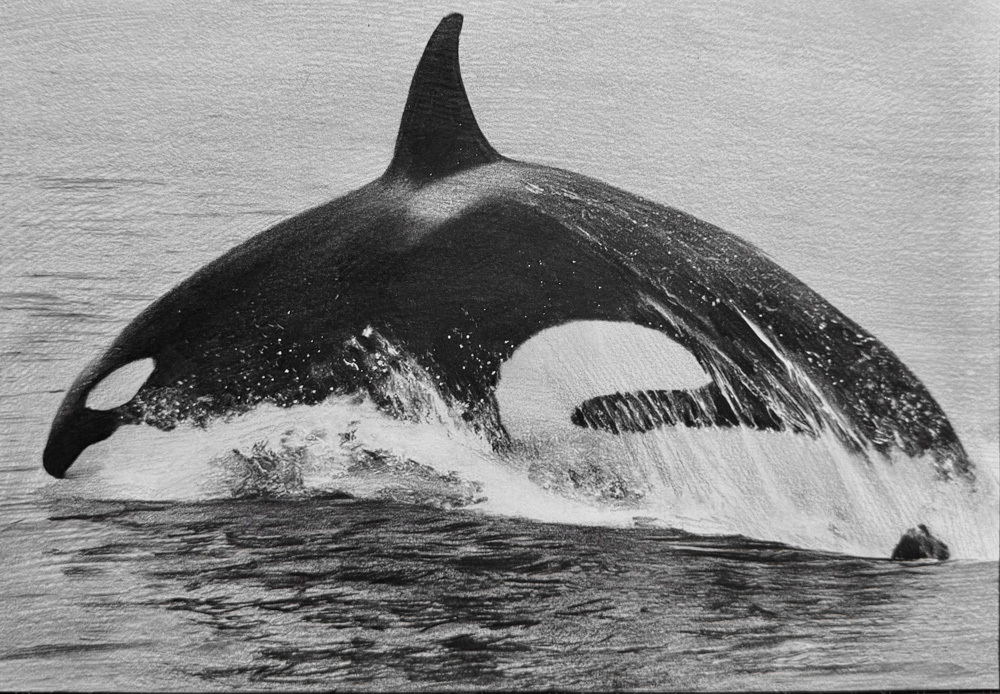
ARTIST'S STATEMENT: This drawing captures an orca mid-leap, between ocean and sky, its body depicts contrast. The stark black and white of the orca’s form mirrors life’s duality. Black, dense and consuming, evokes the unknown depths of the sea and the inevitability of death; white, luminous yet fragile, reflects the fleeting beauty of life. The ocean, rendered in swirling graphite gradients, embodies both sanctuary and peril, its waves etched with textures that suggest hidden currents of environmental decay. Orcas, apex predators in nature, symbolize balance—a harmony now threatened by human encroachment. The absence of color is a metaphor for ecological loss, a world stripped of vibrancy by pollution and climate collapse. The orca’s powerful yet desperate leap becomes a lament for ecosystems teetering on extinction. Graphite’s impermanence—vulnerable to smudging—echoes the fragility of marine life, urging viewers to confront their role in preserving the delicate dance between shadow and sea.