Winners of the 2025 Science Without Borders® Challenge
The 2025 Science Without Borders® Challenge invited young artists from across the globe to create artwork highlighting species that play a critical role in maintaining the structure and health of ocean ecosystems with the theme, “Marine Keystone Species.” This theme encouraged students to illustrate the critical roles these species play in shaping and sustaining healthy ocean ecosystems.
We were amazed by the response—more than 1,300 entries from 75 countries poured in—each piece a unique interpretation of a marine keystone species, from sea otters and mangroves to corals and sharks. These species may not always be the most numerous or well-known, but they have an outsized impact on their environment. Their presence helps maintain biodiversity, balance food webs, and support ecosystem resilience. If a keystone species is removed, the entire ecosystem could shift dramatically or collapse. Through their art, students explored these complex ecological relationships and made a compelling case for ocean conservation.
These stunning artworks showcase diverse marine life, from foundational species at the base of the food web and grazers to apex predators and ecosystem engineers. Prepare to be inspired by their imaginative interpretations and powerful messages about protecting the species that keep our ocean in balance. We are proud to showcase the 2025 Challenge winners, whose art encourages us to appreciate the species that keep our oceans healthy and in balance.
Winners & Finalists Ages 11-14:
"Coastal Puzzle" by Xiaotian Qin, Age 13, China
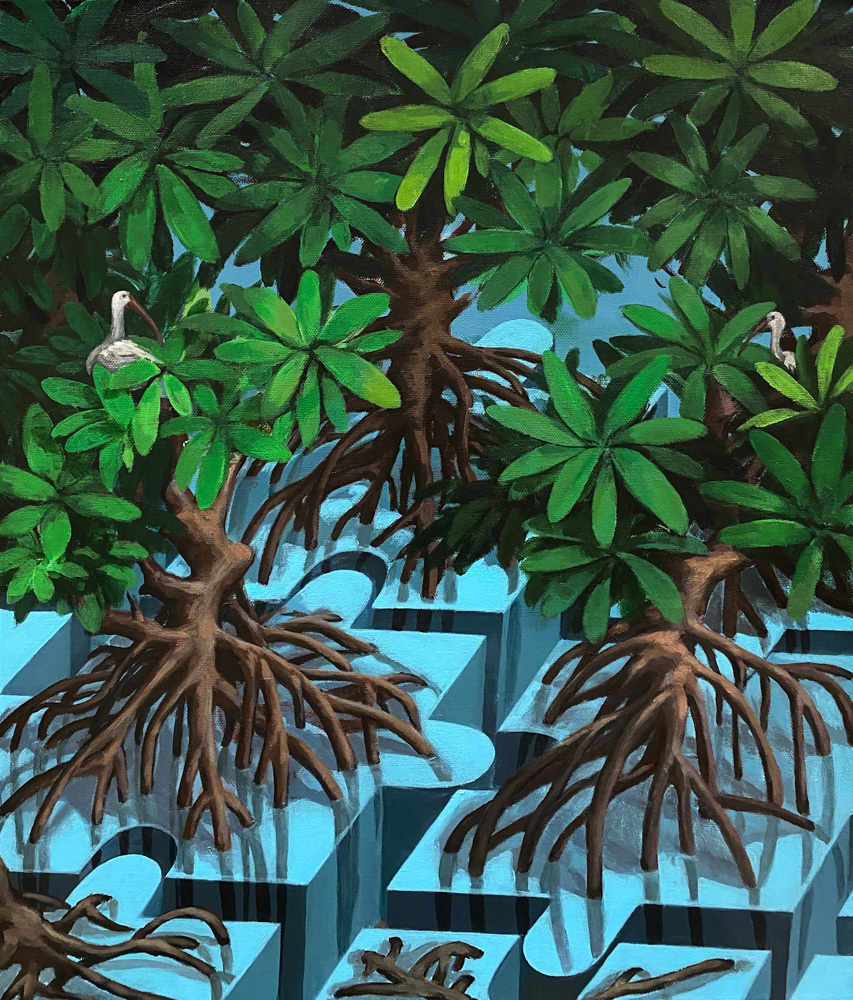
ARTIST STATEMENT: Through the form of a puzzle, I depict how mangrove roots anchor and protect coastal waters. These deeply intertwined roots stabilize the shoreline, reduce wave erosion, and provide a safe habitat and vital breeding ground for marine life. The puzzle design symbolizes the sustainability of mangroves—each tree is part of a larger, interconnected network. By continuing to plant mangroves, we enable their expansion, strengthening the shoreline’s stability and enhancing the ecosystem’s resilience.
Winners & Finalists Ages 15-19:
1st Place (15-19 years old): "The Keeper" by Hyungjun Chin, Age 18, Republic of Korea
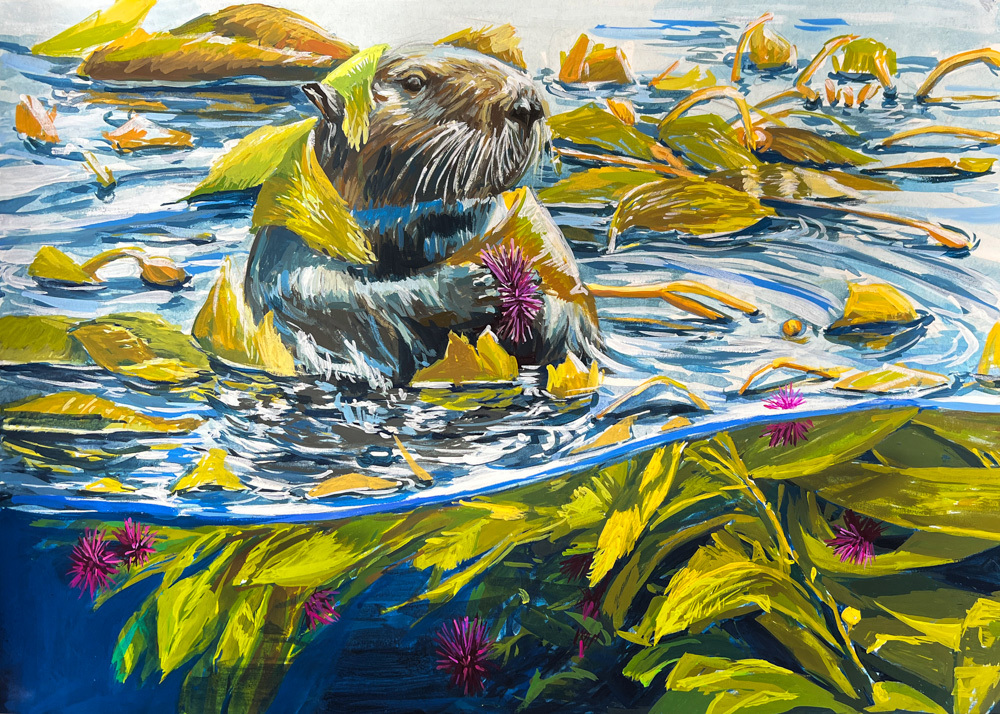
ARTIST'S STATEMENT: Sea otters are a keystone species crucial for maintaining marine ecosystems by controlling sea urchin populations and protecting kelp forests. In California, their decline led to a surge in sea urchins, resulting in overgrazed kelp forests and the creation of "urchin barrens." Conversely, areas where sea otters are protected have seen decreased urchin populations and thriving kelp forests, benefiting diverse marine life. In this painting, I represent the interconnectedness of sea otters, sea urchins, and kelp forests by depicting an otter hunting a sea urchin. This scene captures both underwater and above-water perspectives, emphasizing the vitality of the kelp forest and the otter’s essential role in ecological balance. The stark contrast between the purple sea urchins and golden kelp highlights the tension between destruction and preservation, underscoring the otter's significant environmental impact.