After diving our first set of offshore Ribbon reefs we began exploring the Green, Pink and Blue Zones on a set of midshelf reefs. The depths, water clarity and habitat structure are all vastly different from offshore reefs. Most of these reefs have discontinuous reef habitat and they lack the deeper zones seen out at the shelf edge. The reef structure was less solid. Many of the corals were loose, some were overturned and the bottom was covered in thick algae. With exception of some massive (up to 10-15 m diameter) pore corals (Porites lobata) and a few other giant star corals (Diploastrea), coral cover was much less than on the Ribbon Reefs. Large bommies, some over 50 m in diameter and 5-10 m tall, were separated by low relief habitat with scattered coral heads. Among the bommies, we observed many more coral trout, squaretail coral groupers, schools of snappers, and rabbitfish, while the smaller bodied fishes, such as damselfish and wrasses, seemed to prefer the stands of branching corals and rubble areas. There were also noticeably fewer sharks.
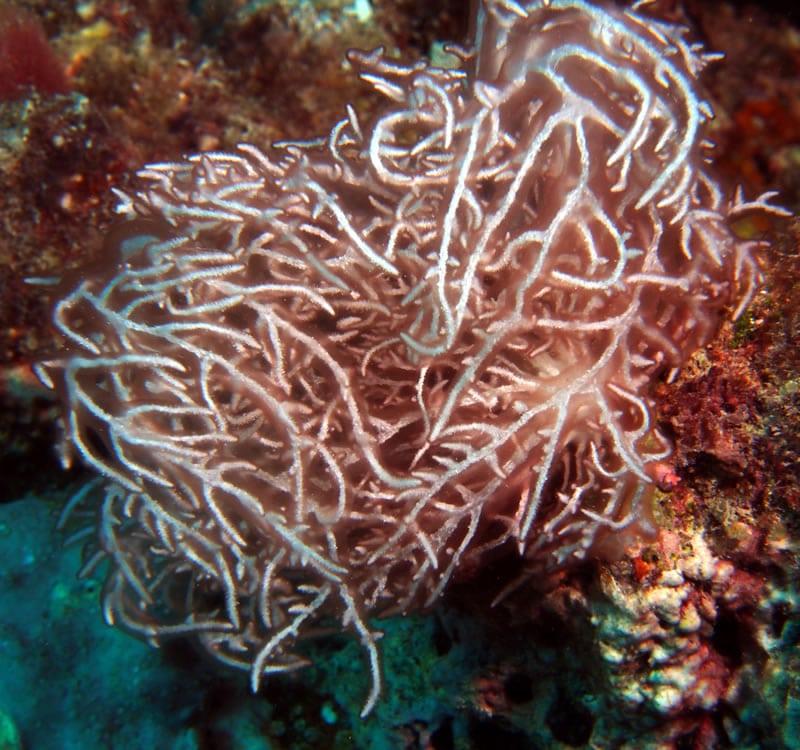
A red macroalgae, Trichogloea.
(Click-thru for detail on larger image.)
Unique species were found here as well. Many of the more sediment tolerant corals were prominent such as Goniopora and Alveopora, two massive corals that extend their long tentacles during the day. We’ve also seen large thickets of fragile corals such as a type of lettuce coral (Leptoseris) and branching Porites, both of which were absent on the outer reefs.
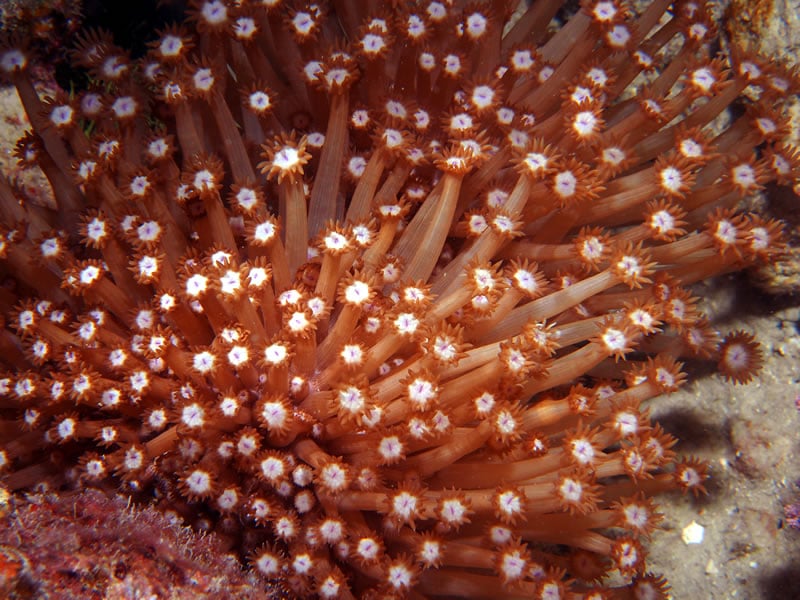
A close-up of the tentacles of the stony coral Goniopora.
(Click-thru for detail on larger image.)
Fish species appeared to segregate by habitat, with lots of activity near the corals, similar biomass but less diversity within stands of dead corals, and both lower biomass and species diversity in some of the flattened, rubble dominated and sand habitats. Sea cucumbers also prefer these habitats, with high numbers of eight different species recorded throughout the reef environments. Even giant clams are more common. We’ve seen dozens of clams that were each nearly a meter in length!
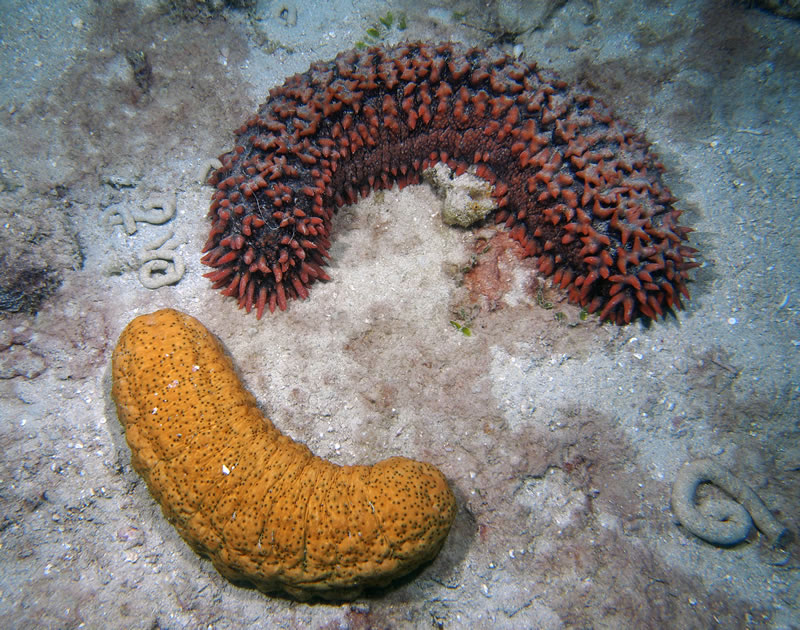
Two commercially valuable sea cucumbers, prickly redfish (Thelenota ananas) and a curryfish (Stichopus hermanni).
(Click-thru for detail on larger image.)
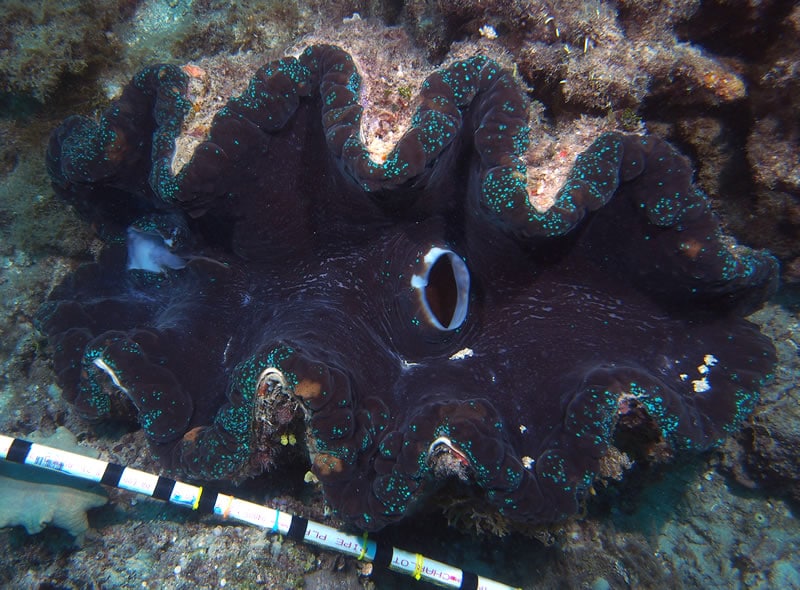
A large (75 cm) giant clam (Tridacna gigas). Scale bar= 50 cm.
(Click-thru for detail on larger image.)
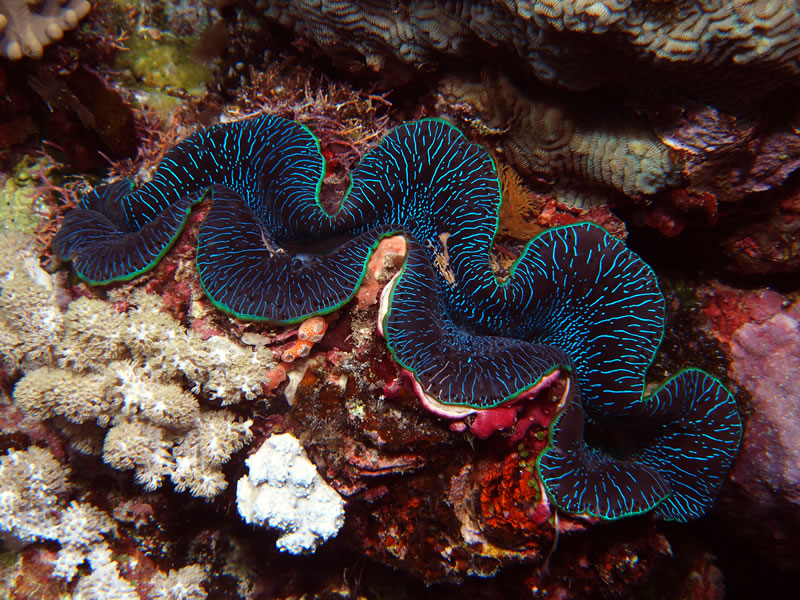
One of the small giant clams, Tridacna maxima.
(Click-thru for detail on larger image.)