search-icon
Fragile Flowers

Expedition Log: Palau – Day 5

Usually we find the most delicate corals in protected deeper lagoonal waters.  Species such as Anacropora, a cousin of Acropora which forms bushes of long spindly branches, up to a meter tall but only a few millimeters thick, are common in sheltered areas.  You expect the opposite on windward fore reef communities, such as those we’ve been surveying off the southwest side of Palau.  Usually only a few species can tolerate those conditions – Boulder-like massive Porites colonies, brain corals, star corals and other faviid corals, encrusting and submassive corals, and branching and columnar corals that have robust, thick branches.
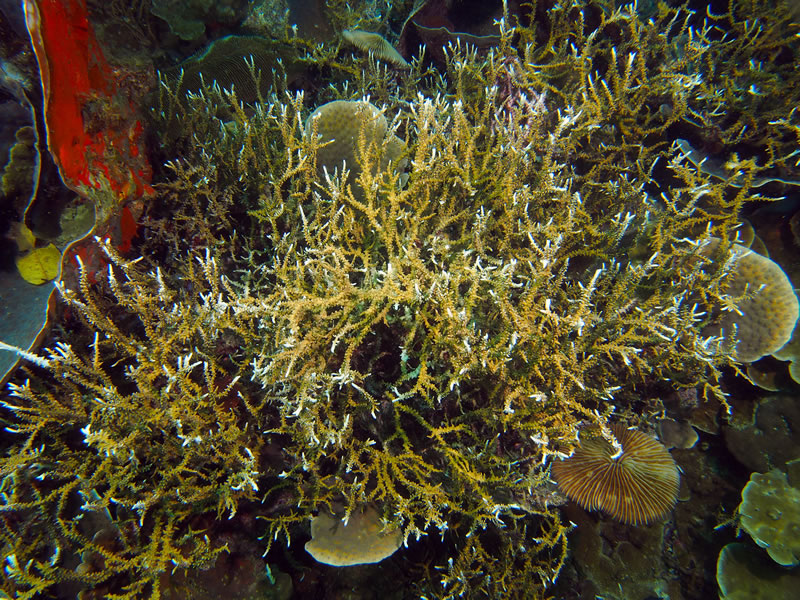
A delicate colony of Anacropora from a lagoon in Rock Islands
A delicate colony of Anacropora from a lagoon in the Rock Islands
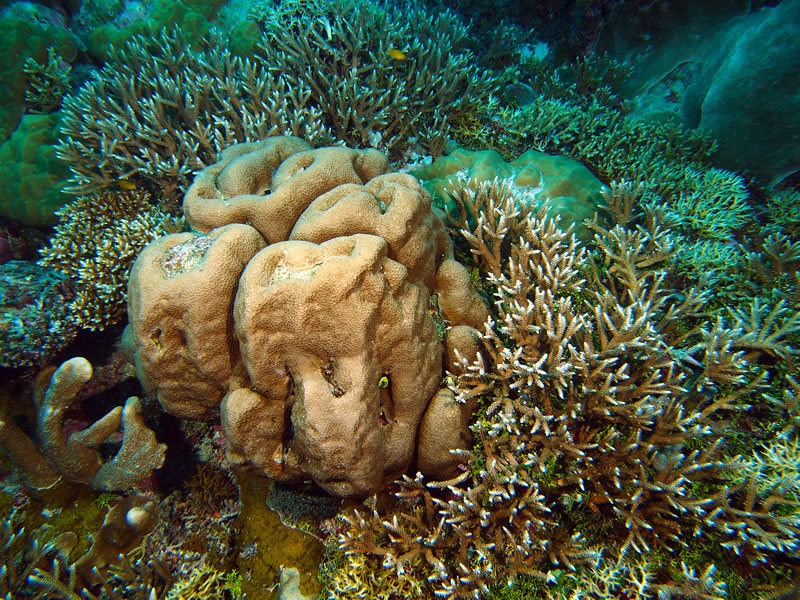
thickets of staghorn coral among a massive gardinoseris colony
Thickets of staghorn coral among a massive gardinoseris colony

Yesterday we had a 3 m swell and huge waves building up on the reef slope and crashing onto the reef crest. Yet underwater, once you swam below 10 m it was calm and clear.  The reef framework was built by hemispherical Porites lobata colonies, something we’ve seen on many Indo-Pacific reefs. But in between these corals were dense thickets of fragile branching corals – several species of staghorn corals, bottlebrush Acroporids, and spiky Seriatopora colonies.  Intermixed among these were coalescing mounds of foliaceous and plating species, such Leptoseris yaebi.
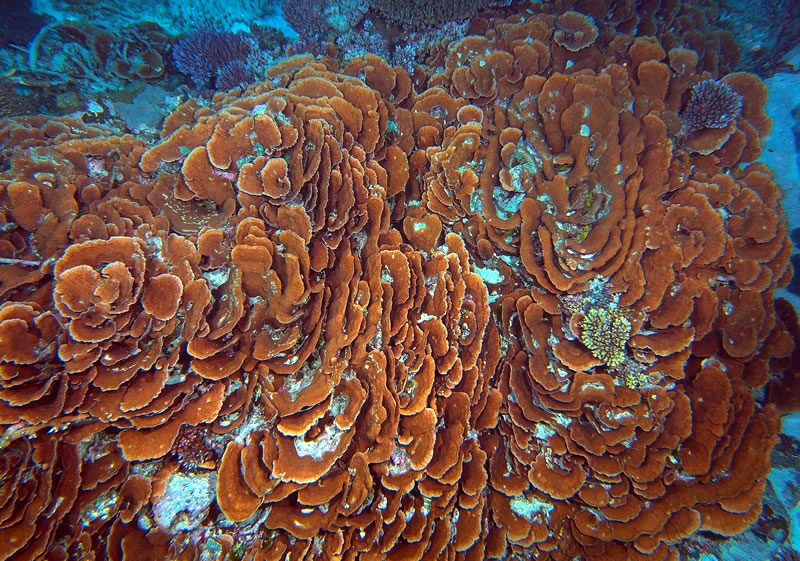
folicaeous colony of leptoseris yaebi
Foliceous colony of Leptoseris yaebi
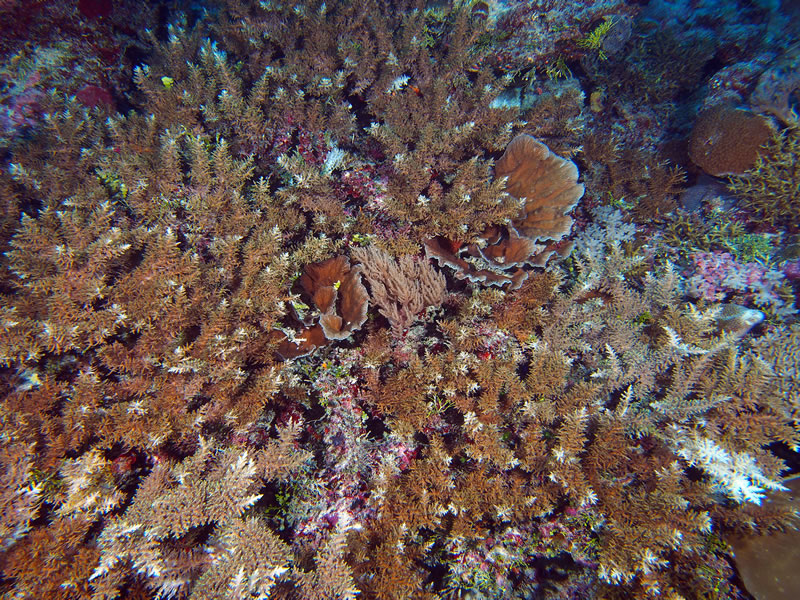
1 m wide patch of bottlebrush acropora bottlebrush thicket with plates of Merulina sheet coral
Bottlebrush Acropora: A 1m-wide patch (left) and a thicket with plates of Merulina sheet coral (right)
(Click-thru on images for greater detail.)

The thickets of branching coral continued to 30 m, but I also found large stands of a very delicate type of lettuce coral called Leptoseris papyracea.  The highly contorted branches were no more than a few centimeters each, yet colonies were several meters across. One of the ways these corals manage to survive is that that they form fairly low relief stands, only 5-15 cm tall, tucked between the larger massive corals. In this way they stay out of the full force of the waves and swell and can flourish on these reefs, covering extensive areas of the bottom.
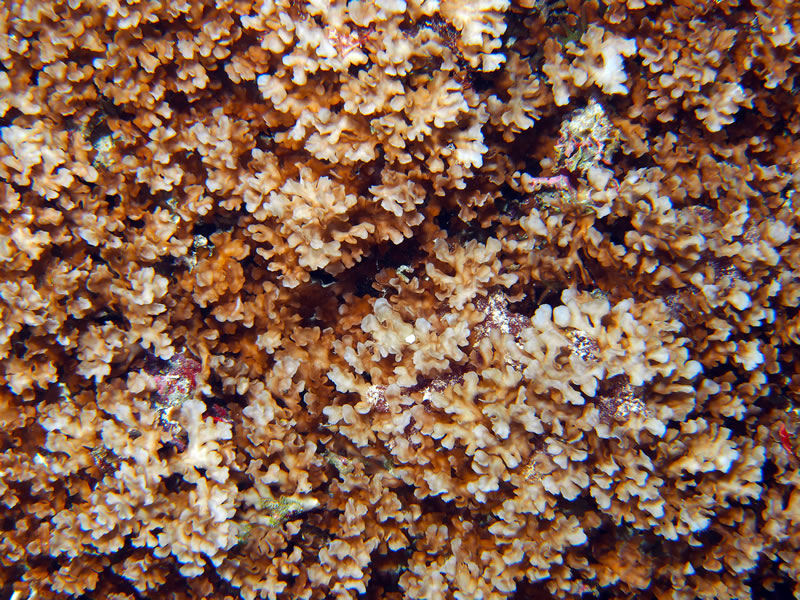
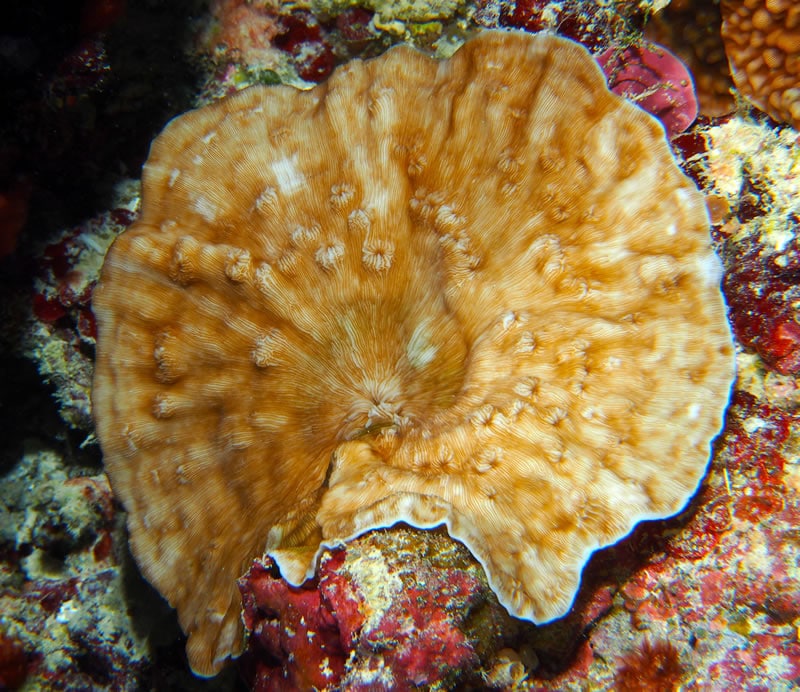
delicate lettuce corals, leptoseris papyracea Delicate lettuce corals, Leptoseris explanata
Delicate lettuce corals, Leptoseris papyracea and Leptoseris explanata
(Click-thru on images for greater detail.)

Photos by Andrew Bruckner.

Related Posts

From Mangrove Mud to Meaningful Work: Desta’s J.A.M.I.N. Journey

Some students I remember for their grades, their quick answers, or a moment that made the whole class laugh. Others I remember for the way they stepped into the mangroves.

Desta was the kind of student who thrived outdoors. While some students hesitated at the edge of the mud, he walked right in. And when he inevitably got stuck — because everyone does — he didn’t get frustrated. He laughed. Covered in mud, holding mangrove propagules in his hands, he embraced the experience fully.

Even then, it was clear that he was connecting with the environment in a way that went beyond the lesson plan…

Read More

From Students to Stewards: A Full-Circle Moment for J.A.M.I.N.

There are certain faces you never forget.

Over the years, hundreds of students have stepped into mangrove forests with us through the Jamaica Awareness of Mangroves in Nature (J.A.M.I.N.) program. I may not always remember every name, but I remember the expressions — the hesitation before stepping into thick mud, the laughter when someone loses a shoe, the look of surprise when they catch that unmistakable sulfur smell rising from the mangrove soil…

Read More
Privacy Overview

This website uses cookies so that we can provide you with the best user experience possible. Cookie information is stored in your browser and performs functions such as recognising you when you return to our website and helping our team to understand which sections of the website you find most interesting and useful.  You can view our complete Privacy Policy here.

Strictly Necessary Cookies

Most of our cookies are used to improve website security and reduce spam. These cookies should be enabled at all times. They also enable us to save your preferences for cookie settings.

3rd Party Cookies

This website uses Google Analytics to collect anonymous information such as the number of visitors to the site, and the most popular pages. Keeping this cookie enabled helps us to improve our website.