Expedition Log: Maldives – Day 14
Crown of thorns starfish (COTS) have undergone population explosions since at least the 1960s and scientists and managers have tried to control these outbreaks for just as long. The standard practice to control COTS has been the collection of the starfish by divers and snorkelers by hand (using a bar, pick, tongs etc.), hauling COTS on board in a collecting bag, basket or net, with final processing and disposal performed on land. This process can be dangerous, as the starfish are covered in highly toxic spines and care is needed during collection, bagging and transport. Furthermore, disposal can present its own set of challenges. Because COTS contain high amounts of water within their bodies, it is difficult to incinerate large amounts of COTS at one time. The alternative, disposal in landfill, is also problematic due to the odor of rotting starfish.
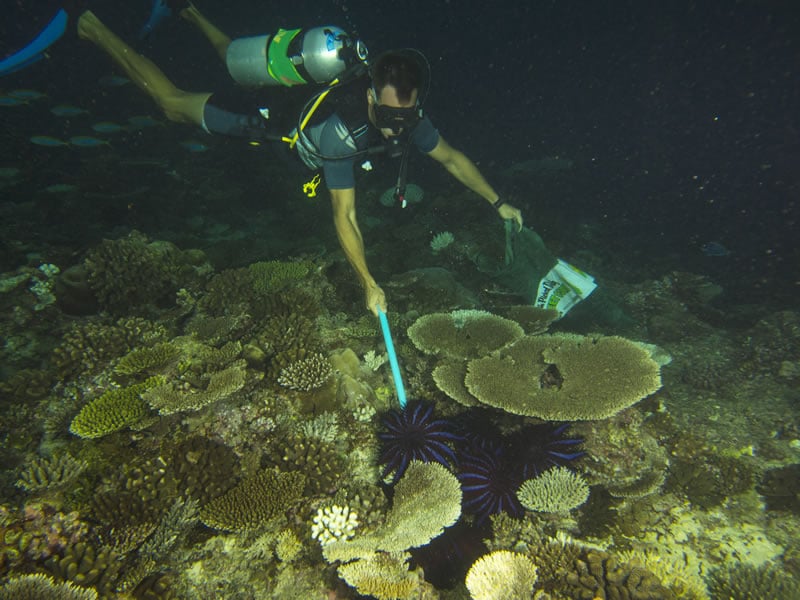
Removing COTS by hand.
Removal efforts can be highly successful, but there are just as many, if not more failures. Failures are usually related to the control mechanism, but also the extent and size of the outbreak, the spatial extent of the outbreak and the amount of time that has passed between first observation and mobilization of a clean-up effort.
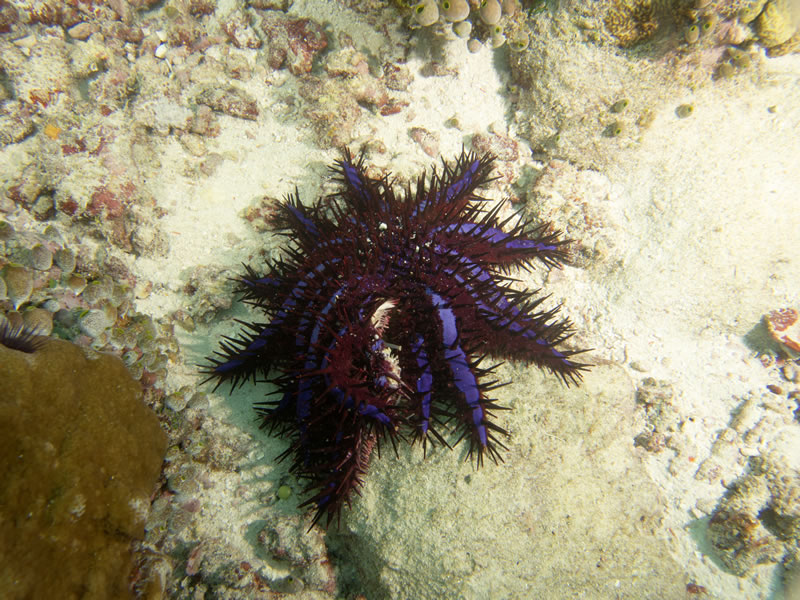
This COTS has a weird leg.
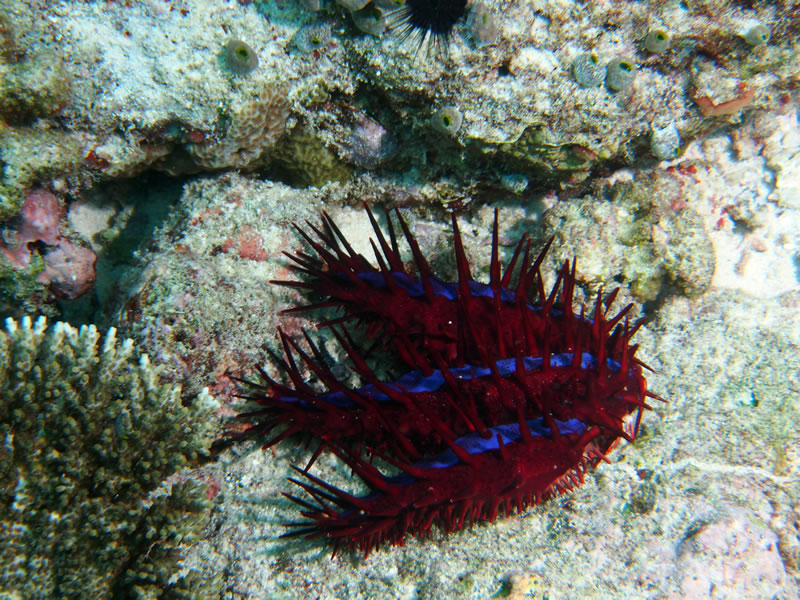
Ever seen a three-legged COTS?
One example of an approach that is unlikely to work involved cutting the COTS into pieces. Instead of killing the starfish, this had the opposite effect of increasing the number of starfish due to their remarkable ability to regenerate limbs and body parts.
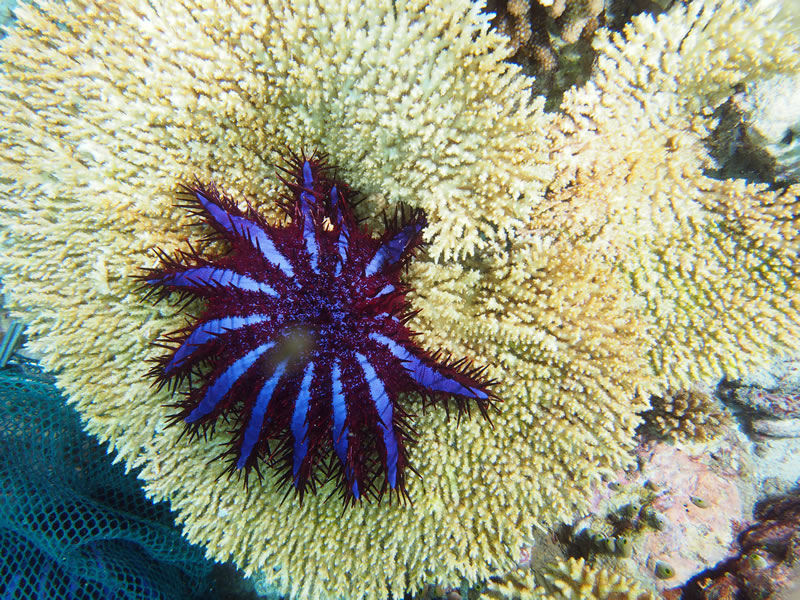
This COTS is regenerating new legs.
More recently, a widely used alternative has been to control COTS populations by poison injection. Chemicals to kill starfish range from highly toxic copper sulphate to sodium bisulphate, acetic acid, lime juice and household vinegar. Each with its own drawbacks and benefits. Some require chemicals that are only available from specialized outlets and may be expensive. Some chemicals are toxic to both the diver administering the injection and to other marine organisms. Some toxins require multiple injections or injections into a specific location with a certain size needle in order to be successful.
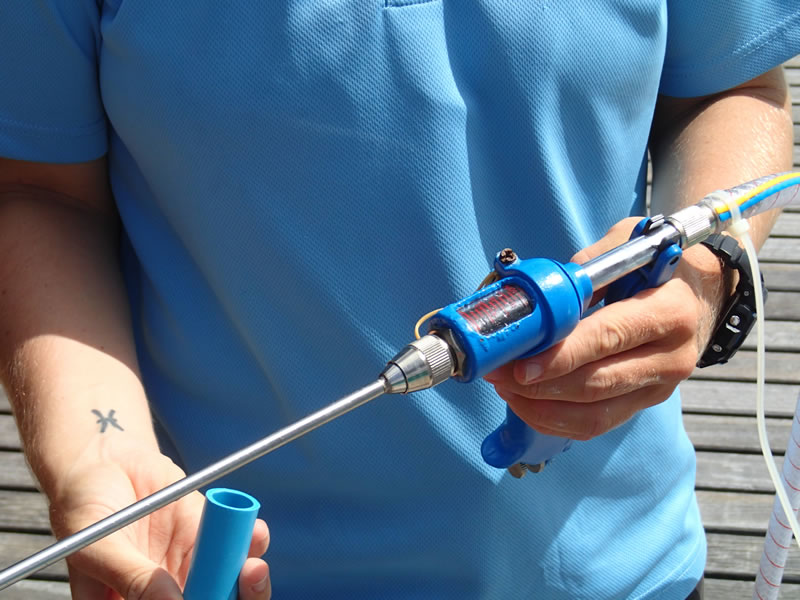
AMPTO injection gun.
In the Maldives, dive operators, desperate to save their reefs, have injected using common household items – everything from bleach and dish soap to petrol, all with little success. In some cases the starfish shed an appendage at the site of infection, and then crawl away. In other cases they spawn, possibly setting the stage for an outbreak a few years down the road.
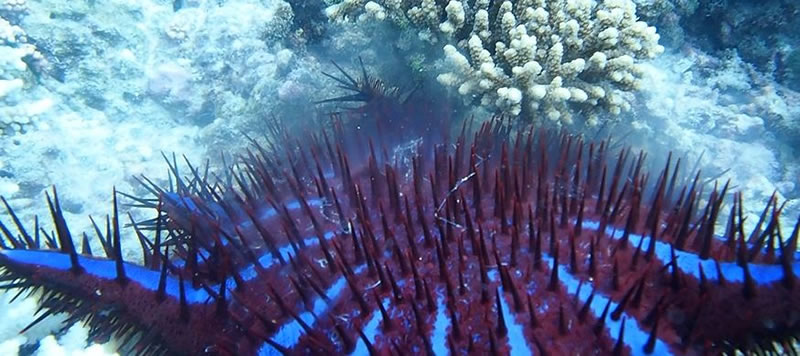
COTS spawning.
One of the more effective chemicals is bile salt, first used last year in Australia and more recently in other locations. The main drawback is that it remains fairly costly and it may be difficult to acquire necessary permits.
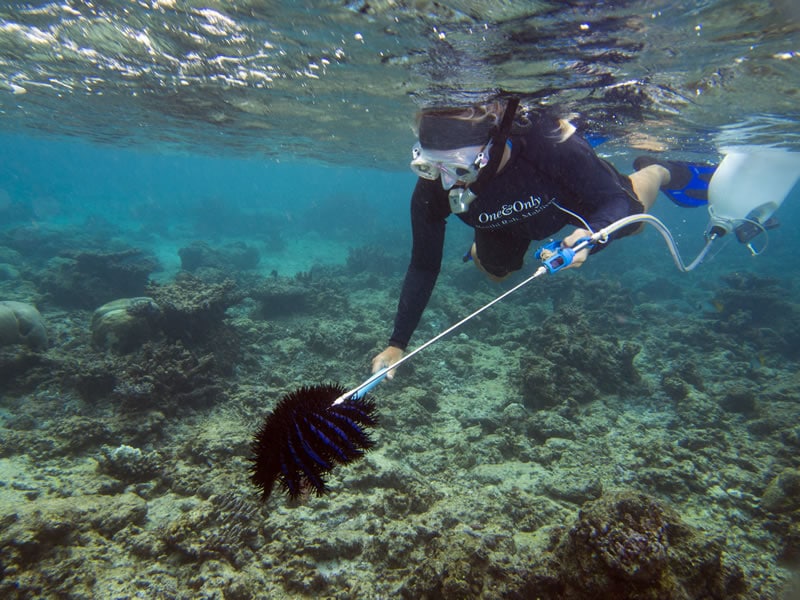
Poisoning COTS via injection.
Bile salts have now begun to reach the Maldives, but not all bile is effective and not all injections seem to work. A cheap synthetic bile salt from China has failed to kill the starfish, while pure oxbile is also less effective. In Reethi Rah and recently on Ari Atoll, divers have expanded the use of bile salts, mainly because they lack the manpower necessary to remove thousands of animals from individual reefs. With proper training, this may provide one solution to an urgent problem. Hopefully, reducing the loss of corals and preventing further spread of these destructive animals.
Photos by Andrew Bruckner