search-icon
Remotely Sensed Spectral Variability Predicts Reef Fish Diversity

Published in Ecological Indicators

Abstract

In terrestrial landscapes, the spectral variability hypothesis (SVH) enables estimation of species diversity from satellite data, thereby allowing biodiversity assessments to be upscaled. Whether the SVH works in the marine realm is an open question. To answer it, we tested the ability of this hypothesis to retrieve coral reef fish biodiversity from two remote sensing platforms on a global transect of reef sites. From orbit, we trialed the multispectral and panchromatic bands of WorldView-2 (WV-2) which have a spatial resolution of 2.5 and 0.5 m, respectively. At 100 times finer resolution, we repeated the experiment using unpiloted aerial vehicle (UAV) data. Encouragingly, the SVH evidently works as well in water as has been reported on land. Spectral variability was positively correlated with fish diversity for all sensors, though the area in which the variability was computed (window size) was important. The strongest relationship between spectral variability and fish biodiversity (R = 0.48) was returned using UAV imagery corrected for surface artifacts via fluid lensing. Splitting fish into herbivores, corallivores, and piscivores revealed that different feeding strategies correlate to spectral variability at different scales. Based on our results, we contend that remote sensing data are underutilized when used to simply map benthic habitat. Spectral variation can clearly serve as a proxy for in situ reef biodiversity.
Related Posts

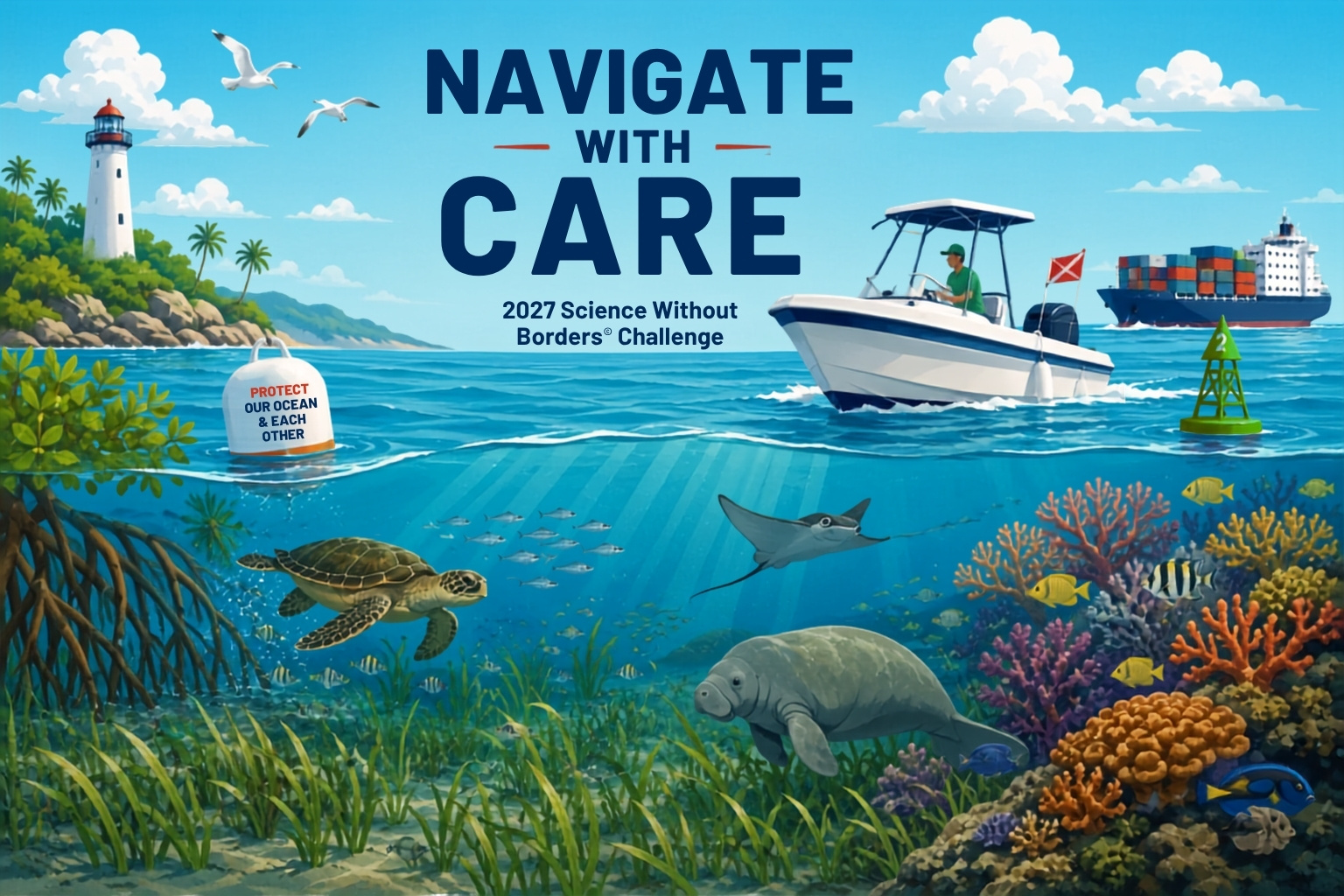
Announcing the 15th Annual Science Without Borders® Challenge: Navigate with Care

Every day, fishing boats, ferries, sailboats, kayaks, research vessels, cargo ships, whales, sea turtles, dolphins, seabirds, and countless other marine animals share the same waters. While people rely on the ocean for transportation, recreation, research, fishing, and exploration, it is also home to some of the most diverse and important ecosystems on Earth.

That simple but powerful idea is the inspiration behind the 15th Annual Science Without Borders® Challenge.

Read More

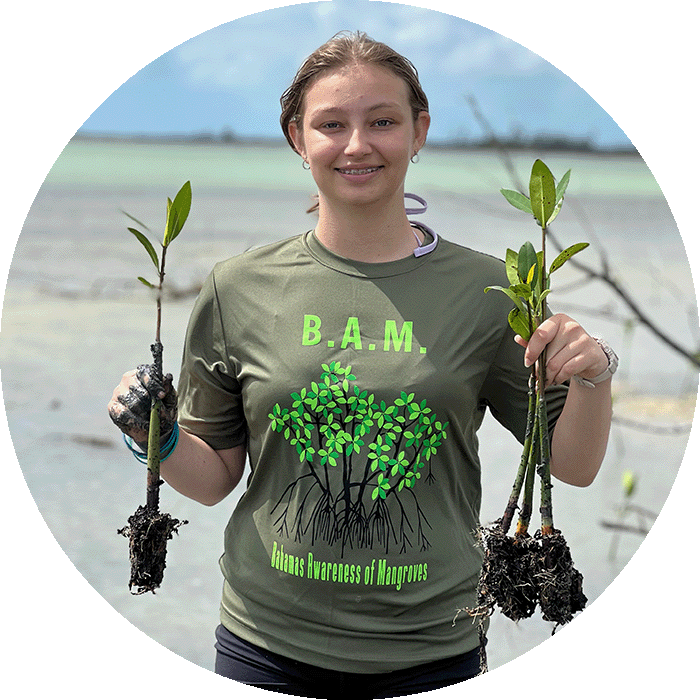
2025-2026 B.A.M. Student Voices

Throughout the Bahamas Awareness of Mangroves (B.A.M.) and Jamaica Awareness of Mangroves in Nature (J.A.M.I.N.) programs, we evaluate each phase of the mangrove education and restoration process to better understand how students are learning, growing, and connecting with their coastal environments.

Before the programs begin, students share what they already know about mangroves and how they feel about them. As the program progresses, we continue to gather feedback to see how their knowledge evolves from identifying mangrove species and understanding food webs to recognizing the role mangroves play in coastal protection and climate change mitigation.

But the surveys go beyond science content.

We also ask students…

Read More
Privacy Overview

This website uses cookies so that we can provide you with the best user experience possible. Cookie information is stored in your browser and performs functions such as recognising you when you return to our website and helping our team to understand which sections of the website you find most interesting and useful.  You can view our complete Privacy Policy here.

Strictly Necessary Cookies

Most of our cookies are used to improve website security and reduce spam. These cookies should be enabled at all times. They also enable us to save your preferences for cookie settings.

3rd Party Cookies

This website uses Google Analytics to collect anonymous information such as the number of visitors to the site, and the most popular pages. Keeping this cookie enabled helps us to improve our website.