This article, published by one of the Living Oceans Foundation Fellows, Andersen Mayfield, PhD, looks at how rubisco expression in the dinoflagellate Symbiodinium sp. is influenced by both photoperiod and endosymbiotic lifestyle.
Rubisco Expression in the Dinoflagellate Symbiodinium sp. Is Influenced by Both Photoperiod and Endosymbiotic Lifestyle
Marine Biotechnology
January 22, 2014
By Anderson B. Mayfield, Yi-Yuong Hsiao, Hung-Kai Chen, Chii-Shiarng Chen
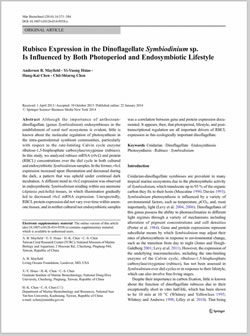 Although the importance of anthozoan-dinoflagellate (genus Symbiodinium) endosymbioses in the establishment of coral reef ecosystems is evident, little is known about the molecular regulation of photosynthesis in the intra-gastrodermal symbiont communities, particularly with respect to the rate-limiting Calvin cycle enzyme ribulose-1,5-bisphosphate carboxylase/oxygenase (rubisco). In this study, we analyzed rubisco mRNA (rbcL) and protein (RBCL) concentrations over the diel cycle in both cultured and endosymbiotic Symbiodinium samples. In the former, rbcL expression increased upon illumination and decreased during the dark, a pattern that was upheld under continual dark incubation. A different trend in rbcL expression was observed in endosymbiotic Symbiodinium residing within sea anemone (Aiptasia pulchella) tissues, in which illumination gradually led to decreased rbcL mRNA expression. Unexpectedly, RBCL protein expression did not vary over time within anemone tissues, and in neither cultured nor endosymbiotic samples was a correlation between gene and protein expression documented. It appears, then, that photoperiod, lifestyle, and posttranscriptional regulation are all important drivers of RBCL expression in this ecologically important dinoflagellate.