Focus for today:
Nursery Habitat for Juvenile Coral Reef Fish.
Target Key Stage:
Key Stage 4: National Science Curriculum, Dual Award, Sc2, 5a: the distribution and relative abundance of organisms in habitats can be explained using ideas of interdependence, adaptation, competition and predation.
Key Information:
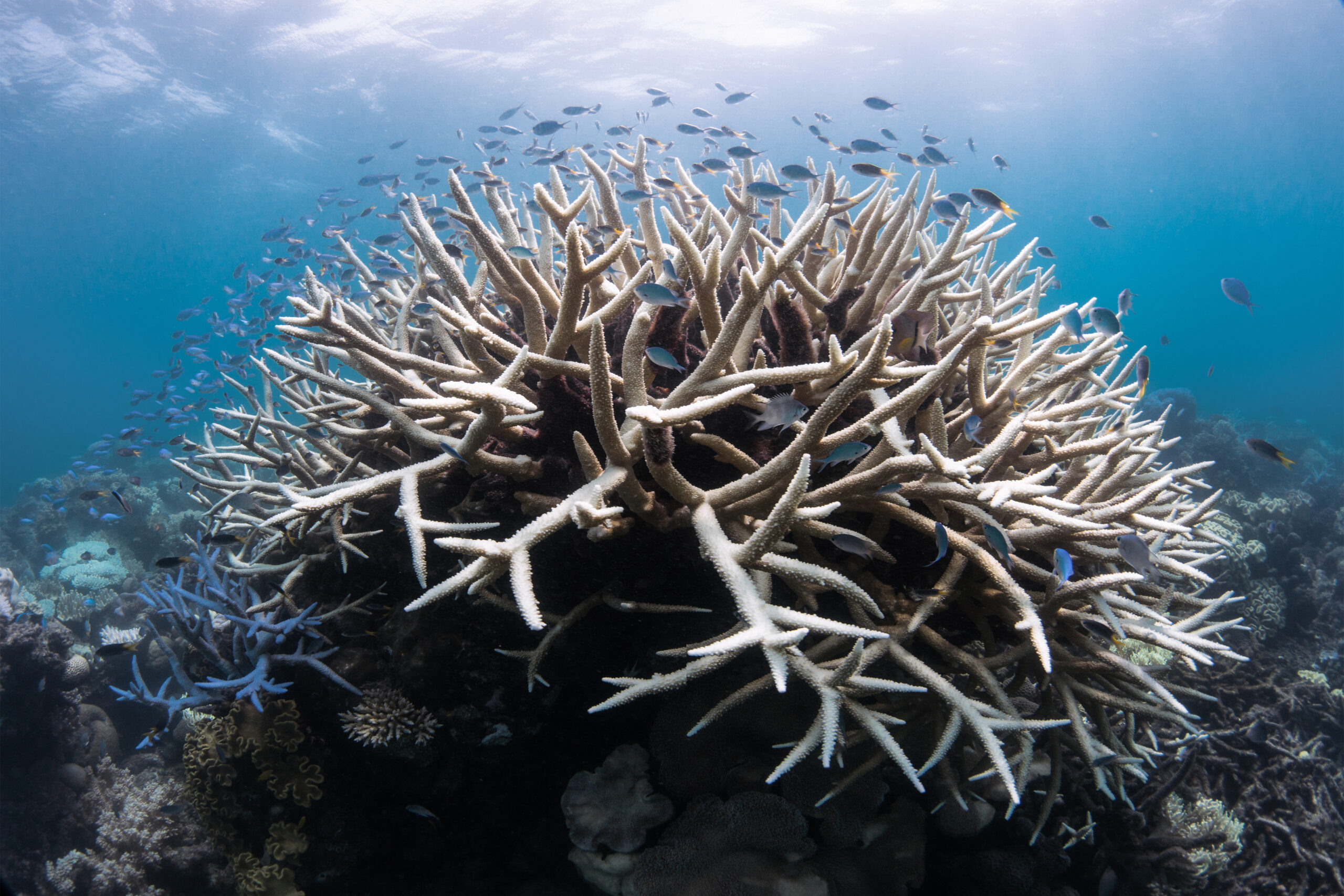
It is common for human visitors to a coral reef to assume that the beautiful live coral to be the only important component of a healthy coral reef ecosystem. The many branching and plate corals form a complex reef substrate of holes and crevices that is home to a variety of colorful reef fish, both large and small, that delight divers and snorkelers. However, most of the fish using the live coral reef habitat as home are voracious predators on small juvenile reef fish trying to settle from the open water, or pelagic, habitat onto the reef.
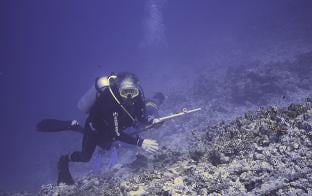
Surveying nursery habitat for juvenile coral reef fish
Almost all coral reef fish start life as larvae drifting in the plankton and they remain in this pelagic habitat until they grow to the small juvenile stage. The juveniles then migrate to the reef habitat where they settle into nursery areas on the reef. This transition from pelagic to benthic, or bottom, habitats is known as recruitment. During this dramatic change in habitats the juvenile reef fish are very vulnerable to predation and losses can be high if they recruit to reef habitat full of predators.
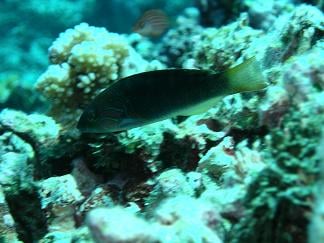
Juvenile reef fish
The areas in the coral reef ecosystem where the habitat is composed mostly of low relief coral rubble, halimeda algae, and small live corals, a habitat that is not as beautiful as the live coral reef. However, this is prime nursery habitat for juvenile coral reef fish because it has few predators and abundant small crevice habitats the juvenile fish can use as protective homes. The environmental conditions in the nursery habitat for juvenile coral reef fish are not very good for growth of large live corals. This can be caused by exposure to high energy from storms that regularly break down the corals, or by tidal currents that cause sedimentation and murky water.
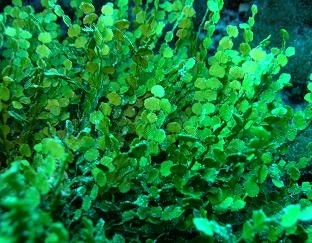
Halimeda – home to juvenile fish
The lack of large crevice habitats in these coral rubble areas make them unsuitable homes for the larger reef fish, which always need a place to hide from even larger predators. With fewer predators around, the juvenile reef fish in the nursery areas are exposed to less predation, especially during the vulnerable recruitment period. This results in higher survival of the juveniles. A healthy coral reef ecosystem has to have successful recruitment and survival of juvenile reef fish.
Question for students/food for thought:
Where do you think the juvenile fish go when they leave the nursery habitat? Do they become predators on the main reef?
Additional information:
Today the Scuba team surveyed some areas of high coral density. Three survey dives were completed, the first at 0900, with the last beign completed at 1830. On return to the Golden Shadow the team began the process of writing up their notes, planning the scientific activities for the next day and of course writing this website!