
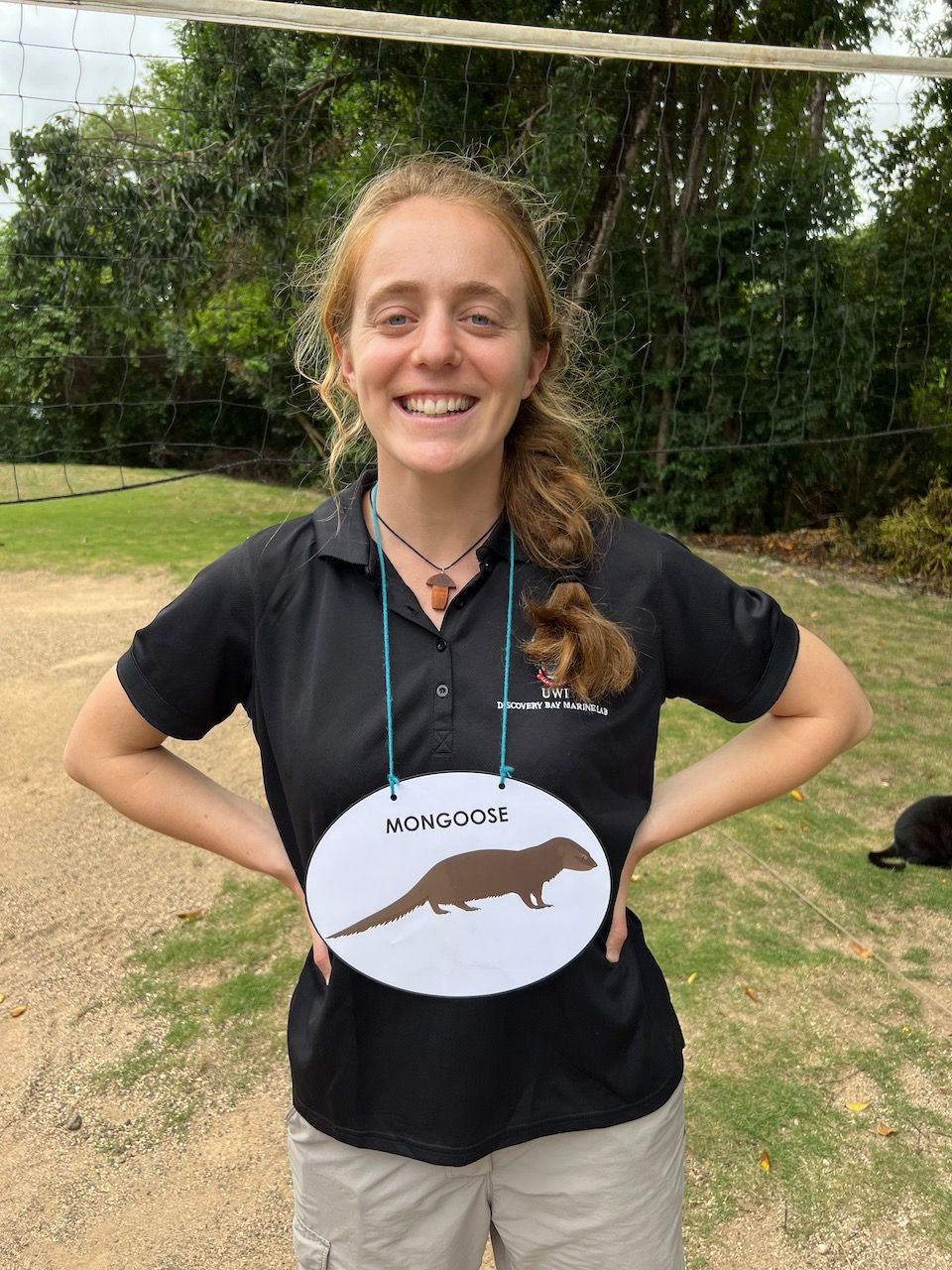
This guest blog comes from Isabel Key, a doctoral student at the University of Edinburgh, UK. Her research focuses on visual and acoustic methods for assessing the biodiversity of seagrass meadows in Scotland. As an interlude from her studies, she is currently interning with the Khaled bin Sultan Living Oceans Foundation and the University of the West Indies Discovery Bay Marine Lab.
A golden anemone wafts its tentacles, tipped with purple jewels. A student leans in, mesmerized. Studying the intricate patterns of colorful algae encrusting the rock, she points excitedly to tiny feathery worms peeking from crevices. Turning to me, she says, “It’s amazing to think that this anemone is alive and experiencing the world – it’s not that different from us.”
Shrieks of laughter and squeals of disgust interrupt our conversation. One of the students has just accepted a sea cucumber into his hands. The soft, sticky creature sends a ripple of curiosity through the group, drawing fascinated eyes. What is this gloopy thing? they wonder, both intrigued and repulsed in equal measure.
These are the moments that stay with me.
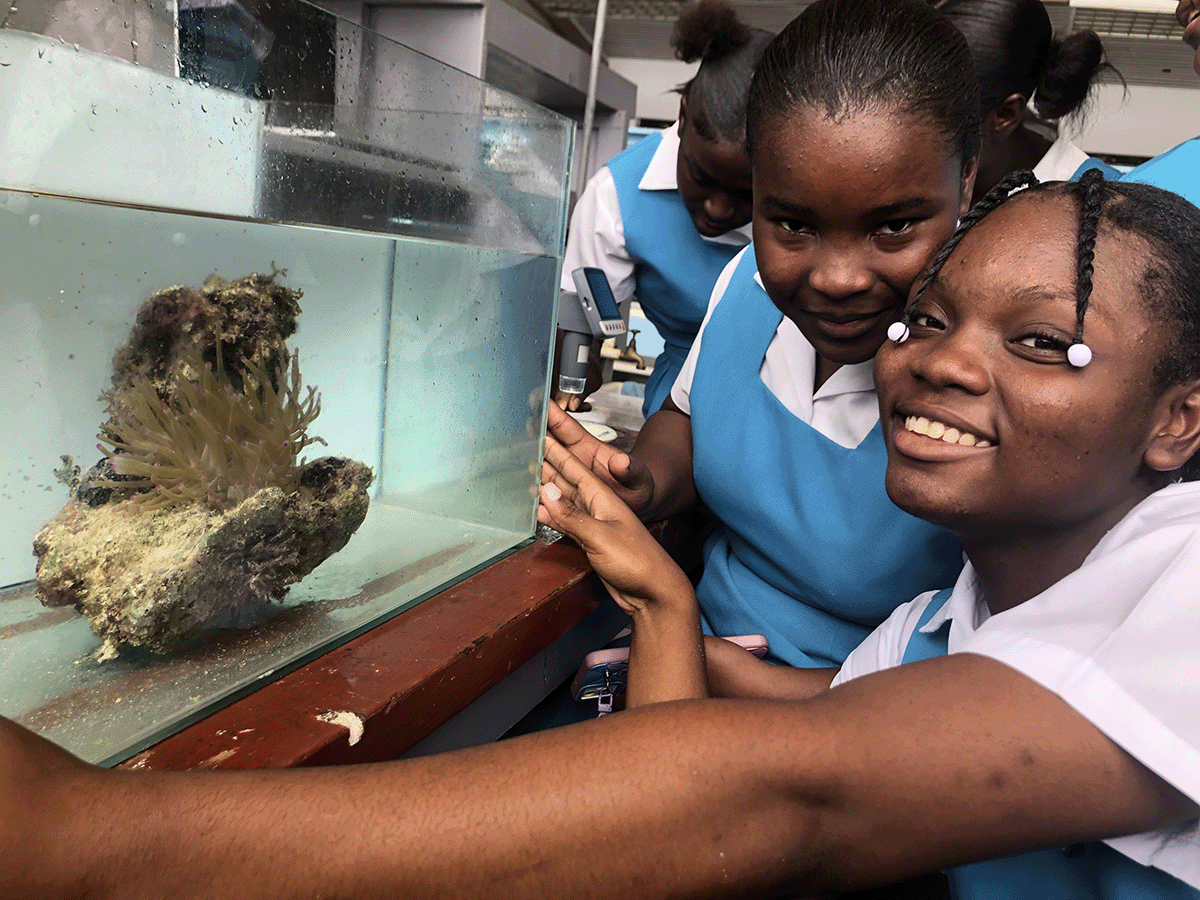
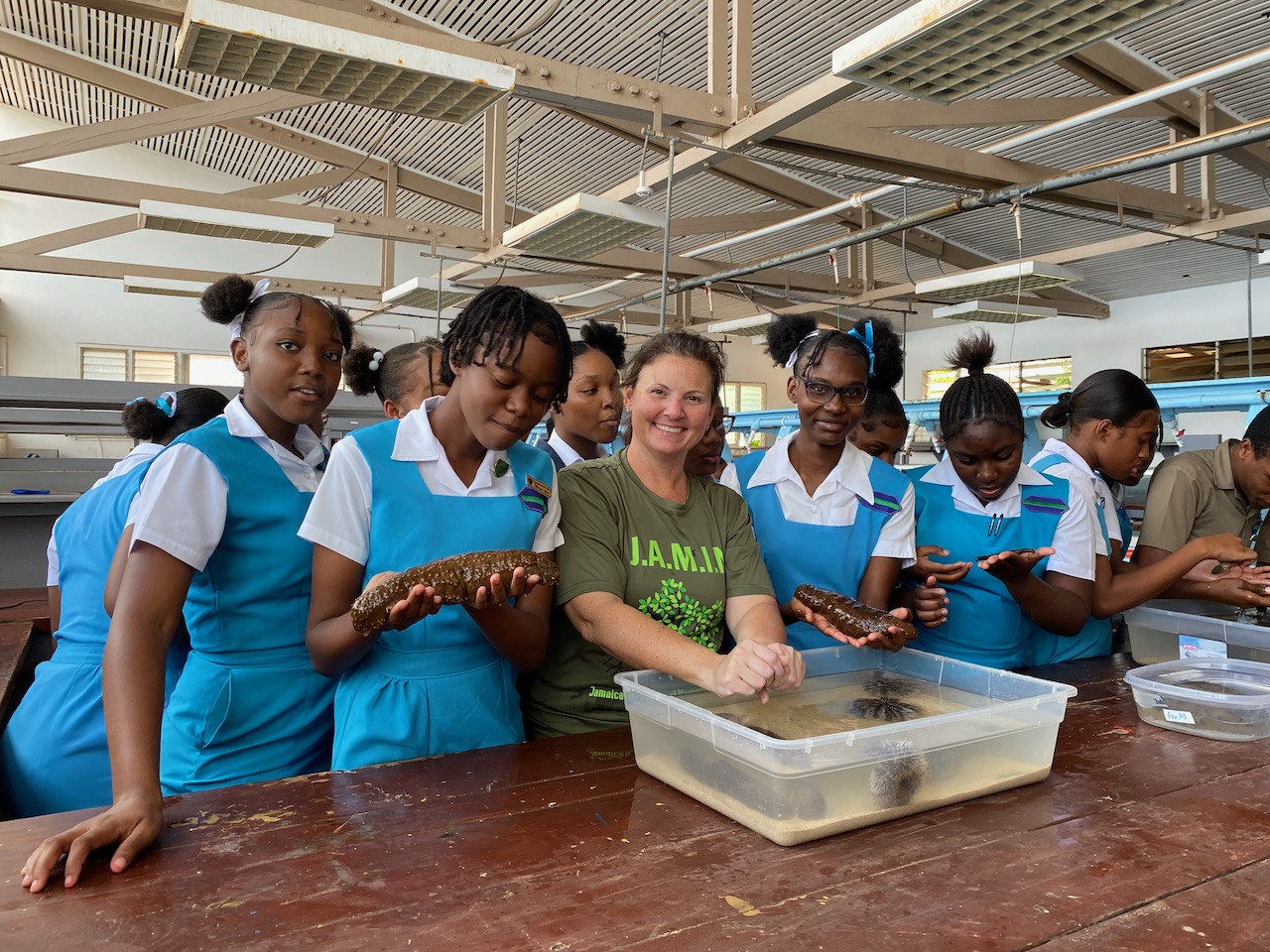
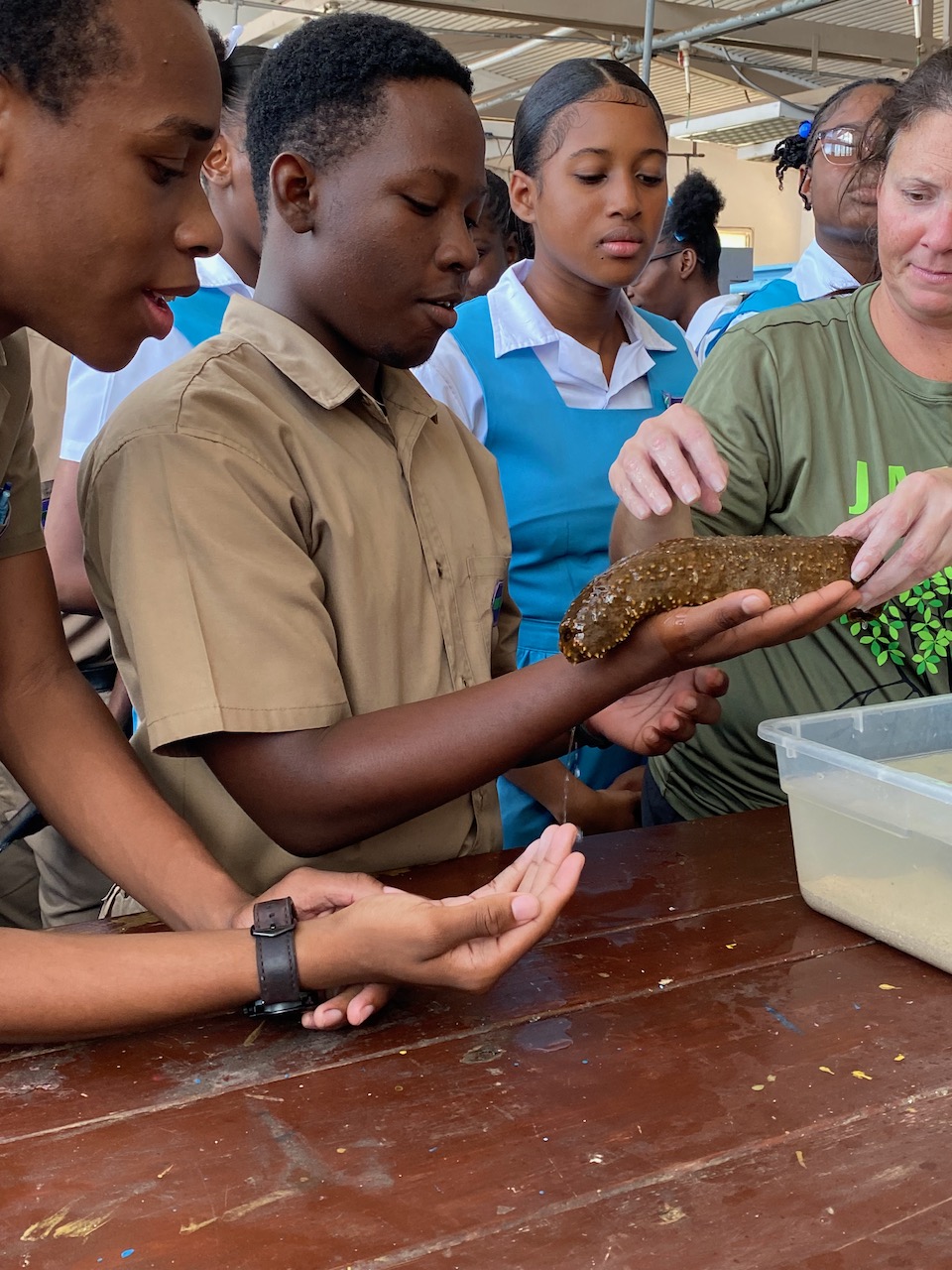
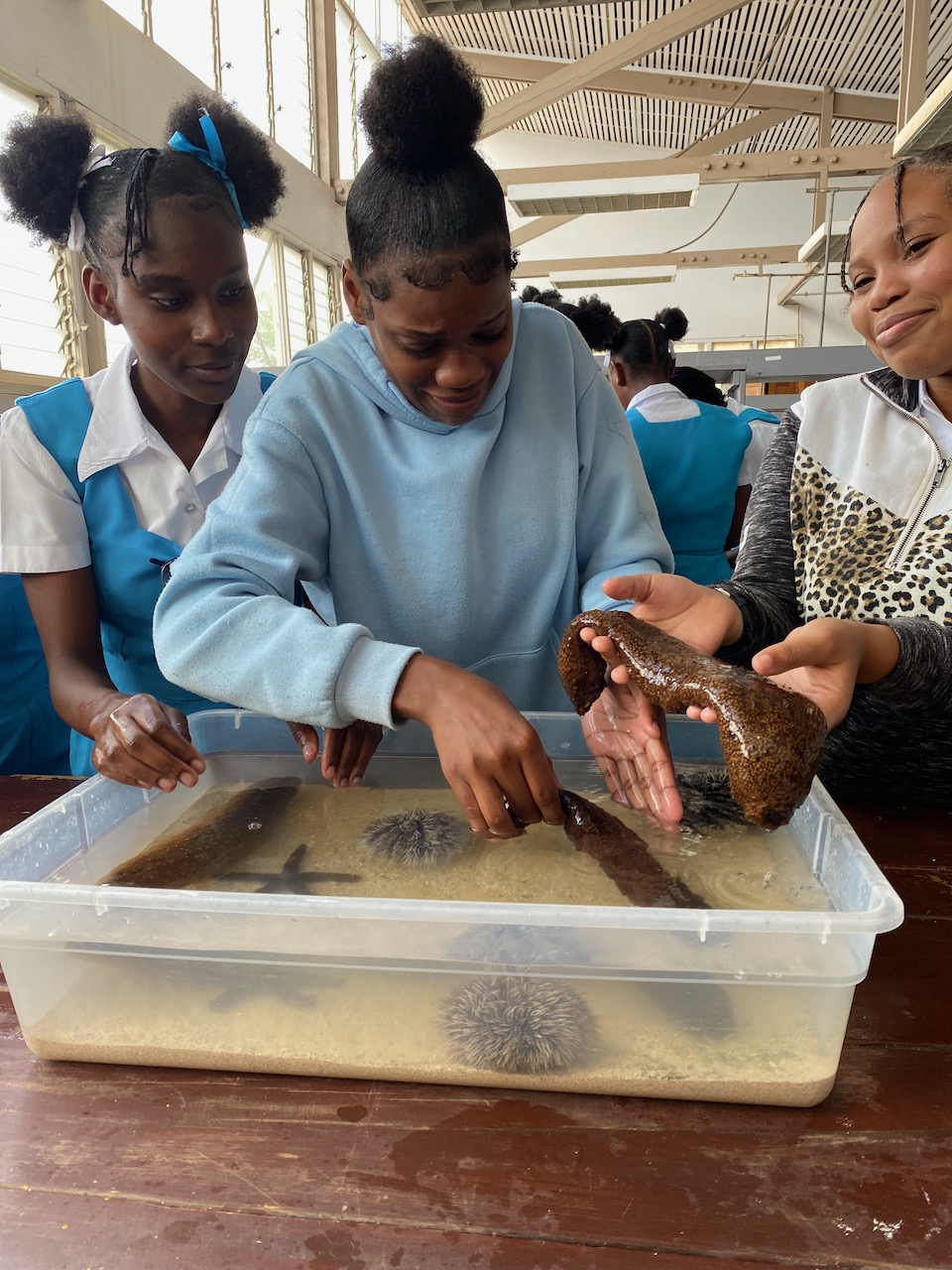
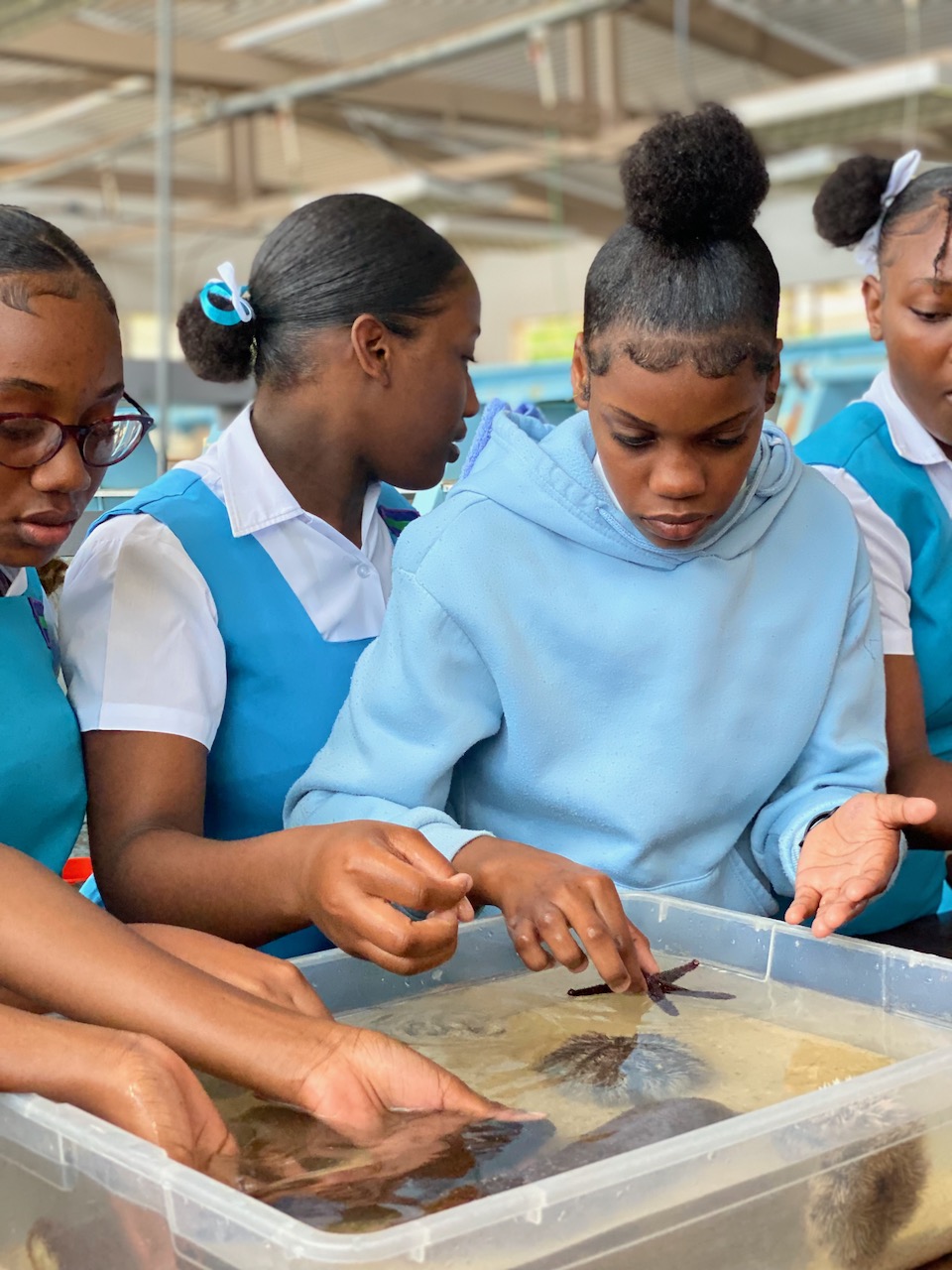
I had the chance to help out with the Khaled bin Sultan Living Oceans Foundation’s (KSLOF) Jamaica Awareness of Mangroves In Nature (J.A.M.I.N.) program in early February. when nearly 50 high school students visited the University of the West Indies Discovery Bay Marine Lab, KSLOF’s program partner, for a day of mangrove learning. Thanks to sponsorship from Playa Hotels and Resorts, KSLOF Education Director Amy Heemsoth ran two full days of lessons and hands-on activities about the mangrove food web.
Amy is a natural in the classroom, effortlessly capturing students’ attention and channeling their excitement into learning. She knows just how to get them on her side—breaking into the SpongeBob SquarePants theme song at every opportunity (relating, of course, to sea sponges). The students absorb her enthusiasm and reflect it right back. At one point, they surprise her by spontaneously breaking into another song: “Red, red, pointy head…”—a jingle Amy had taught them a few months ago to help identify different mangrove species.
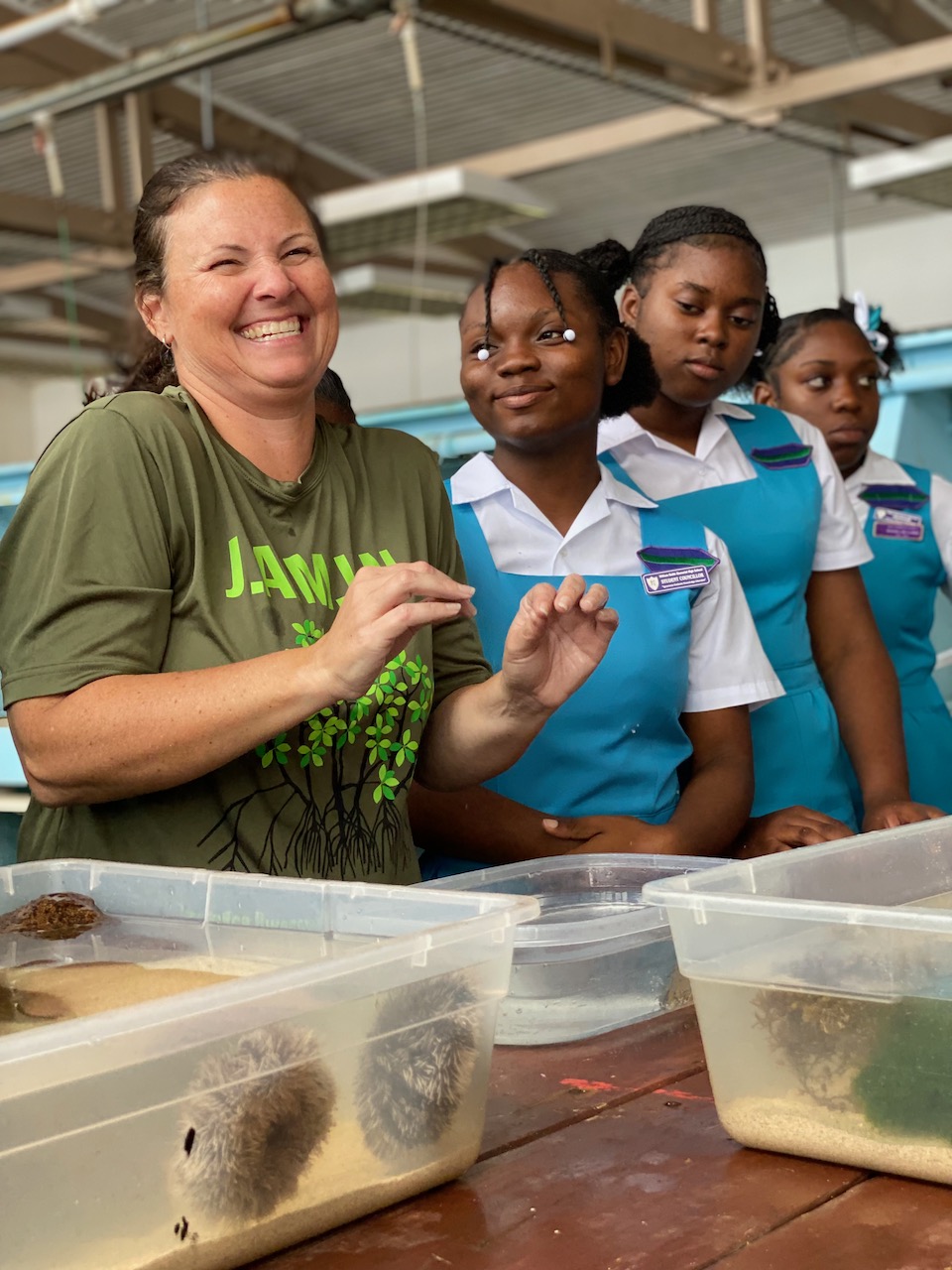
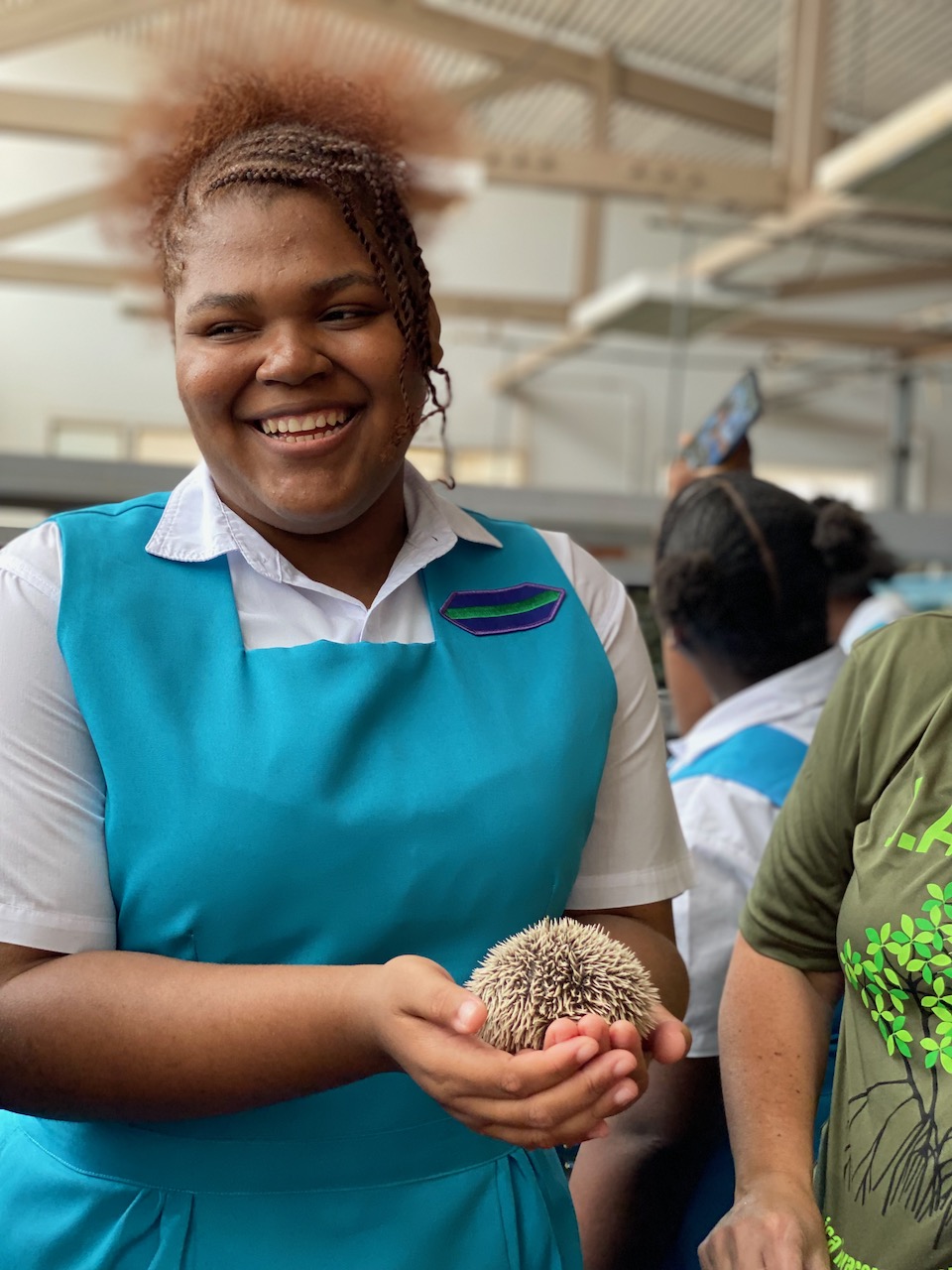
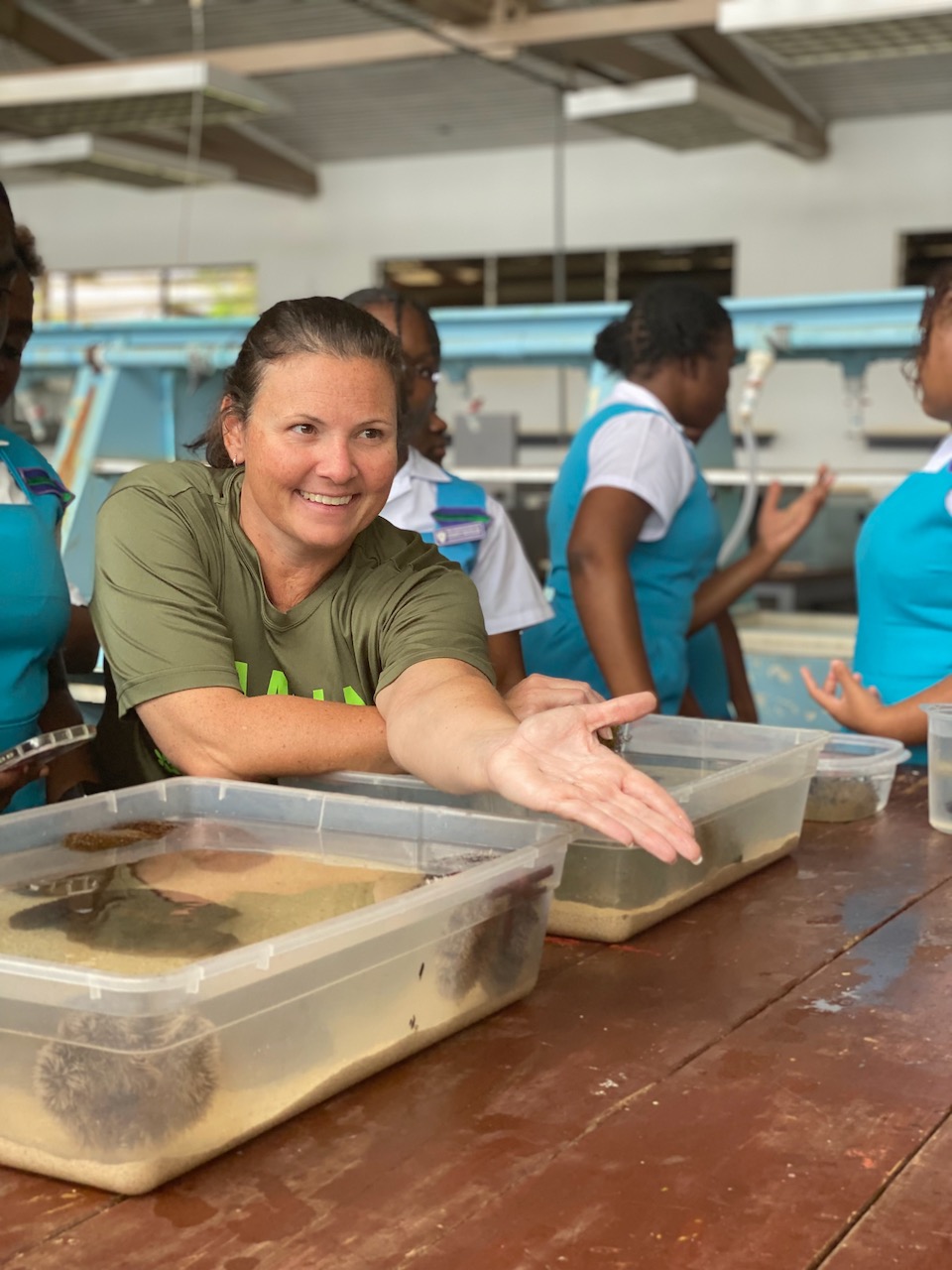
Beyond teaching the foundations of mangrove ecology, the day sparked deep conversations. One student raised a thought-provoking question about solutions to the die-off of Diadema antillarum—a crucial urchin species that helps keep coral reefs healthy by grazing algae. Could we relocate them from other areas? Breed them in captivity? Another student approached me to share her fears about climate change and the urgency of taking meaningful action. She spoke of adjusting her diet to better protect the environment and animal welfare.
We wrapped up the day with a ball of wool—yes, really. Each student took on the role of an animal species found in the mangroves. The wool started with a student representing the sun and was tossed to another student representing the next link in the mangrove food web. Carefully considering who eats whom (and aiming their throws just as carefully), they wove a tangled web between them. A pull of the string by one person—symbolizing the loss of a species—was felt by every individual, illustrating how interconnected ecosystems are, and how the disappearance of even one species can send ripples through the entire system.
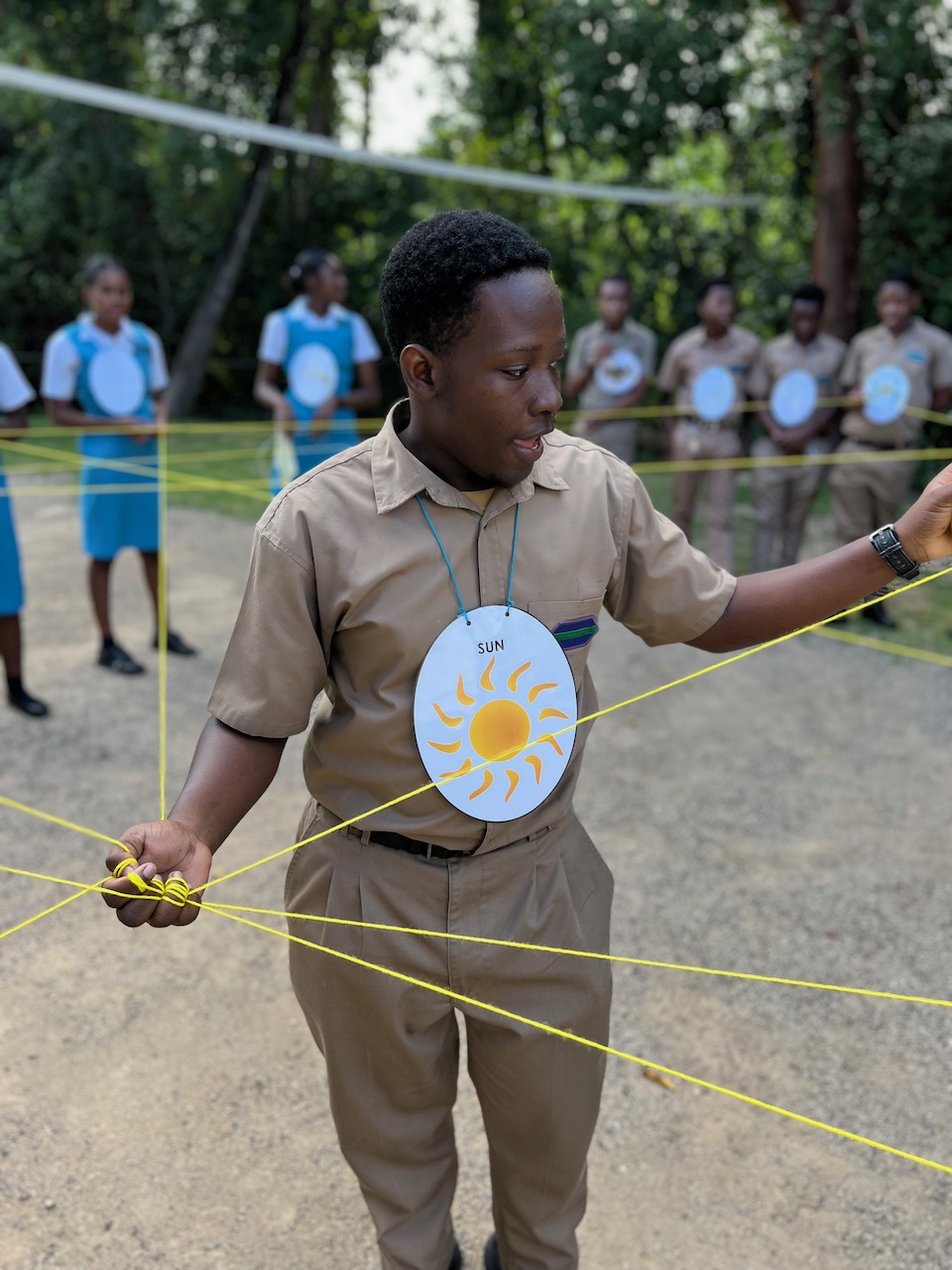
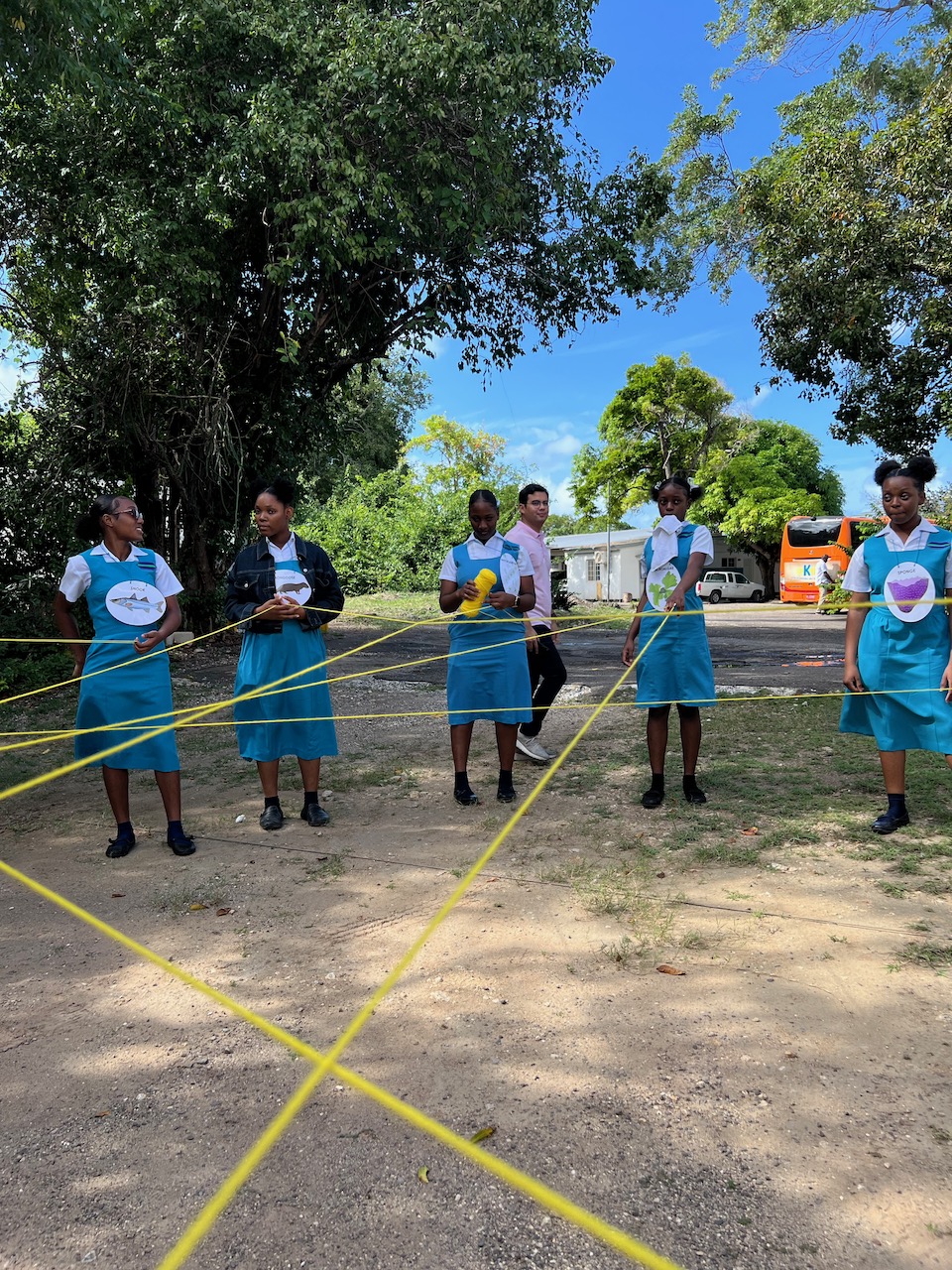
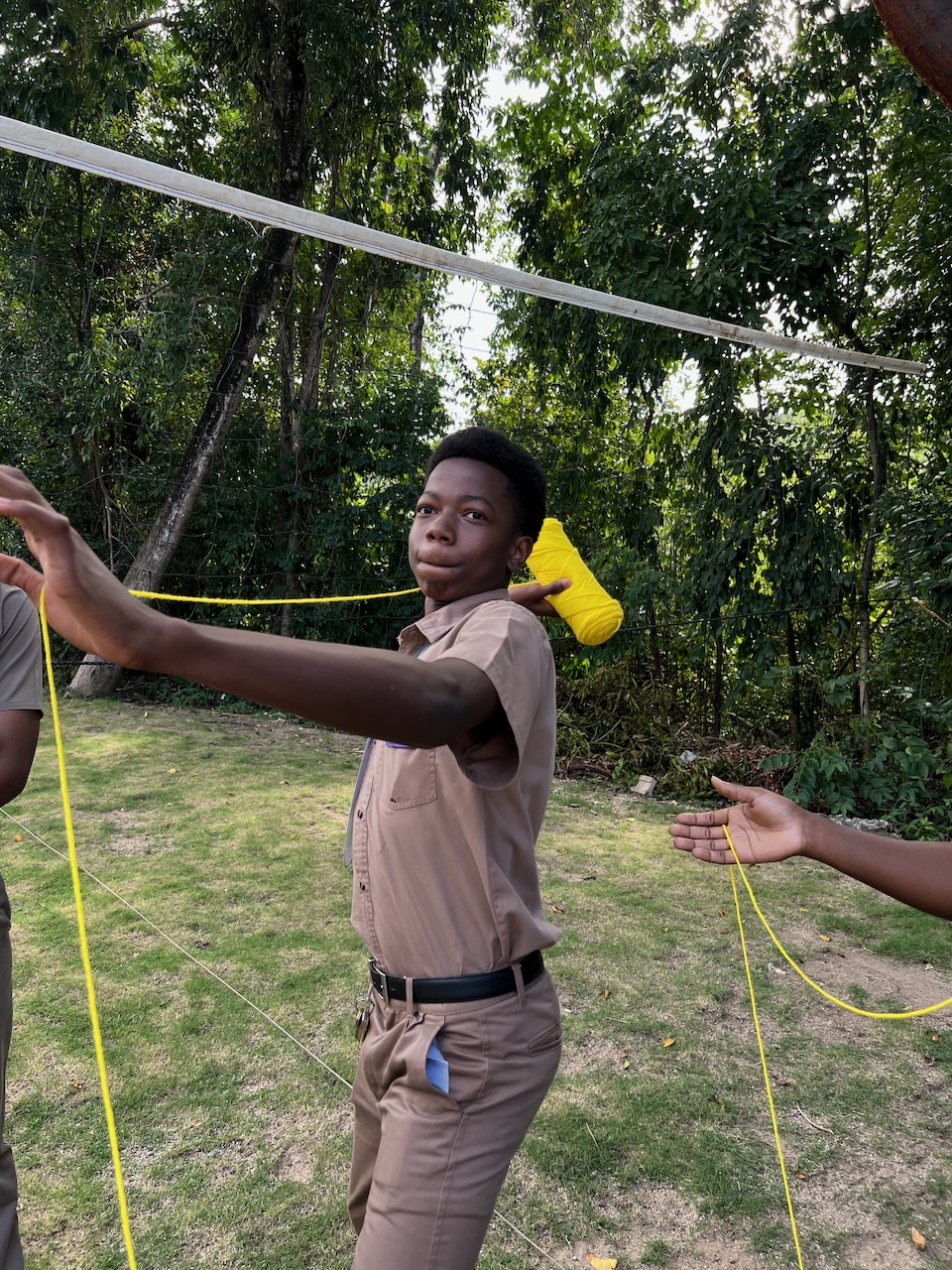
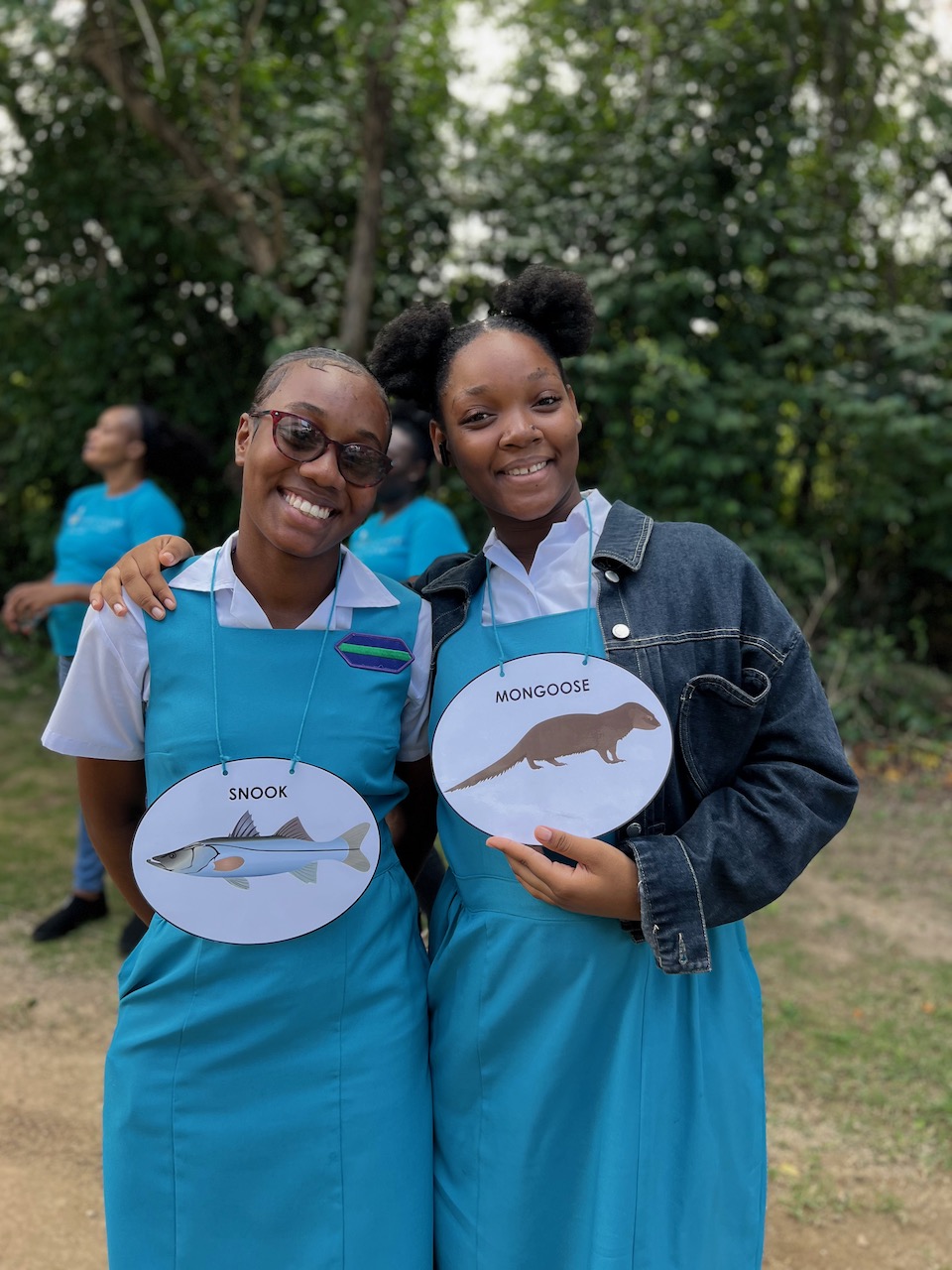
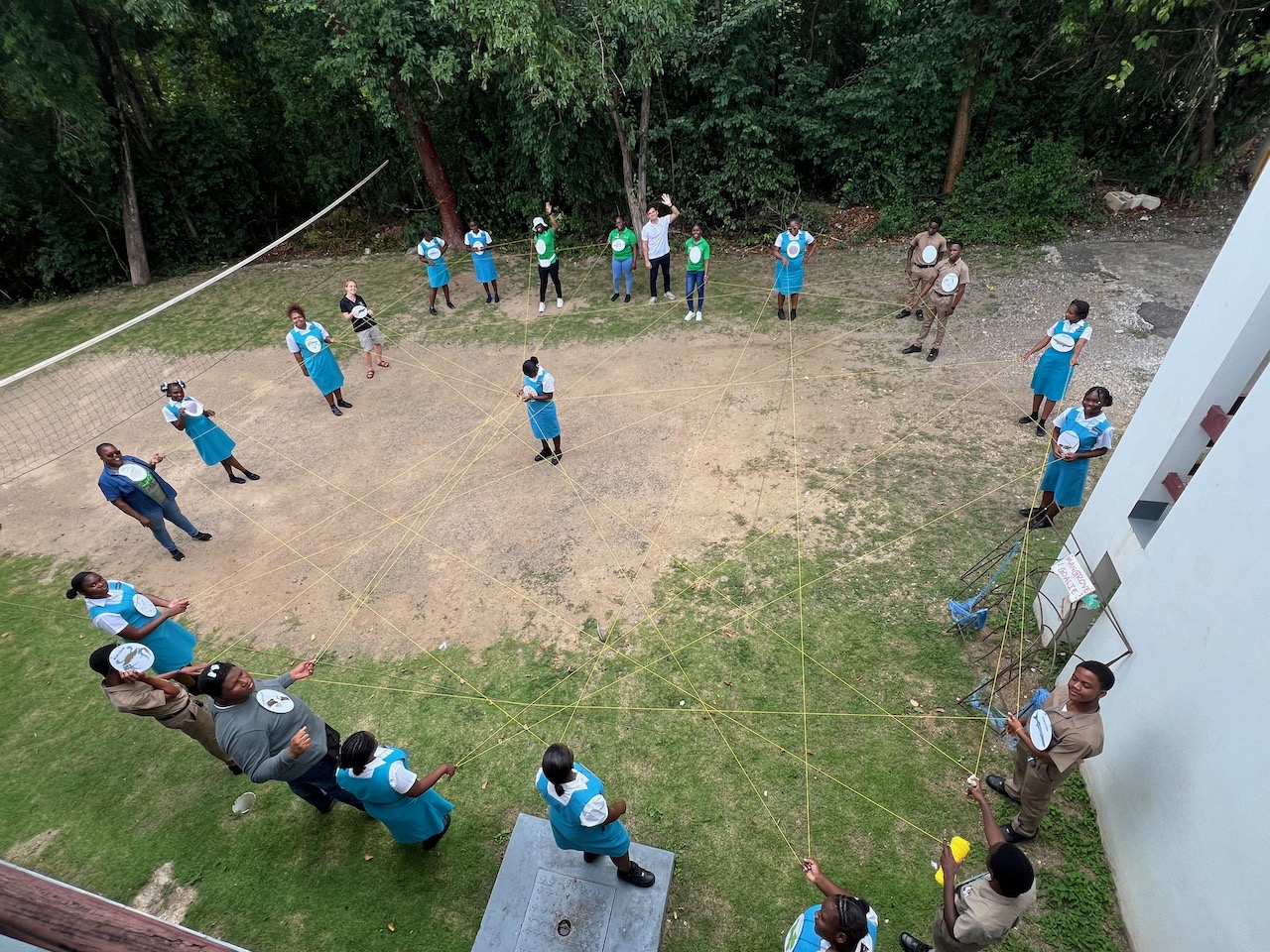
This final activity delivered a powerful message. The decline of a single species or the destruction of a habitat doesn’t happen in isolation—it triggers consequences up the food chain, across ecosystems, and even for human well-being. To me, this highlights why the J.A.M.I.N. program is so vital. It’s more than just a biology education initiative—it’s empowering students with the knowledge that mangrove forests matter, not only intrinsically but for the well-being of their own communities and livelihoods. Such understanding is essential if we are to work together to protect these ecosystems and the lives they support.