Winners of the 2020 Science Without Borders® Challenge
The 2020 Science Without Borders® Challenge invited students from around the world to “Take Action: Conserve Coral Reefs,” inspiring them to create artwork that highlights how we can protect these vital ecosystems. With over 650 submissions from 43 countries, this year’s contest showcased an incredible range of talent and creativity. Students illustrated diverse conservation efforts, from reducing pollution and educating communities to restoring coral reefs through active stewardship.
High school first-place winner Stacey Lei from the United States captured the power of education in her piece, “The Reef We Read,” emphasizing how awareness can drive positive change for coral reefs. Middle school first-place winner Anish Aradhey’s “Coral Reef Superhero” highlighted the impact of small, everyday actions, portraying a young girl cleaning up beach litter to protect marine life. Their artwork, along with other winning pieces, demonstrated not just artistic skill but a deep understanding of coral reef conservation.
By participating in the challenge, students learned how human activities affect coral reefs and discovered ways individuals can make a difference. The contest encouraged them to explore environmental issues creatively, fostering both artistic expression and a passion for marine conservation. Through their art, these young ocean advocates are inspiring a global audience to take action for coral reefs.
Winners & Finalists Ages 11-14:
"Actions of Waves" by Sarah Zhang, Age 14, Canada
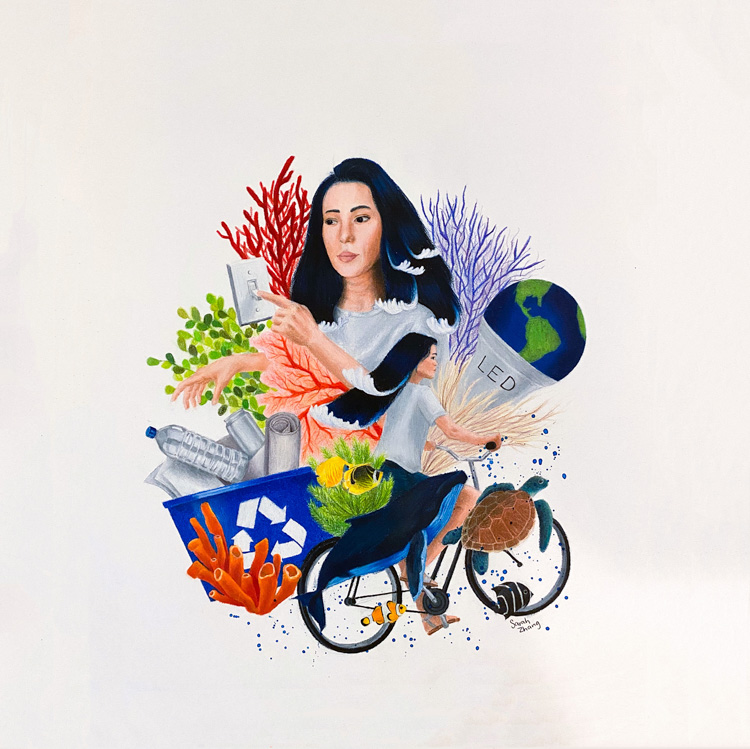
Even the smallest actions can make the biggest differences. The impact would be tremendous, like waves of the ocean. Similar to those strong waves, this girl represents the actions that make the change we need. When she is recycling, she is reducing the possibility of plastic ending up in our oceans and damaging coral reefs. By biking, she is reducing the amount of pollution in the air that creates greenhouse gases and ultimately causes coral bleaching. She is using an LED light bulb, which is 80% more energy-efficient than traditional lights. Less energy used means fewer greenhouse gases in our environment and in our oceans. If we, as individuals, all did these seemingly small actions, the change would be enormous--just like waves. Together, we can save the coral reefs and watch them thrive with all their unique and vivid colors, just like the ones in this artwork.
Winners & Finalists Ages 15-19:
First Place: “The Reef We Read” by Stacey Lei, Age 16, United States
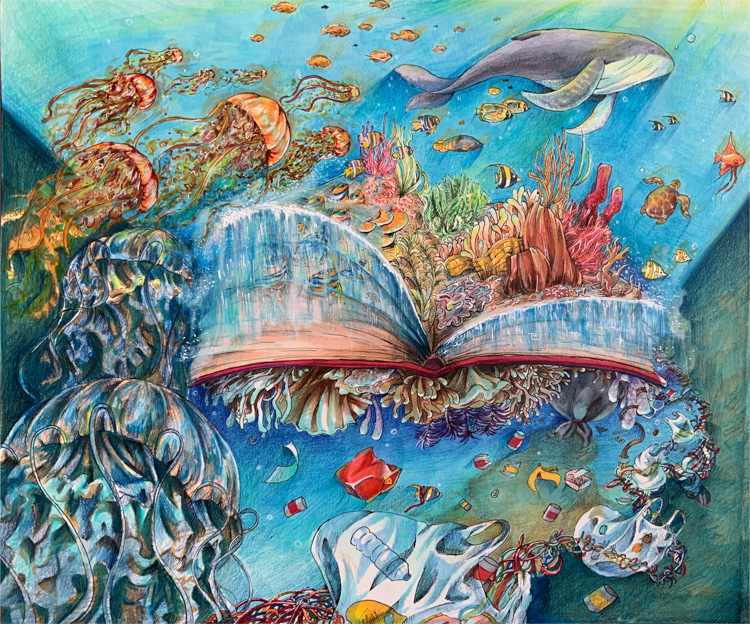
Corals reefs are dying because of negative human activities. The lack of awareness surrounding the reefs have contributed to its destruction. Education paves our future. When awareness is spread, the ocean is bright and full of life. The plants and other organisms above the book live in a healthy ecosystem, free of negative human interventions. However, when the awareness of our environment ceases, pollutants begin to destroy the coral reef. This is illustrated underneath the book where the ocean is lifeless, corals are bleached, and fish are entangled in human waste. Pollution is steadily creeping into marine life and joining the jellyfish. The book will close and coral reefs will only exist in history books if the pollution is not stopped. We must take immediate action by spreading coral reef awareness and stop the cycle of waste before it is too late.