Winners of the 2021 Science Without Borders® Challenge
In 2021, the Science Without Borders® Challenge invited students to explore “The Magic of Mangroves.” This international student art contest focused on the vital role mangrove forests play in coastal ecosystems. Mangroves are extraordinary trees that thrive where land meets sea, protecting coastlines from storms, filtering water, storing carbon, and providing shelter for countless species both above and below the waterline.
Students from 63 countries participated in the competition, creating artwork that showcased the beauty and importance of mangroves. Their pieces highlighted how mangroves serve as nurseries for young fish, provide habitat for diverse wildlife, and help combat climate change by sequestering carbon. Using striking visuals and creative expression, students captured the wonder of these unique ecosystems and their benefits to both people and the planet.
Winning entries came from talented young artists in the United States, South Korea, and Slovakia. Their artwork not only celebrated the magic of mangroves but also inspired greater awareness of the need to protect these critical coastal forests. The contest illustrated how art can be a powerful tool for ocean conservation, engaging the next generation in the fight to preserve our natural world.
Winners & Finalists Ages 11-14:
First Place: "Shelter" by Dana Chung, Age 13, Connecticut, United States of America
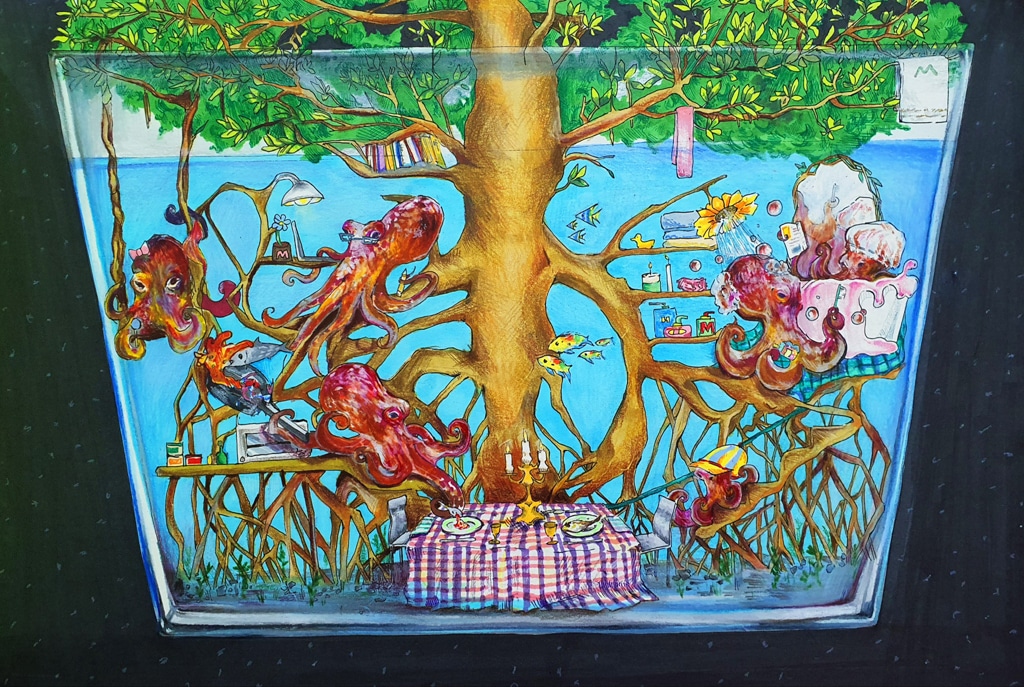
Artist's Statement: Mangrove forests are the barrier that protects locals from severe ocean waves and flooding, and also a shelter that protects sea animals. There are many various reasons that Mangrove trees are a valuable property for not just for humans, but also for the Earth. For this art piece, I depicted a safe, protective shelter that is for all aquatic animals.
Winners & Finalists Ages 15-19:
"The Tree of Life" by Anouschka Bechtolsheim, Age 16, California, United States of America
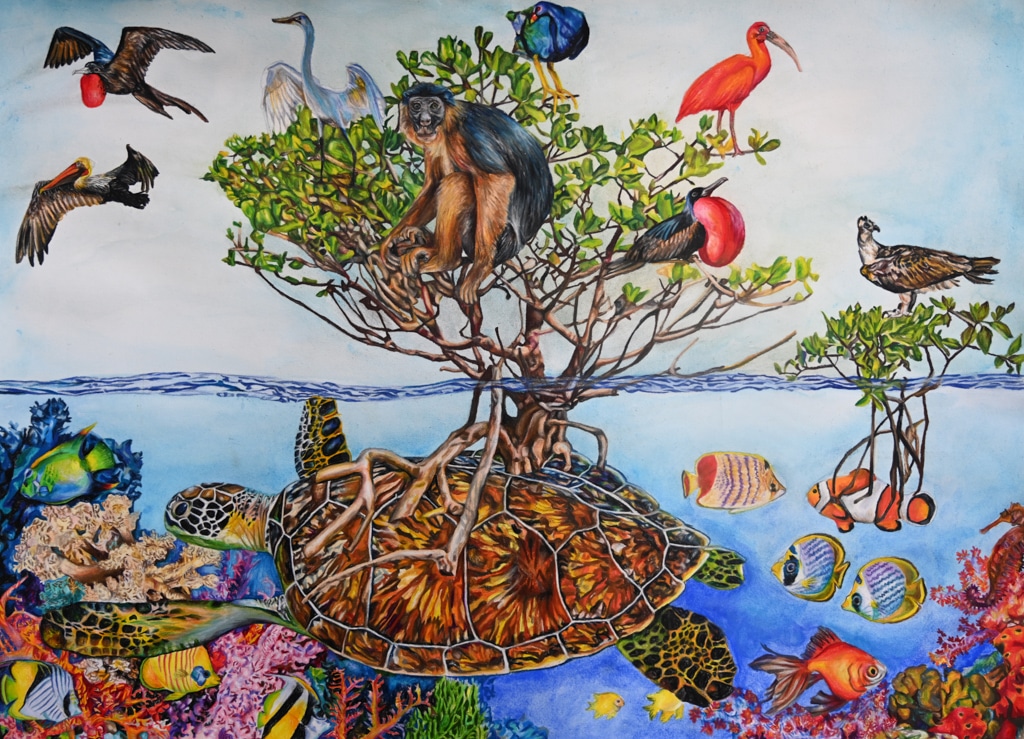
Artist's Statement: Mangroves are one of the most productive ecosystems in the world, providing a habitat for organisms both above and below water. “The Tree of Life” illustrates the variety of species mangroves provide habitat for. The mangroves growing on the backs of marine animals symbolize connectedness: how mangroves link a variety of organisms and ecosystems. Through this symbolism, I aim to show how the mangrove acts in harmony with the organisms and the neighboring coral reef, providing a sanctuary for biodiversity and filtering out sediment and nutrients for cleaner water in nearby ecosystems. My color usage reflects this meaning. I use vibrant colors to show how the water is pristine due to the help of mangroves, as well as to show how a variety of marine life, birds, and mammals flourish around mangroves. Ultimately, I hope this piece raises awareness about just how crucial mangroves and their ecosystems are.