Winners of the 2021 Science Without Borders® Challenge
In 2021, the Science Without Borders® Challenge invited students to explore “The Magic of Mangroves.” This international student art contest focused on the vital role mangrove forests play in coastal ecosystems. Mangroves are extraordinary trees that thrive where land meets sea, protecting coastlines from storms, filtering water, storing carbon, and providing shelter for countless species both above and below the waterline.
Students from 63 countries participated in the competition, creating artwork that showcased the beauty and importance of mangroves. Their pieces highlighted how mangroves serve as nurseries for young fish, provide habitat for diverse wildlife, and help combat climate change by sequestering carbon. Using striking visuals and creative expression, students captured the wonder of these unique ecosystems and their benefits to both people and the planet.
Winning entries came from talented young artists in the United States, South Korea, and Slovakia. Their artwork not only celebrated the magic of mangroves but also inspired greater awareness of the need to protect these critical coastal forests. The contest illustrated how art can be a powerful tool for ocean conservation, engaging the next generation in the fight to preserve our natural world.
Winners & Finalists Ages 11-14:
"Mangrove Forest, the Friend" by Chyi Jaan Li, Age 14, Brazil
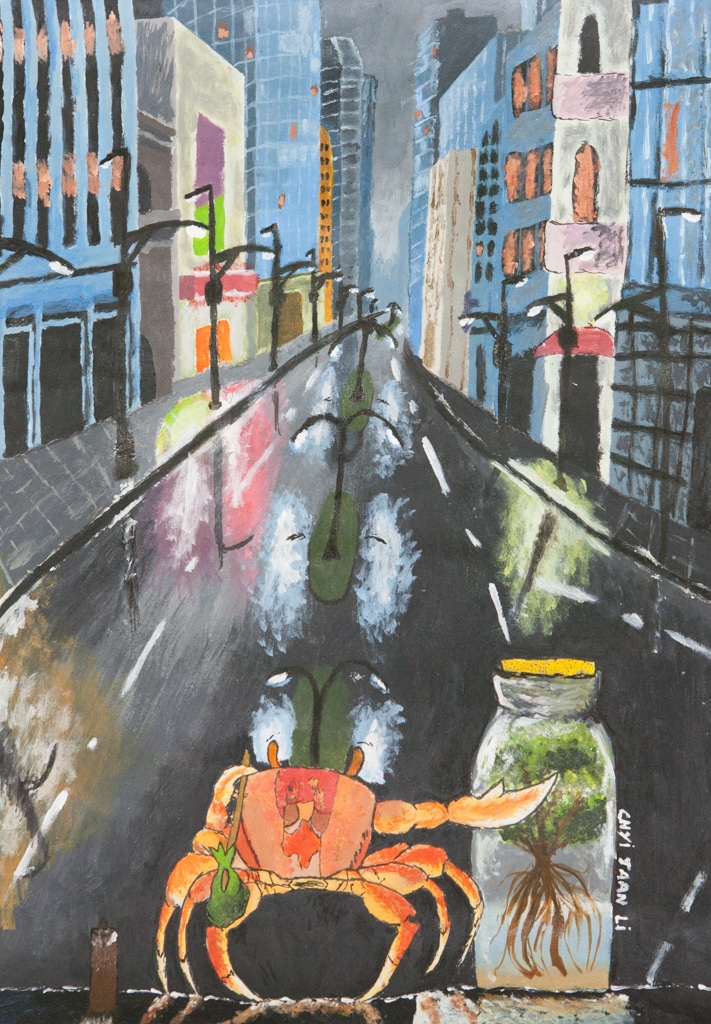
Artist's Statement: The mangrove forests are important to the environment because they are one of the biggest source of seafood and they reduce the strength of waves, besides being the ideal place to animal reproduction, but, unfortunately, depreciated by human beings. This work demonstrates how the human actions destroyed one of the main natural habitat of crabs, what makes them leave and search for a new home, taking with them their best friend: the mangrove.
Winners & Finalists Ages 15-19:
First Place: "The Guardians of the Sea" by Sharon Choi, Age 16, California, United States of America
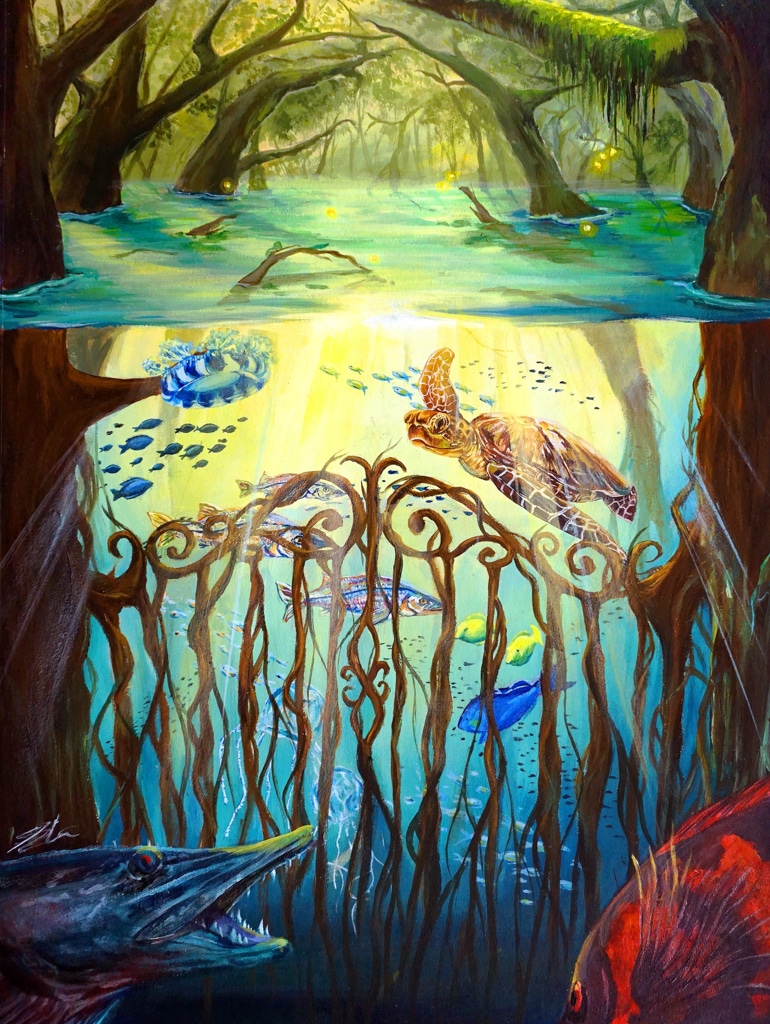
Artist's Statement: Over the years, human activities have caused huge biodiversity loss in marine ecosystems, endangering many plants and animals. However, mangrove trees are a nutrient-rich breeding ground that supports an incredible array of wildlife. In my piece, the mangrove roots intertwine to form a shielding gate to protect swimming species from their predators. Several crabs, shrimp, and fish rely on the intricate network of roots in their early stages of life before entering the open ocean as adults. If we clear mangrove forests, we threaten the survival of over 1,300 species, including numerous fish and sea turtles. Mangrove trees are known to be survivors that thrive in extreme conditions that are deadly to most plants. However, we must ask ourselves if mangroves will also be capable of surviving the accumulative pressures of climate change and an expanding global footprint of human development that are already affecting them at an alarming rate.