
search-icon
The Time Has Come to Protect the High Seas
World Heritage in the High Seas Cover

The Khaled bin Sultan Living Oceans Foundation is proud to support the publication of a game-changing report by UNESCO and IUCN that illustrates how the World Heritage Convention can be used to protect special places on the High Seas.

The High Seas – areas of the open ocean that lay beyond national jurisdiction – cover half our planet and contain natural wonders that rival our National Parks on land. Beneath the waves and far from shore you’ll find undersea volcanoes that dwarf the largest mountains on land, floating golden rainforests of the sea, and species so bizarre NASA is studying them to give them an idea of what life might be like on other planets.

Currently, the high seas are highly vulnerable to exploitation. Following our motto Science Without Borders®, the Khaled bin Sultan Living Oceans Foundation supported the work of the UNESCO World Heritage Centre Marine Programme to assess the potential of using World Heritage status to protect places of “Outstanding Universal Value” on the High Seas.

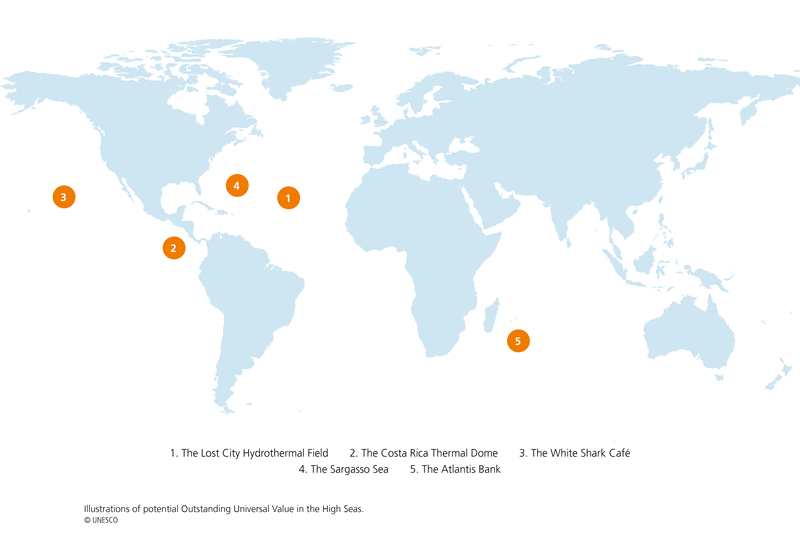
The resulting report, World Heritage in the High Seas: An Idea Whose Time has Come, not only identified how the World Heritage Convention could be used to protect places on the High Seas, but also suggested five possible sites:
World Heritage in the High Seas Map
Protect the High Seas: The Lost City

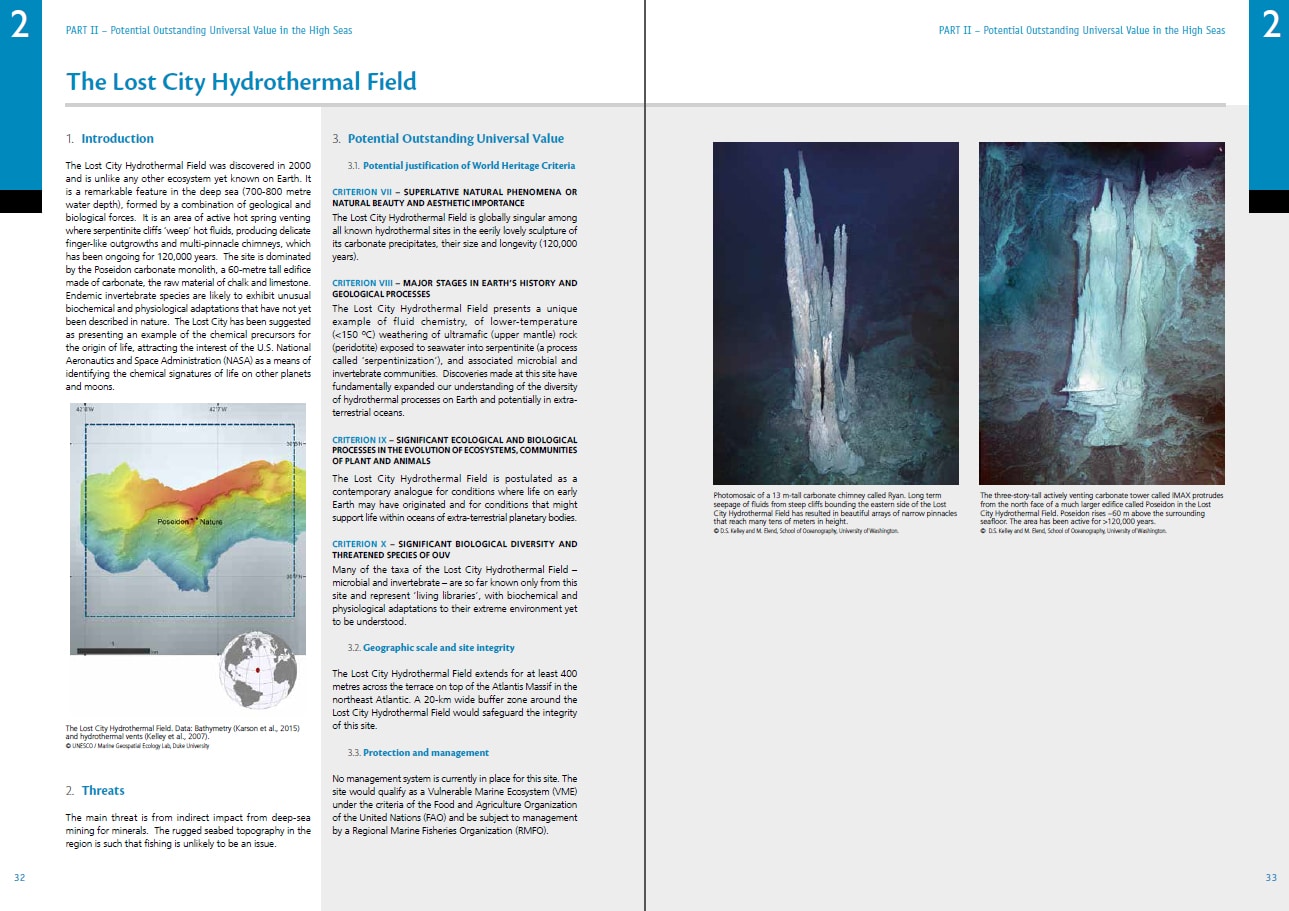
1) The Lost City Hydrothermal Field

The Lost City is a deep-sea wonderland of spires, some hundreds of thousands of years old, created by a combination of geologic and biologic processes in the middle of the Atlantic Ocean. Unlike any other ecosystem on earth, it may present a good example of the chemical precursors for the origin of life.

Protect the High Seas: Costa Rica Thermal Dome

2) The Costa Rica Thermal Dome

The Costa Rica Thermal Dome is an oceanic oasis – an extremely productive ocean area that attracts marine mammals and large ocean predators such as sharks, tunas, and dolphins to its nutrient-rich waters. It is critical feeding and breeding habitat for the endangered blue whale, and is a regular stop on the migratory route of critically endangered leatherback sea turtles.
Protect the High Seas: White Shark Cafe

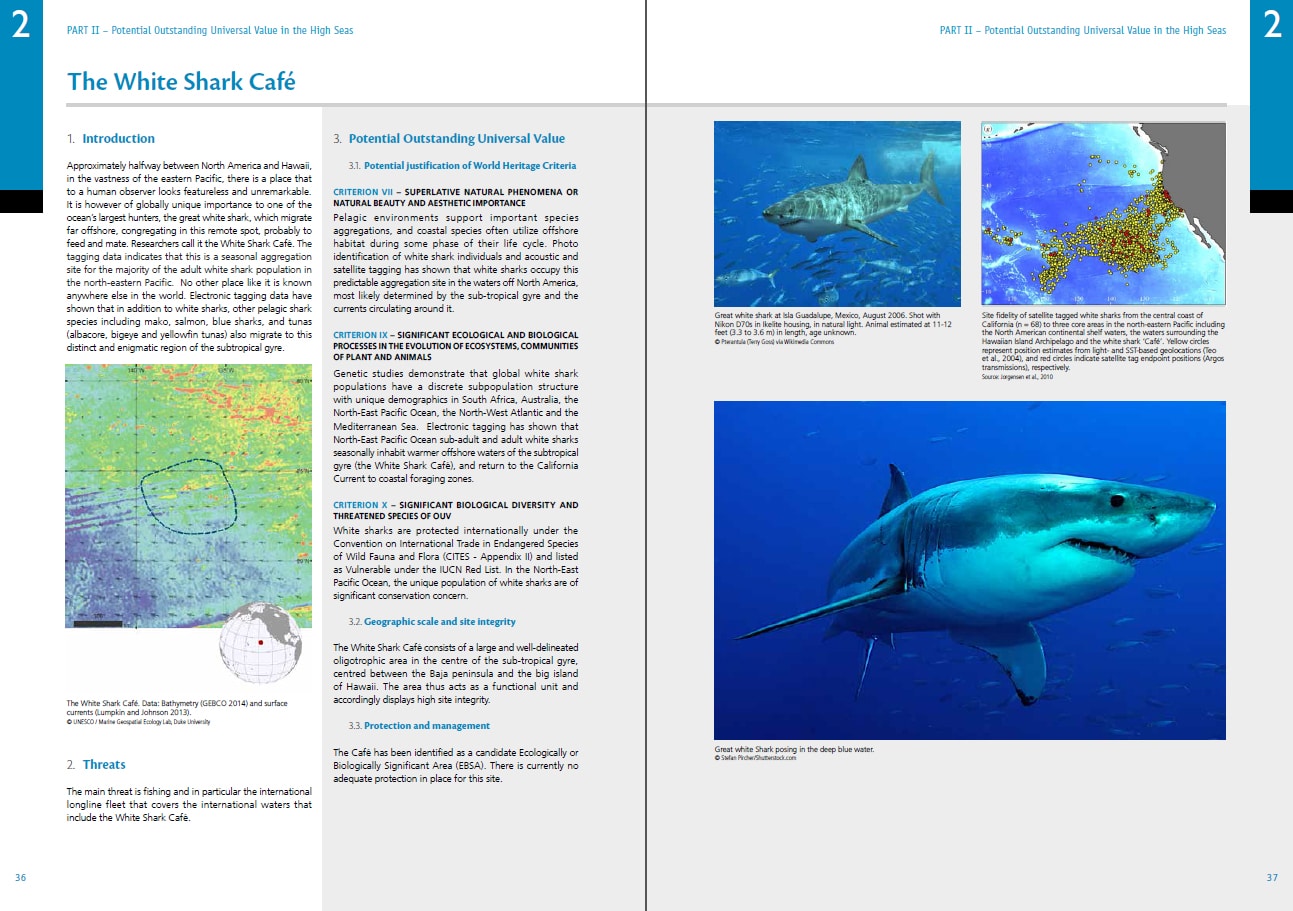
3) The White Shark Café

In the cobalt blue waters between California and Hawaii, hundreds of Great White Sharks gather, most likely to feed and mate. Satellite tagging data shows that many other species of sharks and tuna also congregate in this one particular area of the sub-tropical gyre. Scientists are still figuring out why all of these pelagic predators come and stay at the White Shark Café.
Protect the High Seas: The Sargasso Sea

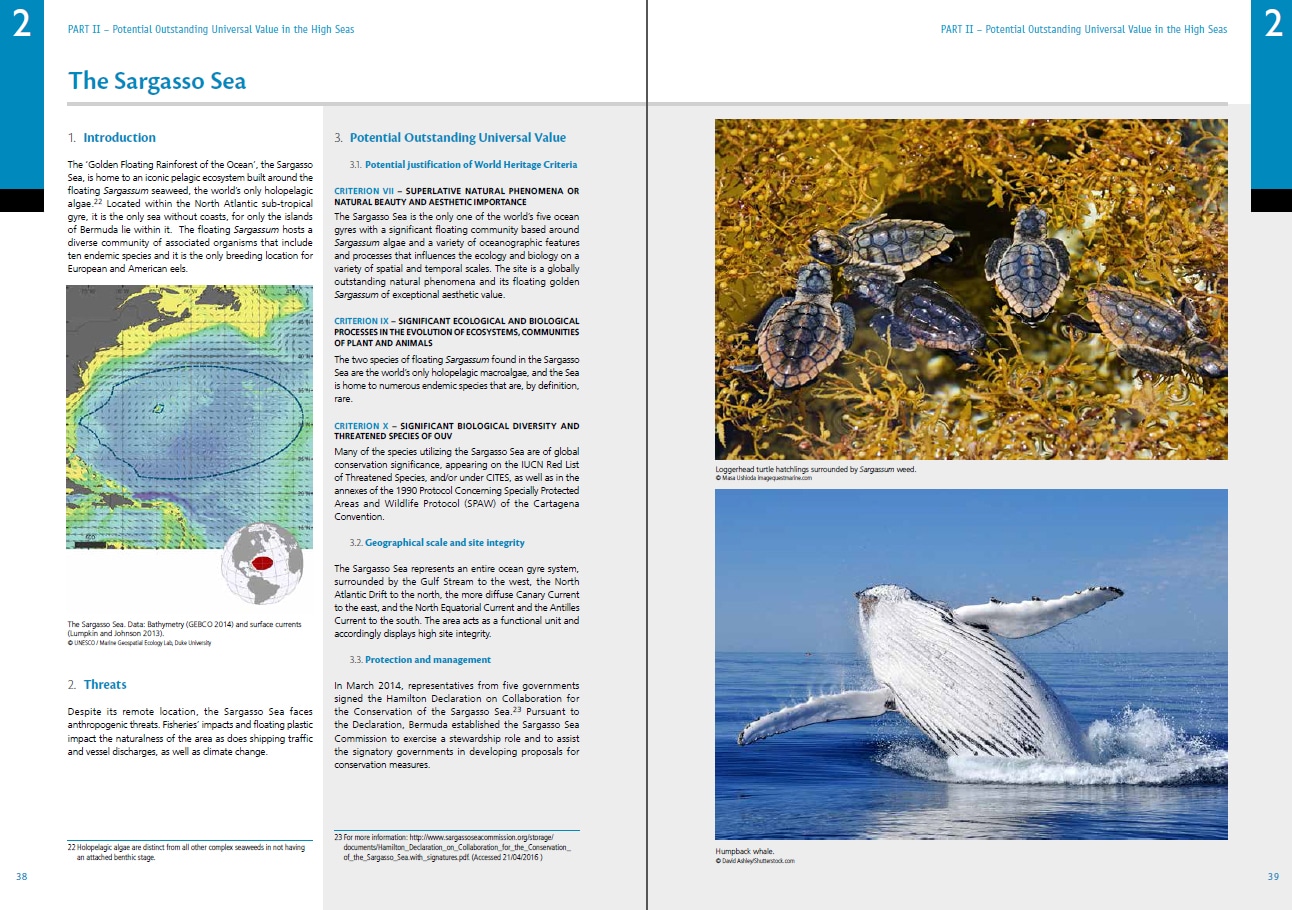
4) The Sargasso Sea

Covered in golden floating Sargassum seaweed, the Sargasso Sea is an iconic ocean ecosystem that is important nursery habitat for hatchling sea turtles and the only known breeding ground for American and European eels. First seen by Columbus on his first voyage to The Americas in 1492, the Sargasso Sea has been a place of myth and legend ever since.
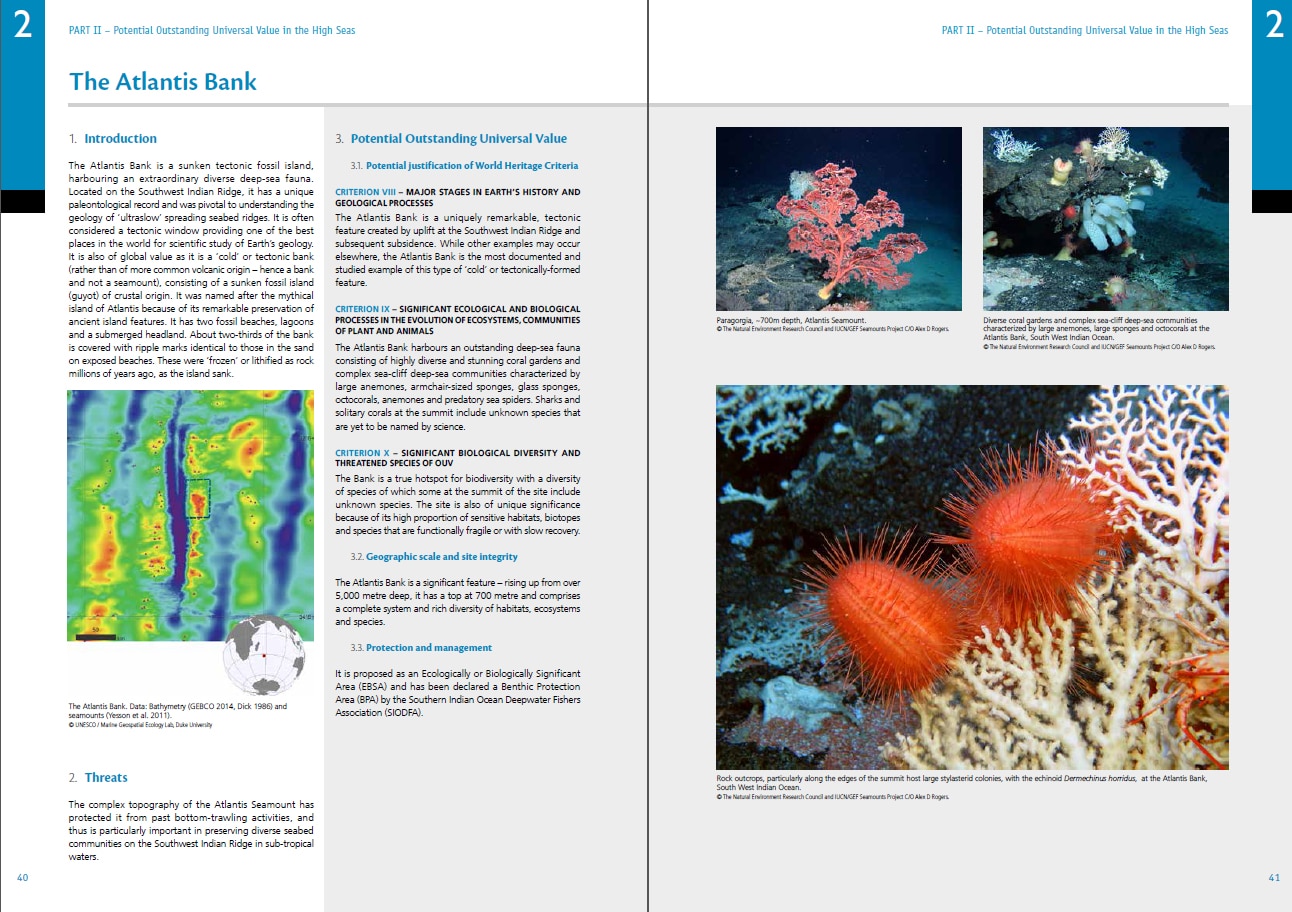
Protect the High Seas: Atlantis Bank

5) The Atlantis Bank

A fossilized island deep in the Indian Ocean, the Atlantis Bank is covered in bizarre ocean creatures, giant sponges, and ancient deep-sea corals.

The time has come to these unique and special places on the High Seas.

This publication would not have been possible without the leadership of His Royal Highness Prince Khaled bin Sultan and the generous support of the Khaled bin Sultan Living Oceans Foundation.
Related Posts

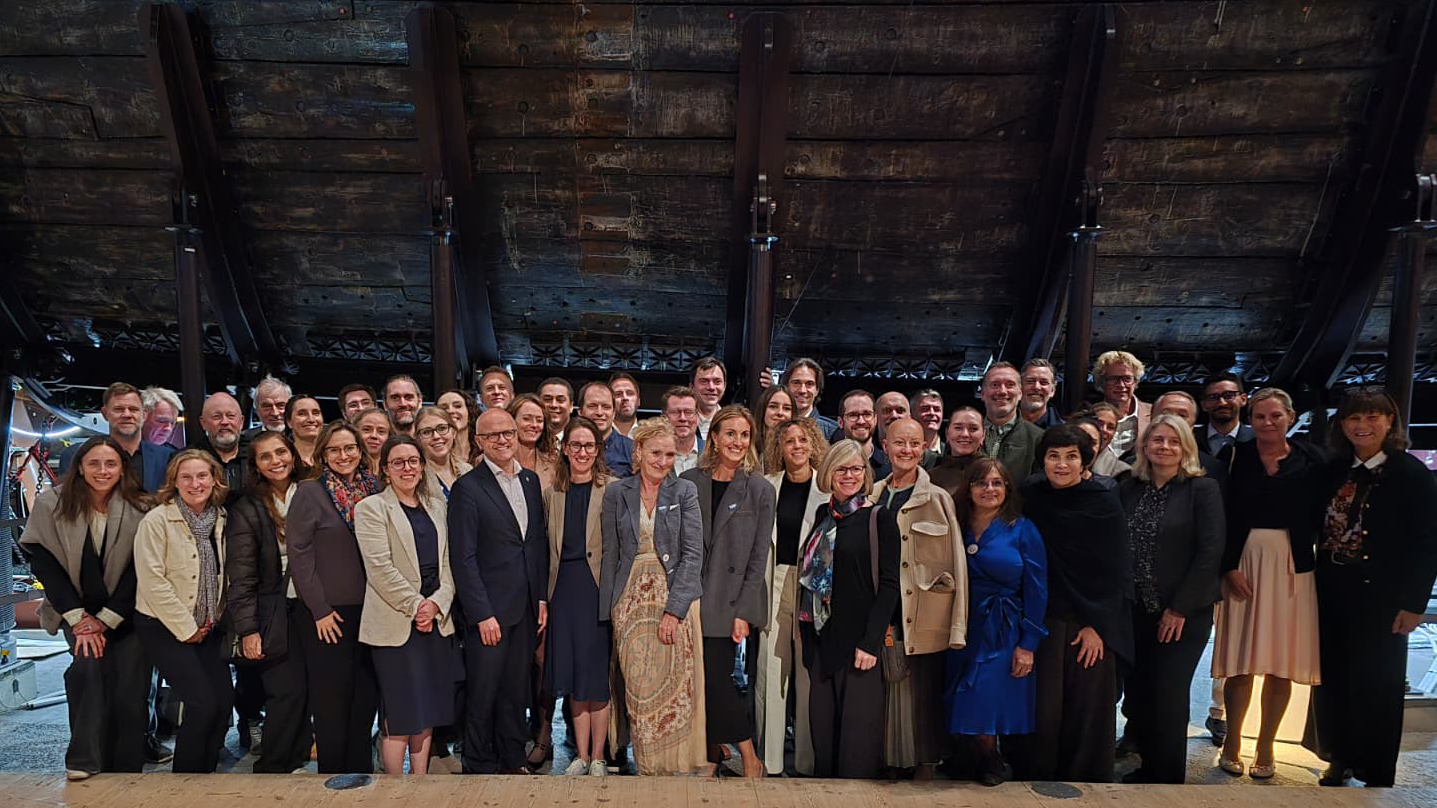
From Dialogue to Action: Ocean Foundations Gather in Stockholm

What can philanthropy accomplish when foundations working across ocean science, conservation, and sustainable development come together around a shared purpose?

That question was at the heart of the 6th UN Ocean Decade Foundations Dialogue, held September 7–9 in Stockholm, Sweden. The Khaled bin Sultan Living Oceans Foundation joined philanthropic organizations from around the world for three days of discussion, collaboration, and planning focused on accelerating progress during the second half of the UN Decade of Ocean Science for Sustainable Development.

Facilitated by UNESCO’s Intergovernmental Oceanographic Commission (IOC), the UN Ocean Decade Foundations Dialogue is a growing network of more than 30 philanthropic organizations committed to advancing ocean science, collaboration, and action. Since its creation within the framework of the Ocean Decade, the Dialogue has provided foundations with a space to exchange ideas, develop partnerships, and explore how philanthropy can help advance a healthy and resilient ocean.

Hosted by the Voice of the Ocean Foundation (VOTO), this year’s gathering began with From Depth to Action, an Opening Forum that brought nearly 100 leaders from the Swedish and international ocean community together at…

Read More

Meet IFAN: Helping Bring Navigate with Care to the Next Generation

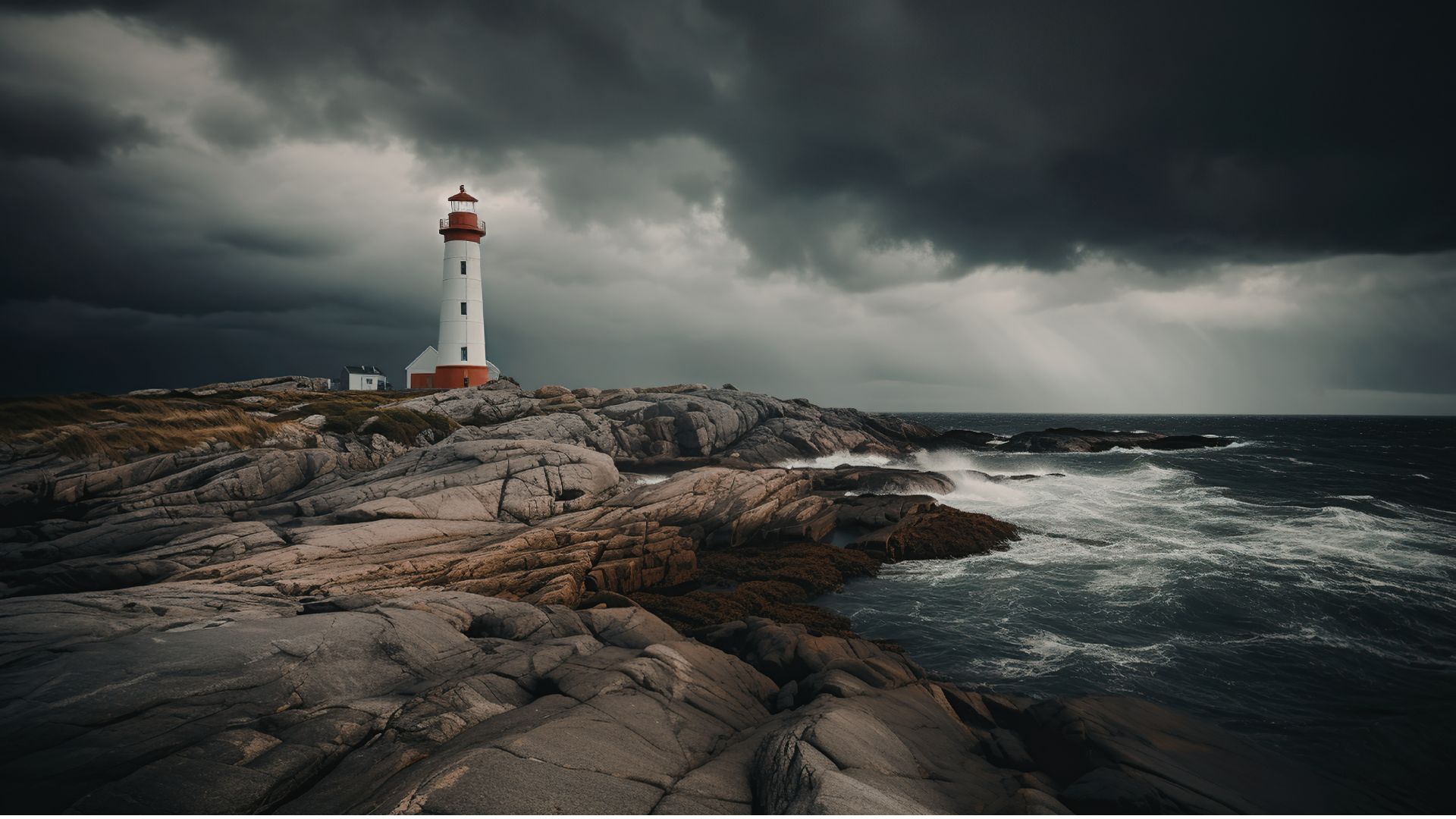
If you’ve ever seen a lighthouse flashing from the shore or a brightly colored buoy bobbing in the water, you’ve seen Aids to Navigation at work.

Aids to Navigation, often called AtoNs, help mariners navigate safely. They can mark channels, warn of hazards, help vessels determine their position, and provide other information people need to make safe decisions on the water. Around the world, these systems help guide everything from small recreational boats to large commercial or container ships. 

But safe navigation isn’t only about protecting vessels and the people aboard them. The choices mariners make can also affect the animals and ecosystems beneath and around them.

That connection between maritime safety and ocean conservation is at the heart of this year’s Science Without Borders® Challenge—and of our partnership with this year’s theme sponsor, the International Foundation for Aids to Navigation (IFAN).

Read More

Privacy Overview

This website uses cookies so that we can provide you with the best user experience possible. Cookie information is stored in your browser and performs functions such as recognising you when you return to our website and helping our team to understand which sections of the website you find most interesting and useful.  You can view our complete Privacy Policy here.

Strictly Necessary Cookies

Most of our cookies are used to improve website security and reduce spam. These cookies should be enabled at all times. They also enable us to save your preferences for cookie settings.

3rd Party Cookies

This website uses Google Analytics to collect anonymous information such as the number of visitors to the site, and the most popular pages. Keeping this cookie enabled helps us to improve our website.