It is green sea turtle nesting season right now and here in the northern atolls of New Caledonia there are some beaches that are well known as favorite nesting spots. The green turtle spends almost all its life at sea feeding on algae and sea grasses, but the female turtles lay their eggs on land, and in the last few days we have been lucky enough to see many of them doing this.
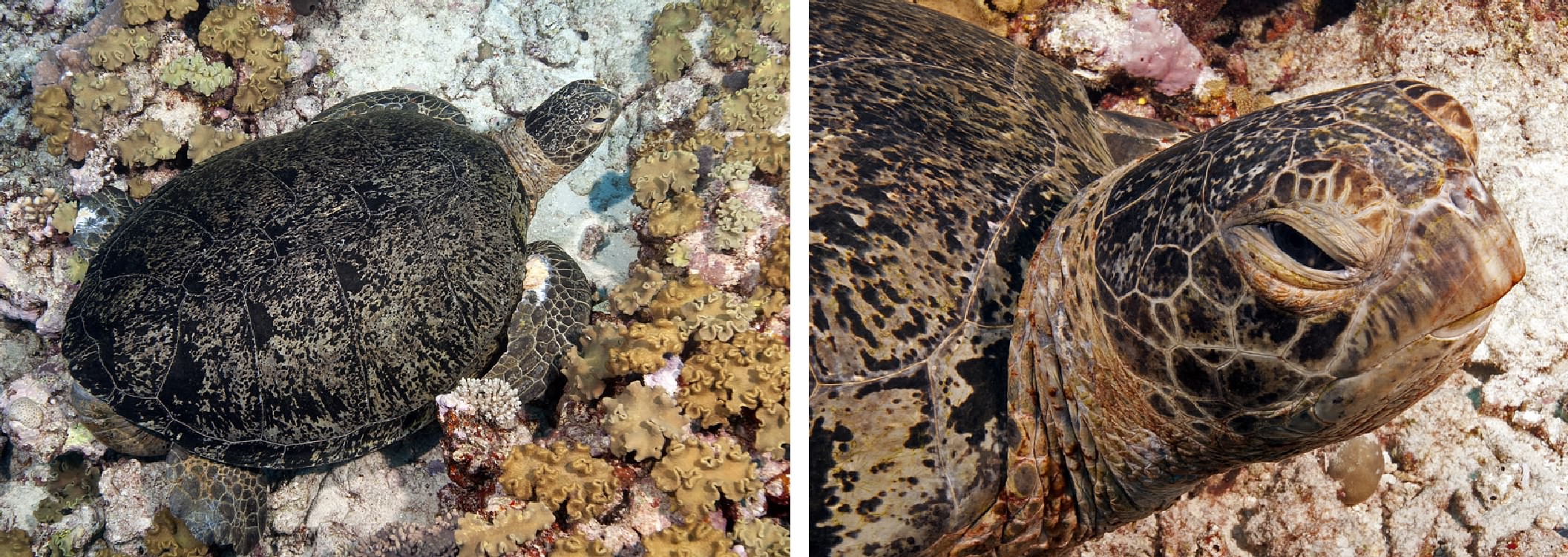
A green turtle rests on the seafloor.
The Sea Turtle Nesting Process:
First they swim parallel to the beach very close to shore, sticking their heads up above water now and again as if they are looking for the right nesting spots to come onto land. Once they have made up their minds the turtles leave the water and use their powerful front flippers to drag themselves up the beach. They look very ungainly doing this and they stop to rest several times before they make it to the top of the beach above the tide line.
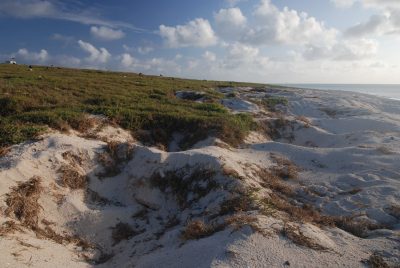
Sea Turtle Nesting Spots: Deep holes in the beach show that many sea turtles come up to nest in the night.
Using their front flippers they sweep away sand and start digging a hole that will take them many hours into the night to complete. After digging for a while with their front flippers, they switch to use their hind flippers curling them to scoop out sand to make a deep hole. Next they lay the eggs into the deep hole and cover it back over before dragging themselves down the beach and back into the water before sunrise.
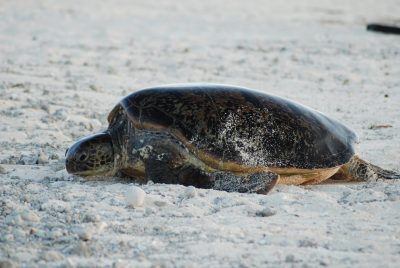
Sea Turtle Nesting: Green turtle dragging herself up the beach, getting ready to dig a nesting hole.
The eggs will incubate in the hot sand for about 2 months before the green turtle hatchlings appear above ground and race for the sea. Predators try to snatch them before they make it to the ocean, but many do survive. All the females we have seen digging holes were likely born on these islands, as turtles seem to return to the exact beach where they hatched themselves over 20 years ago.
Photos: 1-2 – Ken Marks, 3-4 – Alison Barrat