search-icon
Words into Action

Happy International Coastal Cleanup Day! Across the world people are cleaning up beaches in order to conserve and protect their coastlines and the precious marine ecosystems that line them.

While on the Global Reef Expedition in Tonga, the education team visited Mo’unga’one island. We provided an education seminar on coral reefs including the benefits and threats to reefs around the world and in Tonga. During the presentation, we explained how litter can cause damage to reefs as well as being detrimental to the many of the animals living there.

Beach Cleanup Protects Marine Ecosystems
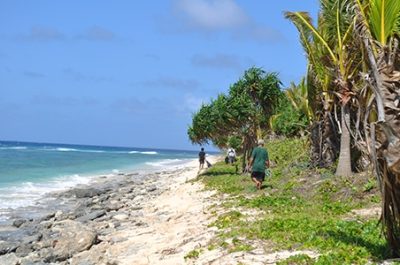
Cleaning up beaches in Tonga

Cleaning up beaches in Tonga.

Often animals mistake litter for food and ingest it, causing health problems. They can also get tangled up in rope, plastic bottle rings, wire, etc. often causing death. We also mentioned that some plastics are believed to take hundreds or even thousands of years to degrade, and that some scientists even think that they may never break down.
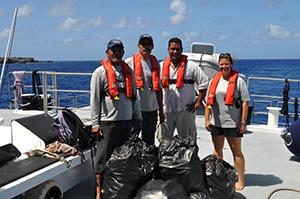
Education team members posing with beach litter they collected during the beach cleanup.

Education team members, Sione Mailau, Hoifua’ Aholani, ‘Apai Moala, and Amy Heemsoth, posing with the litter they collected during the beach cleanup.

Corals receive most of their energy from zooxanthallae or algae that live in their tissues. Zooxanthallae photosynthesize in order to create energy. If litter settles on top of corals, the zooxanthallae are unable to make food, and the coral will die.
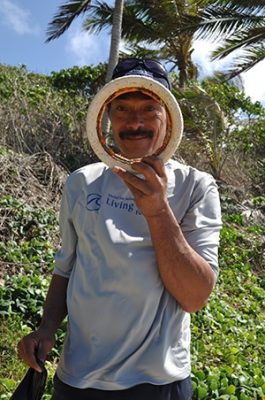
Beach litter: Hoifua’ Aholani holding up a photo of a tire found on the beach.

Beach litter: Hoifua’ Aholani holding up a photo of a tire found on the beach.

After the seminar, the education team put their words into action and coordinated an island beach cleanup in which the team and islanders participated as part of the International Coastal Cleanup.
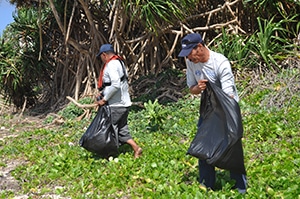
picking up beach litter

Sione Mailau and Hoifua’ Aholani picking up beach litter.

In one hour, seven large bags of trash were collected. Beach litter collected included fishing gear, floats and rope, plastic bottles, toothbrush, a tire, glass jars, food wrappers, bottle caps, and Styrofoam. The most common item that we found were flip flops and the soles of shoes, while Christmas tree icicles was the most interesting item that we found.
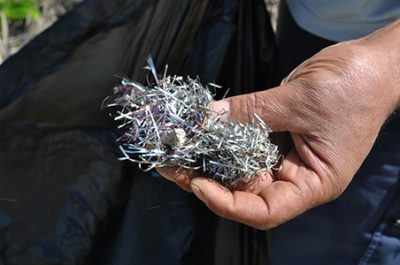
Christmas tree tinsel were the most interesting litter found during the beach cleanup.

Christmas tree tinsel were the most interesting litter found during the beach cleanup.

All of the data collected will be put into the official registry on the Ocean Conservancy website.

For more information about the International Coastal Cleanup, visit their website at www.oceanconservancy.org.

Photos by: 1-5 Amy Heemsoth
Related Posts

Introducing Our New Website: A Fresh Look for the Foundation’s Future

As we celebrate the Khaled bin Sultan Living Oceans Foundation’s 25th anniversary, we are proud to unveil our newly redesigned website—a modern home for our science, conservation work, and educational programs. This launch marks an important moment for the Foundation as we honor our long history and look toward the future of ocean conservation.

For more than two decades, the Foundation has worked tirelessly to improve the health of our living oceans. We have advanced ocean science, led one of the largest coral reef research missions in history, restored mangrove forests with local communities, created award-winning education programs, and shared the wonders of the ocean with people around the world. Our new website reflects the organization we are today—focused on conserving coral reefs, restoring mangrove forests, and improving ocean literacy—while still highlighting the legacy of work that brought us here.

The redesigned site…

Read More

Connecting People, Art, and Oceans: Championing Conservation at the 2025 IUCN Congress

The IUCN World Conservation Congress brings together thousands of leaders and decision-makers from governments, non-profit organizations, civil society, Indigenous groups, and the private sector to shape global conservation policy and action. This influential gathering serves as a platform to share knowledge, build partnerships, and advance initiatives that protect our planet’s biodiversity.

As a member of the International Union for Conservation of Nature (IUCN), the Khaled bin Sultan Living Oceans Foundation was honored to take part in the Congress, joining a global community of leaders, organizations, and changemakers committed to protecting nature and advancing sustainable futures.

Read More
Privacy Overview

This website uses cookies so that we can provide you with the best user experience possible. Cookie information is stored in your browser and performs functions such as recognising you when you return to our website and helping our team to understand which sections of the website you find most interesting and useful.  You can view our complete Privacy Policy here.

Strictly Necessary Cookies

Most of our cookies are used to improve website security and reduce spam. These cookies should be enabled at all times. They also enable us to save your preferences for cookie settings.

3rd Party Cookies

This website uses Google Analytics to collect anonymous information such as the number of visitors to the site, and the most popular pages. Keeping this cookie enabled helps us to improve our website.