search-icon
2026 Science Without Borders® Challenge: Introducing the 15-19 Year-Old Finalists

Following the announcement of our 11–14 age-group finalists, the Science Without Borders® Challenge continues with the 15–19 age group. Each year, the Challenge invites students to explore the ocean through both art and science—and this year’s finalists have done just that in remarkable ways.

Representing countries across the globe, including Canada, China, the Republic of Korea, Taiwan, and the United States, these talented young artists dive into the 2026 theme, “Microscopic Marine Life,” revealing a world that is rarely seen but deeply felt. Their artworks illuminate the hidden systems that sustain our planet, from oxygen-producing phytoplankton to deep-sea microbes driving chemical cycles far below the surface.

Through a range of creative approaches, these students transform the invisible into something tangible. Some reimagine microorganisms as vast, architectural forms or glowing ecosystems, while others focus on the delicate structures and life cycles of individual species. Many works explore powerful ideas of connection—between life and death, surface and deep sea, and humanity’s reliance on organisms too small to see.

What stands out most is not just the technical skill on display but the depth of understanding behind each piece. These artists highlight how microscopic marine life forms the foundation of ocean ecosystems, regulates Earth’s climate, and ultimately makes life as we know it possible.

We’re proud to celebrate this group of finalists, whose work challenges us to look more closely, think more deeply, and better appreciate the unseen forces shaping our world.

2026 Science Without Borders® Challenge Finalists (Ages 15-19)

"The Unsung Heroes of Our Oceans" by Chloe Jang, Age 15, United States of America
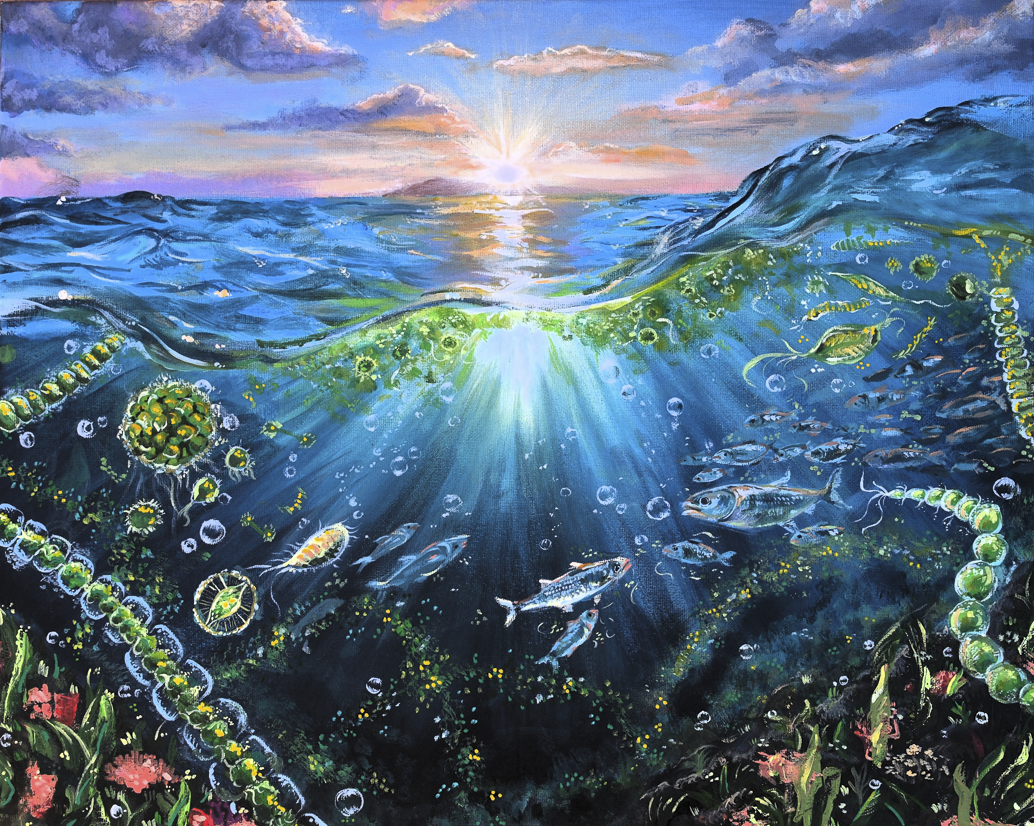
Image 4 of 17

ARTIST’S STATEMENT: When I was around five years old, I asked my older brother where our oxygen comes from. His answer was the same as many others’: trees. While many point to vast forests, most of Earth’s oxygen actually comes from far smaller organisms - microscopic phytoplankton that drift through the ocean, supporting life both in and out of the water. My artwork highlights the importance of phytoplankton in the ecosystem, from their role as the foundation of the marine food web to their impact on mitigating climate change. In my piece, an ocean scene unfolds beneath a distant sunset, casting a warm glow over a vibrant underwater ecosystem filled with abundant phytoplankton. By bringing visibility to what is often overlooked, this artwork encourages awareness, reminding others that recognizing the unseen is the first step toward protecting it.

Stay tuned! We will announce the winners in the next couple of weeks.
Related Posts

From Dialogue to Action: Ocean Foundations Gather in Stockholm

What can philanthropy accomplish when foundations working across ocean science, conservation, and sustainable development come together around a shared purpose?

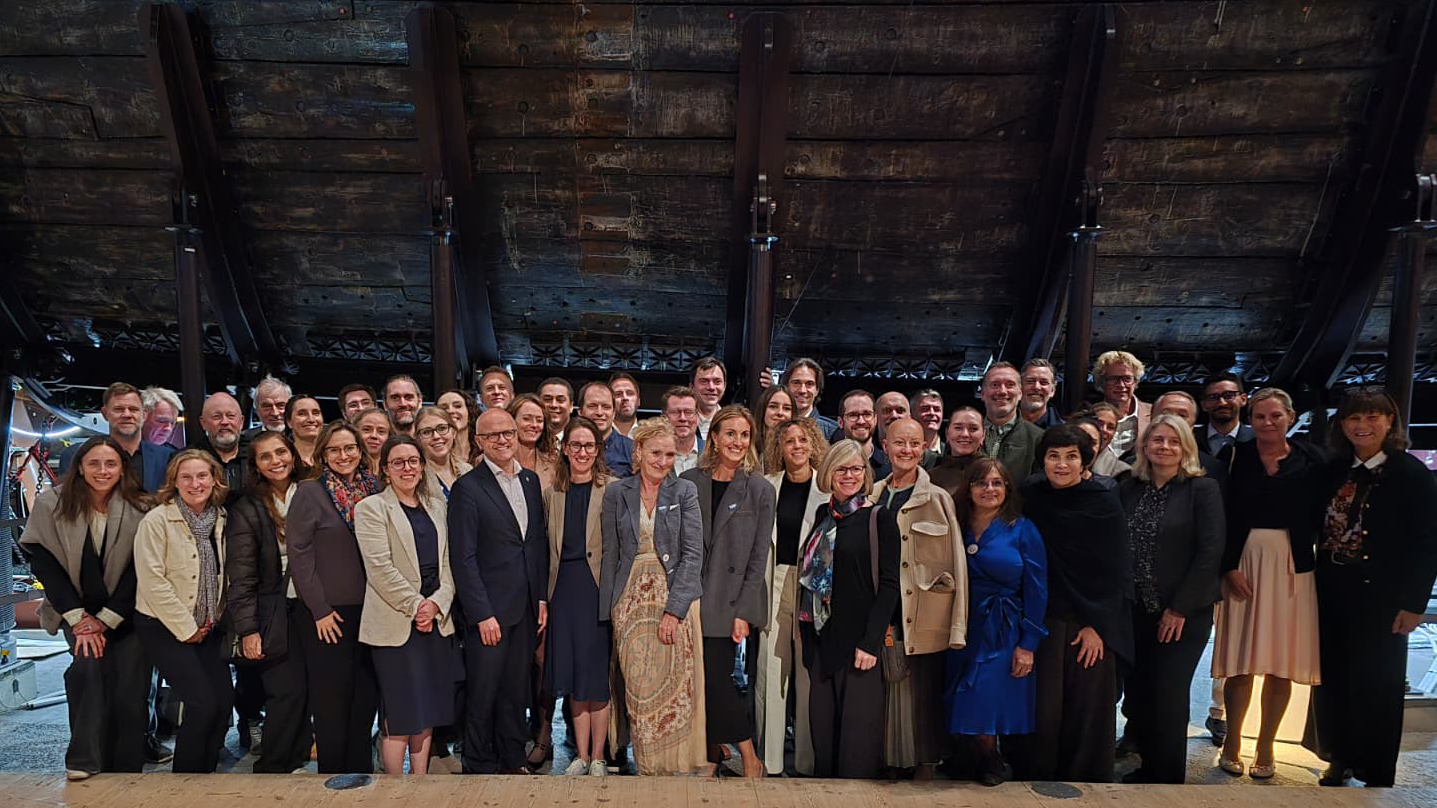
That question was at the heart of the 6th UN Ocean Decade Foundations Dialogue, held September 7–9 in Stockholm, Sweden. The Khaled bin Sultan Living Oceans Foundation joined philanthropic organizations from around the world for three days of discussion, collaboration, and planning focused on accelerating progress during the second half of the UN Decade of Ocean Science for Sustainable Development.

Facilitated by UNESCO’s Intergovernmental Oceanographic Commission (IOC), the UN Ocean Decade Foundations Dialogue is a growing network of more than 30 philanthropic organizations committed to advancing ocean science, collaboration, and action. Since its creation within the framework of the Ocean Decade, the Dialogue has provided foundations with a space to exchange ideas, develop partnerships, and explore how philanthropy can help advance a healthy and resilient ocean.

Hosted by the Voice of the Ocean Foundation (VOTO), this year’s gathering began with From Depth to Action, an Opening Forum that brought nearly 100 leaders from the Swedish and international ocean community together at…

Read More

Meet IFAN: Helping Bring Navigate with Care to the Next Generation

If you’ve ever seen a lighthouse flashing from the shore or a brightly colored buoy bobbing in the water, you’ve seen Aids to Navigation at work.

Aids to Navigation, often called AtoNs, help mariners navigate safely. They can mark channels, warn of hazards, help vessels determine their position, and provide other information people need to make safe decisions on the water. Around the world, these systems help guide everything from small recreational boats to large commercial or container ships. 

But safe navigation isn’t only about protecting vessels and the people aboard them. The choices mariners make can also affect the animals and ecosystems beneath and around them.

That connection between maritime safety and ocean conservation is at the heart of this year’s Science Without Borders® Challenge—and of our partnership with this year’s theme sponsor, the International Foundation for Aids to Navigation (IFAN).

Read More

Privacy Overview

This website uses cookies so that we can provide you with the best user experience possible. Cookie information is stored in your browser and performs functions such as recognising you when you return to our website and helping our team to understand which sections of the website you find most interesting and useful.  You can view our complete Privacy Policy here.

Strictly Necessary Cookies

Most of our cookies are used to improve website security and reduce spam. These cookies should be enabled at all times. They also enable us to save your preferences for cookie settings.

3rd Party Cookies

This website uses Google Analytics to collect anonymous information such as the number of visitors to the site, and the most popular pages. Keeping this cookie enabled helps us to improve our website.