search-icon
3…2…1…Liftoff

Mangrove Education and Restoration Blog

We are reaching the end of our time here in Jamaica and Art Binkowski, our J.A.M.I.N. videographer, got a lot of really great footage of the J.A.M.I.N. program, interviews, and aerial drone footage. Today, Art will be using the drone to capture the grade 11 Biology students at William Knibb High School monitoring mangroves in Falmouth.

When I informed the students that Art was going to be flying an aerial drone as part of the filming efforts the students shrieked in excitement. Just a couple of days ago, I didn’t have much experience with drones either. I was just excited, but for another reason. I couldn’t wait for the students to see what the Falmouth mangroves looked like from above. I thought that it would give them an entirely new perspective about the importance of their mangroves.
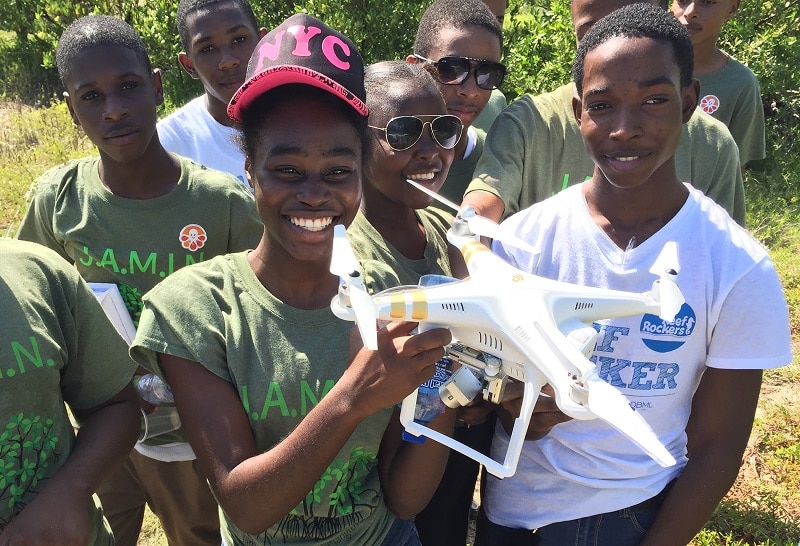
Students excited to launch the aerial drone.

After we finished setting up the mangrove quadrats, the students crowded around Art as he set up the drone. Though squelching hot, the students were still really excited to watch the drone fly. In preparation for launching the drone, Art placed it on level ground. The students started counting down and as they shouted 3…2…1, Art used the joystick to lift the drone off of the ground. The students looked on as the drone lifted higher and higher into the air.
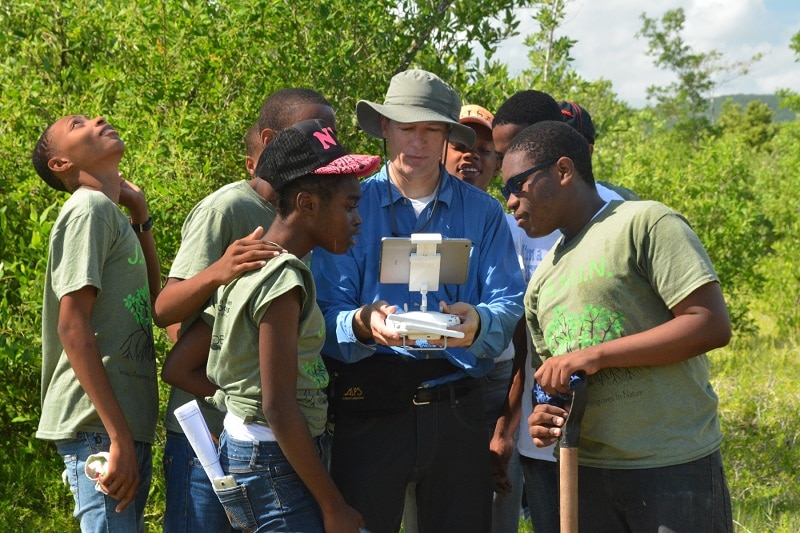
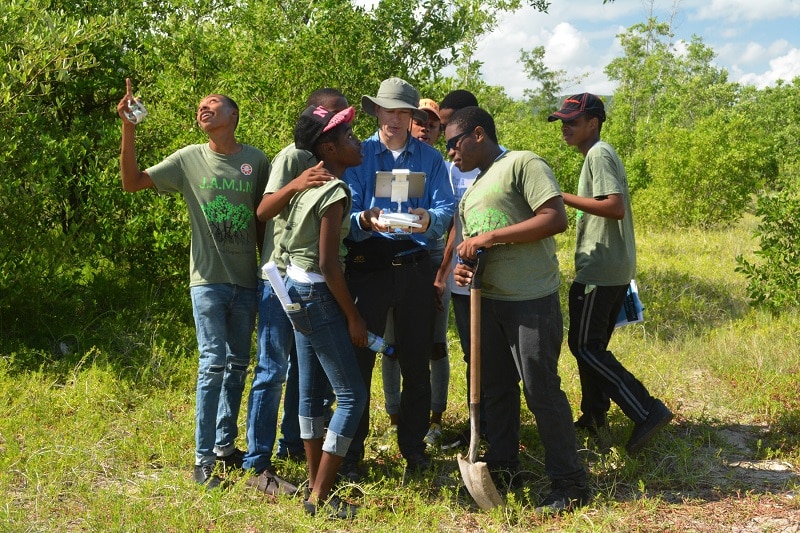
Students from William Knibb High School gather around Art Binkowski to get an aerial view the mangroves in Falmouth.  Students from William Knibb High School gather around Art Binkowski to get an aerial view the mangroves in Falmouth.
Students from William Knibb High School gather around Art Binkowski to get an aerial view the mangroves in Falmouth.

Then, Art showed the students what the view from the drone. The students were mesmerized by the iPad screen that revealed an aerial view of this expansive mangroves ecosystem. I heard one student say, “I had no idea that this mangrove forest was so large.” I heard others say, “Wow, that is really beautiful.”

[embedyt] http://www.youtube.com/watch?v=qRucE0IHRwQ&width=940&height=530[/embedyt]
Aerial footage of mangrove forests.

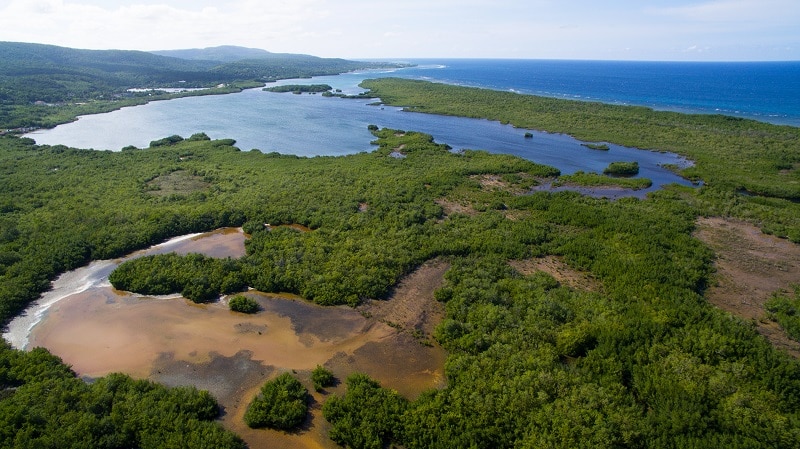
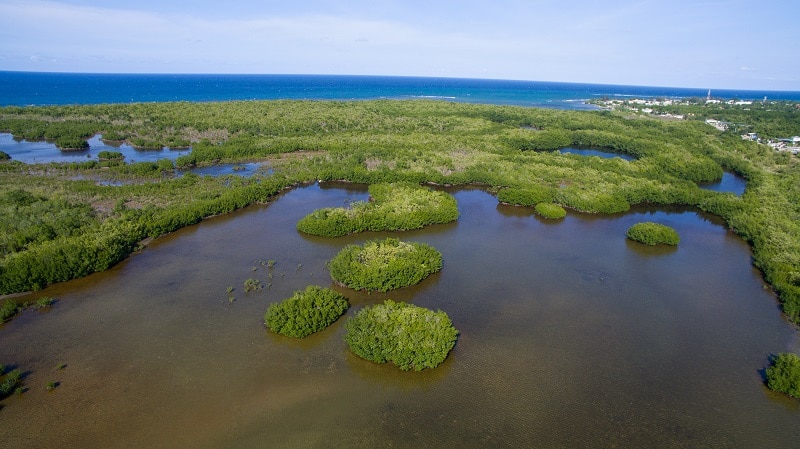
A couple of days ago, when I first saw the mangrove forest from the drone, I had the exact same reaction. When you are standing in the Falmouth mangroves, it seems quite small. You can only walk a short distance around the forest before the mangrove trees become so thick that you can’t pass through their intertwined root system. Of course I always knew that this mangrove forest was much larger than it appeared, but I didn’t realize just how expansive it was or how great the distance from where we stood at the restoration site to where the mangroves met the ocean. The mangroves truly covered a much greater area than I expected.
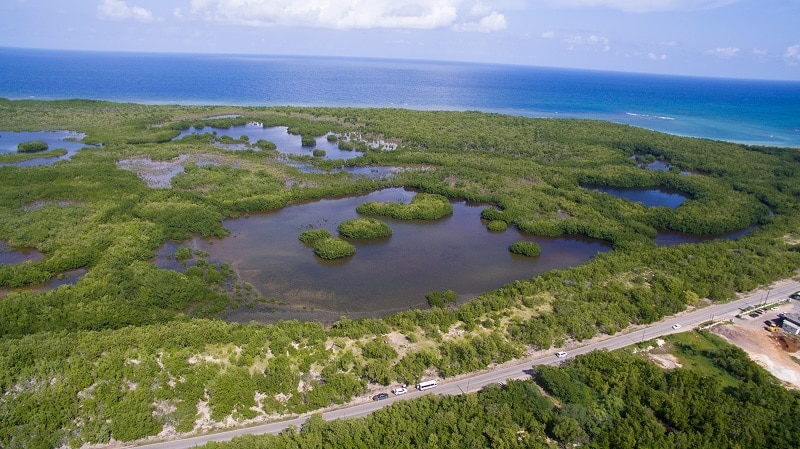
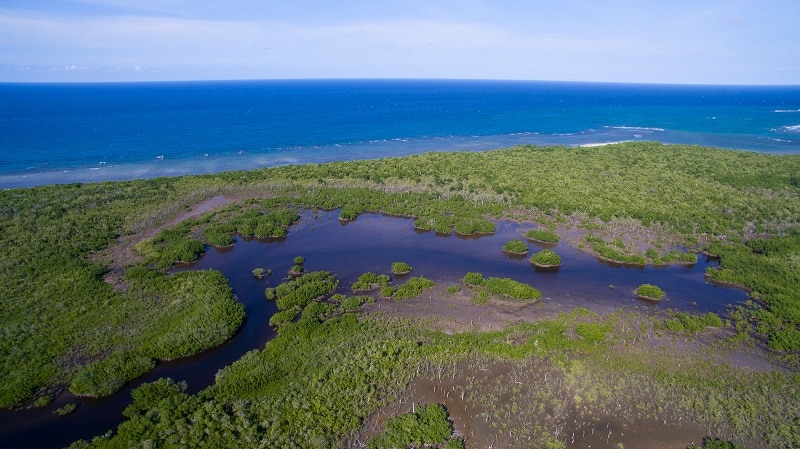
Falmouth mangrove forest, seen from the aerial drone. Falmouth mangrove forest, seen from the aerial drone. Falmouth mangrove forest, seen from the aerial drone. Falmouth mangrove forest, seen from the aerial drone.
Mangrove forests, seen from the aerial drone.
(Click to enlarge.)

When we returned to the classroom, I projected the drone footage of the Falmouth mangrove forest on the wall. Again, the students stared at the footage in awe. When I asked them, do you still think that the mangroves are worth protecting? Without hesitating, the students loudly responded in unison, “yes, miss!” My heart warmed and I knew that the footage that Art shot, had not only imprinted a lasting impression on the students, but that it would be a valuable conservation tool for the future.
Related Posts

Introducing Our New Website: A Fresh Look for the Foundation’s Future

As we celebrate the Khaled bin Sultan Living Oceans Foundation’s 25th anniversary, we are proud to unveil our newly redesigned website—a modern home for our science, conservation work, and educational programs. This launch marks an important moment for the Foundation as we honor our long history and look toward the future of ocean conservation.

For more than two decades, the Foundation has worked tirelessly to improve the health of our living oceans. We have advanced ocean science, led one of the largest coral reef research missions in history, restored mangrove forests with local communities, created award-winning education programs, and shared the wonders of the ocean with people around the world. Our new website reflects the organization we are today—focused on conserving coral reefs, restoring mangrove forests, and improving ocean literacy—while still highlighting the legacy of work that brought us here.

The redesigned site…

Read More

Connecting People, Art, and Oceans: Championing Conservation at the 2025 IUCN Congress

The IUCN World Conservation Congress brings together thousands of leaders and decision-makers from governments, non-profit organizations, civil society, Indigenous groups, and the private sector to shape global conservation policy and action. This influential gathering serves as a platform to share knowledge, build partnerships, and advance initiatives that protect our planet’s biodiversity.

As a member of the International Union for Conservation of Nature (IUCN), the Khaled bin Sultan Living Oceans Foundation was honored to take part in the Congress, joining a global community of leaders, organizations, and changemakers committed to protecting nature and advancing sustainable futures.

Read More
Privacy Overview

This website uses cookies so that we can provide you with the best user experience possible. Cookie information is stored in your browser and performs functions such as recognising you when you return to our website and helping our team to understand which sections of the website you find most interesting and useful.  You can view our complete Privacy Policy here.

Strictly Necessary Cookies

Most of our cookies are used to improve website security and reduce spam. These cookies should be enabled at all times. They also enable us to save your preferences for cookie settings.

3rd Party Cookies

This website uses Google Analytics to collect anonymous information such as the number of visitors to the site, and the most popular pages. Keeping this cookie enabled helps us to improve our website.