
search-icon
When Volcanoes Meet

Another day at Isabela Island, with two morning dives at C-shaped island called Tortuga, the remains of yet another in the chain of volcanoes… a partially collapsed volcanic cone (though much bigger than Devil’s Crown). Unfortunately, we found very little coral.
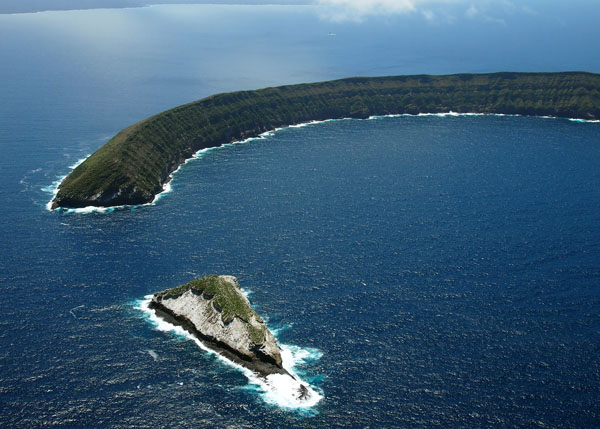
Tortuga island
Tortuga island

Isabela Island is by far the biggest island in the Galapagos, the highest, and one of the youngest. It’s formed by six volcanoes—Alcedo, Cerro Azul, Darwin, Ecuador, Sierra Negra, and Wolf—that are connected by old lava flows. Five of them are considered active; Cerro Azul and Sierra Negra both erupted within the last seven years. Wolf is the highest point in the archipelago, at 1,707 m.

Like Hawaii, the Galapagos are a hotspot chain of volcanoes, created when molten rock squeezes up through a particular place in a plate on the Earth’s crust. (For Hawaii, it’s the Pacific plate; the Galapagos are on the Nazca plate.) When the magma hits the surface, it forms a volcano. Since the plates are slowly moving, the volcano is carried along too, leaving room for another to form behind it, and so on. The older ones are gradually worn down by weather and the ocean, creating a chain of volcanoes trailing away, both above and eventually below the surface.
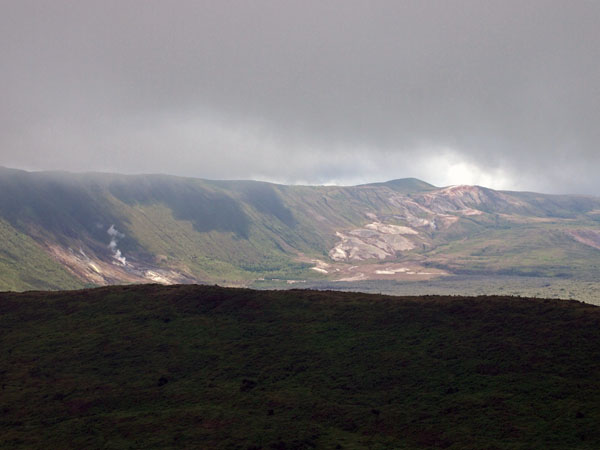
Rim of Alcedo Volcano, Isabela Island

The Nazca plate is inching east, so the older islands to the east, such as Española and San Cristóbal, are lower than the newer islands to the west, like Fernandina and Isabela Island. (The Galapagos situation is actually more complicated, since the islands sit near the “Galapagos Triple Junction” where the Nazca, Pacific and Coco plates meet, but the basic idea holds true.) The cool heights of Isabela Island make a good habitat for giant tortoises, which evolved into separate subspecies on five of the six volcanoes. Today the island is home to more wild tortoises than all the other islands put together.

(Photos/Images by Sam Purkis)

To follow along and see more photos, please visit us on Facebook! You can also follow the expedition on our Global Reef Expedition page, where there is more information about our research and team members.
Related Posts

From Dialogue to Action: Ocean Foundations Gather in Stockholm

What can philanthropy accomplish when foundations working across ocean science, conservation, and sustainable development come together around a shared purpose?

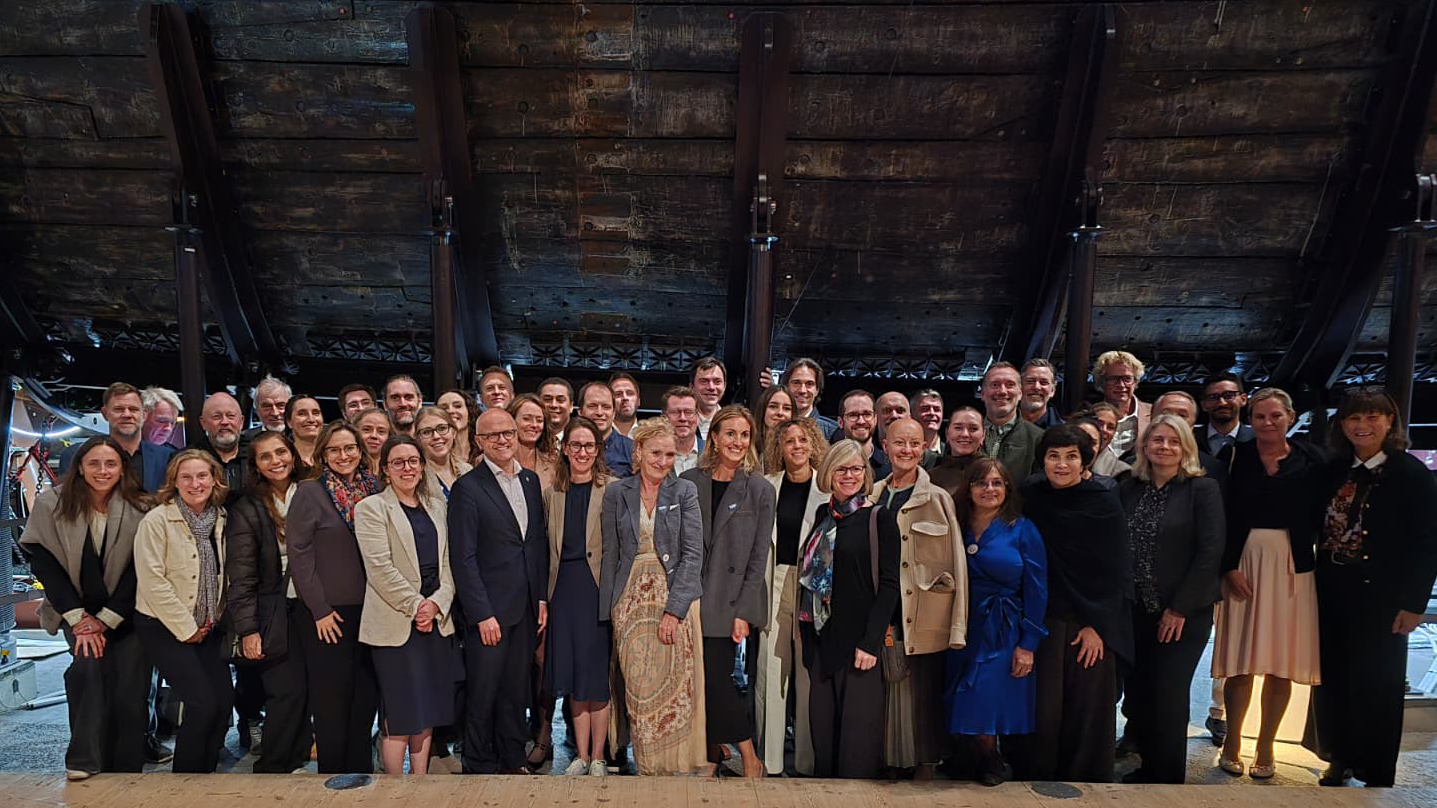
That question was at the heart of the 6th UN Ocean Decade Foundations Dialogue, held September 7–9 in Stockholm, Sweden. The Khaled bin Sultan Living Oceans Foundation joined philanthropic organizations from around the world for three days of discussion, collaboration, and planning focused on accelerating progress during the second half of the UN Decade of Ocean Science for Sustainable Development.

Facilitated by UNESCO’s Intergovernmental Oceanographic Commission (IOC), the UN Ocean Decade Foundations Dialogue is a growing network of more than 30 philanthropic organizations committed to advancing ocean science, collaboration, and action. Since its creation within the framework of the Ocean Decade, the Dialogue has provided foundations with a space to exchange ideas, develop partnerships, and explore how philanthropy can help advance a healthy and resilient ocean.

Hosted by the Voice of the Ocean Foundation (VOTO), this year’s gathering began with From Depth to Action, an Opening Forum that brought nearly 100 leaders from the Swedish and international ocean community together at…

Read More

Meet IFAN: Helping Bring Navigate with Care to the Next Generation

If you’ve ever seen a lighthouse flashing from the shore or a brightly colored buoy bobbing in the water, you’ve seen Aids to Navigation at work.

Aids to Navigation, often called AtoNs, help mariners navigate safely. They can mark channels, warn of hazards, help vessels determine their position, and provide other information people need to make safe decisions on the water. Around the world, these systems help guide everything from small recreational boats to large commercial or container ships. 

But safe navigation isn’t only about protecting vessels and the people aboard them. The choices mariners make can also affect the animals and ecosystems beneath and around them.

That connection between maritime safety and ocean conservation is at the heart of this year’s Science Without Borders® Challenge—and of our partnership with this year’s theme sponsor, the International Foundation for Aids to Navigation (IFAN).

Read More

Privacy Overview

This website uses cookies so that we can provide you with the best user experience possible. Cookie information is stored in your browser and performs functions such as recognising you when you return to our website and helping our team to understand which sections of the website you find most interesting and useful.  You can view our complete Privacy Policy here.

Strictly Necessary Cookies

Most of our cookies are used to improve website security and reduce spam. These cookies should be enabled at all times. They also enable us to save your preferences for cookie settings.

3rd Party Cookies

This website uses Google Analytics to collect anonymous information such as the number of visitors to the site, and the most popular pages. Keeping this cookie enabled helps us to improve our website.