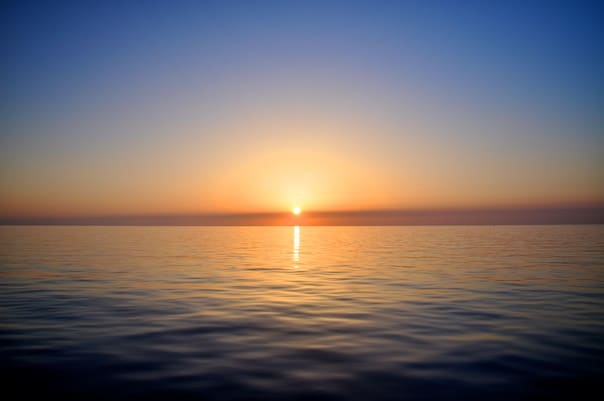
The weather has been beautiful the last few days. The sea is calm enough we can look over the railings of the Golden Shadow and see the bottom clearly, 20 meters below. We were treated to a gorgeous sunset this evening with quietly lapping waves and glassy waters.
After our nightly post-dinner science meeting and catch-up, I took a walk around the ship to see what our Cay Sal science team members were working on this evening. The ship felt a bit like a floating university. Team members were scattered about in their bunks, on their laptops, in the labs, and in the staff meeting room. They were entering data, discussing research, studying coral IDs, and getting ready for tomorrow’s dives.
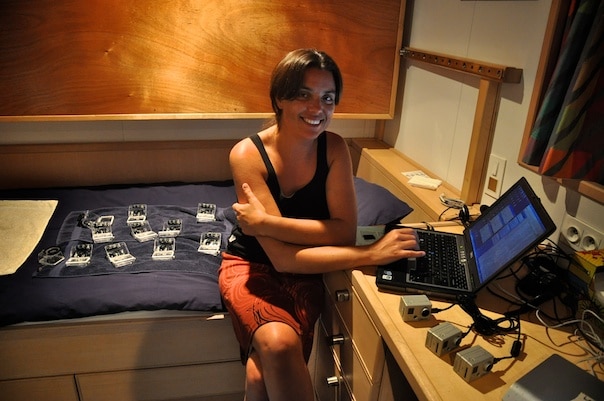
Living Oceans Foundation Fellow Sonia Bejarano was in her cabin downloading video from her 10 GoPro cameras and recharging them for tomorrow’s dives. She’s surveyed 5 sites so far and has more than 100 hours of video to look through for instances of fish grazing for her research.
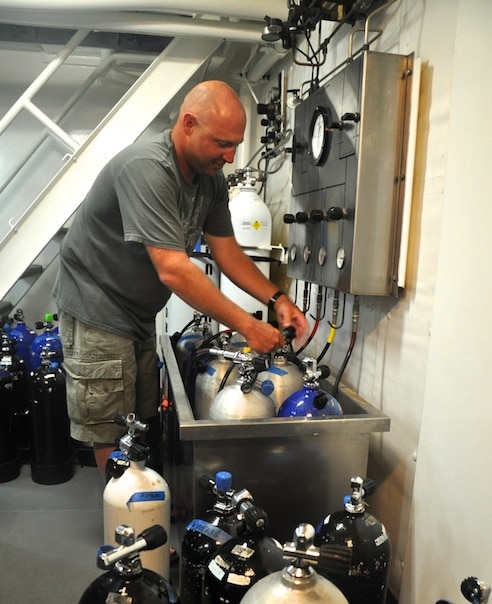 Downstairs in the dive locker, Dive Safety Officer (DSO) Timothy Payne was busy filling SCUBA tanks for tomorrow’s dives. Every day our team uses more than 30 tanks of compressed air for our dives, and we’re grateful to Tim for keeping them ready to go.
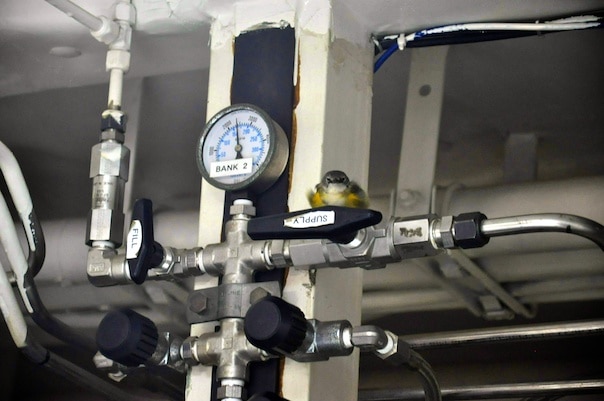
This particular evening, Tim had a little winged friend hanging out in the dive locker with him… We’re not sure where this little bird came from, but he seems to be enjoying the warmth near the fill station.
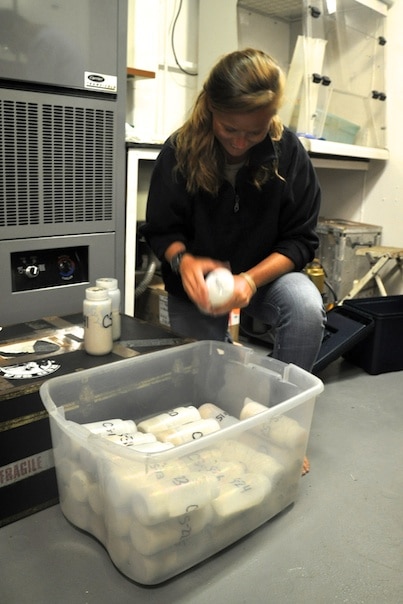 Next door in the lab, coral biologist Alex Dempsey was sorting and labeling sediment samples to take back to the lab at the National Coral Reef Institute. Their team is collecting material from the seafloor at different locations around Cay Sal Bank. Once the expedition is completed, they’ll take a look at each of the samples to determine the sizes and types of benthic (bottom) material contained within them. With all of this data, they’ll then be able to create a map of the bank based on the sediment types in the area, so we have a better idea of what the seafloor is like across Cay Sal Bank.
Back upstairs on the research deck, Living Oceans Foundation GIS Analyst Amanda Williams was in her cabin working on the latest map of our survey area.
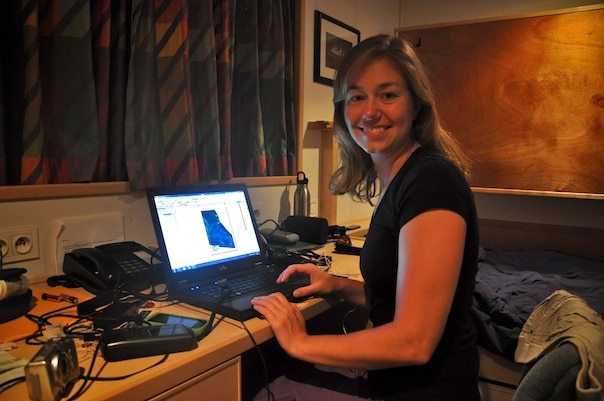
She’s the one creating the survey site maps so we can see where we’ve completed our dive sites and groundtruthing surveys in Cay Sal Bank. Below is the latest chart from Amanda.
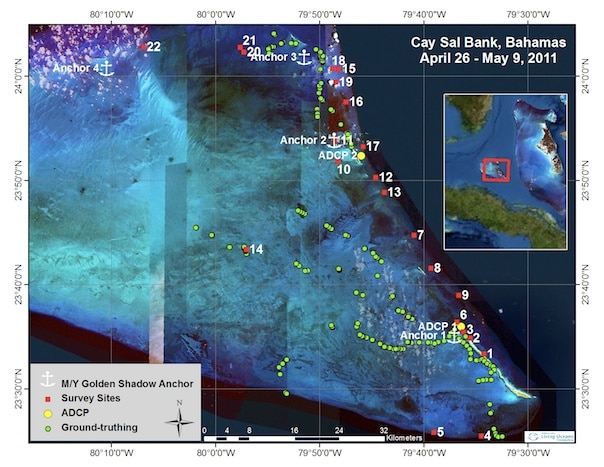
So far, the Cay Sal science team has surveyed 22 sites with roughly 30 SCUBA dives as of this evening, with plenty more to go. With the weather holding, we have another solid week of research time on Cay Sal Bank.
To follow along and see more photos, please visit us on Facebook! You can also follow the expedition on our Global Reef Expedition page, where there is more information about our research and our team members.
Post by Liz Smith
(Images: Liz Smith; Survey Map: Amanda Williams)