search-icon
Surveys and Sampling

Two days of diving and our coral reef research is well underway in Isle de Pins, New Caledonia.  Although sea conditions were very murky, we explored three lagoonal patch reefs yesterday and successfully completed our standardized coral, benthic and fish surveys. We also sampled corals and algae and collected information needed to map the shallow marine habitats. Today’s dives focused on the fore reef, the part of the reef that is sloping seaward; fortunately, the visibility was better and the sea was fairly calm.
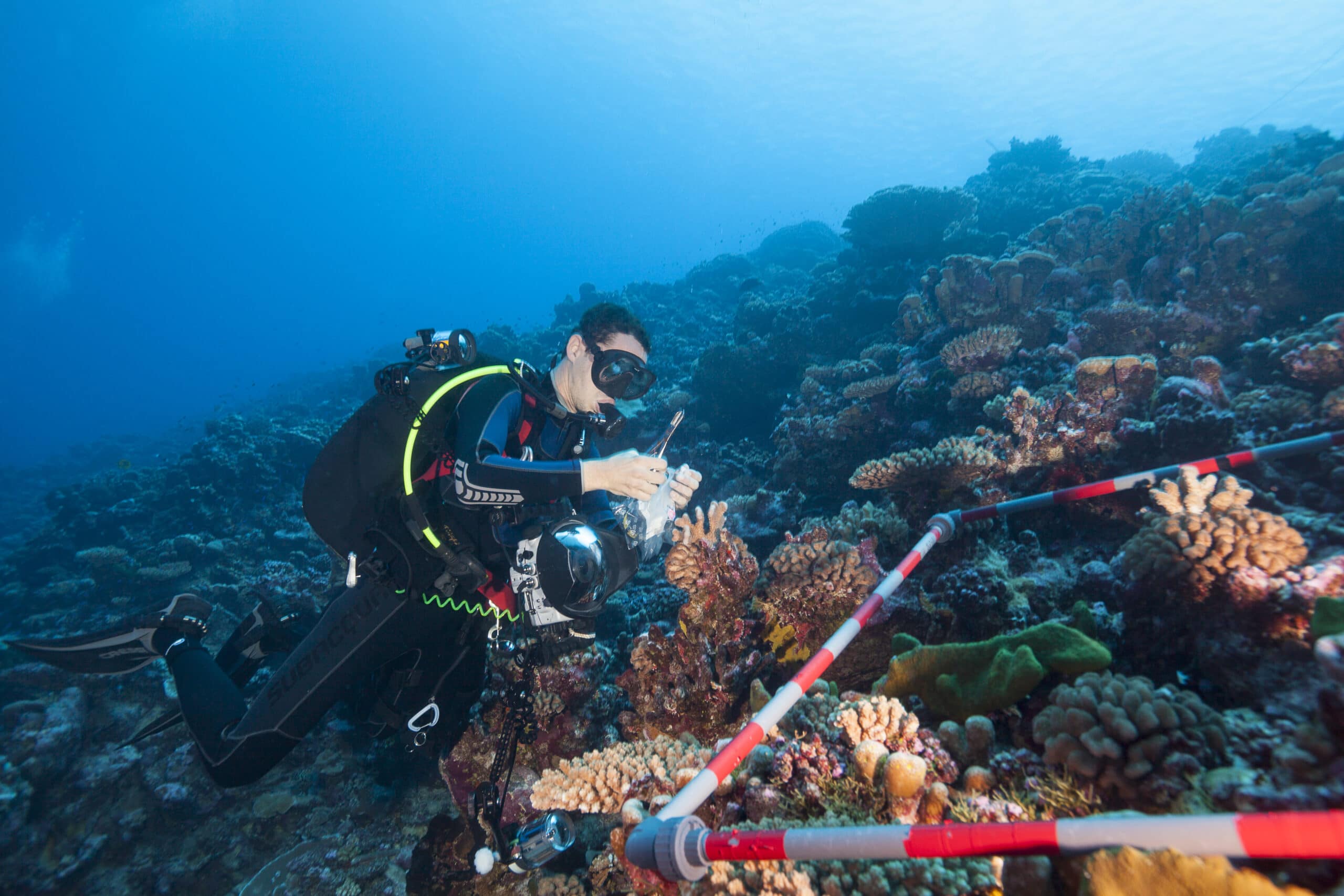
 Coral Reef Research: João Monteiro collects coral samples.

João Monteiro collects coral samples.

As part of our standard survey methodology, we sampled branching corals (Pocillopora) to evaluate their health, the symbionts (zooxanthellae) associated with the corals, and how variations in the environment alter their ability to make food (“i.e. photosynthetic efficiency”). We continue measuring the water chemistry and taking cores of the massive framework corals (Porites) to assess changes in growth and the effects of ocean acidification. Our coral reef research research is expanding our understanding of coral reefs around the world.
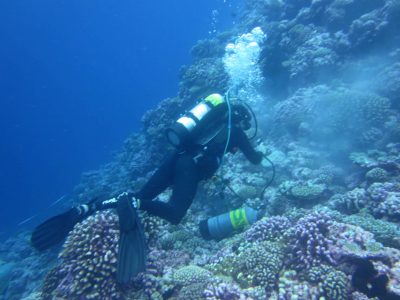
 A member of the Science Team taking a core sample.

A member of the Science Team taking a core sample.

During this mission we are working with the Institut de Recherche pour le Développement (IRD).  One team of scientists is evaluating how food sources including plankton, organic material in the water and sediment, and the food produced by the symbionts vary among corals exposed to different levels of human pressure. Another scientist is cataloging the different species of algae found on the reefs.  A third researcher is collecting, identifying and genetically barcoding all of the motile invertebrates he can find. The fourth team is completing a population genetic survey of giant clams, to assist in the management of these commercially harvested species. Over the next month you’ll hear more about our coral reef research here in New Caledonia and each of their findings.
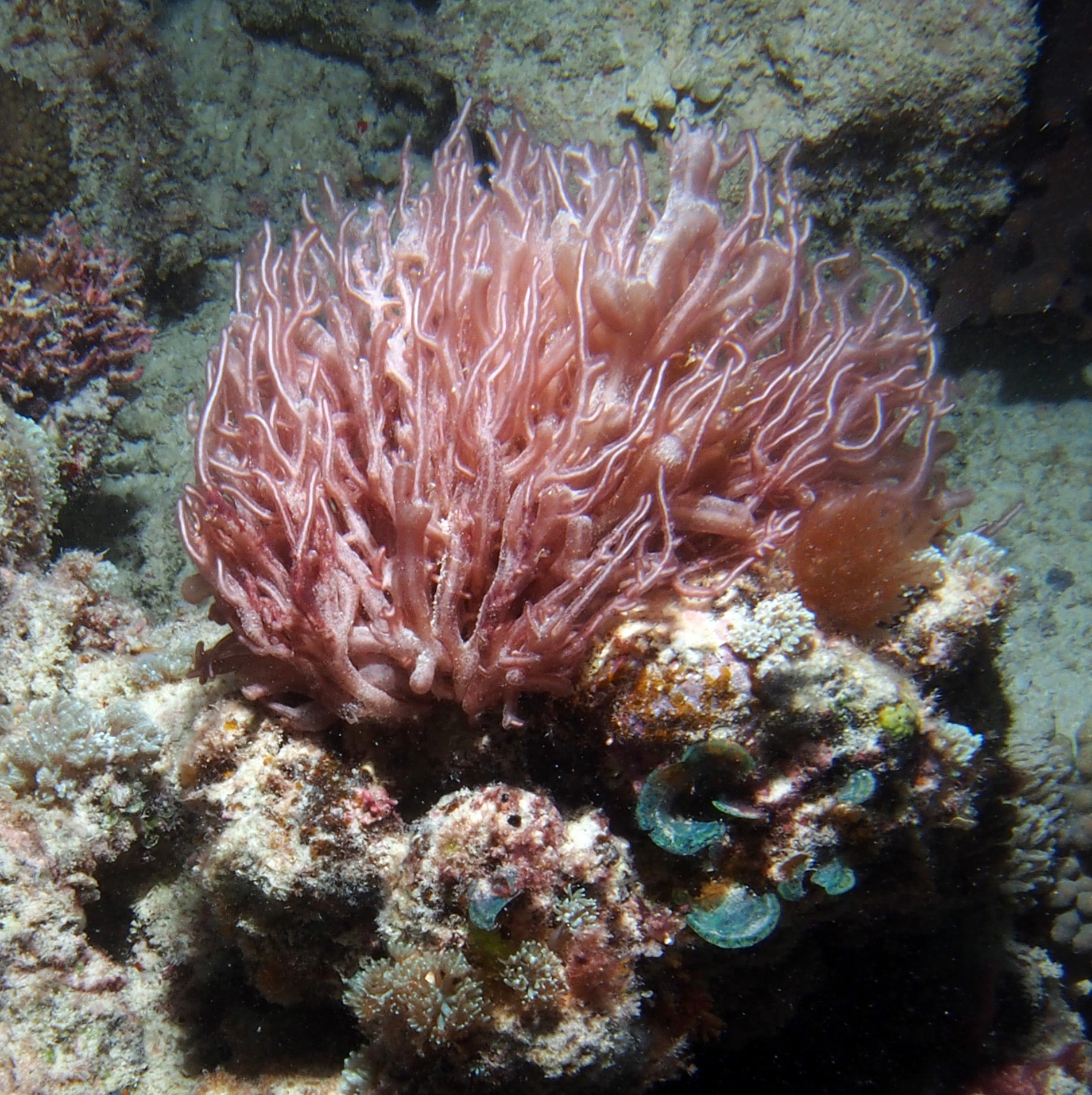
Trichoglea Algae

Trichoglea Algae

Photos by: 1 – Michele Westmorland , 2 – Eddie Gonzales, 3 – Andrew Bruckner
Related Posts

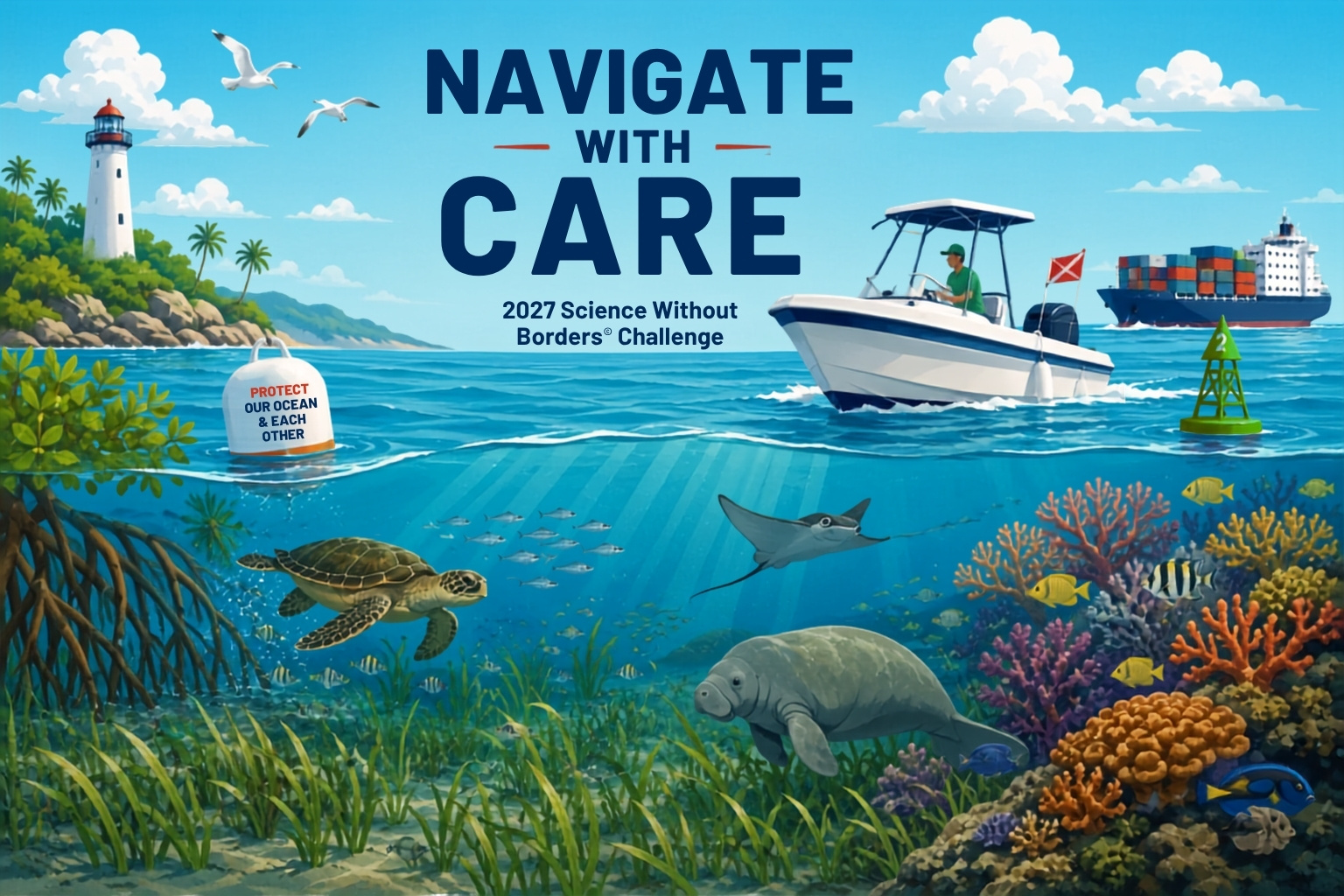
Announcing the 15th Annual Science Without Borders® Challenge: Navigate with Care

Every day, fishing boats, ferries, sailboats, kayaks, research vessels, cargo ships, whales, sea turtles, dolphins, seabirds, and countless other marine animals share the same waters. While people rely on the ocean for transportation, recreation, research, fishing, and exploration, it is also home to some of the most diverse and important ecosystems on Earth.

That simple but powerful idea is the inspiration behind the 15th Annual Science Without Borders® Challenge.

Read More

2025-2026 B.A.M. Student Voices

Throughout the Bahamas Awareness of Mangroves (B.A.M.) and Jamaica Awareness of Mangroves in Nature (J.A.M.I.N.) programs, we evaluate each phase of the mangrove education and restoration process to better understand how students are learning, growing, and connecting with their coastal environments.

Before the programs begin, students share what they already know about mangroves and how they feel about them. As the program progresses, we continue to gather feedback to see how their knowledge evolves from identifying mangrove species and understanding food webs to recognizing the role mangroves play in coastal protection and climate change mitigation.

But the surveys go beyond science content.

We also ask students…

Read More
Privacy Overview

This website uses cookies so that we can provide you with the best user experience possible. Cookie information is stored in your browser and performs functions such as recognising you when you return to our website and helping our team to understand which sections of the website you find most interesting and useful.  You can view our complete Privacy Policy here.

Strictly Necessary Cookies

Most of our cookies are used to improve website security and reduce spam. These cookies should be enabled at all times. They also enable us to save your preferences for cookie settings.

3rd Party Cookies

This website uses Google Analytics to collect anonymous information such as the number of visitors to the site, and the most popular pages. Keeping this cookie enabled helps us to improve our website.