search-icon
The Cryptic Yellow-Spotted Scorpionfish

As I plunged into the water for my last dive of the day on the western tip of Cook Reef in New Caledonia I was greeted by the sight of many different types of fishes. Along with my dive buddy Kate Fraser, we make up the fish survey team. Our task at each of the SCUBA survey sites is to conduct visual census of the fish along several 30m transects. We make a list of all the species of fish we see along each transect, and estimate their numbers. Between 50 and 150 species of fish are typically recorded at a given site, though the number varies depending on the location, depth, and condition of the reef.

The Lowly Yellow-spotted Scorpionfish

On the last dive of the day, one fish in particular caught my attention – the lowly Yellow-spotted Scorpionfish (Sebastapistes cyanostigma). This member of the Scorpionfish family is small (approximately 5cm) and typically shy. Because of its cryptic nature most divers do not commonly observe it.
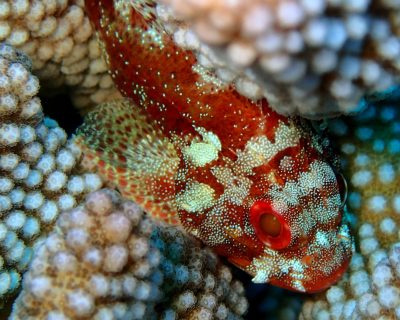
A Yellow-spotted Scorpionfish shelters within the coral colony.

A Yellow-spotted Scorpionfish (Sebastapistes cyanostigma) shelters within the Pocillopora coral.

The Scorpion fish takes refuge within the intricate matrix of branching Pocillopora corals. Sheltered within the coral colony they launch ambush attacks on unsuspecting prey. It is very likely that the Scorpion fish spends much of its life within a single coral colony.

Crown of Thorns Starfish, Large-Scale Mortality of Coral Colonies, and the Scorpion Fish

I am fascinated by the close association between the Scorpion fish and the Pocillopora coral. However, I am also concerned for the fish’s future. Pocillopora is not immune to large scale mortality events caused by elevated temperatures, or outbreaks of coral predators such as the Crown of Thorns starfish.
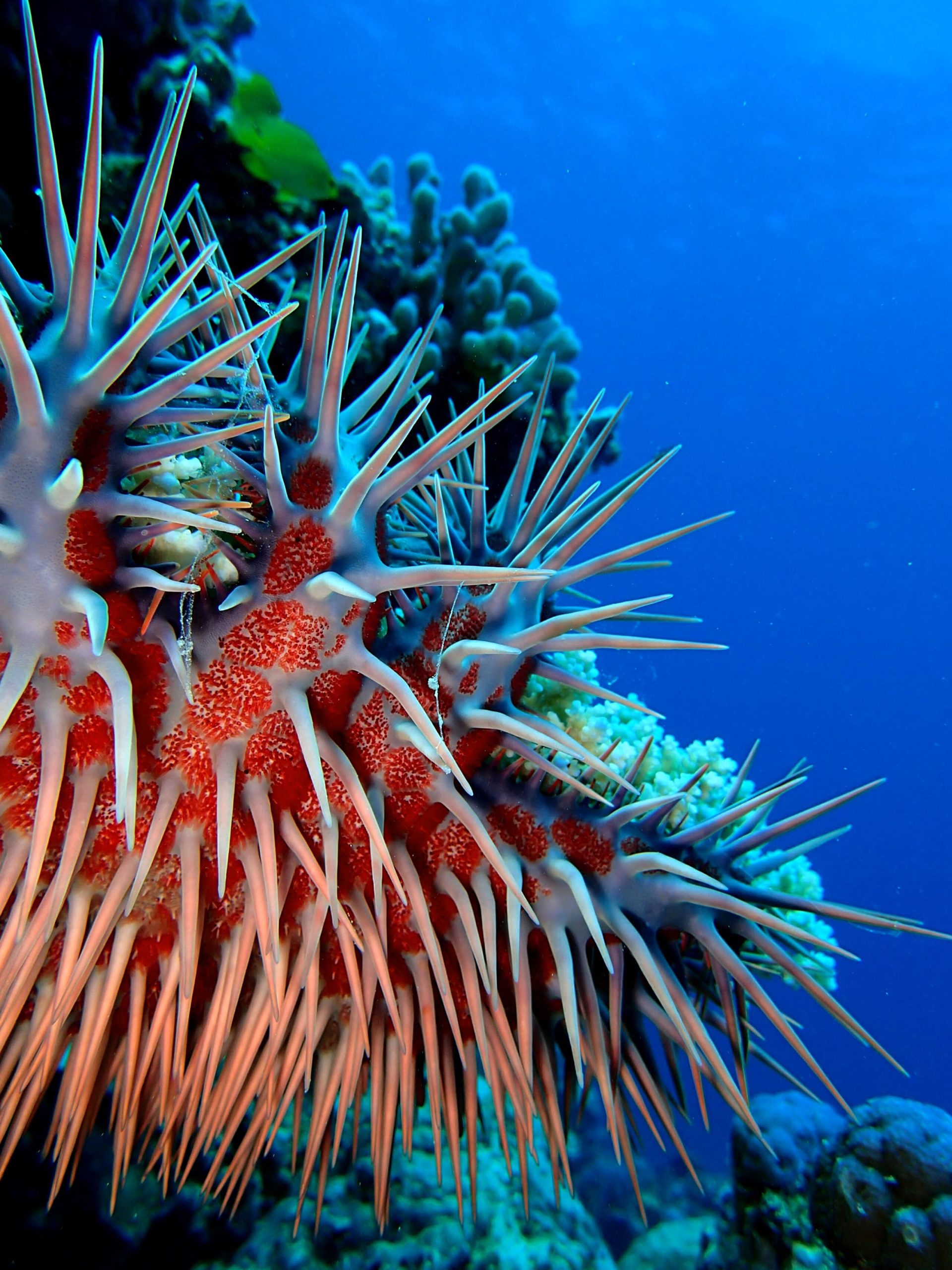
The Crown of thorns starfish - A voracious predator of coral.

The Crown of thorns starfish (Acanthaster plancii) – A voracious predator of coral.

Any large mortality of Pocillopora reef habitat would severely impact fish such as the Yellow-tailed Scorpionfish, as well as a host of other small fish and invertebrates, that depend on this coral for a home.
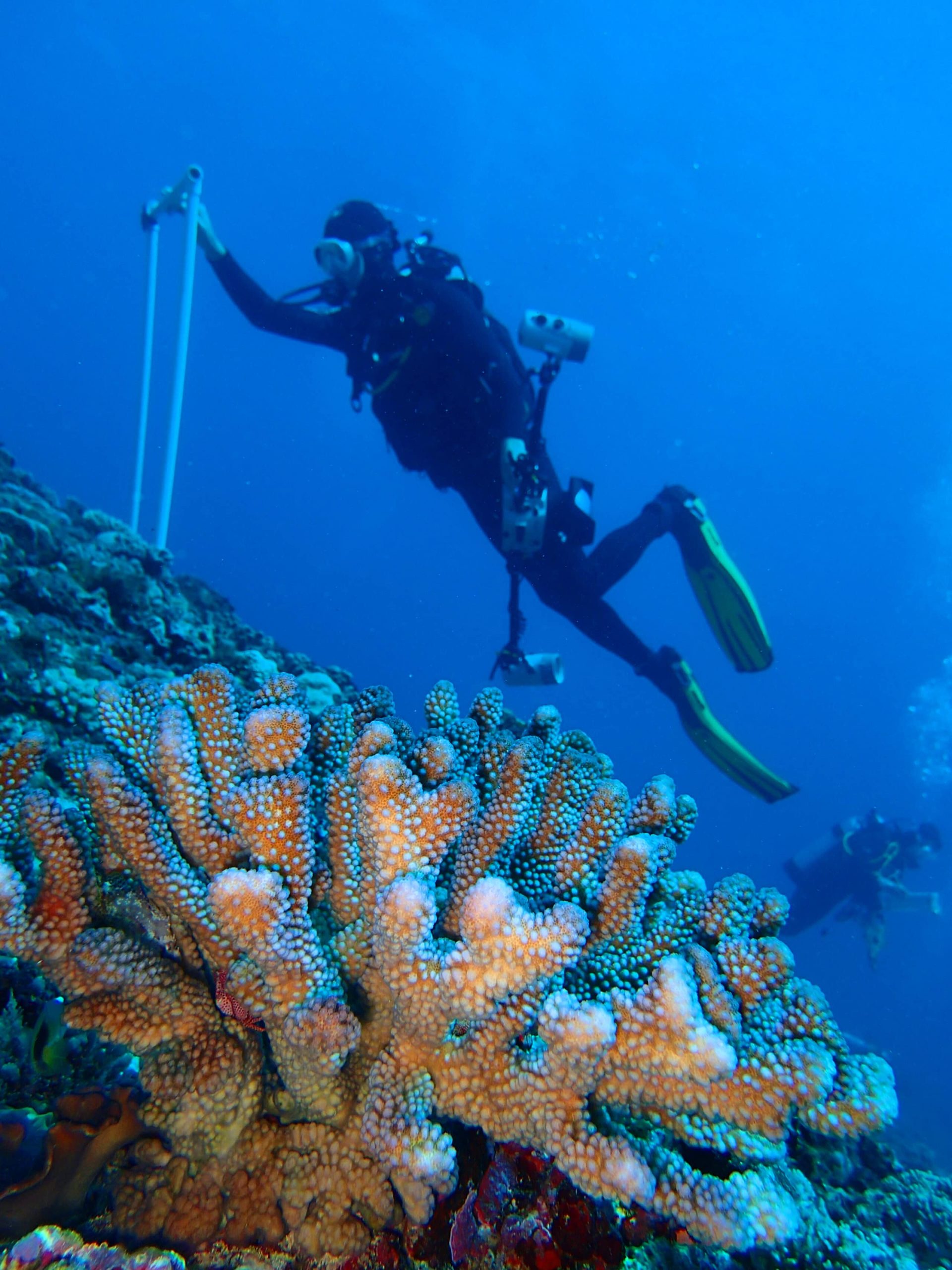
The coral colony (foreground). Small fish such as the Yellow-spotted Scorpion fish, crabs and other invertebrates shelter within the club-like branches.

The Pocillopora coral colony (foreground). Small fish such as the Yellow-spotted Scorpion fish, crabs and other invertebrates shelter within the club-like branches.

Concern is often placed on the broad scale impacts of climate change to coral reefs, as well as the large charismatic animals, but we also need to think about the plight of smaller species, who may be most vulnerable to reef decline.


Photos: 1-3: Badi Samaniego
Related Posts

Everything You Need to Know About the 2027 Science Without Borders® Challenge

Are you ready to combine your creativity with ocean science?

The 15th Annual Science Without Borders® Challenge is now open! Whether you’re participating for the first time or returning for another year, this guide will help you get started.

This year’s theme, Navigate With Care, invites students to explore how responsible navigation helps protect both people and life in the ocean. Through your artwork, you can compete for scholarships and international recognition while inspiring others to protect both people and life in the ocean.

Read More

Global Reef Expedition Data Contributes to Landmark Report on the World’s Coral Reefs

More than a decade after scientists aboard the Global Reef Expedition surveyed coral reefs across the Pacific, the data they collected continues to contribute to our understanding of the world’s coral reefs.

Today, the Global Coral Reef Monitoring Network (GCRMN) released Status of Coral Reefs of the World: 2025, the most comprehensive assessment to date of the status and trends of coral reefs worldwide. The report brings together an extraordinary amount of information collected over more than four decades—and the Khaled bin Sultan Living Oceans Foundation is proud to have contributed data from the Global Reef Expedition to this global effort. 

Read More
Privacy Overview

This website uses cookies so that we can provide you with the best user experience possible. Cookie information is stored in your browser and performs functions such as recognising you when you return to our website and helping our team to understand which sections of the website you find most interesting and useful.  You can view our complete Privacy Policy here.

Strictly Necessary Cookies

Most of our cookies are used to improve website security and reduce spam. These cookies should be enabled at all times. They also enable us to save your preferences for cookie settings.

3rd Party Cookies

This website uses Google Analytics to collect anonymous information such as the number of visitors to the site, and the most popular pages. Keeping this cookie enabled helps us to improve our website.